
Rugeast
Since 1921


Bakhtiar Persian Rugs
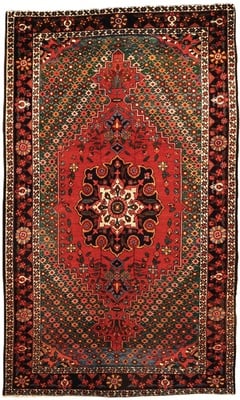
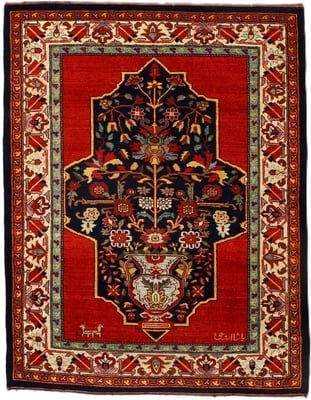
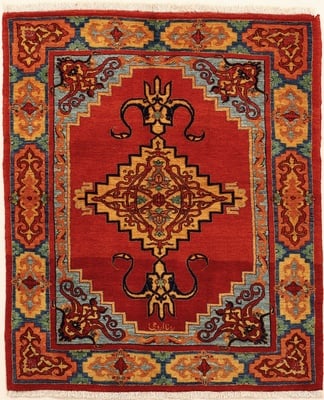
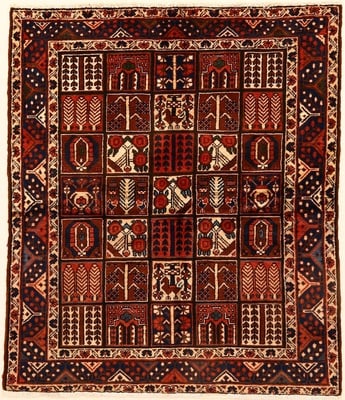
Bakhtiar Persian rugs from the Zagros mountain region of southwest Iran are known for their distinctive garden panel layouts, rich colour fields, and strong tribal identity a structured, characterful choice for traditional and eclectic interiors alike.
Discover the timeless elegance and archaic expressive power of genuine Bakhtiari rugs, crafted in the heart of the Zagros Mountains by skilled nomadic and village communities through masterful hand-knotting. An authentic Bakhtiari carpet embodies like no other craft the symbiosis of indestructible durability, rich tribal history, and expressive imagery. As a solid pillar of classic Persian carpets, these unique pieces bring a warm, earthy atmosphere, vibrant natural dyes, and unmistakable character into demanding living spaces.
When selecting an exquisite oriental rug for your home, you often face the choice between urban delicacy and rustic nomadic heritage. Bakhtiari carpets bridge this gap in a fascinating way: they combine the robust warp and weft construction of traditional village and nomadic carpets with architecturally structured garden patterns otherwise found only in feudal court centers. At RugEast, you will find carefully curated, certified Bakhtiari provenances – ranging from powerful collector's pieces from Chahar Mahal to detailed Chaleshtor master carpets.
The Bakhtiari people belong to one of the most traditional nomadic tribal federations in the southwestern highlands of Iran. For centuries, seasonal pasture migration—known as transhumance between the winter lowlands of Khuzestan (Garmsir) and the summer high pastures of the Chahar Mahal region (Sardsir)—shaped their entire daily life. These extreme climatic conditions, characterized by scorching valley heat and snowy winters at over two thousand meters of altitude, required textiles of unparalleled toughness and insulation.
Knitting and knotting originally served no commercial purpose; rather, they were an existential part of nomadic life. Saddlebags (Khorjin), blankets, tent flooring, and cradles were knotted out of necessity. It was only towards the late 19th century, when European explorers and collectors discovered the allure of this powerful visual language, that permanent workshops were established in fixed settlements and princely estates (such as Chaleshtor), where the Khans of the Bakhtiari commissioned monumental representation carpets. This fusion of nomadic freedom and lordly dignity can still be felt today in every single square centimeter.
Over time, regional centers emerged that are now appreciated by connoisseurs worldwide: Alongside the provincial capital **Shahr-e Kord**, these primarily include **Saman**, **Boldaji**, **Farrokhshahr**, and the famous weaving hub **Chaleshtor**, whose knotting often rivals the balance of fine Isfahan carpets without losing their untamed tribal soul.
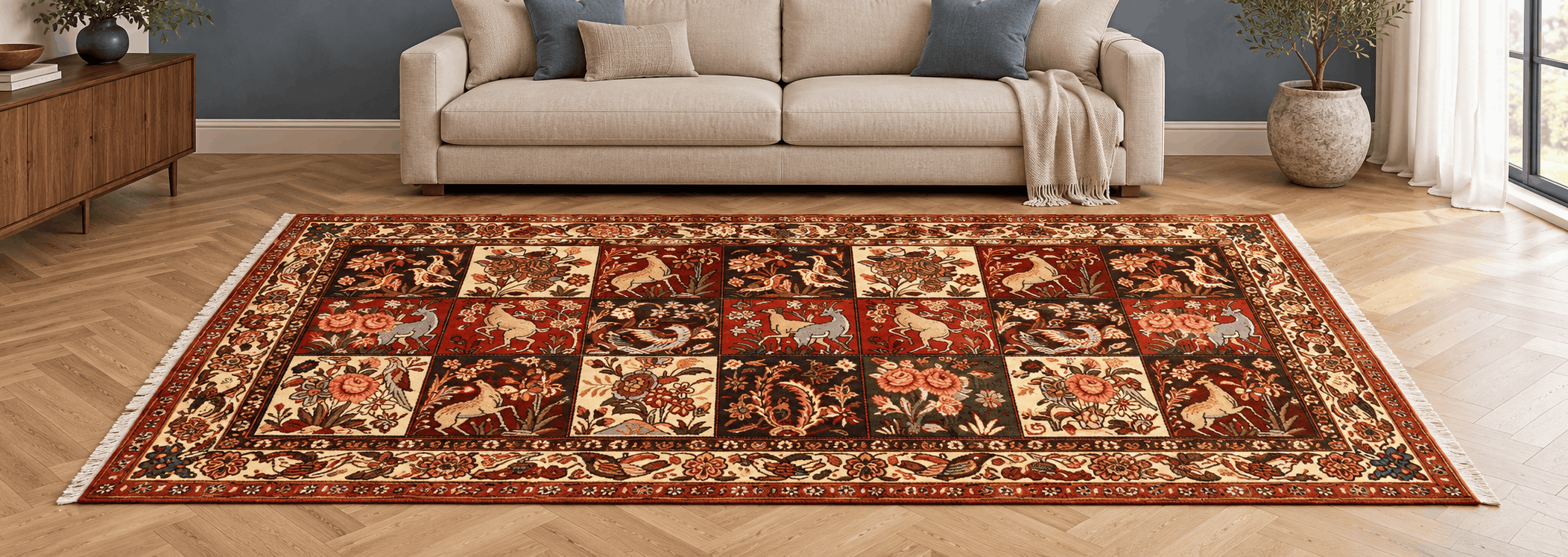
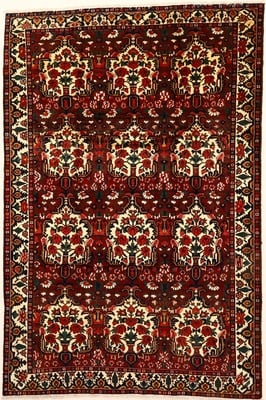
The unmistakable trademark of the classic Bakhtiari is the world-renowned Khesti pattern (garden field or compartment layout). While urban manufactories often rely on a dominant central medallion with floral vines, the traditional Bakhtiari divides the interior field into a geometric grid of square, diamond-shaped, or arched compartments. These cassettes represent the architectural vision of a walled Persian garden—a Pardis (paradise) amidst the barren mountain landscape.
Every single compartment tells its own mythological story, displaying stylized natural symbols:
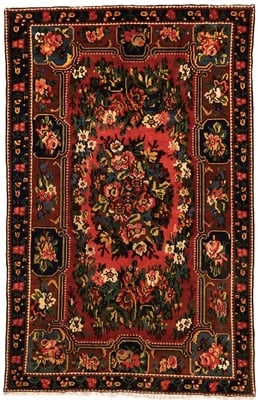
Alongside the Khesti design, remarkable medallion compositions (Lachak-Toranj) inspired by rugged rock formations exist, as well as all-over patterns (Afshan) and Gol-Farang motifs integrating European-style rose bouquets into traditional nomadic schemas.
The legendary durability of Bakhtiari rugs is the result of excellent raw materials and uncompromising knotting techniques. The Chahar Mahal & Bakhtiari region sits at an average altitude of 2,000 meters. The fat-tailed sheep grazing there develop extremely dense, elastic, and lanolin-rich highland wool. Traditionally, this fleece is hand-washed, carded, and spun with hand-spindles (Dastres yarn), giving the fibers an inimitable tactile feel.
Knotted almost exclusively with the symmetrical Turkish knot (Ghiordes or Turkbaf), the Turkbaf wraps completely around two warp threads unlike the asymmetrical knot, creating an exceptionally firm structural bond. Warp and weft threads in modern and urban Bakhtiaris consist mostly of tear-resistant, rigid cotton, while historical and purely nomadic pieces occasionally feature warp threads of pure goat or sheep wool.
The color aesthetics of a genuine Bakhtiari rug are warm, earthy, yet strikingly luminous. Instead of artificial synthetic tones, traditional master weavers rely on plant and mineral-based natural dyes to this day. These colors do not age by fading; rather, over decades they develop a warm, shimmering patina prized so highly by collectors of antique rugs.
Typical palettes include deep madder red (extracted from Rubia tinctorum roots), warm ochre and sunflower yellow (from weld, pomegranate rinds, and turmeric), and intense indigo blue. Warm brown, cream, and black tones originate mostly from un-dyed natural sheep's wool or are fixed using walnut husks and oak galls. This avoidance of harsh chemicals preserves the wool fibers long-term and ensures a healthy, toxin-free indoor climate.
Bakhtiari rugs rank among the most indestructible carpets in the world. Their dense structure and robust warp system make them immune to sharp chair legs, heavy foot traffic, and pet claws.
Compared to delicate silk rugs or fragile flatweaves, they effortlessly forgive daily mishaps, making them the ideal investment for lively households.
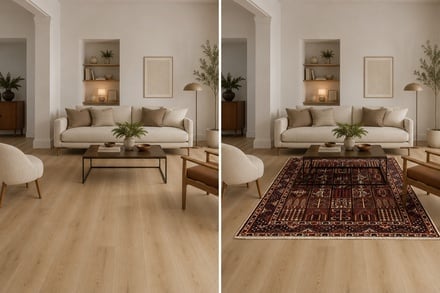
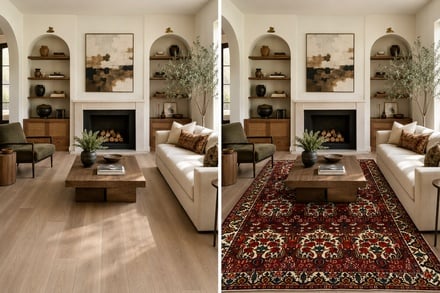
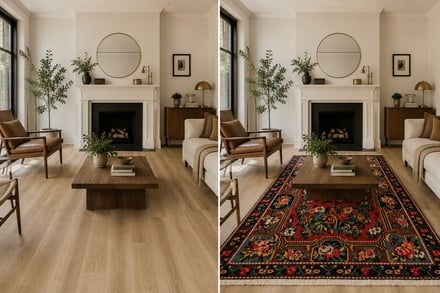
Despite their centuries-old visual language, Bakhtiari rugs appear surprisingly avant-garde in modern interiors. The geometric partitioning of garden fields harmonizes perfectly with minimalist furniture.
Combined with exposed concrete, solid oak flooring, or Scandinavian design, they establish a powerful architectural accent and break up cool room structures.
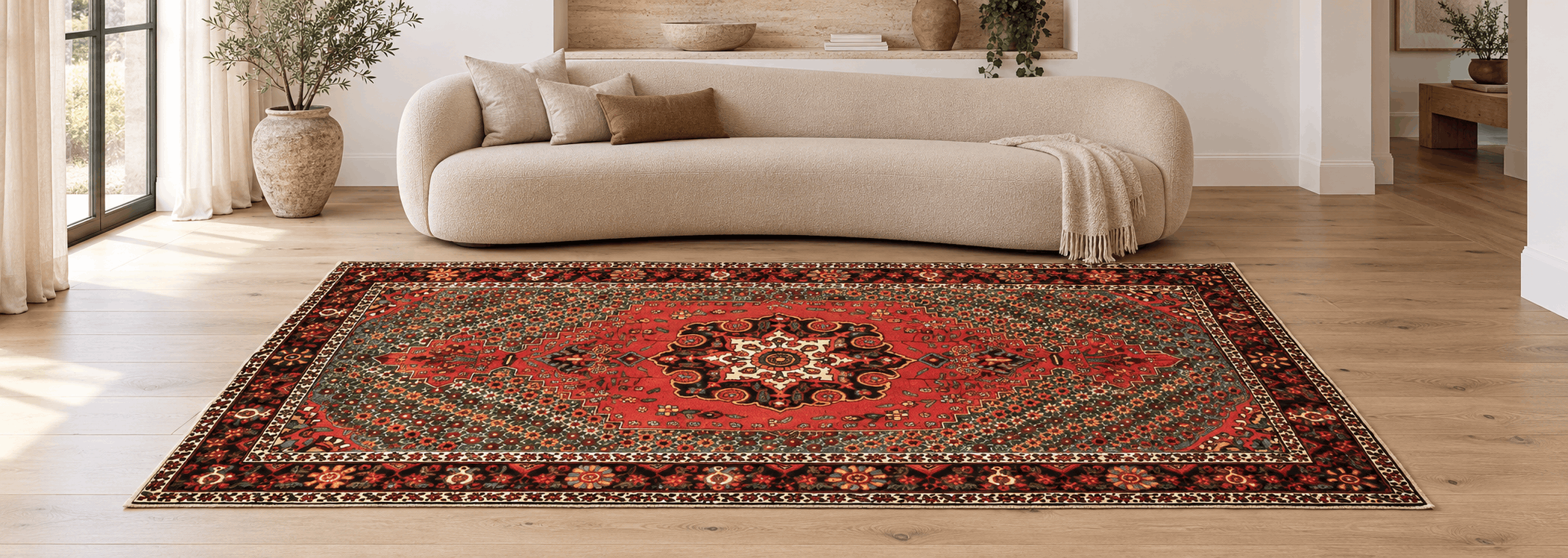
A hand-knotted Bakhtiari is no timid floor covering; it is a confident statement. Thanks to its high tensile and abrasion resistance, placement possibilities throughout the home are virtually unlimited:
A genuine Bakhtiari rug is naturally low-maintenance. The lanolin contained within the Zagros sheep's wool creates a natural protective barrier against liquid penetration and soil particles. Nevertheless, observing basic care rules ensures radiant luminosity for decades:
Regular Vacuuming: Vacuum your rug once or twice a week in the direction of the pile using a smooth nozzle without rotating brushes, as spinning brush attachments can unnecessarily roughen wool tips.
Even Wear: Rotate your rug 180 degrees once or twice a year to prevent uneven walking tracks and allow incoming daylight to mature the colors evenly.
Spot Treatment & Professional Washing: Blot spilled liquids immediately with an absorbent cotton or paper towel—never rub! For stubborn stains or after years of intensive use, we recommend traditional biological carpet washing by specialized experts. Chemical dry cleaning strips away natural lanolin and should be avoided. Much like renowned Kashan carpets, a well-maintained Bakhtiari grows increasingly radiant and soft with age.
Purchasing a hand-knotted Persian carpet is a matter of trust. At RugEast we guarantee without exception genuine, traditionally crafted unique pieces. Every item in our collection is inspected on-site by experienced experts, professionally documented, and supplied with a certificate of authenticity.
Benefit from our customer-friendly service: We offer free shipping and returns, alongside a 30-day return policy, allowing you to experience your desired rug in your own home with complete peace of mind. Explore the diversity of our collection of fine oriental carpets and bring a piece of Persian cultural history into your home.
Bakhtiari rugs are distinguished primarily by their iconic Khesti pattern (garden field compartments) and extremely robust Zagros highland wool. Unlike finely knotted city carpets, they use sturdier yarns and the symmetrical Turkbaf knot, providing unmatched dimensional stability and durability.
Yes, without reservation. Due to the firm double-weft weave and lanolin-rich wool, Bakhtiari rugs are among the most resilient natural fiber carpets available. They are ideal for living rooms, dining spaces, entry zones, or hallways with active daily traffic.
Chaleshtor (or Chaleshotor) is a renowned weaving region in Chahar Mahal known for producing the finest and highest-quality Bakhtiari rugs. Chaleshtor knots often feature higher knot density, exceptionally silky wool quality, and very precisely drafted garden and medallion patterns.
Yes. Because they consist entirely of natural materials (wool and cotton) without synthetic backing, Bakhtiari rugs allow warmth to circulate gently. However, using a breathable rug pad is recommended to prevent slipping and optimize the indoor climate.
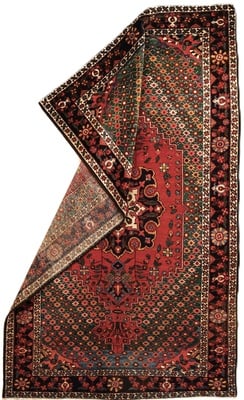
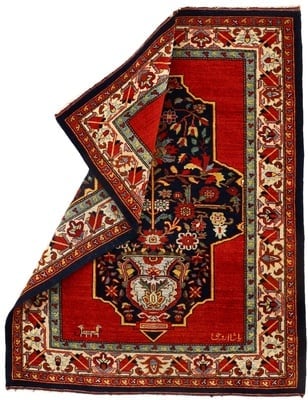
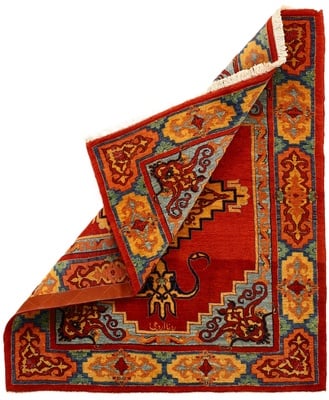
A genuine Bakhtiari displays a clear pattern design on the reverse side with slightly irregular, hand-tied knots. The fringes are the direct continuation of the warp threads rather than being artificially sewn on. Additionally, the rug feels heavy and elastic without the artificial sheen of synthetic fibers.