
Rugeast
Since 1921

Heriz Persian rugs from northwest Iran are celebrated for their bold geometric medallions, strong village character, and exceptional durability making them a timeless choice for expressive living spaces and high-traffic rooms.
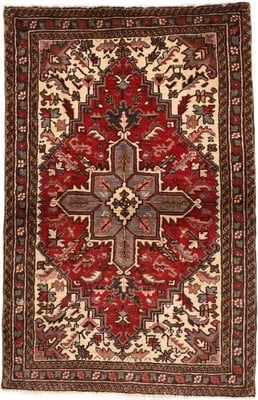
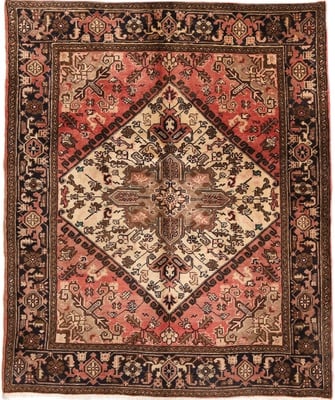
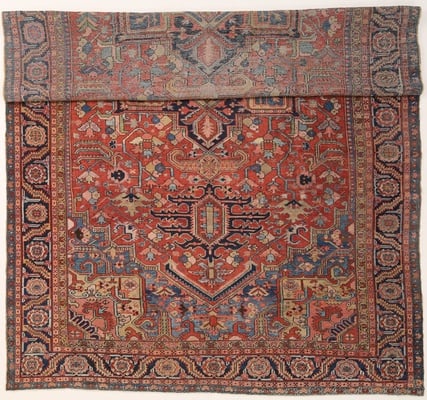
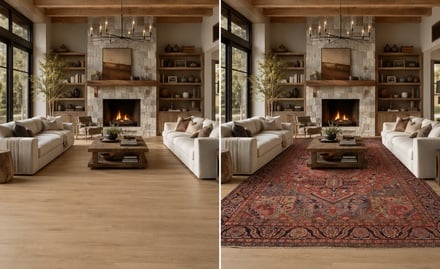


Heriz rugs are among Iran's best-known village-woven carpets. Their bold geometric designs, warm colours and robust construction have made them popular with rug enthusiasts around the world.
Heriz rugs are woven in and around Heriz, in Iran's East Azerbaijan province. The wider region has a long tradition of carpet weaving, with distinctive designs and techniques associated with its villages. Explore our Tabriz rugs to discover more carpets from northwestern Iran.
Heriz rugs are valued for their distinctive patterns and hard-wearing character. Their sturdy wool pile and firm construction make them a practical choice for many everyday living spaces.
Traditionally, many Heriz rugs are hand-knotted with a relatively thick pile. Their substantial feel and geometric designs give them a strong visual presence in a room.
Hand-knotting methods and materials can vary by workshop, village and individual rug. Knot type, density, wool quality and construction should therefore be assessed for each piece rather than assumed to be identical across all Heriz rugs.
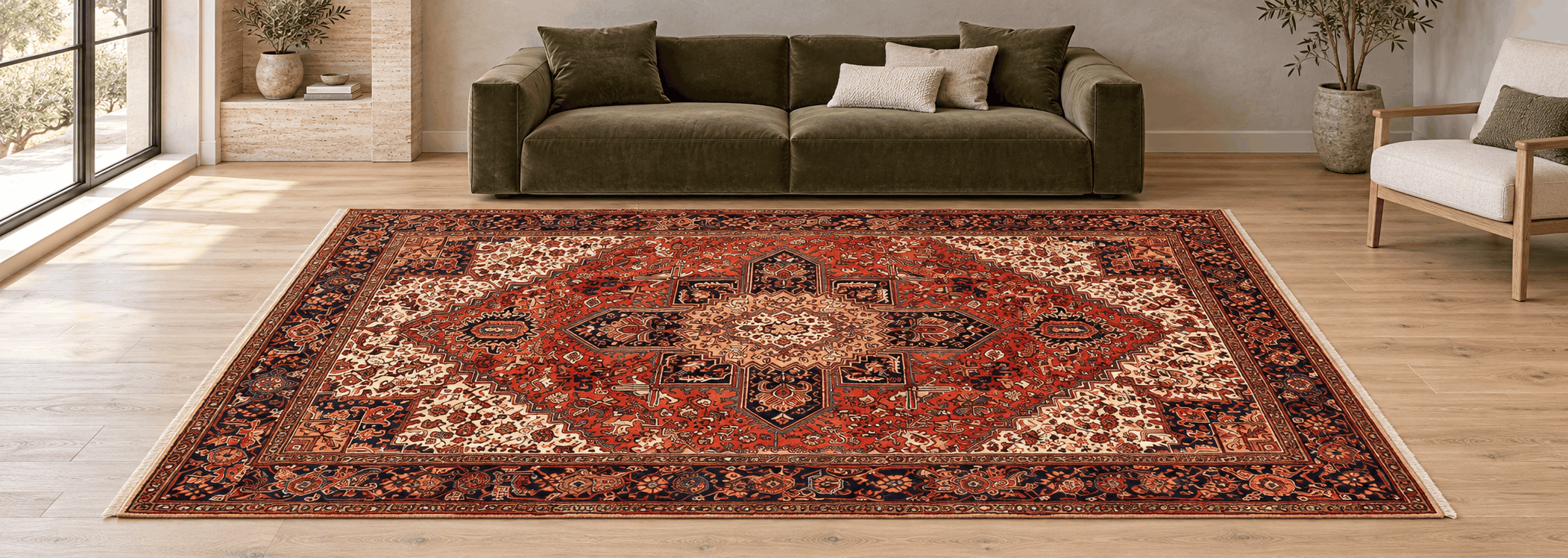
Heriz is a carpet-weaving district in East Azerbaijan, northwestern Iran. Rugs from the area are recognised for their expressive geometric compositions, substantial wool pile and regional character.
The name Heriz is used for rugs associated with the town and surrounding weaving communities. Individual pieces can differ considerably in age, materials, colours and design, so the details of a specific rug are important when evaluating it.
Antique and vintage Heriz rugs are sought after for their age, condition, craftsmanship and distinctive designs. Their suitability and value depend on the characteristics and provenance of each individual carpet.
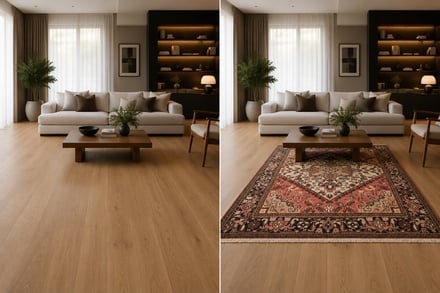
Common features include bold geometric motifs, a substantial wool pile and a robust construction. Depending on the rug, these qualities can make a Heriz carpet a practical option for living rooms and other regularly used spaces. Comfort, weight, pile height and ease of care vary from piece to piece.
Heriz rugs are available in a range of dimensions, from smaller accent sizes to larger room rugs. Measurements and knot density vary by carpet; check the product specifications for the exact size and construction of the piece you are considering.
Designs often feature a prominent central medallion, angular floral forms, stylised leaves and stepped geometric outlines. Regional and workshop patterns may be known by different names, and design terminology can vary between sellers and sources.
Traditional palettes may include deep red, rust, navy or indigo, cream, brown and beige. Colours differ according to the rug's age, dyes, materials and subsequent care; inspect the individual carpet for its actual shades.
Wool quality and weaving construction are important factors in a rug's durability. With appropriate placement, regular care and professional cleaning when needed, a well-made Heriz rug can remain in use for many years.
Hand-knotted and machine-made rugs differ in how they are constructed, as well as in their materials and appearance. A hand-knotted rug may show small variations in its pattern or knotting, while machine-made rugs are typically more uniform.
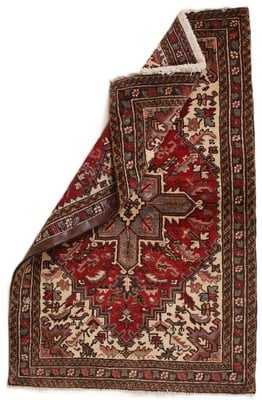
To assess a rug, examine its front and back, edges, pile and construction. No single visual feature proves authenticity on its own; when buying a valuable carpet, ask for clear product details and documentation where available.
Before treating a stain or cleaning the whole rug, check its care instructions and test any cleaning method on a small, inconspicuous area. A damp white cloth can help reveal colour transfer, but this simple test does not replace professional assessment.
For thorough washing, consult a rug-cleaning professional experienced with hand-knotted carpets. The right method depends on the dyes, fibres, age and condition of the individual rug.
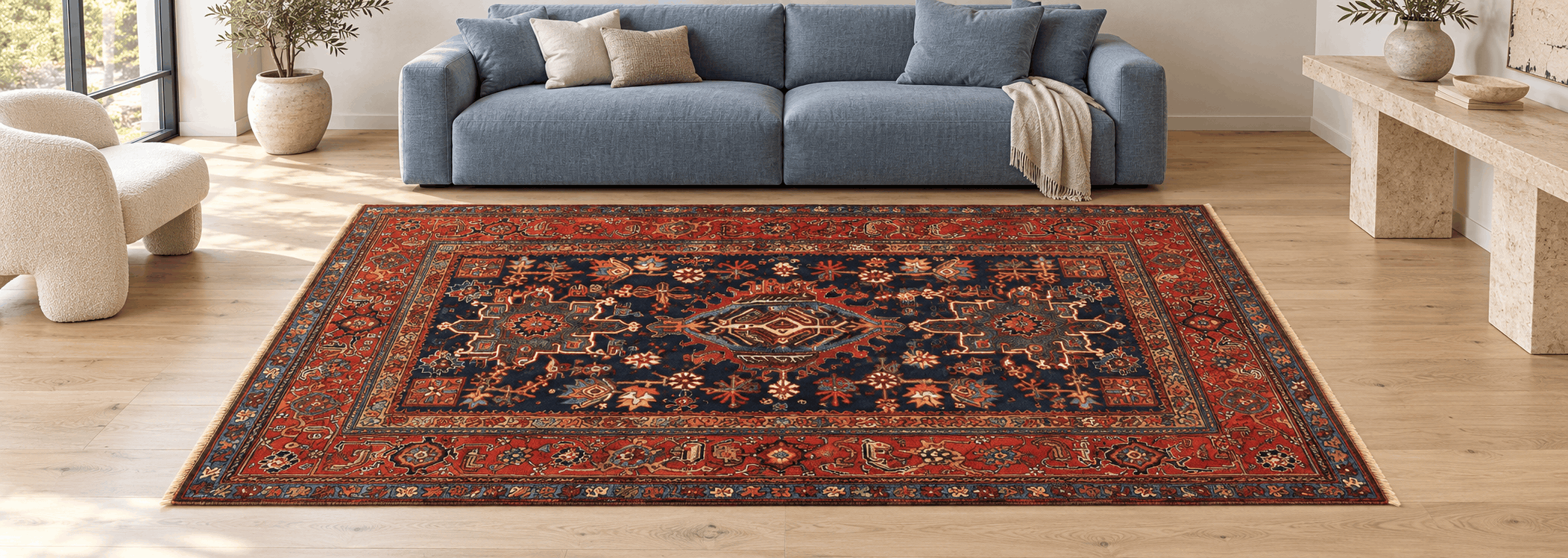
The price of a Heriz rug depends on factors such as size, age, condition, materials, knotting, design and provenance. Compare the details of individual pieces and buy from a seller who provides clear information about the rug's materials, origin and condition.
Many Heriz rugs have a sturdy construction and wool pile, which can make them suitable for regularly used rooms. Check the specific rug's condition, pile and care requirements before choosing it for a high-traffic area.
Look at the rug's construction, back, edges, materials and design, and ask the seller for details about its origin. Small variations can be consistent with hand-knotting, but no single feature confirms authenticity on its own.
A rug's future value cannot be guaranteed. Age, condition, quality, provenance and demand all matter; choose a Heriz rug for its craftsmanship and suitability as well as any potential collector interest.


