
A Room-by-Room Guide to Choosing Persian Rugs: Find the Right Rug for Every Space in Your Home
In this guide, we explain how to choose Persian rugs for every important area of your home, with practical advice on sizing, design, materials and everyday use.
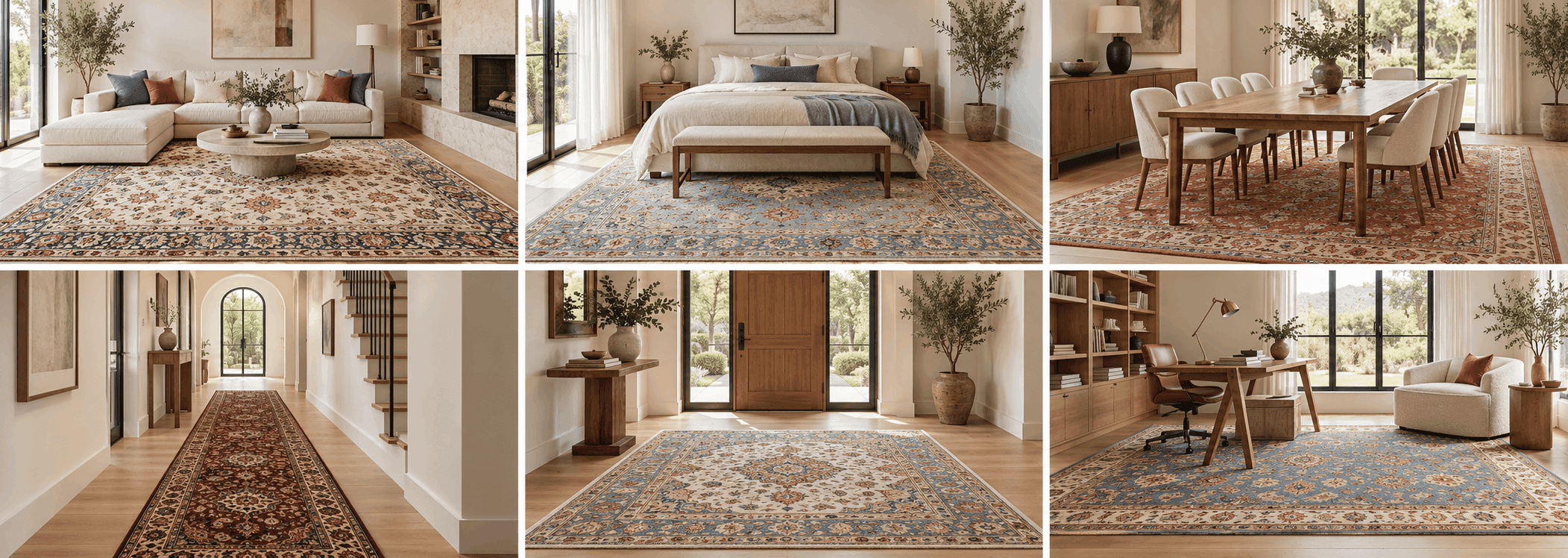
A practical guide to rug sizes, colours, materials, patterns and placement for living rooms, bedrooms, dining rooms, hallways and entrances.
A Persian rug can change the atmosphere of a room in a way that few other furnishings can. It introduces colour, texture and warmth, connects furniture, and brings a sense of character to an interior. Yet even a beautiful handmade rug can look out of place if its size, pattern or placement does not suit the room.
So, how do you choose the right Persian rug for your home?
The answer depends on more than personal taste. You need to consider the dimensions of the room, the furniture arrangement, the amount of daily use, the type of flooring and the way you live in the space.
For European homes, these considerations are particularly important. A spacious living room in a traditional German house has different requirements from a compact apartment in Hamburg, a minimalist Scandinavian interior or a contemporary home with an open-plan kitchen and dining area.
At Rugeast, we believe that choosing a handmade rug should begin with understanding how it will be used. Our family has been involved in the handmade carpet trade since 1921, and our experience has taught us that the right rug is not necessarily the largest, most expensive or most intricately designed one. It is the rug that works naturally with its surroundings.
In this guide, we explain how to choose Persian rugs for every important area of your home, with practical advice on sizing, design, materials and everyday use.
1. How to Choose the Right Rug for Your Home
Before exploring individual rooms, it helps to understand four basic principles.
Choose the size according to the furniture
One of the most common mistakes is choosing a rug that is too small for the furniture around it.
A small rug placed in the middle of a large seating area can make the furniture appear disconnected. A suitably sized rug, on the other hand, brings the seating arrangement together and creates a clear visual centre.
For most rooms, start by measuring the furniture arrangement rather than simply measuring the empty floor.
Consider how the room is used
A rug in a quiet bedroom has different requirements from one in a busy hallway.
In a bedroom, softness and comfort may be the main priorities. In an entrance, durability and easy maintenance are usually more important. In a dining room, the movement of chairs can determine whether a rug is practical at all.
Think about everyday use before choosing a design.
Match the rug to the interior without making everything identical
Your rug does not need to match your curtains, sofa or cushions exactly.
Instead, look for relationships between colours, materials and shapes. A traditional Persian rug can look beautiful beneath contemporary furniture because the contrast gives the room depth and personality.
For example, a rug with muted rust, cream and indigo tones can complement a neutral sofa without making the entire room feel traditional.
Leave some visible flooring
Unless you are deliberately aiming for a wall-to-wall effect, allow a border of exposed flooring around the rug.
The ideal border depends on the room's proportions and layout. In many living rooms, leaving approximately 20–45 cm of visible flooring around the rug creates a balanced appearance, although larger rooms may need more space.
The objective is to make the rug look intentionally placed rather than squeezed into the room.
2. Persian Rugs for the Living Room
The living room is often the best place to begin when choosing a handmade Persian rug.
A well-positioned rug connects the sofa, armchairs and coffee table, helping the entire seating area feel like one coherent space.
It can also introduce colour into a neutral interior, soften hard flooring and create a welcoming atmosphere.
See our living room rug collection
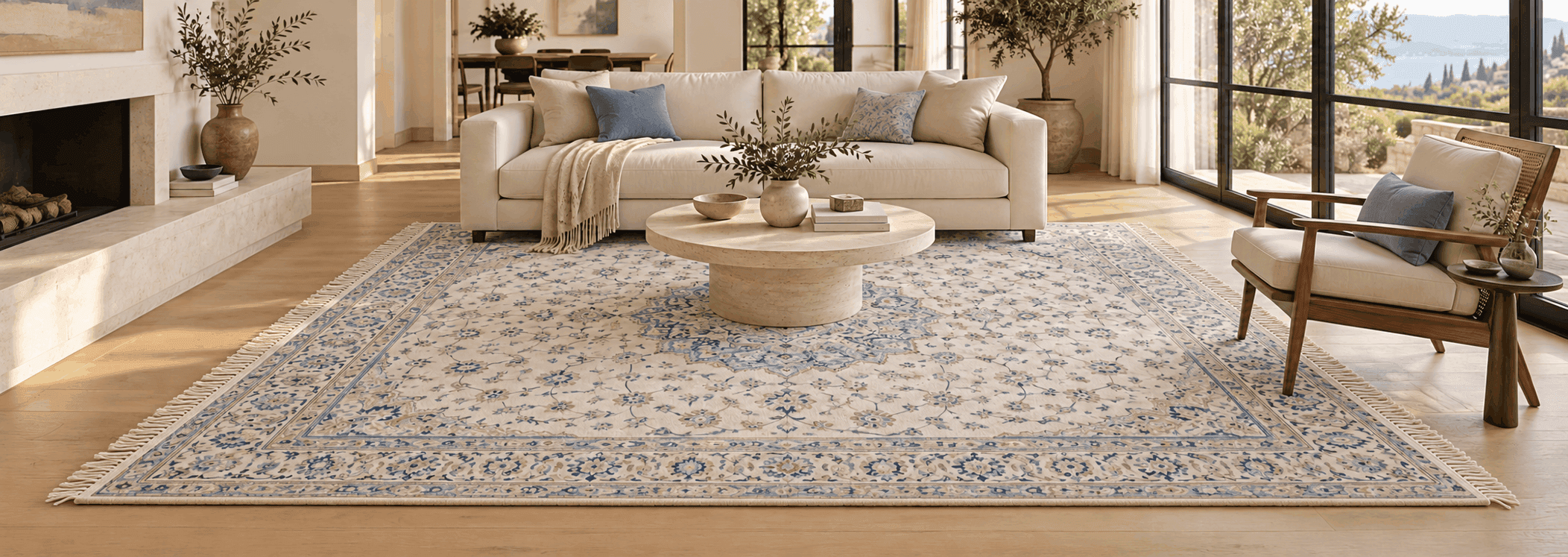
What size Persian rug works best in a living room?
The right size depends on your furniture and the dimensions of the room.
These measurements are useful starting points for European interiors:
Large seating arrangements and open-plan interiors
These are guidelines, not fixed rules. A 160 × 230 cm rug may work beautifully in a compact apartment, while a spacious room with several armchairs may require a substantially larger piece.
Where should you place the rug?
There are three common approaches.
Option 1: Place the front legs of the furniture on the rug.
This is often the most practical solution. Position the rug so that the front legs of the sofa and armchairs rest on it, while the rear legs remain on the bare floor.
This arrangement visually connects the furniture without requiring an exceptionally large rug.
Option 2: Place all the seating furniture on the rug.
In a spacious living room, a larger rug can accommodate the entire seating arrangement.
This creates a more generous, unified appearance and works particularly well with larger Persian carpets featuring medallions, intricate borders or all-over patterns.
Option 3: Use a smaller rug as an accent.
A smaller handmade rug can work beneath a coffee table or beside a reading chair, particularly in a compact interior.
However, if your intention is to connect an entire seating area, make sure the rug is not so small that it appears disconnected from the surrounding furniture.
Which Persian rug styles work best?
Different handmade rug traditions create different atmospheres.
- Gabbeh rugs: Their often bold, simplified designs and generous areas of colour suit relaxed, contemporary interiors.
- Luri and Loribaft rugs: Depending on their design, these can introduce a distinctive nomadic character, expressive colours and a strong handmade aesthetic.
- Classic Persian rugs: Designs from regions such as Tabriz, Kashan, Isfahan and Sarouk can add intricate detail and traditional elegance.
- Vintage Persian rugs: Their aged colours and established character can complement modern furniture, natural wood and understated interiors.
The origin alone does not determine whether a rug will suit your home. Individual designs, colours, proportions and the condition of the piece all matter.
Our advice: If your sofa and walls are relatively plain, consider a rug with a more expressive pattern. If the room already contains several strong colours and patterns, a quieter design may create a better balance.
Explore our Rugs by Room collection to see how different handmade rug styles can work in your interior.
3. Persian Rugs for the Bedroom
The bedroom is where comfort often takes priority over visual impact.
A handmade Persian rug can make the space feel warmer, especially when the floor is made of wood, laminate, stone or another hard material.
It also provides a comfortable surface underfoot when getting out of bed in the morning.
See our bedroom rug collection
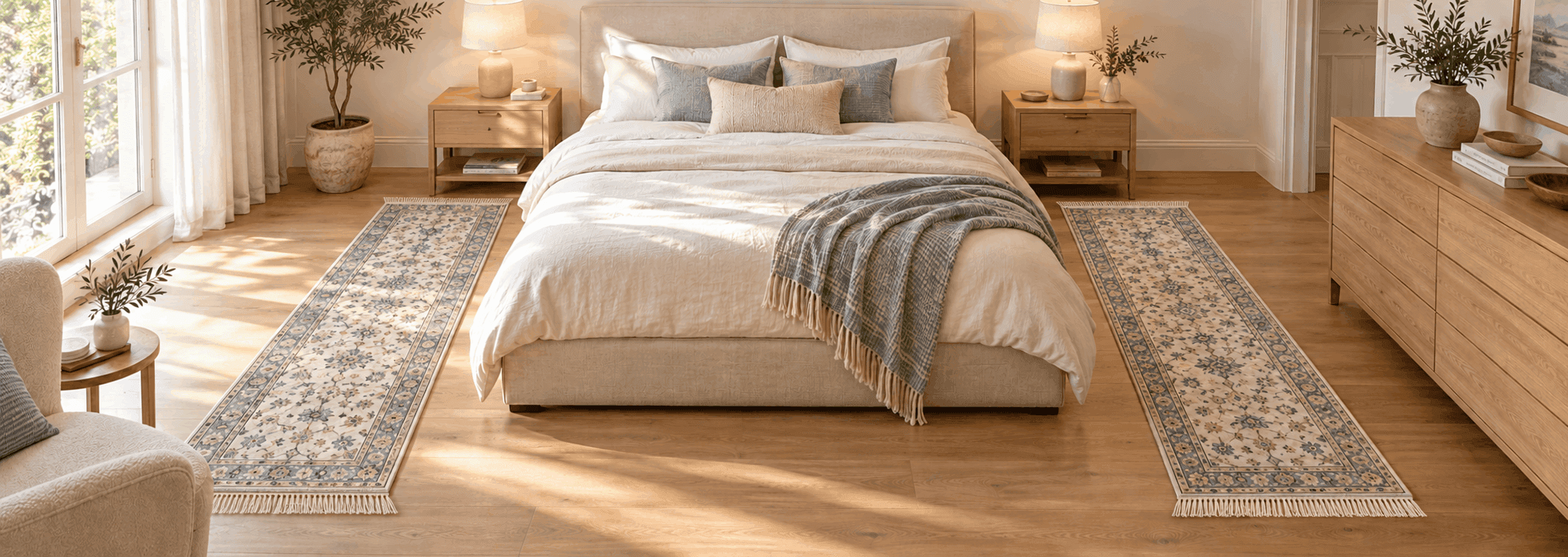
Should a bedroom rug go under the bed?
In most bedrooms, yes. Placing a rug beneath the bed is an effective way to establish the bed as the room's focal point.
The best arrangement depends on the size of the bed, the available floor space and your budget.
A large rug beneath the bed
This is often the most balanced arrangement in a medium or large bedroom.
A rug measuring approximately 200 × 300 cm may suit some double-bed layouts, while larger beds and rooms may benefit from a 250 × 350 cm rug or another generously proportioned size.
Ideally, the rug should extend beyond the sides and foot of the bed far enough to provide a comfortable area to step onto.
A rug beneath the lower part of the bed
If a larger rug is not practical, position a medium-sized rug beneath the lower portion of the bed.
This allows the rug to remain visible on both sides and at the foot of the bed without covering as much floor space.
Two runners beside the bed
Matching or coordinating runners can be an excellent solution for smaller bedrooms.
For example, two runners measuring approximately 70 × 200 cm may work well beside a double bed, depending on the available space.
This arrangement also allows you to introduce handmade patterns without covering a large proportion of the floor.
Which colours work well in bedrooms?
The best choice depends on the atmosphere you want to create.
- Cream, beige and soft ivory can make a bedroom feel light and calm.
- Muted blue and green can complement natural materials and understated interiors.
- Rust, burgundy and warm terracotta can introduce richness and depth.
- Darker traditional patterns can create contrast against pale walls and bedding.
You do not necessarily need a pale rug to create a restful bedroom. A richly patterned Persian rug can work beautifully when the rest of the room is relatively simple.
Should you choose wool or silk?
For most bedrooms, wool is a practical choice because it combines comfort with resilience.
Silk rugs can be visually striking, but their suitability depends on the particular rug, its construction and the way the room is used. A silk-rich decorative piece may be better suited to a lower-traffic position than to an area exposed to frequent wear.
Our advice: Prioritise the size and placement first. A rug with the perfect colours will not look right if most of it disappears beneath the bed.
4. Persian Rugs for the Dining Room
A handmade rug can introduce warmth and character into a dining area. However, this is one room where you should think carefully before buying.
The main challenge is not the table itself. It is the movement of the chairs.
Every time someone sits down or gets up, the chair moves backwards and forwards. If the chair legs catch on the rug's edge, the arrangement quickly becomes inconvenient.
For this reason, a beautiful rug is not automatically a suitable dining-room rug.
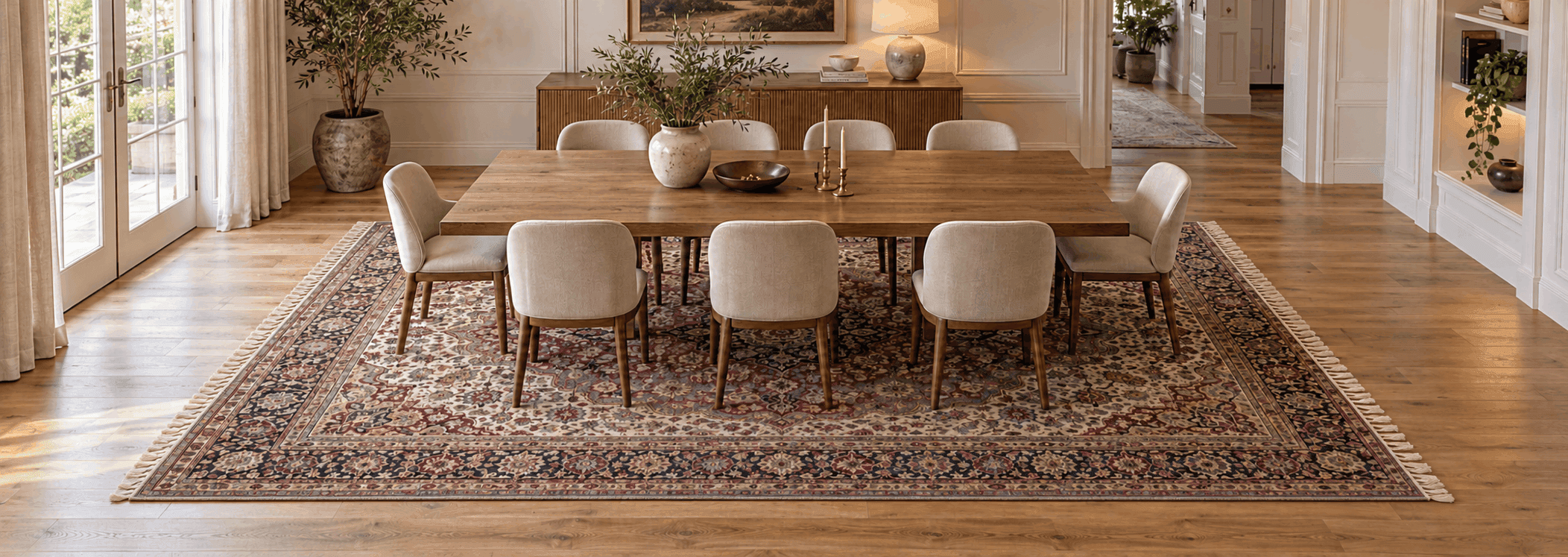
How large should a dining-room rug be?
As a general guideline, allow approximately 60–75 cm of additional rug beyond each edge of the table.
This provides room for chairs to move while remaining on the rug.
For example:
These are approximate examples, not guaranteed fits. Measure the actual chair footprint, including the distance the chairs move when occupied, before selecting a rug.
A rug that only accommodates the table is usually too small for a conventional dining arrangement.
Are Persian rugs suitable for dining rooms?
They can be, provided the size, construction and placement are appropriate.
A tightly woven wool rug with a relatively low pile may be easier to use beneath dining chairs than a thick, high-pile rug.
Traditional patterns can also be forgiving of minor everyday marks. Nevertheless, wool is not stain-proof, and food or liquid spills should be addressed promptly.
You should also consider the practicalities of cleaning. A dining rug needs to be maintained regularly, and a valuable or delicate handmade piece may require more care than the room justifies.
What about Persian kilims?
Kilims are flat-woven carpets that often have a distinctive graphic character.
Their relatively flat construction can make them attractive for certain dining spaces. However, their suitability depends on the individual piece and the floor beneath it.
In our experience, kilims can be frustrating beneath dining tables when chairs are moved frequently, particularly on smooth stone or parquet flooring. The combination of moving chair legs and a lightweight, flat-woven textile can cause the rug to shift or gather.
A correctly sized, well-secured kilim may work in some homes, but it is not automatically the most practical choice.
If you are considering a kilim for a dining area, test the arrangement carefully and use a suitable rug underlay where appropriate.
When is it better not to use a rug under the dining table?
Consider leaving the floor uncovered if:
- Your dining area is too small for a rug large enough to accommodate the chairs.
- Chairs are moved frequently throughout the day.
- The floor is particularly slippery.
- Young children regularly spill food and drinks.
- The rug is valuable, delicate or difficult to clean.
- The room's layout makes a suitably sized rug impractical.
There is nothing wrong with leaving a dining floor bare and using a Persian rug elsewhere.
A handmade rug should improve everyday life, not make an ordinary activity more difficult.
5. Persian Runners for Hallways
Hallways are often overlooked when people plan their interiors.
Yet they are among the most frequently used areas of a home. A well-chosen runner can transform a long, plain corridor into a more welcoming part of the house.
It can also introduce a visual connection between the entrance and the adjoining rooms.
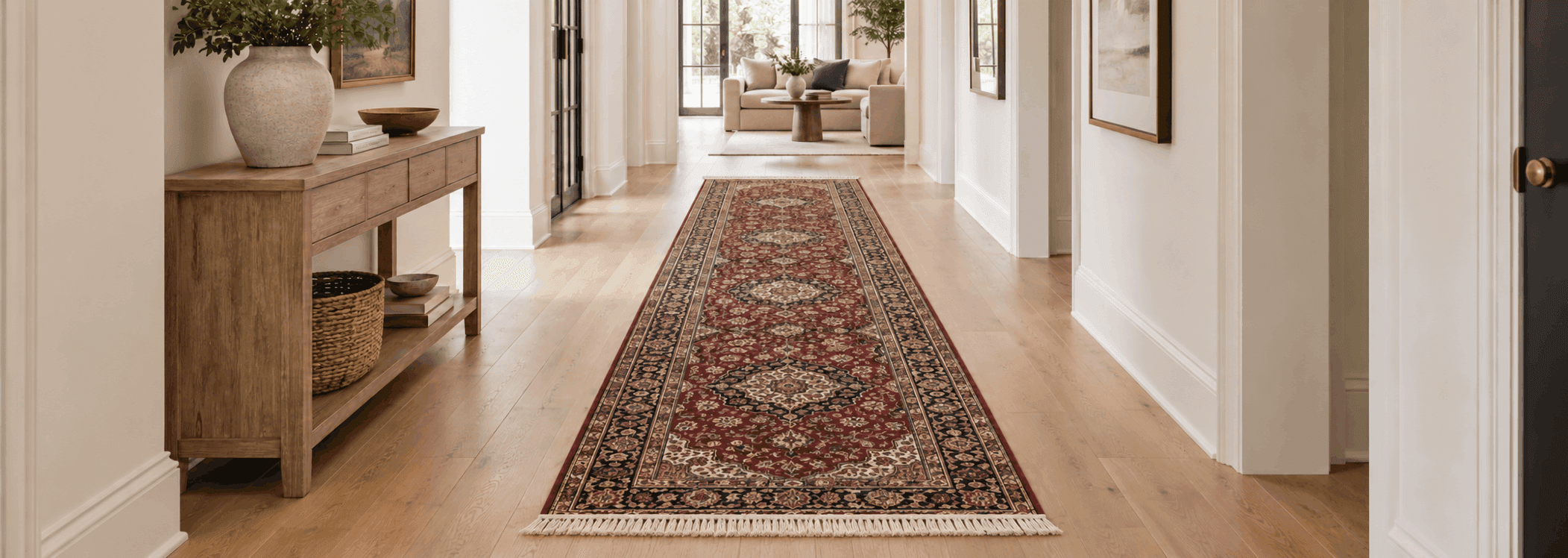
What size runner do you need?
For many European hallways, a runner approximately 70–100 cm wide is a useful starting point.
Lengths of 200, 250, 300 or 350 cm may work well, depending on the corridor.
The important consideration is proportion.
A runner should leave visible flooring along both sides and, where possible, at the ends. If it nearly touches both walls, it may make the corridor feel cramped.
Before purchasing, measure the narrowest point of the hallway, including door openings and any areas where furniture or doors could interfere with the rug.
Which rugs are best for busy hallways?
Hallways benefit from rugs that can tolerate regular foot traffic.
Consider:
- Wool rugs with a construction suitable for frequent use.
- Relatively low-pile rugs that are easier to walk over.
- Tightly woven pieces with sound edges and a stable foundation.
- Patterns that remain visually attractive despite everyday dust and minor marks.
The condition of an individual rug matters as much as its traditional reputation for durability. A robust handmade rug can serve for many years, but a fragile antique with weakened foundations may not be appropriate for a busy corridor.
Should the runner match the living-room rug?
Not necessarily.
Two rugs can complement each other without being identical.
For example, a richly coloured runner can lead into a living room containing a more muted Persian carpet. Repeating one or two colours across both spaces can create continuity without making the interior feel overly coordinated.
This is especially effective in homes where the entrance opens directly into the main living area.
Our advice: Think of a hallway runner as a connecting element. It should work with the adjoining rooms while still having its own character.
See our Runners Rugs collection
6. Persian Rugs for Entrances and Foyers
Your entrance establishes the first impression of your home.
A small handmade rug can introduce colour and character before visitors even reach the living room. In a larger foyer, a more substantial rug can help define the space.
However, entrances also collect dirt, moisture and grit brought in from outdoors.
This means practical considerations should come before appearance alone.
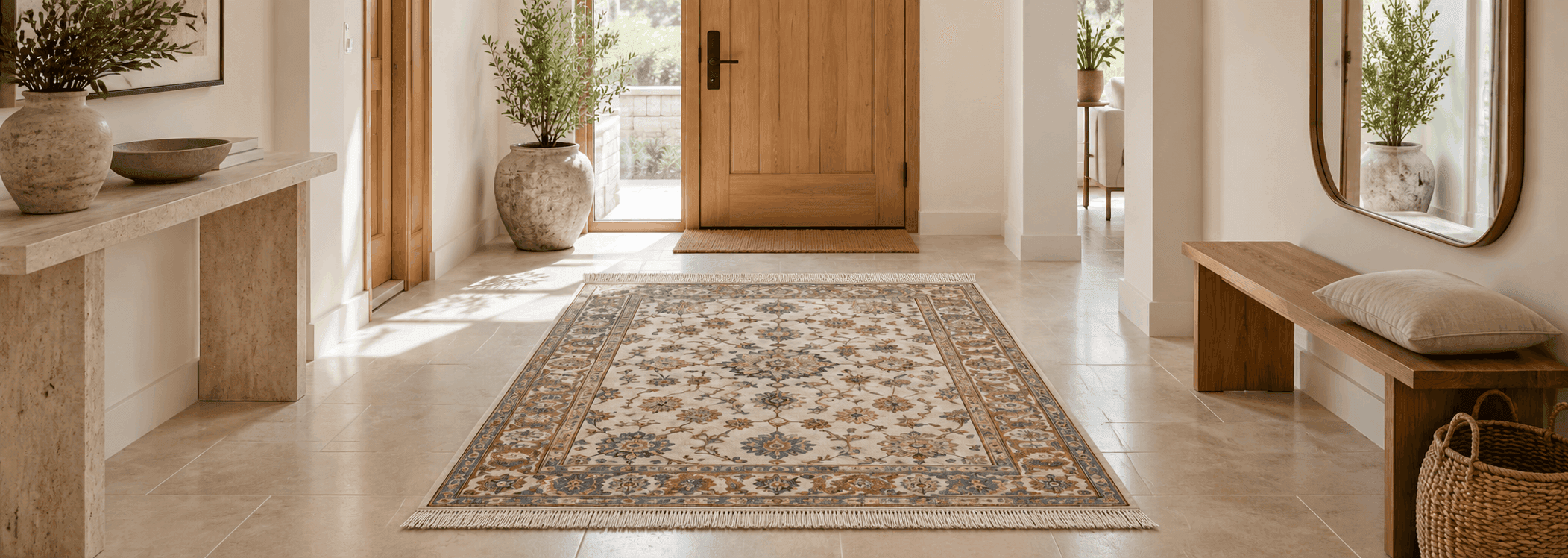
Which size works best in an entrance?
The dimensions of the entrance determine the best option.
These are starting points. The rug should fit the usable floor area without obstructing doors or becoming a tripping hazard.
Which colours and patterns are practical?
Medium and darker colours, particularly in multicoloured patterns, can be useful in busy entrances because they may make minor dust and everyday marks less noticeable.
That does not mean you must avoid light-coloured rugs.
A pale rug can look beautiful in a relatively clean entrance, especially when the area is protected from outdoor dirt. It simply requires more attention to maintenance.
How can you protect a rug at the entrance?
A few practical measures make a difference:
- Use a suitable doormat at the exterior or immediate entrance.
- Keep outdoor shoes and wet footwear away from the handmade rug where possible.
- Choose an underlay appropriate for both the rug and the floor.
- Vacuum regularly using a method suitable for the rug's construction.
- Address spills and moisture promptly.
Do not place a valuable handmade rug where it will routinely become wet.
A rug's durability should never be confused with immunity to dirt, moisture or wear.
7. Persian Rugs for Home Offices and Reading Corners
With more people working from home, smaller areas such as home offices, study corners and reading spaces deserve attention.
A handmade rug can make these spaces feel more comfortable and visually distinct from the rest of the room.
Rugs for a home office
If your desk and chair occupy a small area, consider a rug that defines the workspace without interfering with the chair.
A rug measuring approximately 120 × 180 cm or 160 × 230 cm may suit some arrangements.
However, pay attention to the type of office chair you use. Rolling casters can catch on certain rug edges or make movement difficult, particularly with thicker pile.
If the chair must roll freely, a hard floor surface may be more practical, or you may need a suitable chair mat compatible with the rug.
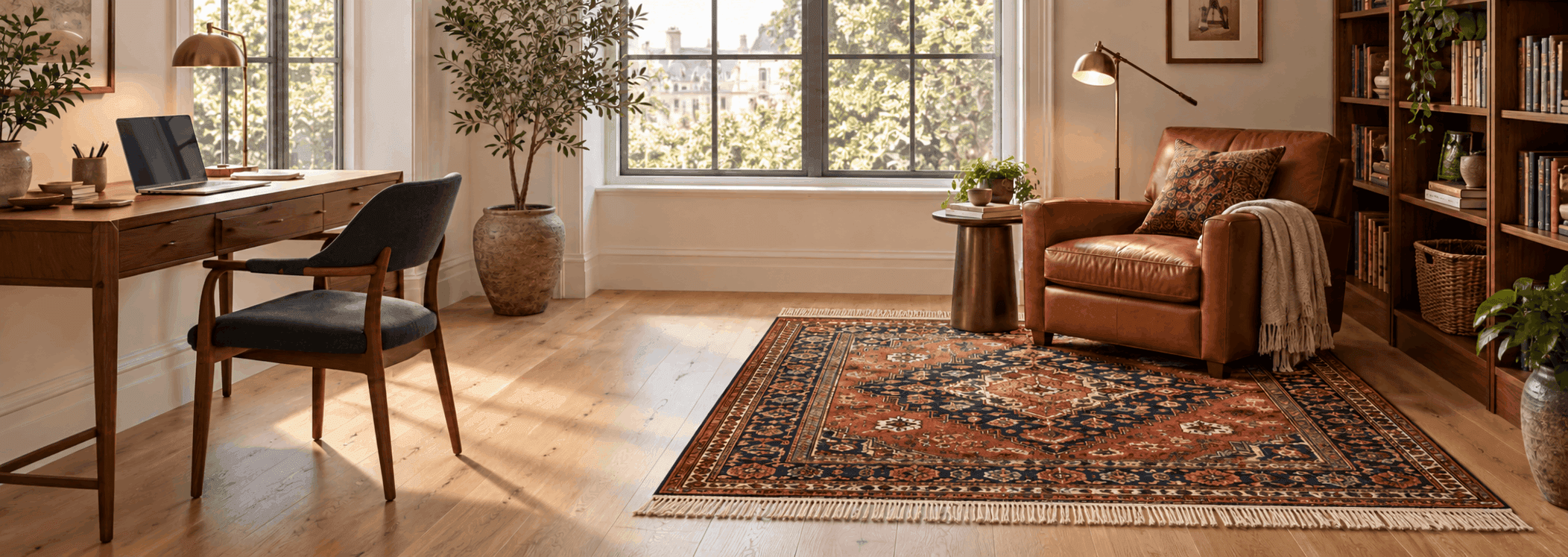
Rugs for reading corners
A small Persian rug beneath a comfortable chair can create a distinct reading area even in a larger room.
This is an excellent opportunity to use a smaller handmade piece with a particularly interesting pattern or colour combination.
A small rug does not have to be a lesser choice. When placed deliberately, it can become one of the most memorable details in a room.
Which styles should you consider?
Gabbeh rugs, small tribal designs and compact traditional Persian rugs can all work well.
Choose according to the character of the space rather than following a rigid design rule.
A quiet reading corner might benefit from softer colours, while a home office with neutral furniture could accommodate a more expressive pattern.
See our office rugs collection
8. How to Choose the Right Rug Colour and Pattern
Choosing the correct size solves only part of the problem. Colour and pattern determine how the rug relates to the rest of the interior.
Persian rugs offer a particularly broad range of possibilities because their designs vary considerably between regions, weaving traditions and individual pieces.
For a minimalist interior
Modern European interiors often feature neutral walls, simple furniture and natural materials.
A handmade Persian rug can introduce the colour and detail that the room otherwise lacks.
Consider:
- Gabbeh rugs with simplified motifs.
- Vintage pieces with softened colours.
- Rugs combining cream, beige, rust or muted blue.
- Traditional designs that contrast with clean-lined furniture.
The objective is not to make a minimalist room look traditional. It is to introduce an element of craftsmanship and individuality.
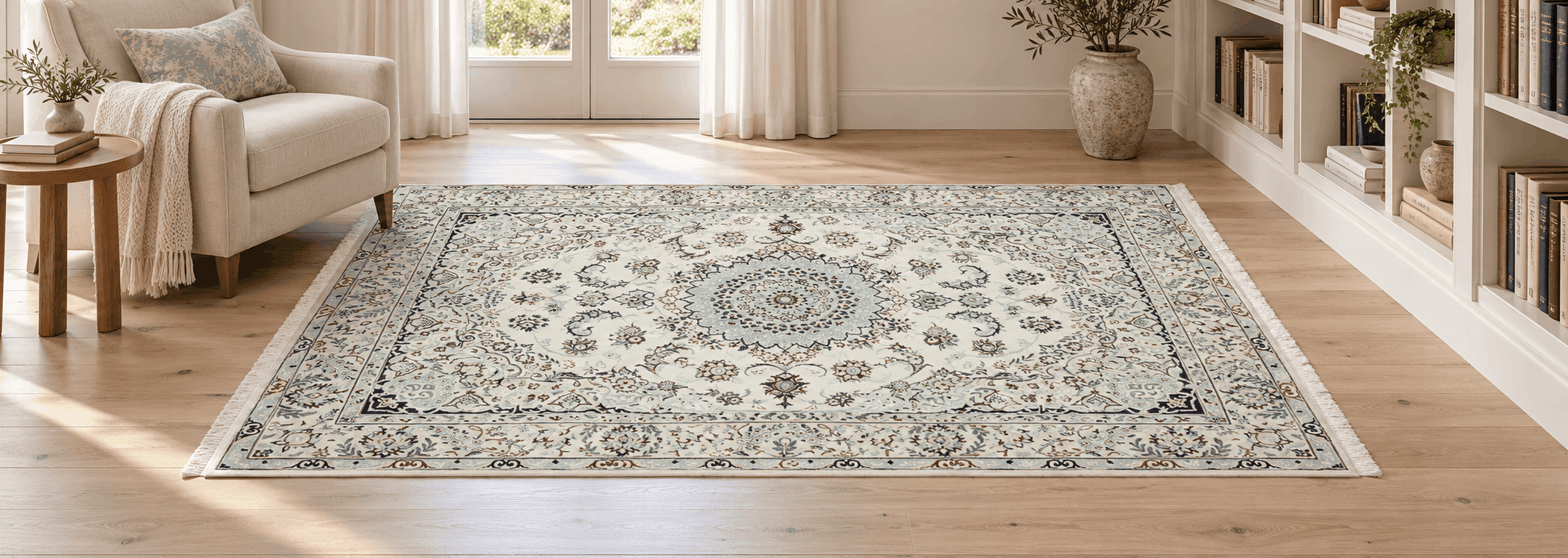
For a traditional interior
Classic Persian rugs can complement wooden furniture, decorative lighting, bookshelves and established architectural details.
Depending on the room, look for designs featuring floral motifs, medallions or elaborate borders.
Colours such as navy, burgundy, ivory and warm red can work particularly well, although the individual combination should always be considered alongside the existing furnishings.
For a small room
A lighter-coloured rug may help a room feel more open, but colour alone does not determine how spacious an interior appears.
The rug's proportions, pattern scale, contrast with the floor and relationship to the furniture all contribute to the overall effect.
In a compact apartment, a suitably sized rug with a relatively open design can be more effective than a very small rug with an elaborate border.
Should the rug match the sofa?
Exact matching is rarely necessary.
Instead, identify one or two colours that connect the rug with the room.
For example, if your sofa is beige and your cushions contain muted blue, a Persian rug featuring cream, blue and warm brown can connect the different elements naturally.
The result should feel coordinated without looking as though every item was purchased as part of the same set.
Can traditional Persian rugs work with modern furniture?
Absolutely.
One of the most interesting uses of a traditional handmade rug is to create contrast with contemporary furniture.
A classic Persian carpet beneath a simple modern sofa can introduce depth, history and visual complexity.
Likewise, a contemporary interior can provide a quiet setting for a rug with a highly detailed traditional pattern.
The contrast is often more effective than trying to make every element follow the same design style.
9. Which Rug Materials Work Best in Different Rooms?
The best material depends on the room, the rug's construction and your expectations for maintenance.
Wool
Wool is widely used in handmade Persian rugs and is often a practical choice for everyday interiors.
Depending on its quality and construction, wool can offer a useful combination of resilience, comfort and a naturally textured surface.
It is worth considering for living rooms, bedrooms and suitable hallway applications.
However, not every wool rug is equally durable. Fibre quality, pile construction, foundation, condition and craftsmanship all influence how a particular piece performs.
Silk
Silk can produce exceptional detail, lustre and visual refinement.
It is often associated with finely detailed decorative and traditional rugs.
However, a silk rug's suitability for a particular room depends on its construction, condition and intended use. A delicate piece may be better placed in an area where it is less exposed to heavy traffic or frequent cleaning.
Cotton
Cotton is often used in rug foundations and can also form part of the visible textile in some handmade rugs.
Its role varies by construction, so it is important to check the actual materials of the individual rug rather than assuming that all handmade carpets have the same composition.
Wool and silk blends
Some rugs combine wool and silk to balance texture, visual detail and decorative effects.
Their practical suitability depends on the proportions of the materials and how the rug is made.
What about pile height?
Pile height matters because it influences how the rug feels underfoot and how it interacts with furniture.
- Lower pile: Often easier for chair movement and everyday use in busy areas.
- Medium pile: Can provide a useful balance between comfort and practicality.
- Higher pile: May feel particularly comfortable in a bedroom or relaxed living area, but can be less convenient beneath moving chairs or in areas where doors have limited clearance.
These are general guidelines, not guarantees. The rug's overall construction remains important.
10. Common Mistakes to Avoid When Choosing a Rug
Even experienced interior enthusiasts can make mistakes when buying a rug online.
Here are six problems worth avoiding.
Mistake 1: Buying a rug that is too small
A small rug beneath a large sofa can make the furniture arrangement look disconnected.
Measure the seating area and consider how the rug will relate to every major piece of furniture.
Mistake 2: Choosing by colour alone
A rug can look perfect in a photograph but be unsuitable for the room.
Consider its size, material, pile height, condition and intended use before making a decision.
Mistake 3: Ignoring the movement of furniture
Dining chairs, office chairs and doors all interact with the rug.
Check that the rug does not interfere with ordinary movement.
Mistake 4: Assuming every handmade rug is suitable for heavy use
Handmade construction does not automatically make a rug suitable for every environment.
A robust wool rug and a fragile antique may have very different requirements.
Mistake 5: Forgetting the underlay
On smooth floors such as polished stone, parquet and some laminate surfaces, an appropriate underlay can help reduce movement.
Make sure the underlay is compatible with both the floor finish and the rug. Some materials can discolour or damage particular floor surfaces over time.
Mistake 6: Buying without checking the actual dimensions
A photograph can make a rug appear larger or smaller than it really is.
Always check the listed dimensions and compare them with your room measurements.
For handmade rugs, also confirm whether the stated measurements include the fringes or refer only to the woven body.
This small detail can affect how the rug fits into your space.
11. How to Measure Your Space Before Buying
You do not need professional interior-design software to choose the right rug.
A tape measure and a few minutes of preparation can prevent an expensive mistake.
Step 1: Measure the usable floor area
Record the length and width of the area where you intend to place the rug.
Consider doors, fireplaces, built-in cupboards and other features that may affect placement.
Step 2: Measure the furniture
For a living room, measure the seating arrangement.
For a bedroom, measure the bed and the surrounding space.
For a dining room, measure the table and allow for chairs to be pulled out.
Step 3: Mark the proposed rug dimensions
Use painter's tape to outline the intended rug size on the floor.
This is particularly useful when buying a large handmade carpet online.
Walk around the outlined area and check whether it leaves enough room for doors, chairs and normal movement.
Step 4: Consider the floor colour
Look at how the proposed rug size and colour work with the existing floor.
A rug should complement the flooring rather than simply cover as much of it as possible.
Step 5: Check the individual product details
Before ordering, confirm:
- Exact dimensions.
- Materials and construction.
- Pile height, where available.
- The rug's condition, if it is vintage or antique.
- Care recommendations.
- Delivery and return conditions.
If you are uncertain about the dimensions, ask for advice before buying.
At Rugeast, we believe that understanding a rug before purchasing it is an essential part of choosing well.
Frequently Asked Questions
For many medium-sized living rooms, 200 × 300 cm is a useful starting point. Smaller rooms may suit 160 × 230 cm, while large seating arrangements can require 250 × 350 cm or larger.
The best size depends on the dimensions of the room and the position of the furniture. Ideally, at least the front legs of the main seating furniture should rest on the rug.
Should a Persian rug be placed under the sofa?
In most living rooms, placing at least the front legs of the sofa on the rug creates a more connected seating arrangement.
A larger rug can accommodate all the furniture legs, while a smaller accent rug may be appropriate for a separate reading corner or coffee table.
Are Persian rugs suitable for bedrooms?
Yes. Persian rugs can introduce warmth, colour and texture into a bedroom.
A larger rug beneath the bed, a rug beneath the lower part of the bed or two runners beside the bed can all work well, depending on the available space.
Can I put a Persian rug under my dining table?
Yes, provided the rug is large enough for the chairs to remain on it when pulled out.
Choose a suitable construction, consider the risk of spills and check that the rug does not shift when chairs move.
If the room is too small for a practical rug size, leaving the floor uncovered may be the better choice.
Are kilims suitable for dining rooms?
Sometimes, but not in every setting.
Kilims are flat-woven and can work well in appropriately sized dining areas. However, lightweight kilims may shift or gather when chairs are moved, particularly on smooth flooring.
Consider the chair movement, the floor surface and a suitable underlay before choosing one.
Which Persian rugs are best for hallways?
A runner with a construction suitable for regular foot traffic is often a good choice.
Wool runners with sound edges and a stable foundation can work well, but the suitability of an individual rug depends on its condition and construction.
Do Persian rugs work with modern furniture?
Yes. Traditional Persian rugs can create an attractive contrast with contemporary furniture, clean architectural lines and neutral colours.
The key is to balance the rug's colours and patterns with the other elements in the room.
Should my rug match my curtains and sofa?
No. Exact matching is unnecessary.
Instead, choose colours that complement the room. Repeating one or two colours between the rug, cushions, artwork or other furnishings can create a cohesive appearance.
How do I stop a handmade rug from slipping?
Use an underlay specifically suitable for the rug and the type of flooring.
Check the manufacturer's guidance for the floor finish, particularly with parquet, stone and other sensitive surfaces. An appropriate underlay can improve stability, but it should be checked periodically.
Is a handmade Persian rug a good long-term purchase?
A well-made handmade rug can remain in use for many years, sometimes across generations, when it is suitable for its environment and properly maintained.
However, longevity depends on construction, materials, condition, traffic and care. Handmade origin alone does not guarantee that every rug will have the same lifespan.
Final Thoughts: Choose a Rug That Suits the Way You Live
The best Persian rug is not necessarily the most expensive piece or the one with the most intricate design.
It is the rug that fits your room, complements your furniture and suits your everyday life.
In the living room, the right size can connect the entire seating area. In the bedroom, a carefully positioned rug can make the space feel warmer and more comfortable. In a hallway, a runner can introduce colour and character. In a dining room, practicality must be considered just as carefully as appearance.
There is no single design rule that works for every European home. A contemporary apartment in Berlin, a traditional house in Hamburg and a Scandinavian-inspired interior may all benefit from different rug choices.
That is part of the appeal of handmade Persian rugs: each piece offers a different combination of colour, craftsmanship, pattern and character.
At Rugeast, our family has been involved in the handmade carpet trade since 1921. We believe that understanding the tradition behind a rug is valuable, but understanding how it will live in your home is equally important.
Take your measurements, consider your furniture, think about the way you use each room and choose a rug that feels right for your space.
Explore handmade Persian and oriental rugs at Rugeast and discover a piece that brings lasting character to your home.