
Garden Designs in Persian Rugs: From Persian Gardens to Carpet Patterns
Persian gardens have inspired art, architecture and poetry for centuries. Their influence can also be seen in Persian rugs, where geometric layouts, flowing waterways, trees and flowers create patterns that reflect the beauty and symbolism of cultivated landscapes.
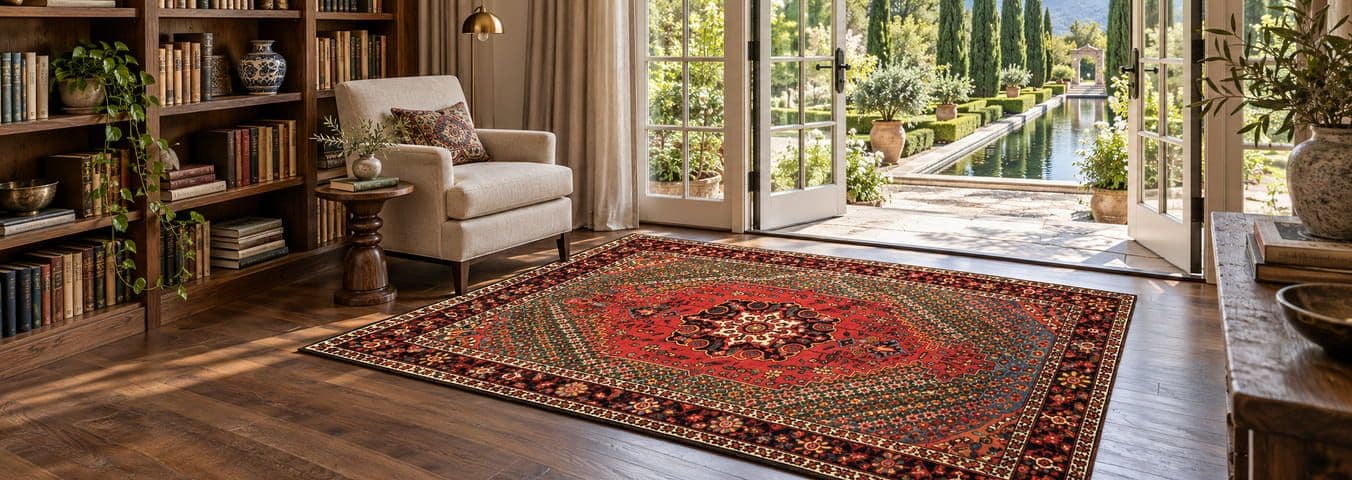
Persian gardens have inspired art, architecture and poetry for centuries. Their influence can also be seen in Persian rugs, where geometric layouts, flowing waterways, trees and flowers create patterns that reflect the beauty and symbolism of cultivated landscapes.
Some Persian carpets represent gardens through clearly divided sections, while others use floral motifs and natural elements to suggest a connection with nature. Understanding this relationship reveals how traditional Persian weaving transforms ideas about landscape and harmony into textile art.
The Persian Garden: A Tradition of Harmony and Order
The traditional Persian garden is more than a decorative landscape. It reflects an approach to design that brings together nature, geometry, water and architecture.
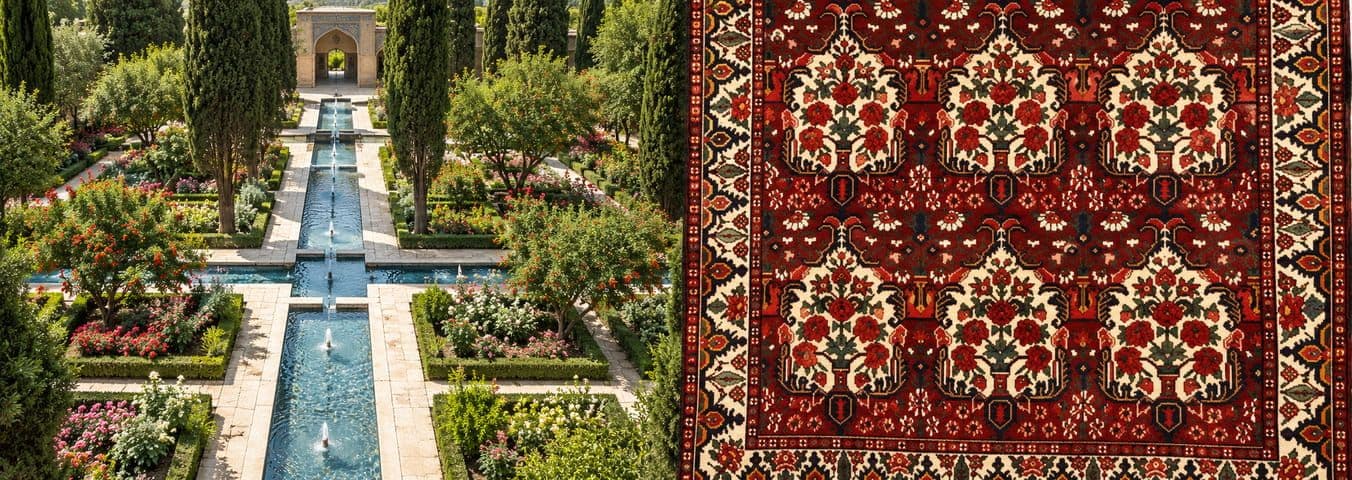
One important concept associated with Persian garden design is Chahar Bagh, meaning “four gardens.” In its classic form, a garden is divided into four sections by intersecting paths or waterways. The arrangement creates a balanced composition in which each part relates to the whole.
Water channels, shaded walkways, trees and flowering plants contribute to the garden's structure and atmosphere. The result combines natural beauty with careful planning.
These principles also offer a useful way to understand certain Persian rug designs. A carpet can organise its motifs within a defined framework, creating a sense of balance and movement across a flat surface.
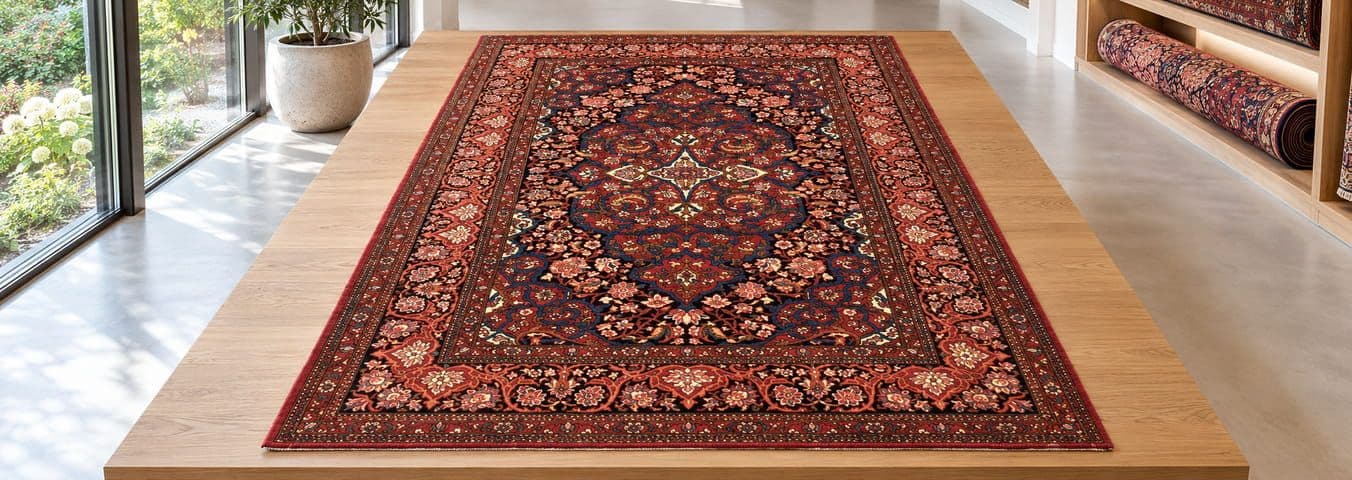
How Persian Garden Designs Appear in Carpets
Not every Persian rug depicts a garden literally. However, several design elements found in traditional carpets can be connected to the visual language of Persian gardens.
Geometric Layouts and Divided Sections
Some garden-inspired carpets are organised into a grid of rectangular or square compartments. Each section may contain a different tree, flower, shrub or decorative motif.
The divisions can resemble the carefully planned structure of a formal garden. Repeated shapes create rhythm, while variations within each compartment introduce visual interest.
The precise arrangement also demonstrates the skill of the weaver, who must maintain the overall composition while working through thousands of individual knots.
Waterways and Central Axes
Water is an important feature of many traditional Persian gardens. In garden-style carpets, narrow lines and intersecting bands may suggest channels that divide the design into sections.
A central axis can organise the composition and guide the eye across the carpet. Although some designs clearly evoke a garden plan, others use similar geometry for purely decorative purposes.
Trees, Flowers and Plants
Trees and flowering plants are among the most recognisable elements of Persian carpet design. Cypress trees, flowering branches, vines and stylised blossoms appear in many regional traditions.
These motifs may represent the abundance and beauty of nature, but their meanings depend on the design and cultural context. A tree motif alone does not necessarily indicate that a rug depicts a complete garden.
The Influence of Persian Gardens on Regional Rug Traditions
Garden-inspired compositions are not limited to one Persian weaving centre. Different workshops and regional traditions interpret floral and geometric elements in their own ways.
Isfahan Rugs
Isfahan rugs are often associated with refined floral compositions, balanced symmetry and intricate detailing. Their designs may include flowering vines, central medallions and carefully arranged botanical motifs.
Although many Isfahan rugs are not literal garden carpets, their organised patterns reflect an appreciation for proportion and decorative harmony.
Kashan Rugs
Kashan rugs are known for their rich floral designs, elaborate medallions and detailed borders. Floral arrangements may evoke cultivated landscapes, even when the overall composition follows a central-medallion format rather than a garden grid.
Tabriz Rugs
Tabriz rugs feature a wide variety of designs, including intricate floral patterns, medallions and pictorial compositions. Their diversity demonstrates how Persian weaving traditions can adapt familiar natural motifs to different artistic approaches.
These examples illustrate the variety of Persian carpet design. Regional attribution should always consider construction, materials, knotting and other characteristics rather than relying on patterns alone.
What Do Garden Motifs Symbolise?
The natural elements found in Persian rugs can carry cultural and artistic associations. Their interpretations are not universal, but several motifs are frequently linked with particular ideas.
- Trees: Growth, continuity and the natural world.
- Flowers: Beauty, renewal and seasonal change.
- Water: Life, refreshment and abundance.
- Gardens: Order, balance and an idealised relationship between people and nature.
These associations can enrich the way a rug is understood, but they should not be treated as fixed meanings that apply to every design.
How to Recognise a Persian Garden Carpet
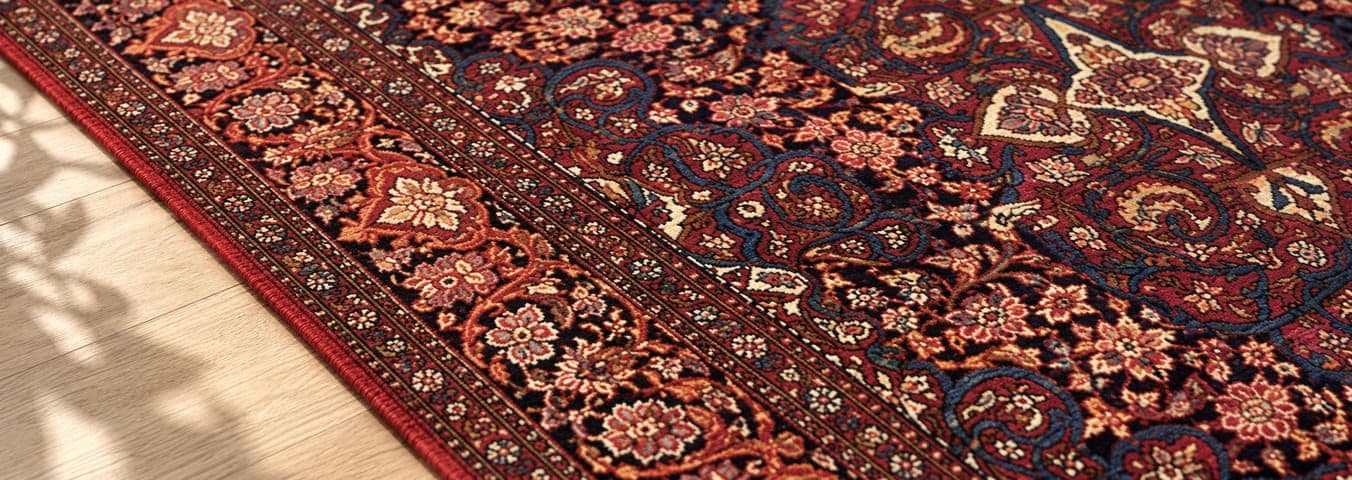
A garden carpet usually has a more structured layout than a rug decorated only with scattered floral motifs. Look for repeated compartments, pathways, intersecting lines and plant motifs arranged within a larger landscape-like composition.
However, not every carpet with trees and flowers is a garden rug. Some designs are floral compositions, while others use geometric divisions without representing an actual landscape.
The back, knotting technique, materials, colour palette and overall construction can provide additional clues about a rug's origin and tradition. When identification matters, it is best to assess these features together.
Persian Garden Designs in Contemporary Interiors
Garden-inspired Persian rugs can bring structure, colour and a connection with nature into modern interiors. Their repeating sections and botanical motifs work particularly well in spaces where the rug can be appreciated as a central design element.
A detailed garden pattern can become the focal point of a room, while simpler floral designs may complement natural materials, neutral colours and contemporary furniture.
At RugEast, exploring the designs and craftsmanship of Persian rugs helps reveal the stories behind their patterns. Whether a carpet depicts a carefully divided garden or simply celebrates flowers and trees, it offers a glimpse into the artistic traditions that have shaped Persian textile design.
Frequently Asked Questions
1. What is a Persian garden carpet?
A Persian garden carpet is a rug whose design evokes a garden, often through divided compartments, pathways, water channels, trees and flowers. Not every floral Persian rug is a garden carpet.
2. What is the Chahar Bagh design?
Chahar Bagh means “four gardens” and refers to a traditional garden layout divided into four sections, often by intersecting pathways or waterways. This concept can help explain the structure of some garden-inspired carpet designs.
3. Which Persian rugs feature garden-inspired patterns?
Garden-like and botanical elements appear in several Persian weaving traditions, including some rugs from Isfahan, Kashan and Tabriz. The exact design varies by region, workshop and period.