
Persian Gabbeh Rugs: Heritage, Craftsmanship, Motifs and a Practical Buying Guide
A Gabbeh is more than a simple rug with an uncluttered pattern. It is a hand-knotted piece of textile culture associated with the Iranian Zagros Mountains and neighbouring regions.
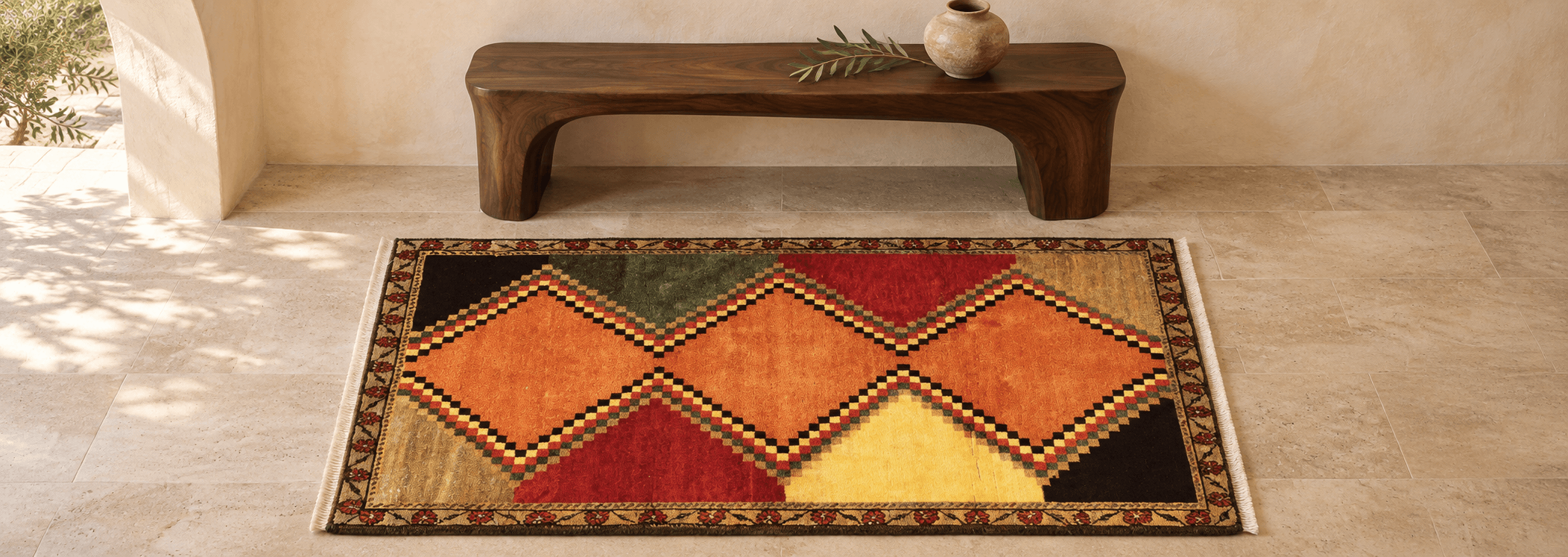
A Gabbeh is more than a simple rug with an uncluttered pattern. It is a hand-knotted piece of textile culture associated with the Iranian Zagros Mountains and neighbouring regions. Its character often comes from what it leaves out: there may be no elaborate border, formal central medallion or perfectly mirrored composition. Instead, broad fields of colour, simple geometry, stylised animals and a lively, sometimes deliberately irregular design give each rug its own presence.
For contemporary homes in Germany and across Europe, that individuality can be especially appealing. A Gabbeh can soften a minimal room, introduce colour without overwhelming the space, or complement natural materials such as timber, linen and wool. But the word “Gabbeh” does not, by itself, guarantee a particular place of origin, age or level of quality. This guide explains what to look for—and what not to assume.
1. What is a Gabbeh rug?
Gabbeh (also written as Gabba) generally refers to a hand-knotted pile rug with a relatively substantial pile and a design that is often open, bold and freely composed. Large areas of colour, geometric shapes and simplified figures are common. The Encyclopaedia Iranica describes Gabbeh as a pile rug whose design often makes use of open colour fields and a playful approach to geometry.
Traditional Gabbehs are often less finely knotted than formal urban carpets. That is not automatically a flaw: the structure, pile and feel answer a different aesthetic and practical purpose. A good Gabbeh should therefore not be judged by knot count alone. Wool quality, yarn preparation, knotting, structural stability, finishing and the overall balance of the rug all matter.
Today, the name Gabbeh is also used in the trade for contemporary rugs and pieces made outside Iran. If you are specifically looking for an Iranian Gabbeh, ask for the country of manufacture and, where it can be substantiated, the regional attribution.
2. Origins and cultural background
The Gabbeh tradition is associated with nomadic and rural ways of life in Iran’s Zagros mountain region. Relevant areas include parts of Fars and Lorestan, and communities including Qashqai groups as well as other Kurdish- and Luri-speaking populations. The history is layered; it would be misleading to attribute every Gabbeh exclusively to one ethnic group or one locality.
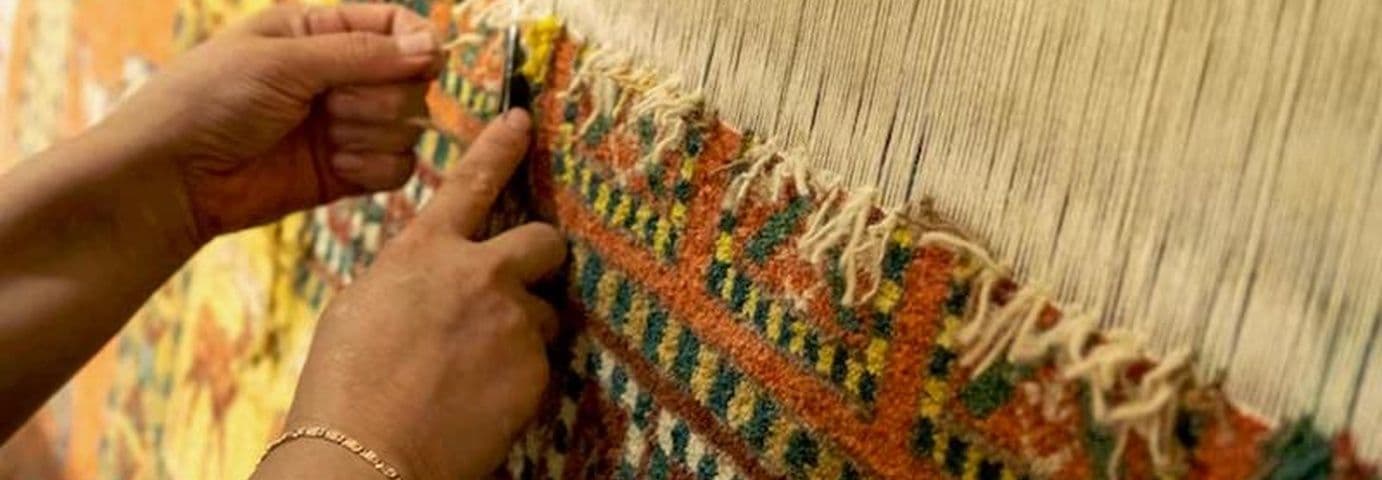
Qashqai weaving is particularly prominent in the international image of Gabbeh. Nomadic life, the use of locally sourced or family-produced wool, and the transmission of textile knowledge across generations all form part of the wider weaving culture of Fars. In 2010, UNESCO inscribed the traditional skills of carpet weaving in Fars on its Representative List of the Intangible Cultural Heritage of Humanity. Its documentation describes stages that include shearing, spinning, the use of natural dyes, design and the passing on of skills.
Historically, a Gabbeh was not simply a decorative export object. It belonged to everyday life—as a floor covering, a warm place to sit or sleep, and a practical textile that could be moved. Its design did not necessarily have to follow a workshop template or a fixed pattern book. That closeness to daily life helps explain its direct and personal character.
3. Qashqai Gabbeh and other regional traditions
Qashqai Gabbehs are especially well known, but not every Iranian Gabbeh is a Qashqai rug. Related pile-rug traditions have also been made in other parts of the Zagros and among other communities. Regional names and terminology vary; related terms such as Gava or Khersak also appear in specialist literature.
For buyers, it is useful to distinguish three descriptions:
Iranian Gabbeh means that manufacture in Iran is known or documented. Qashqai Gabbeh means that an attribution to the Qashqai tradition is supported by provenance information or reliable specialist knowledge. Gabbeh in the Qashqai style describes a design inspired by that tradition without claiming that Qashqai origin has been established.
A similar pattern is not proof of a particular regional origin. Good product descriptions should make that distinction clear.
4. Motifs and design language
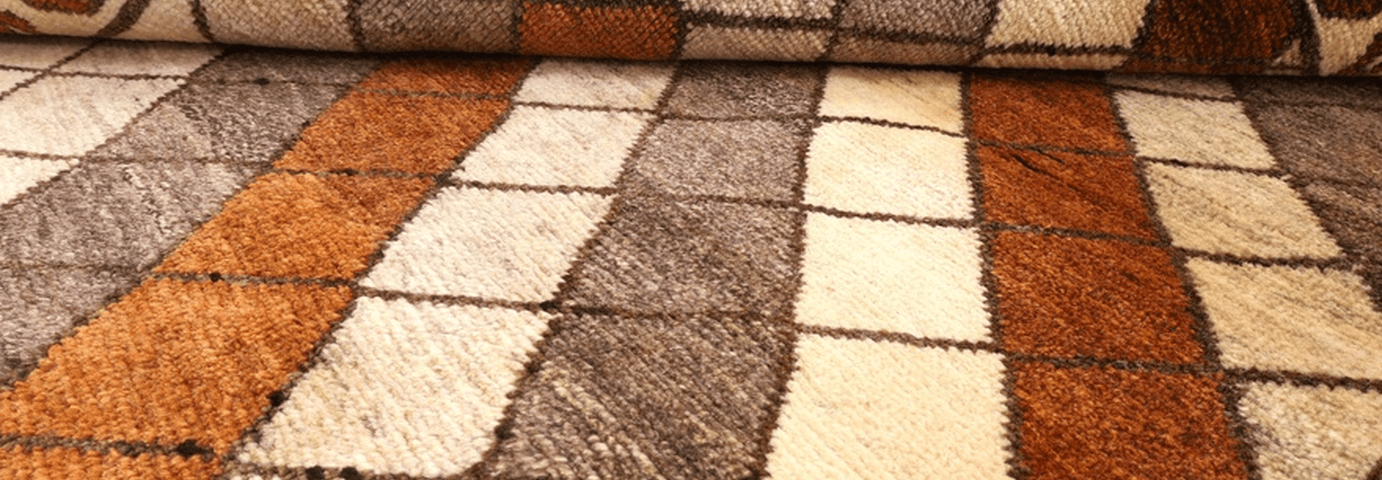
Geometry: Diamonds, squares, rectangles, stepped forms and simple lines recur in many designs. They may appear individually or in rows and fields. Their visual clarity is one reason Gabbeh rugs sit comfortably in contemporary interiors.
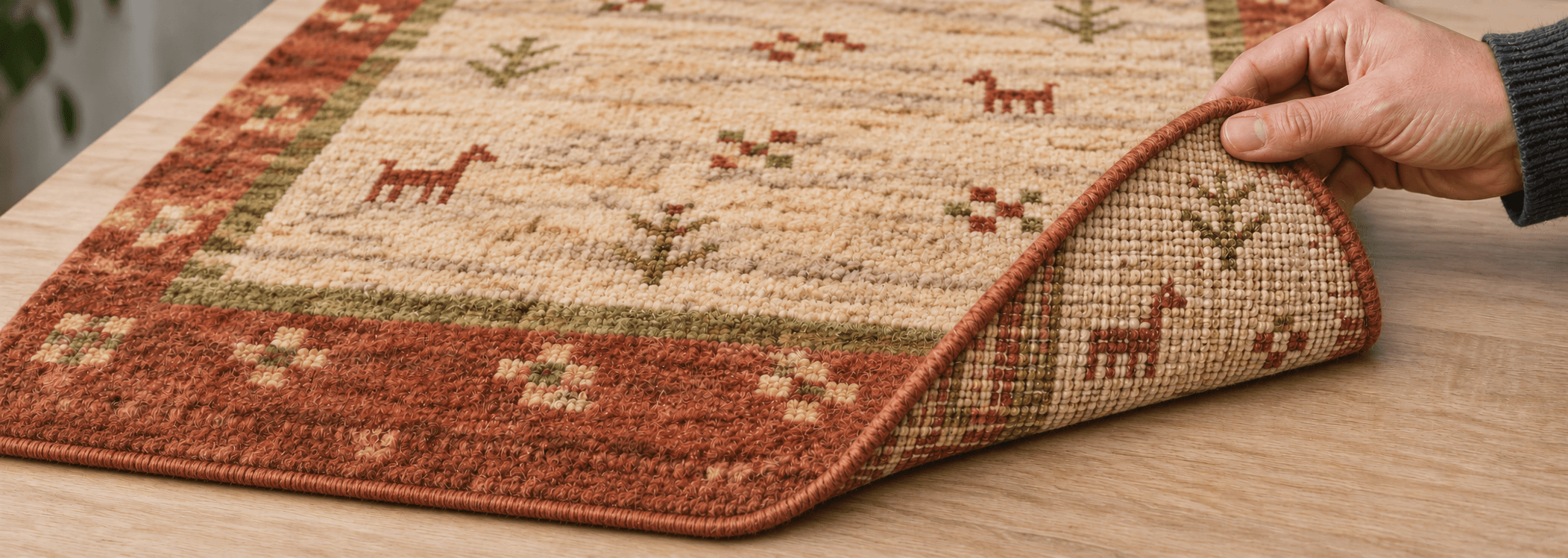
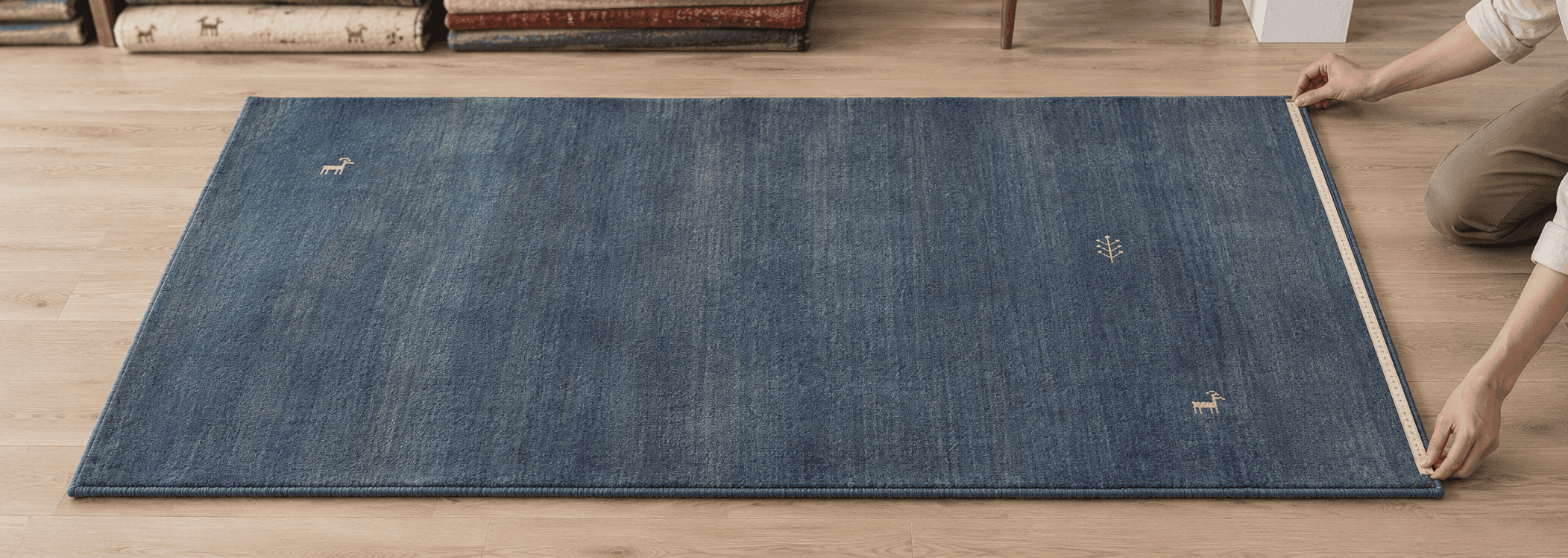
Animals and figures: Stylised goats, birds and other familiar creatures may be reduced to a few lines or blocks of colour. Human figures and abstracted forms also occur. It is best not to assign a fixed symbolic meaning to every motif: interpretations can vary by region, family, maker and individual rug.
Trees, plants and the natural world: Trees and other organic forms may evoke landscape, fertility or the weaver’s surroundings. A single definitive translation is rarely possible. A careful description starts with what is visibly present and labels deeper interpretations as possibilities, not facts.
Free composition: Many traditional Gabbehs have a strong sense of design freedom. Their compositions may be spontaneous rather than symmetrical. Small variations between repeated motifs are not necessarily mistakes; they can be part of the maker’s individual hand.
5. Wool, yarn and construction
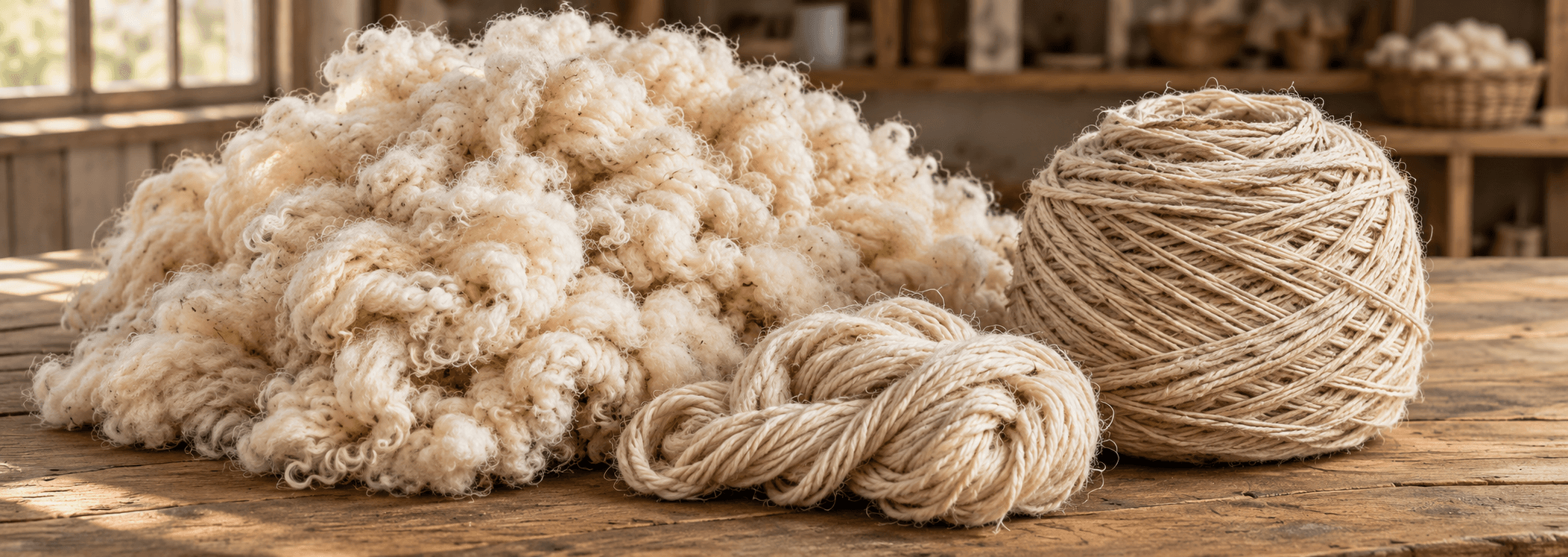
Wool is the principal material in many traditional Gabbehs. Its quality affects the handle, resilience, surface and suitability for everyday use. Good rug wool should feel appropriate to its intended use and have a degree of natural spring. Fibre quality, sorting and preparation matter as much as the word “wool” on a label.
Handspun yarn can show subtle variations in thickness and twist, creating a lively surface. Such variation is not an automatic quality certificate: fibre condition, preparation and yarn strength remain important.
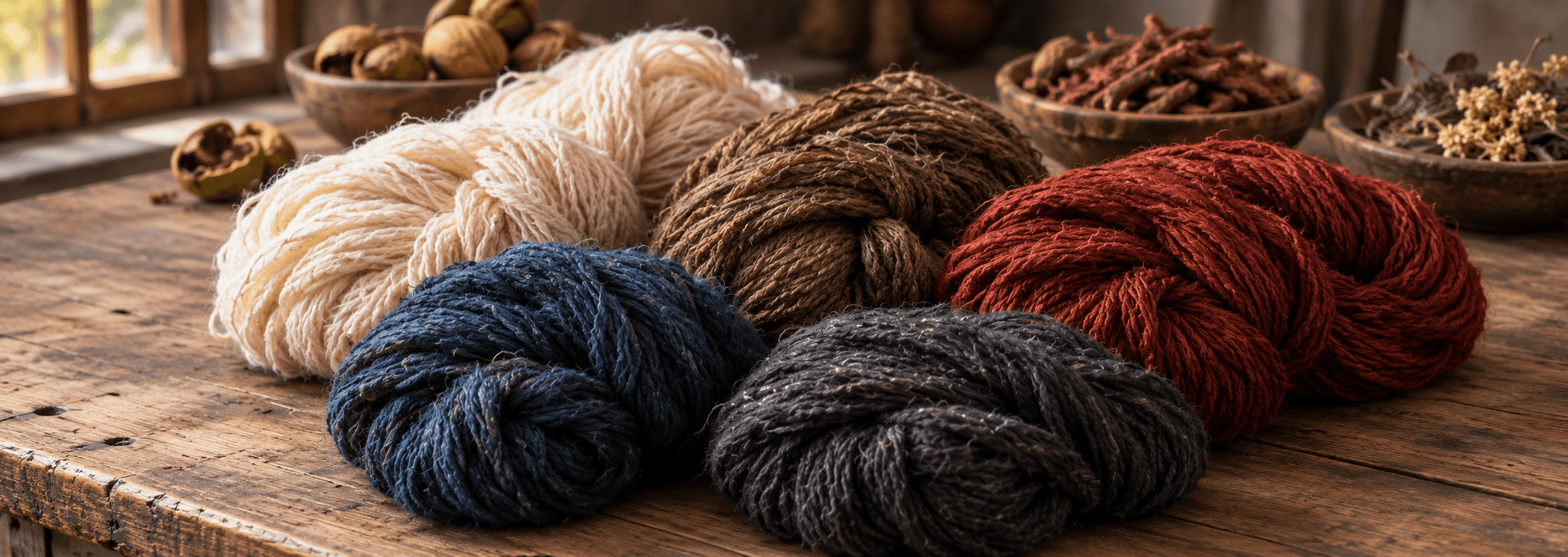
Natural wool shades may include cream, beige, brown, grey and black. These may be described as undyed or naturally coloured wool. The precise palette depends on the animal, fibre batch and sorting.
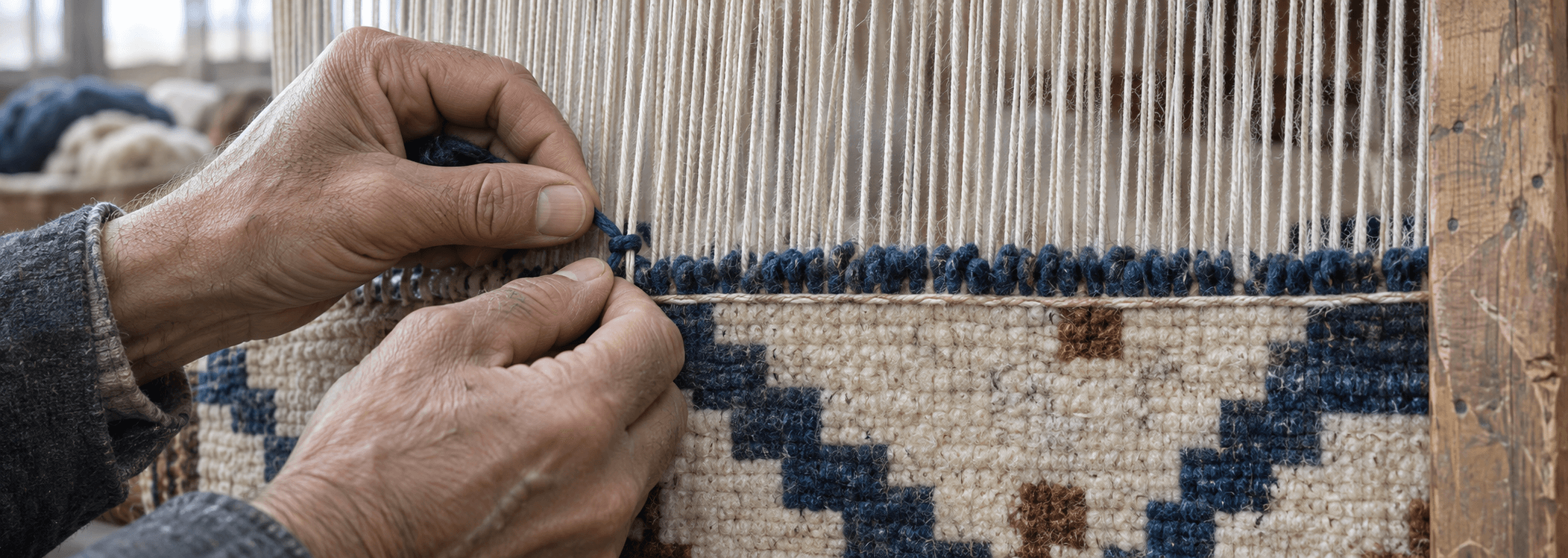
Pile, warp and weft: The pile is the visible surface formed by the knots. The warp runs lengthwise through the rug, while the weft passes across its width and helps secure the structure. Materials can differ from one rug to another, so a reliable description should identify the pile, warp and weft separately where known.
6. Natural colours and dyeing
Gabbeh palettes range from undyed wool shades to strong reds, blues, yellows and greens. Some traditional rugs use plant- or mineral-based dyes, while others may use synthetic dyes or a combination. Colour alone cannot establish which dye was used.
An earthy or muted appearance is not proof of vegetable dyeing. Likewise, “natural wool” may simply mean that the fibre has not been dyed. Specific claims about dye materials should be made only when supported by credible product information or specialist testing.
7. How to assess quality
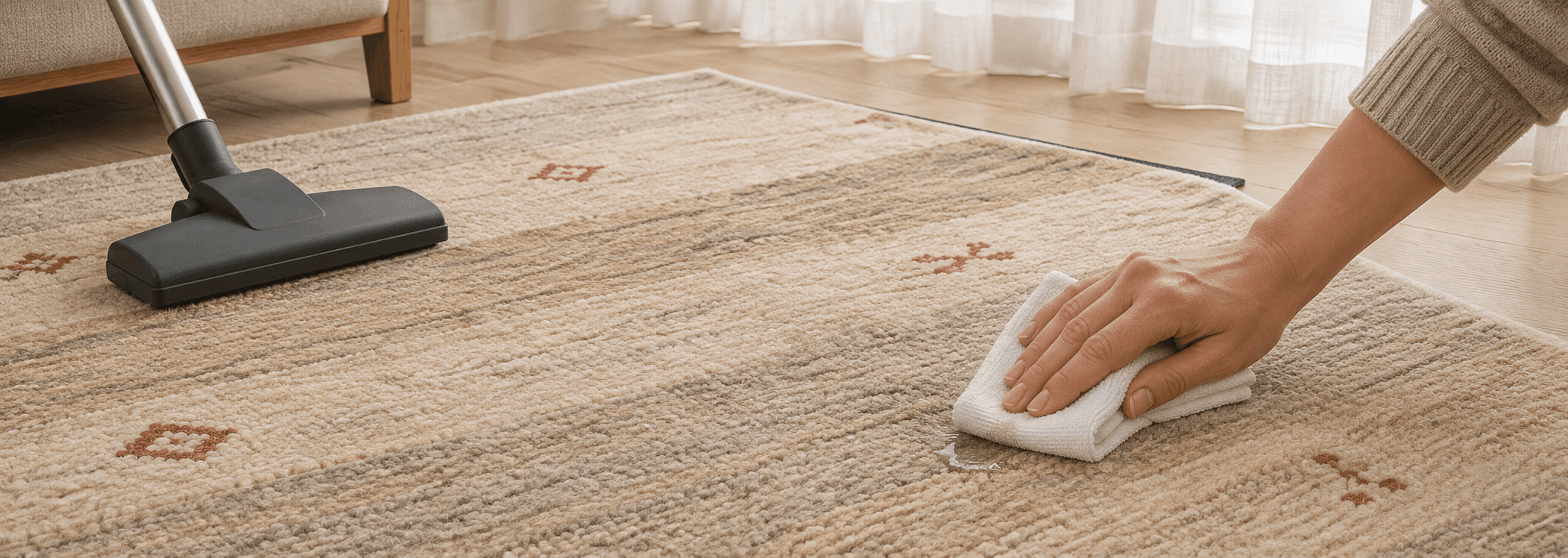
Look at the rug as a whole rather than relying on a single number. Check whether the pile feels reasonably consistent for its style, whether the sides and ends are secure, whether the rug lies properly, and whether there are unexplained weak areas or repairs. Turn it over: the reverse can help you understand the knotting and construction.
Some irregularity is normal in handmade textiles. The key distinction is between characterful variation and structural problems. Loose edges, unstable foundations, severe distortion, bald patches or knots that are pulling out deserve closer inspection.
Quality is a combination of material, construction, finishing, condition and suitability. A Gabbeh intended for a relaxed living space need not imitate the fineness or formal symmetry of a classical city carpet.
8. Gabbeh, classical rugs and kilims: what is the difference?
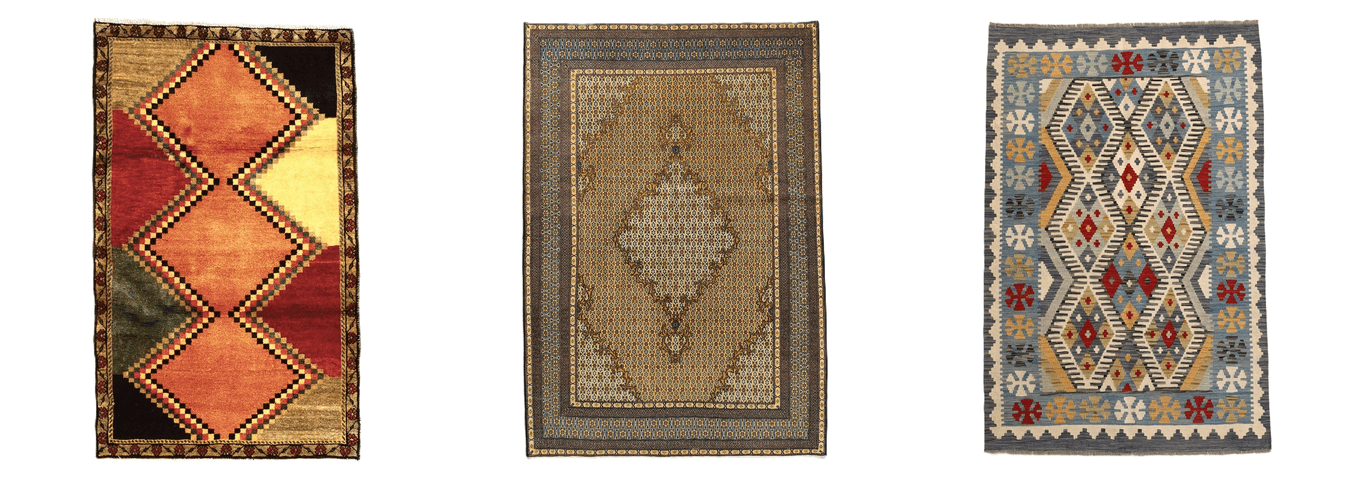
A Gabbeh is a pile rug: its surface is made by knots that create a visible pile. Many classical Persian city rugs are also pile rugs, but they often have more intricate patterns, formal borders and denser knotting. A kilim, by contrast, is a flatweave without a knotted pile, so it has a flatter surface and a different construction.
These are different textile forms, not a simple ranking from better to worse. The right choice depends on the look, feel, room and practical needs.
9. Gabbeh in European interiors
Scandinavian and minimalist: Cream, beige, grey and other natural shades complement pale timber, linen, clean-lined furniture and restrained palettes. The rug adds texture and warmth without dominating the room.
Modern and urban: A richly coloured Gabbeh can become the focal point in a pared-back living room. It often works best when sofas, walls and larger furniture remain relatively neutral.
Bohemian and eclectic: Animal motifs, geometry and expressive colours can sit naturally alongside plants, vintage furniture, ceramics and layered textiles. This is a setting where a more personal, collected look can work well.
Country and natural materials: Wool, wood, stone and linen make a coherent combination. A Gabbeh in earthy shades can reinforce a relaxed, tactile atmosphere.
10. Choosing the right size
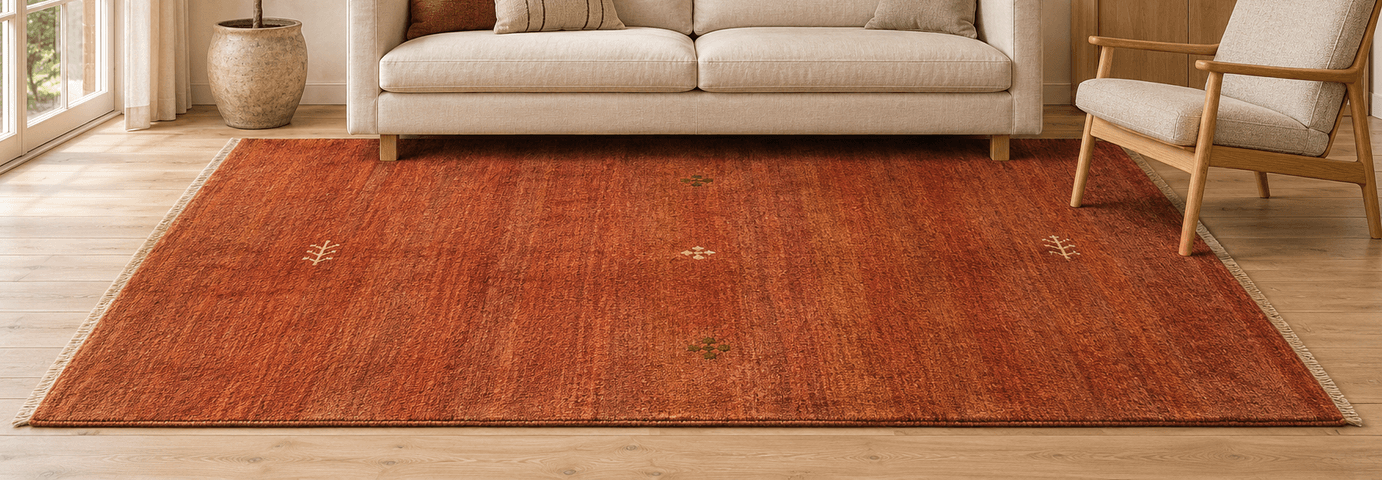
Measure the room before ordering. In many living rooms, the arrangement feels more connected when at least the front legs of the sofa and chairs sit on the rug. A very small rug floating in front of the sofa can make the seating area feel visually disconnected.
In a bedroom, a Gabbeh can sit beside the bed or at its foot. Smaller formats can work in an entrance, provided the rug lies securely and does not obstruct the door.
For a dining area, a thick, high-pile Gabbeh may be less practical: chairs can be harder to move and crumbs can settle into the pile. A flatter weave or lower-pile rug is often easier to live with.
11. A practical buying checklist
Before placing an order, look for clear information on: exact dimensions in centimetres; country of manufacture and any substantiated regional origin; pile, warp and weft materials; whether the rug is hand-knotted or machine-made; dye information where known; condition, repairs and signs of use; clear photographs of the front, reverse, edges and details; and shipping and return terms.
For online purchases, genuine photographs of the actual rug are particularly important. Check that colours are represented as neutrally as possible and that the dimensions are clear. If anything is uncertain, ask for close-up photographs or a short video showing the pile, surface and reverse.
12. Care and cleaning
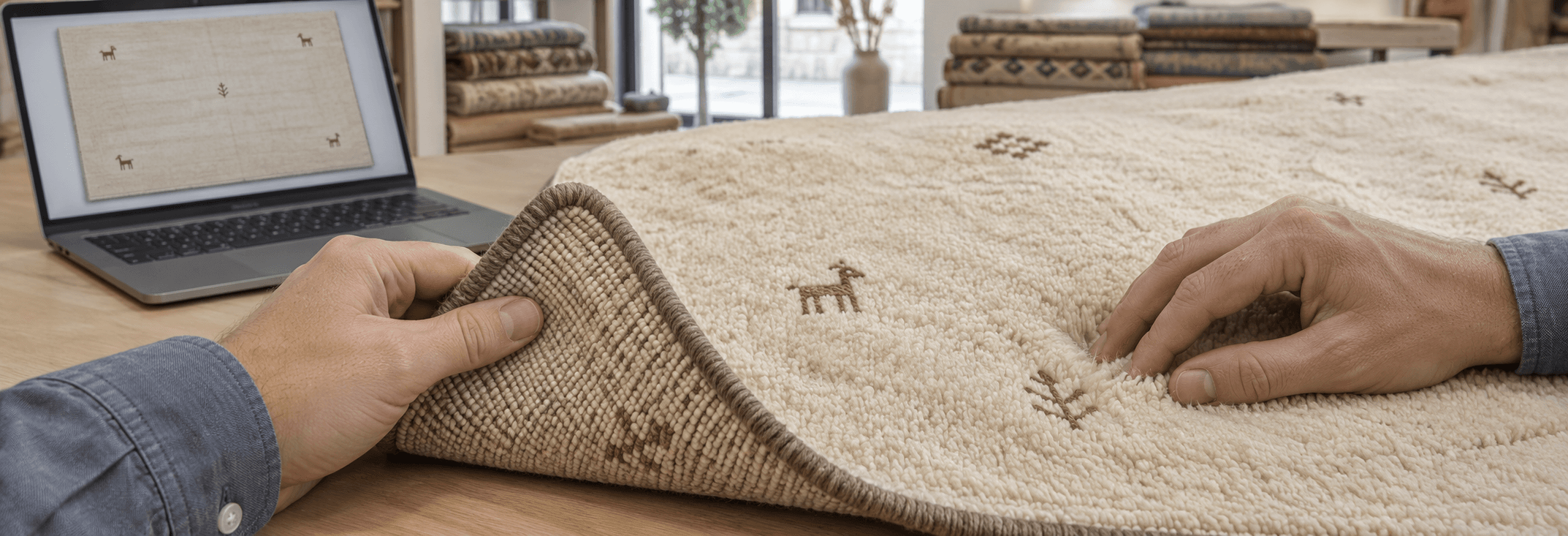
Regular, gentle vacuuming is usually sufficient for everyday care. Use moderate suction and avoid aggressive rotating brushes, especially around fringes and edges. Where possible, vacuum in the direction of the pile.
Spills: Blot liquid promptly with a clean, light-coloured cloth. Do not scrub; rubbing can drive soil deeper into the fibres and may affect the colours. For coloured, oily or dried stains, seek professional advice.
Shedding: Some initial shedding can occur with new wool rugs. Severe thinning, bare patches or tufts being pulled out are different and should be assessed.
Professional washing: Before washing, the material, colourfastness, soiling and condition should be checked. Unsuitable detergents, incorrect temperatures or inadequate rinsing can damage wool and dyes. Older, repaired or colour-sensitive rugs should be entrusted to a specialist.
Sunlight, moisture and underlay: Prolonged direct sunlight can alter colours. Persistent dampness can lead to odours and mould. A suitable anti-slip underlay helps prevent movement and reduces friction against the floor.
13. Gabbeh rugs and underfloor heating
Wool has insulating properties. A particularly thick, high-pile Gabbeh may reduce heat transfer from underfloor heating. Suitability depends on pile height, density, underlay and the heating system’s specifications. Check the manufacturer’s guidance and consider a flatter rug if heat transfer is a priority.
14. Price and value: what affects the cost?
Price can reflect size, wool quality, yarn, knotting, finishing, design, condition, documented origin and current demand. A larger rug is not automatically more valuable than a smaller one, and a high price does not prove age or exceptional provenance.
Older or antique Gabbehs may interest collectors when age, origin and condition are plausible and well documented. For everyday use, a newer, well-made rug may be the more practical choice. “Hand-knotted”, “old”, “antique” and “rare” are different claims and should not be treated as interchangeable.
15. Sustainability and responsible buying
Wool and handcraft can contribute to long-lasting products, but “natural” does not automatically mean “sustainable”. A responsible assessment considers animal husbandry, wool origin, dye processes, water and energy use, working conditions, transport, durability and repairability.
A rug that is used carefully and repaired when necessary may serve for many years. Buyers should still look for transparent information and treat broad environmental claims with healthy caution.
16. Why Gabbeh rugs remain relevant
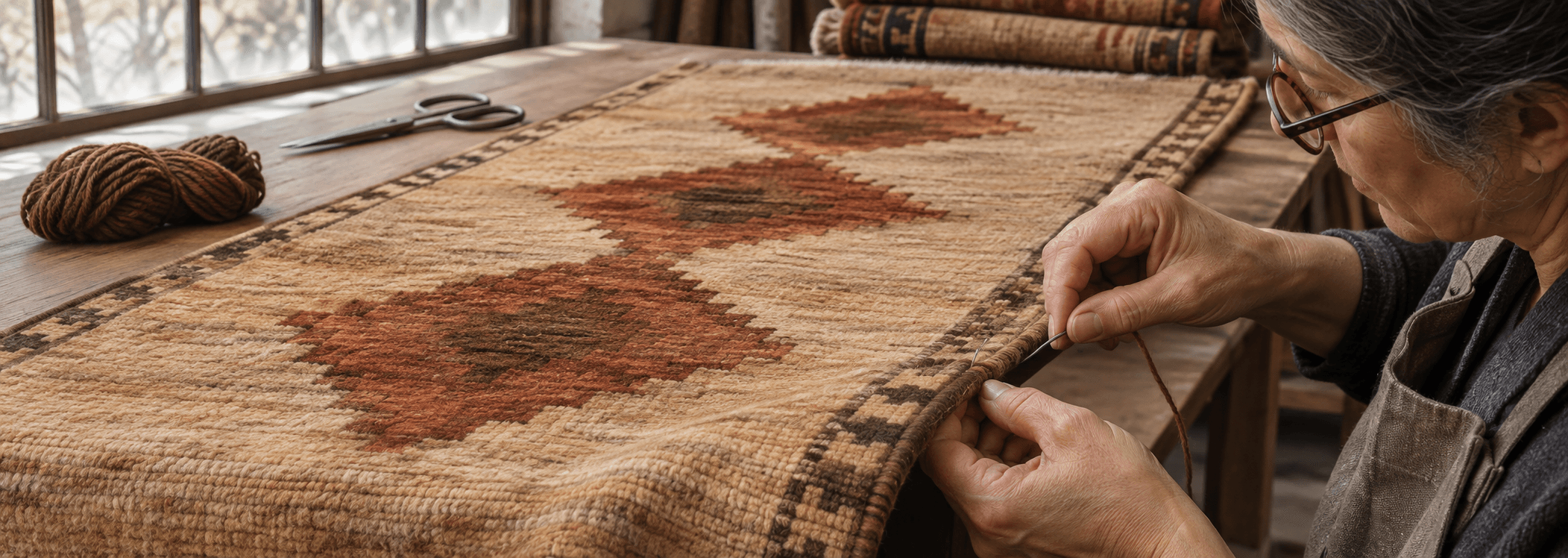
Gabbeh brings together a strong craft tradition and a visual language that works in many contemporary homes. Open spaces, expressive colour and the visible hand of the maker offer an alternative to standardised, factory-like interiors.
At Rugeast, the aim is not simply to show an attractive rug, but to explain it honestly: Where was it made? What materials were used? What is known about the dyes? How does the pile feel? And what kind of room or use is it suited to?
A good Gabbeh does not have to be perfectly symmetrical. It should, however, be well made, accurately described and suitable for the way it will be used.
Frequently asked questions
What does the word Gabbeh mean? Gabbeh generally describes a hand-knotted pile rug often associated with a substantial pile and a relatively open, free design.
Are all Gabbehs made by the Qashqai? No. Qashqai Gabbehs are especially well known, but related traditions exist among other communities and in other parts of the Iranian Zagros.
Is every Gabbeh made entirely of wool? No. The pile is often wool in traditional examples, but the warp and weft may also be wool or other fibres. Material details should be stated separately.
Do natural-looking colours prove that plant dyes were used? No. Undyed wool can have natural shades, and an earthy palette does not prove vegetable dyeing. A specific dye claim needs evidence.
Does a Gabbeh suit a modern home? Yes. Natural shades and geometric designs work well in minimalist, Scandinavian and contemporary spaces; more colourful examples can act as a focal point.
How is a Gabbeh different from a kilim? A Gabbeh has a knotted pile. A kilim is a flatweave without pile and has a different surface and construction.
Are Gabbehs easy to care for? Everyday care is generally straightforward: vacuum gently, blot spills promptly and use specialist cleaning when needed. Follow advice for the specific rug.
Are older Gabbehs always more valuable? No. Age alone guarantees neither quality nor market value. Condition, provenance, rarity, design and supporting evidence also matter.
Conclusion: a rug with its own character
A Persian Gabbeh brings more than colour and warmth to a room. It also carries a textile culture in which knowledge of materials, practical skill and individual design are closely connected.
When choosing one, look beyond the pattern. Materials, construction, origin, condition and care requirements all belong in the decision. That turns an impulse décor purchase into an informed choice: a rug with character, made to be part of everyday life.
References and further reading
- Jean-Pierre Digard and Carol Bier, “Gabba,” Encyclopaedia Iranica, Vol. X, Fasc. 3, pp. 237–239, published 15 December 2000; updated 29 May 2013. https://www.iranicaonline.org/articles/gabba/
- UNESCO, “Traditional skills of carpet weaving in Fars,” inscribed on the Representative List of the Intangible Cultural Heritage of Humanity in 2010. https://ich.unesco.org/en/RL/traditional-skills-of-carpet-weaving-in-fars-00382
- UNESCO, “Photos: Traditional skills of carpet weaving in Fars,” documentation of shearing, spinning, natural dyeing and weaving. https://ich.unesco.org/en/6-representative-list-00335?id=00382&include=slideshow_inc.php
- UNESCO, “Traditional Skills of Carpet Weaving in Fars,” nomination file No. 00382. https://ich.unesco.org/doc/src/07404-EN.pdf
Editorial note: Regional attributions, age statements and claims about plant dyes should be made for an individual rug only when supported by product documentation or specialist examination.