
Arak Rugs: History, Designs & Persian Craftsmanship
Arak rugs are not defined by one single design or weaving style. The wider region includes several recognised weaving traditions, such as Sultanabad, Sarouk, Farahan and Mahal. Each has its own characteristics, although they share geographical and historical connections.
The History of Arak Rug Weaving
Located in central Iran, Arak has a long-standing reputation as one of the country's important carpet-producing regions. The city was formerly known as Sultanabad, a name that remains particularly familiar in the international antique rug market.
Although carpet weaving existed in the surrounding villages before the city became a major commercial centre, the industry expanded significantly during the second half of the nineteenth century. The growing interest of European and American buyers created new opportunities for local weavers and merchants.
One of the most influential developments was the arrival of Ziegler & Co., a European trading company that helped organise carpet production in Sultanabad for export markets. Its activities contributed to the international popularity of Sultanabad rugs, particularly during the late nineteenth and early twentieth centuries.
Today, antique Sultanabad carpets are recognised for combining traditional Persian weaving techniques with designs and colour palettes adapted to international tastes.
What Makes Arak Rugs Distinctive?
Arak rugs are not defined by one single design or weaving style. The wider region includes several recognised weaving traditions, such as Sultanabad, Sarouk, Farahan and Mahal. Each has its own characteristics, although they share geographical and historical connections.
Sultanabad rugs, in particular, are often appreciated for their spacious compositions, expressive floral patterns and balanced proportions. Compared with some more densely patterned Persian carpets, their designs can feel open and less crowded.
Their construction also varies. Many traditional examples feature wool pile on a cotton foundation, although materials and weaving techniques differ between individual rugs and production areas.
Traditional Patterns and Motifs
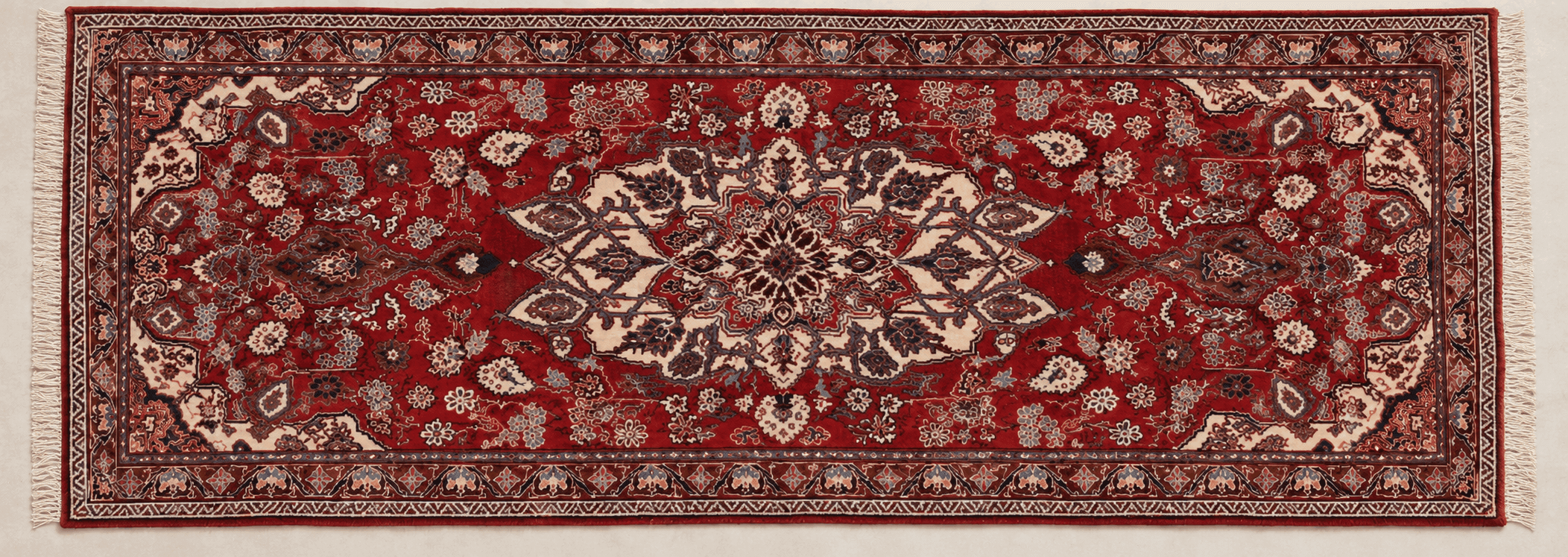
Floral designs are among the most recognisable features of many Sultanabad carpets. Rather than relying exclusively on a small central medallion, some designs cover much of the field with interconnected flowers, vines and palmettes.
Common motifs include:
- Floral arrangements: Large blossoms, leaves and decorative branches create flowing compositions.
- Palmettes: Stylised floral forms appear throughout the field and borders.
- Herati patterns: Repeating floral elements and curved leaves create a more structured design.
- Lattice patterns: Interconnected vines form repeating geometric frameworks filled with smaller flowers.
- Central medallions: Some rugs feature a prominent centre surrounded by decorative floral elements.
The region also has less widely known designs. The Mostofi pattern, for example, is associated with the Arak and Farahan weaving traditions. It features intricate floral elements arranged around paired spiral forms and is particularly interesting for its historical and artistic character.
Colours and Wool
The colour palette of Arak and Sultanabad rugs can be quite different from the stronger contrasts found in some other Persian weaving traditions.
Antique Sultanabad examples are often admired for their softer combinations of rose, terracotta, ivory, beige, muted blue and green. These colours give the carpets a balanced appearance that works well in both traditional and contemporary interiors.
Wool is the main material used for the pile in many traditional examples. Its texture, softness and natural lustre contribute to the overall appearance of the carpet. Cotton is also commonly found in the foundation of many workshop-produced rugs.
However, neither colour nor material alone can establish a rug's age, quality or authenticity. The condition, craftsmanship, construction and provenance should always be considered together.
Arak, Sultanabad, Sarouk and Farahan: Understanding the Differences
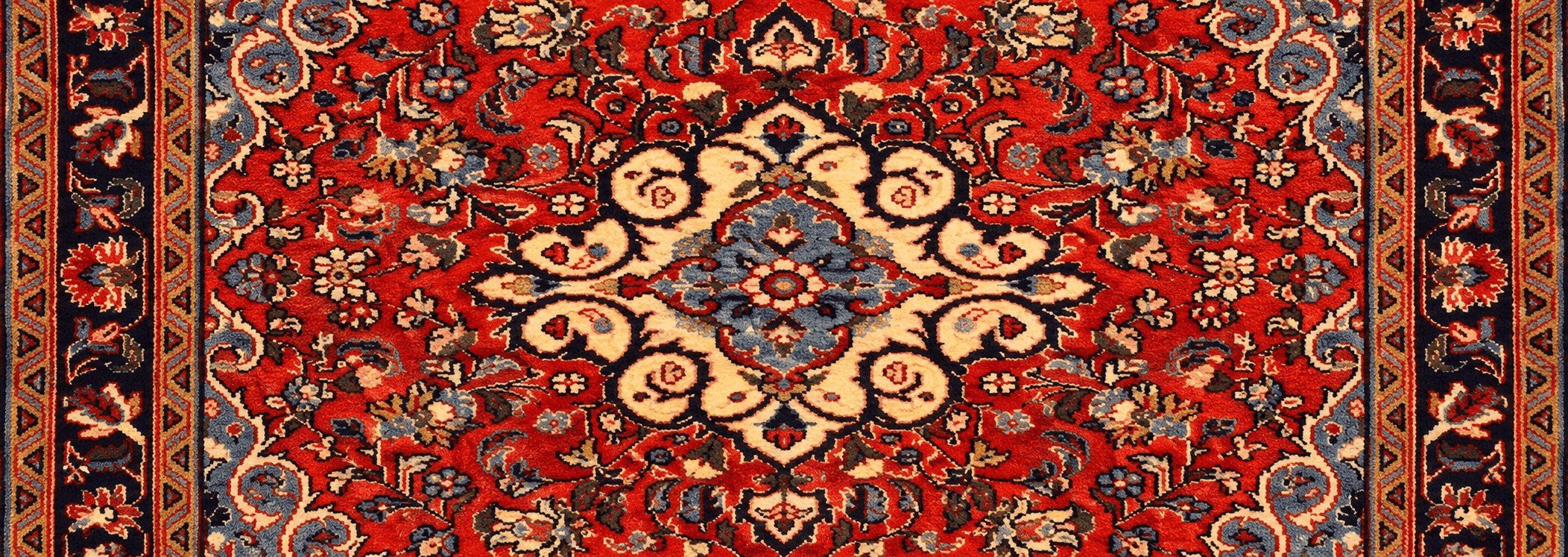
The names associated with central Iranian carpets can sometimes be confusing. Arak refers to the wider regional centre, while Sultanabad is its former name and an important historical rug designation.
Sarouk and Farahan are separate weaving traditions within the broader region. Sarouk rugs are often recognised for their rich colours and distinctive floral compositions, while Farahan carpets are appreciated for their detailed patterns and traditional character.
Mahal is another important regional designation, generally associated with a broader and often more varied group of village and workshop productions.
These categories are related, but they should not be treated as interchangeable. A rug's design, structure, materials and documented origin all help establish its more precise attribution.
The Appeal of Arak Rugs in Modern Interiors
The decorative character of many Sultanabad rugs makes them particularly versatile. Their large-scale floral patterns can create a strong visual centrepiece without making a room feel overly busy.
A spacious Sultanabad design can complement neutral furniture, wooden floors and natural materials. Softer colour combinations also make these rugs suitable for interiors that mix classic details with contemporary furniture.
Whether placed in a living room, dining area or spacious hallway, an Arak-region rug can introduce warmth, texture and a sense of Persian heritage.
Discover Persian Rug Heritage with RugEast
Arak's weaving tradition reflects an important chapter in the history of Persian carpets. From the commercial growth of Sultanabad to the distinctive patterns of its surrounding weaving communities, the region offers a rich variety of styles and craftsmanship.
At RugEast, we appreciate the history and individuality of handmade Persian rugs. Exploring regional traditions such as Arak and Sultanabad is a way to understand not only their decorative appeal but also the cultural heritage behind each woven piece.
Frequently Asked Questions
1. Are Arak rugs and Sultanabad rugs the same?
Sultanabad is the former name of Arak and is also widely used as a historical rug designation. However, Arak is a broader regional term that includes several weaving traditions.
2. What patterns are common in Sultanabad rugs?
Many Sultanabad rugs feature large floral motifs, palmettes, vine patterns, Herati designs and, in some examples, central medallions.
3. Are Arak rugs suitable for modern interiors?
Yes. Their spacious designs, floral compositions and often softer colour palettes make many Arak and Sultanabad rugs suitable for both traditional and contemporary spaces.