
Why Some Persian Rugs Have a Cotton Foundation and Others Wool
Understanding these materials can help you appreciate the craftsmanship behind a handmade Persian rug and make a more informed choice when buying one.
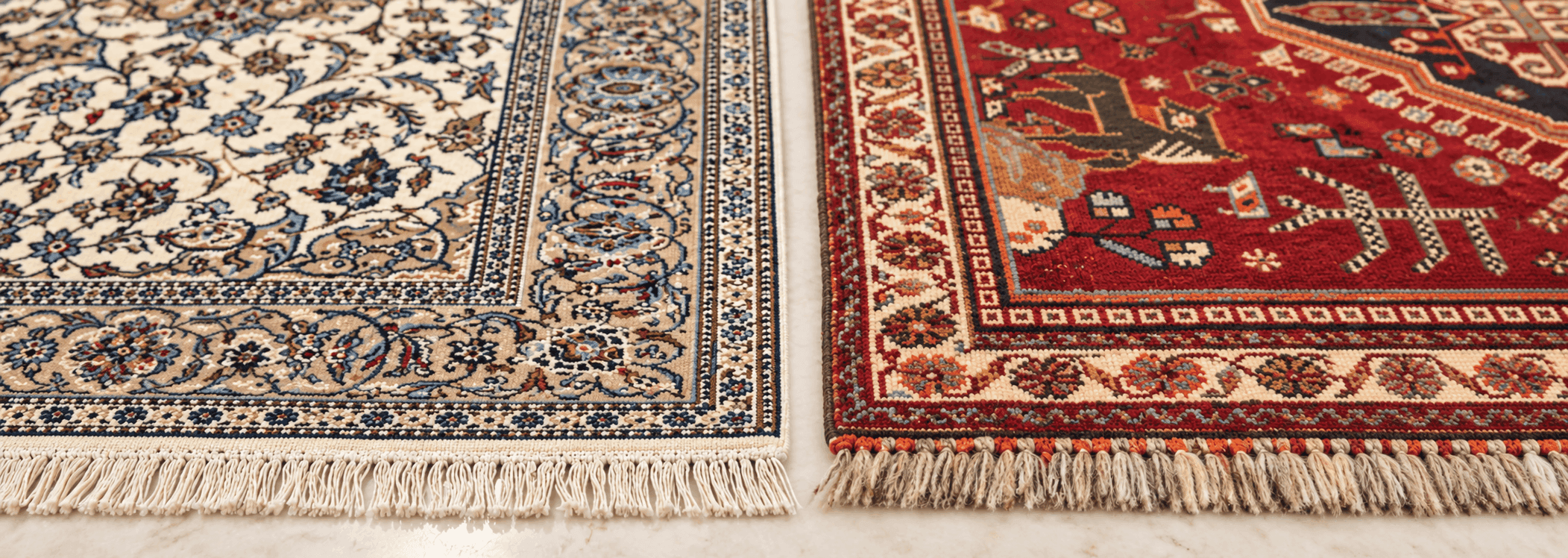
When examining a Persian rug, you may notice that some have a cotton foundation while others are built on wool. This difference is not simply a matter of appearance. The foundation plays an important role in how a rug is constructed, how it holds its shape and how it reflects the weaving traditions of its region.
Understanding these materials can help you appreciate the craftsmanship behind a handmade Persian rug and make a more informed choice when buying one.
What Is a Rug Foundation?
A rug's foundation is the structural framework that supports its pile and design. It usually consists of two main elements:
- Warp: The threads running lengthwise through the rug.
- Weft: The threads passed horizontally between the warps to secure the knots and build the structure.
In hand-knotted Persian rugs, the foundation is commonly made from cotton, wool or, in some weaving traditions, a combination of materials. Silk may also be used in certain fine or specialized rugs.
The foundation is different from the pile. The pile forms the visible surface of the rug, while the foundation provides the underlying structure.
Why Do Some Persian Rugs Have a Cotton Foundation?
Cotton is widely used in Persian city and workshop rugs, including many examples from regions such as Tabriz, Kashan and Isfahan. It is particularly useful when a weaver needs a stable framework for detailed designs.
Stability and Shape
Cotton yarn is generally less elastic than wool. When properly prepared and tensioned, cotton warps can help create a relatively stable foundation that supports precise patterns and consistent proportions.
This can be especially useful for rugs with intricate floral motifs, central medallions and detailed borders.
Fine and Detailed Weaving
Cotton foundations are common in many finely knotted Persian rugs. Their relatively firm structure can help weavers maintain the tension needed to produce detailed designs.
However, cotton does not automatically mean that a rug is finer or better. Knot density, yarn quality, weaving technique and the skill of the weaver all matter.
Practical Considerations
Cotton is a plant-based fibre and has different moisture and elasticity characteristics from wool. Its performance depends on the quality of the yarn, the construction of the rug and how the piece is used and maintained.
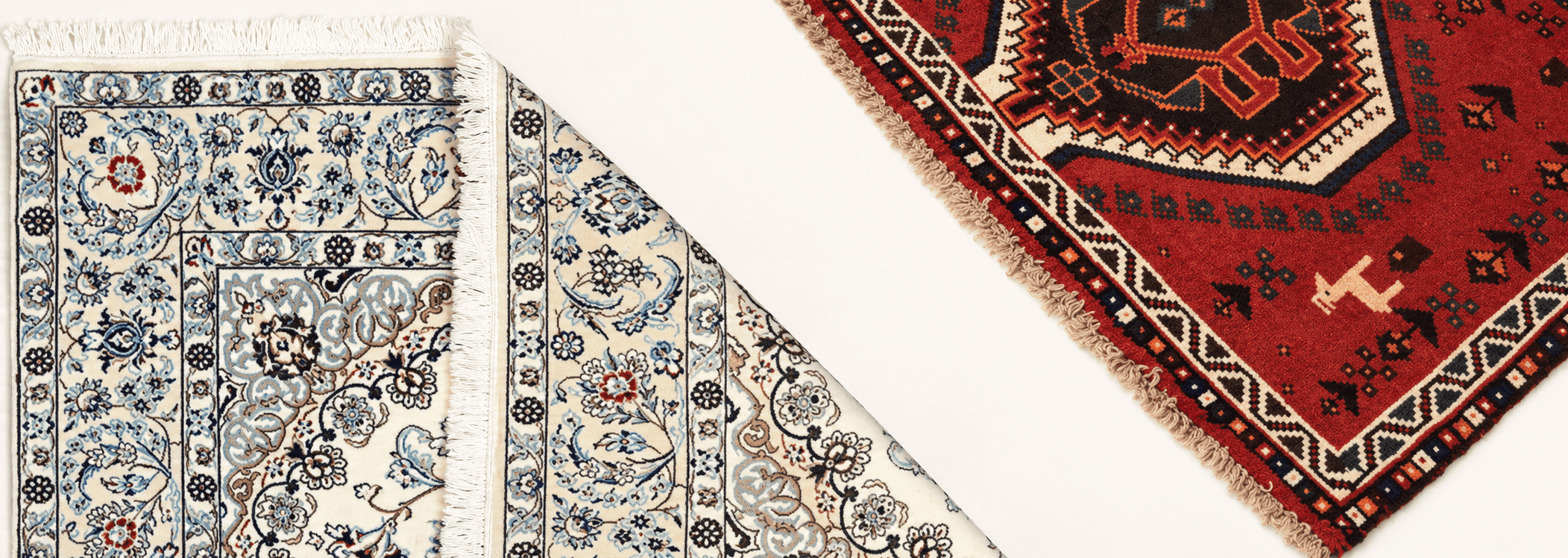
Why Do Other Persian Rugs Have a Wool Foundation?
Wool foundations are found in a range of Persian tribal, village and regional weaving traditions. Wool has been particularly important in communities where it is locally available and forms a central part of everyday textile production.
Flexibility and Resilience
Wool fibres naturally have elasticity. Depending on the yarn and construction, a wool foundation can create a more flexible textile structure than a comparable cotton foundation.
This flexibility may be useful in rugs made within traditional village or nomadic weaving environments, where locally available materials influence construction.
Connection to Regional Traditions
Some tribal and village rugs use wool for both the pile and parts of the foundation. The choice reflects local materials, established weaving practices and the intended use of the textile.
Nevertheless, wool foundations are not exclusive to tribal rugs, and cotton foundations are not exclusive to city rugs. These are common tendencies rather than absolute rules.
Cotton vs Wool: Which Foundation Is Better?
Neither material is universally superior. Each has different characteristics, and the overall quality of a Persian rug depends on much more than its foundation.
A cotton foundation can offer a stable framework for intricate designs. A wool foundation can provide flexibility and reflect a particular regional weaving tradition.
When evaluating a rug, consider several factors together:
- Construction: How securely and consistently is the rug woven?
- Materials: What is the quality of the foundation yarn and pile?
- Knotting: How well are the knots formed and secured?
- Condition: Are there signs of damage, distortion or previous repairs?
- Intended use: Will the rug be placed in a busy living area or displayed as a collectible piece?
- Origin: Does the construction correspond with the rug's claimed regional tradition?
A well-made wool-foundation rug can be an excellent piece, just as a well-made cotton-foundation rug can be. Neither material alone proves authenticity, age or value.
Can You Identify the Foundation by Looking at a Rug?
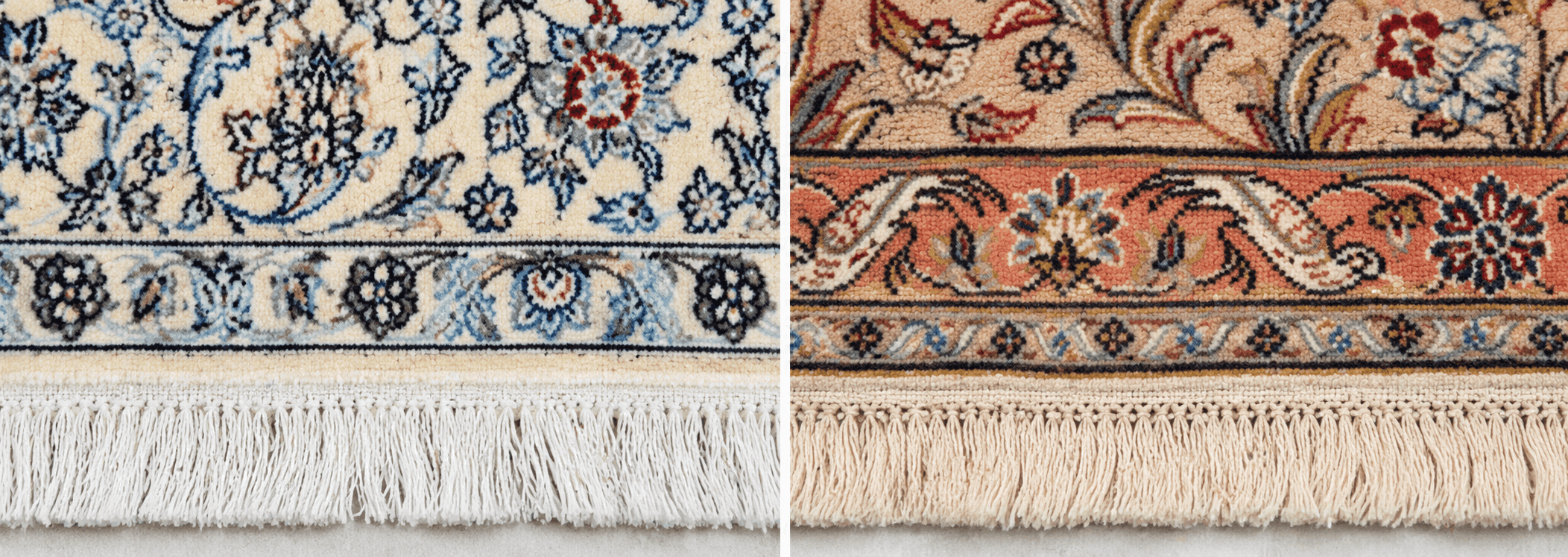
Sometimes, but not always. The back and edges of a rug may reveal clues about its foundation. Cotton and wool can differ in colour, texture, sheen and fibre structure, but these characteristics are not always easy to distinguish by eye.
Age, dirt, fading, repairs and previous washing can also change the appearance of the fibres. In some rugs, mixed materials make identification more complicated.
For a valuable or unusual piece, a specialist can examine the construction and, if necessary, identify the fibres more closely. The foundation should be considered alongside knotting, motifs, dyes, proportions and provenance rather than used as the sole basis for identification.
Understanding the Craftsmanship Behind Persian Rugs
The choice between cotton and wool reveals how Persian rug weaving adapts to different materials, techniques and regional traditions. Cotton often supports a stable structure for detailed workshop designs, while wool foundations appear in a variety of village and tribal weaving traditions.
At RugEast, understanding the materials and construction of a handmade rug is part of appreciating its character. Whether a rug has a cotton or wool foundation, its quality is best judged by looking at the complete piece: its craftsmanship, materials, condition and design.
Frequently Asked Questions
1. Are Persian rugs with cotton foundations better?
Not necessarily. Cotton can provide a stable foundation, but overall quality depends on the materials, knotting, construction, condition and craftsmanship.
2. Are wool foundations more common in tribal Persian rugs?
Wool foundations are found in many tribal and village weaving traditions, but usage varies. Some tribal rugs have cotton foundations, and wool is not limited to tribal weaving.
3. Does a cotton foundation mean a Persian rug is newer?
No. Both cotton and wool foundations have been used across different periods and weaving traditions. Foundation material alone cannot reliably establish a rug's age.