
What to Check Before Buying a Vintage or Antique Persian Rug
Buying a vintage or antique Persian rug is not simply a matter of choosing an attractive pattern or an appealing colour palette. It means assessing a handmade textile that may have experienced decades of use, previous repairs, changes in colour, and varying degrees of structural deterioration.
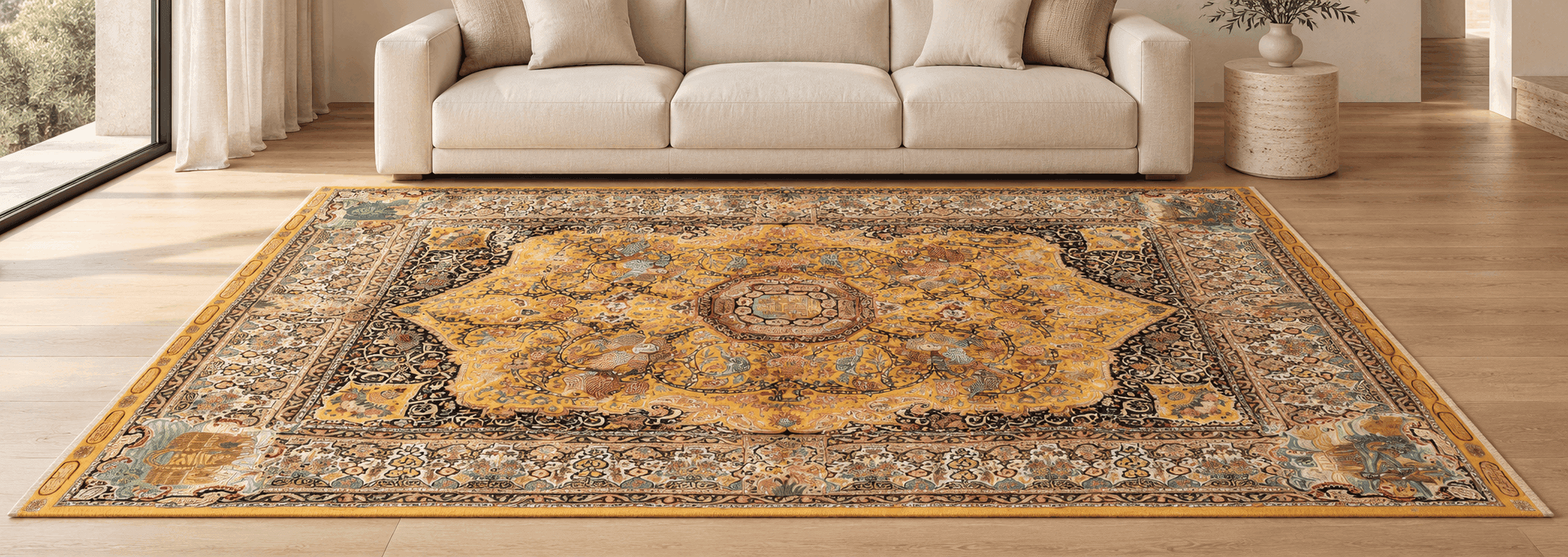
Buying a vintage or antique Persian rug is not simply a matter of choosing an attractive pattern or an appealing colour palette. It means assessing a handmade textile that may have experienced decades of use, previous repairs, changes in colour, and varying degrees of structural deterioration.
Two rugs of similar age and origin can have very different levels of quality, durability and market value. One may have beautifully preserved wool, stable edges and skilfully executed repairs. Another may look impressive from a distance but conceal weakened foundation threads, extensive reweaving or damage that makes it unsuitable for everyday use.
The most important principle is this: assess the rug's physical condition, construction and evidence of age before deciding whether its price is justified. Age alone does not establish authenticity, quality or value.
This guide explains how to examine a vintage or antique Persian rug systematically, what the visible signs can tell you, which problems deserve particular attention, and what to ask a seller before committing to a purchase.
1. First, understand what vintage and antique mean
The terms vintage, antique and old are often used loosely in the rug trade. Before paying a premium for age, establish what the seller means by the description.
- Vintage rug: Generally refers to an older rug that has acquired a distinctive character through its age, design or use. There is no universally accepted age threshold for vintage rugs.
- Antique rug: In common collecting and antiques terminology, this usually means a rug at least 100 years old, although usage can vary by market and specialist.
- Semi-antique rug: A trade term often applied to rugs around 50–100 years old, but without a universally agreed definition.
In 2026, a rug woven before 1926 would generally meet the 100-year age threshold. However, a rug does not become valuable merely because it passes that threshold.
A well-designed, carefully woven rug from the mid-twentieth century can be a better purchase than a much older rug with severe structural damage. Likewise, a modern rug can be deliberately faded or distressed to create an aged appearance.
The practical question is not simply, “How old is this rug?” It is:
What evidence supports its age, where and how was it woven, what condition is it in today, and how does that combination justify the asking price?
2. Examine the pile: the first major condition check
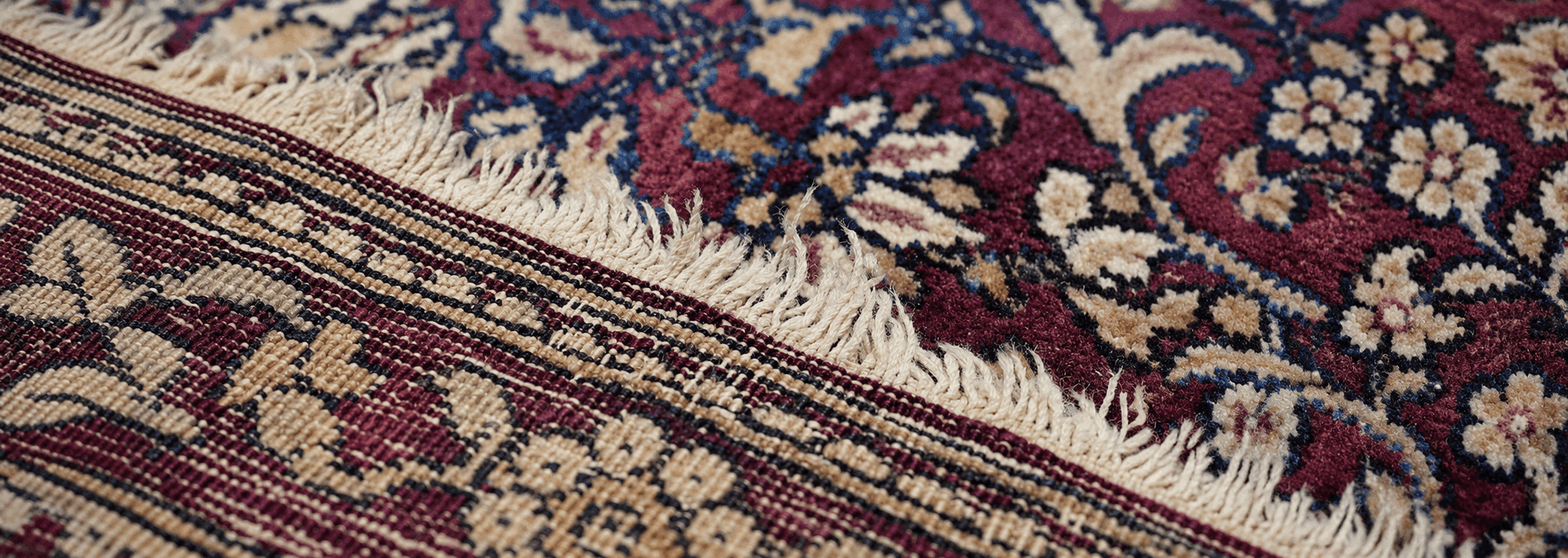
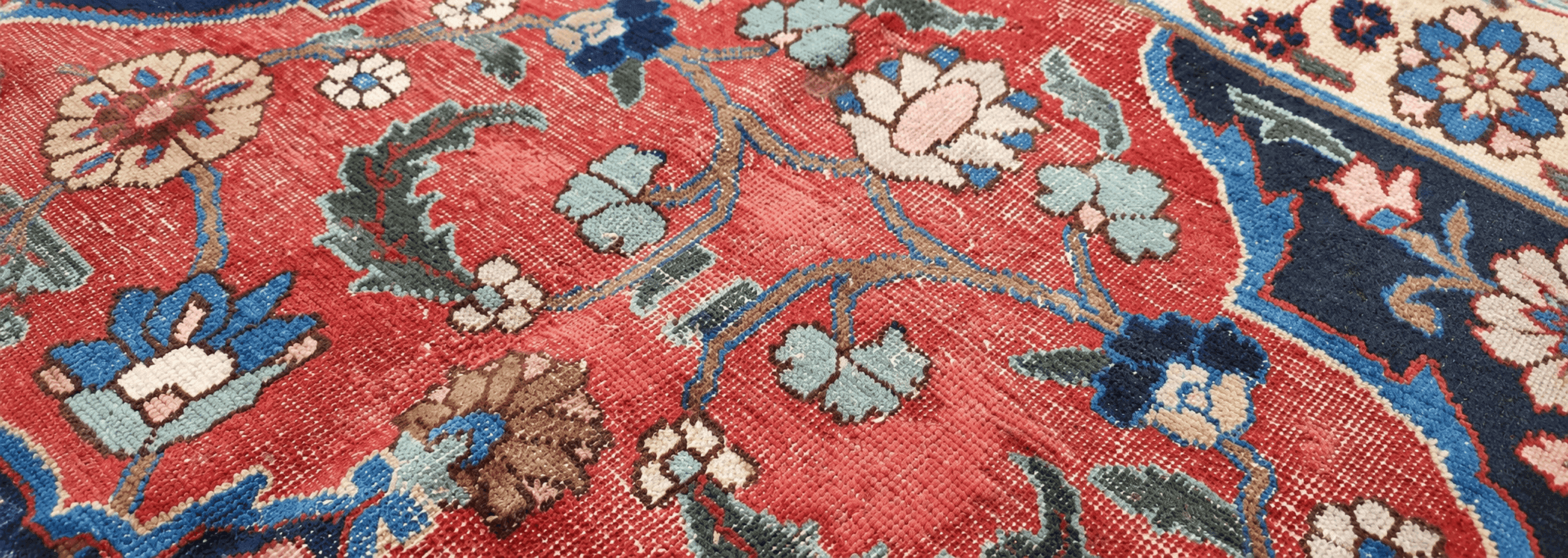
The pile is the visible surface formed by the yarns tied into the rug's foundation. Its condition affects appearance, texture, practical durability and value.
An old rug does not need to have a completely full pile to be desirable. Some collectors appreciate a worn surface because it reveals the structure and history of a textile. The critical distinction is between attractive, stable wear and deterioration that threatens the rug's integrity.
What to inspect
A. Pile height and consistency
Examine the rug across its entire surface, not only in the centre or the most attractive part.
Look for:
- Areas where the pile is substantially lower than the surrounding surface.
- Uneven wear along walking paths.
- Exposed foundation threads.
- Abrupt changes in pile height that may indicate previous shaving, local damage or repiling.
- Sections that appear unusually smooth or have a different sheen from the rest of the rug.
A naturally worn area often transitions gradually into better-preserved pile. A restored area may show a different texture, direction of light reflection or relationship between the pile and the surrounding pattern.
Neither observation alone proves restoration; they indicate where closer inspection is warranted.
B. Exposed foundation
When the pile has worn away, the warp and weft threads beneath it may become visible. Limited exposure in a stable area is not necessarily a reason to reject an antique rug.
However, extensive exposure can indicate that the protective pile has been lost and the structural threads are vulnerable to abrasion. If the foundation is also brittle, broken or separating, the concern is considerably more serious.
Ask whether the exposed areas are stable and whether any repair is required now, rather than relying on the seller's description of the rug as simply “well worn.”
C. Moth damage and fibre loss
Inspect less visible areas, including the underside, edges and spaces where furniture may have protected the pile.
Look for irregular holes, broken wool fibres, localised thinning and damage that continues into the foundation. Insect damage may be old and inactive, or it may be associated with an ongoing infestation. Appearance alone cannot always establish which is the case.
If there is fresh-looking fibre loss, insect activity or unexplained debris, request a professional assessment before bringing the rug into a home with other wool textiles.
D. Wool quality and resilience
Gently move your hand over several areas of the pile. Compare the texture, density and flexibility of the wool.
A good-quality wool pile may retain a pleasant handle and a degree of resilience even after decades of use. However, softness alone is not proof of quality: worn, chemically treated or heavily washed wool can also feel soft.
Avoid repeatedly rubbing or pulling at fragile areas. On a valuable antique, a qualified rug conservator can assess fibre strength more reliably than an informal hand test.
An important distinction: low pile versus damaged pile
A low pile may be part of the rug's natural history. A structurally compromised pile is a different issue.
For example, an old village rug with consistently low but stable pile may remain suitable for a quiet living room. A rug with small holes, fractured foundation threads and loose edges may deteriorate rapidly under furniture movement or regular foot traffic, even if its colours and design remain attractive.
The buyer must evaluate both appearance and structural stability.
3. Check the fringe and ends carefully
The fringe is one of the most misunderstood parts of an antique rug.
In a traditionally hand-knotted rug, the fringe is generally formed by the warp threads that extend beyond the woven body. It is therefore connected to the rug's underlying structure, rather than being merely decorative trim.
Over time, these threads can become worn, shortened, knotted, repaired or replaced.
What the fringe can reveal
Inspect both ends and compare their condition.
- Original or surviving warp ends: These may help explain the rug's construction, but their appearance varies with region, weaving tradition and subsequent treatment.
- Reinforced ends: An older rug may have additional stitching or protective finishing to prevent further unravelling.
- Replaced fringe: New threads may have been added to an old rug. This is not automatically a defect, but the extent and quality of the work should be disclosed.
- End loss: If the pile and foundation have worn away together, the rug may have lost part of its original dimensions or design.
Pay particular attention to the point where the fringe meets the woven body. Loose knots, broken warps, splitting or a line of weakness at this transition can be more significant than the appearance of the fringe itself.
When should fringe replacement concern you?
Replacement is not inherently a reason to reject a rug. A carefully executed repair can protect the remaining structure and extend its useful life.
The concern is whether the work has concealed significant end loss, altered the rug's original dimensions, or attached new material without adequately securing the weakened foundation.
Ask the seller whether the ends are original, reinforced, partially reconstructed or extensively rewoven. These are different conditions and should not be treated as interchangeable.
4. Inspect the side edges and selvedges
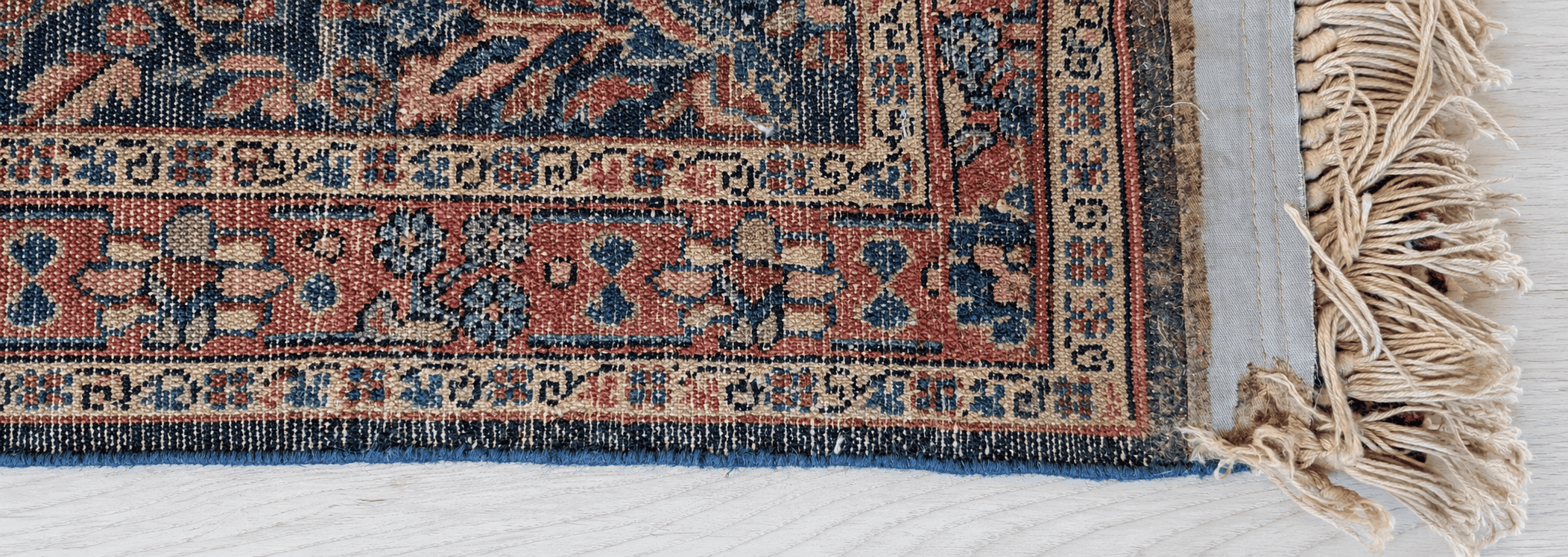
The side edges, commonly called selvedges, help secure the woven structure and prevent the sides from unravelling. They are particularly vulnerable to friction, handling, folding and vacuuming.
Examine both sides from end to end.
Look for:
- Loose or missing edge wrapping.
- Broken side cords or exposed warp threads.
- Areas where the edge has separated from the body.
- New wool that differs noticeably in colour, thickness or texture.
- Uneven width or an edge that curves because of tension differences.
- Stiff, bulky or poorly matched binding.
A repaired selvedge can be perfectly acceptable. In fact, appropriate edge restoration may be essential to preserve an old rug.
What matters is whether the repair is stable, compatible with the original construction and proportionate to the price.
A small, well-executed repair along one side is not equivalent to extensive reconstruction of both edges. A rug described as “original condition” should not have substantial restoration left unexplained.
5. Identify repairs, reweaving and restoration
One of the most important skills in buying an antique rug is learning to distinguish its original fabric from later intervention.
Many genuinely old rugs have undergone repairs during their lifetime. Restoration is not proof of inauthenticity, nor does it automatically reduce a rug to a poor purchase. The decisive questions concern the extent of the work, its technical quality, its visibility and its effect on structural integrity.
The main types of repair
Type of work
What it means for the buyer
Edge repair
The selvedge has been stabilised or reconstructed. Check whether the foundation remains secure.
End repair
The fringe or end structure has been reinforced, replaced or rewoven. Establish how much original material survives.
Repiling
New pile yarn has been introduced into worn or damaged areas. Compare colour, texture and pile direction.
Reweaving
Missing or damaged sections of the woven structure have been reconstructed. Extensive work may materially affect value.
Patching
A separate piece of textile has been inserted or attached to cover damage. Check the stability and extent of the intervention.
Colour retouching
Colour has been added or altered to disguise fading, stains or repaired areas. Ask what was treated and whether the dyes are stable.
How to look for concealed repairs
Use bright, diffuse light first. Then, if possible, examine the rug under light falling across its surface at a low angle, often called raking light.
This can reveal differences in pile height, direction, sheen and surface texture that are difficult to see under direct overhead lighting.
Next:
- Compare the suspicious area with the corresponding pattern and colours around it.
- Turn the rug over and inspect the same location on the reverse.
- Look for changes in knot structure, foundation threads, weave density or the alignment of the design.
- Check whether the area feels noticeably stiffer, thicker or less flexible than the surrounding textile.
- Ask the seller to identify known restoration areas and explain what was done.
A difference in colour or weave does not conclusively prove a repair. Original weaving can vary, and natural ageing can create considerable variation across a single rug. Conversely, skilled restoration may be difficult to detect visually.
For expensive or particularly important pieces, an independent specialist should assess the rug before purchase.
Does restoration always reduce value?
No. A stable, professionally executed repair may preserve an otherwise desirable rug. But extensive reconstruction, poorly matched repiling or replacement of large portions of the original textile can reduce originality and market value.
The buyer should distinguish between restoration that preserves original material and reconstruction that replaces a substantial amount of it.
The invoice or written condition report should describe material restoration honestly rather than using a vague phrase such as “professionally restored.”
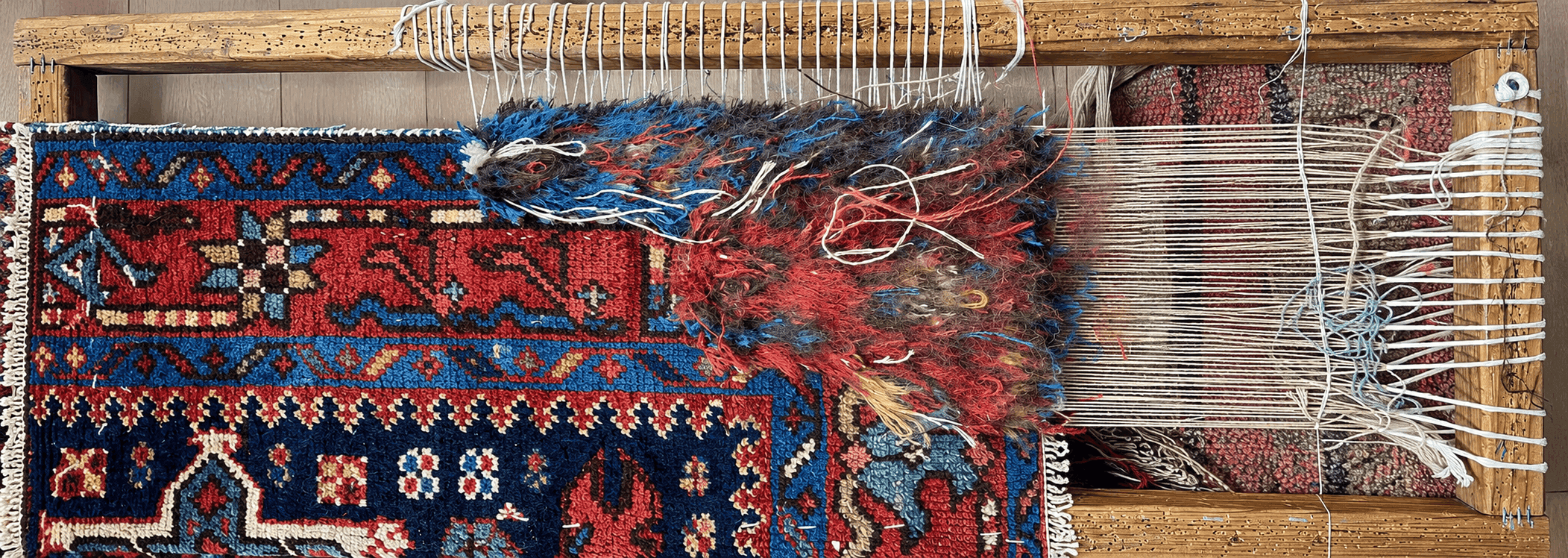
6. Assess the foundation: the problem that can hide beneath a beautiful surface
The foundation is the structural framework of a hand-knotted rug. It consists primarily of the warp threads, which run lengthwise, and the weft threads, which pass across the width. The pile knots are tied around the warp threads and secured by the weft.
Understanding the foundation is essential because a rug can look attractive on the front while being too fragile for regular use.
What should you look for?
Loose or broken warp threads: Individual threads may protrude, separate or break. This can indicate structural damage, especially when it occurs in a concentrated area.
Broken or missing wefts: Examine the reverse for missing horizontal threads, open spaces or areas where the weave has loosened.
Splitting: A tear or separation in the woven body may extend beyond the visible surface. Check whether it runs across the rug and whether the surrounding structure remains secure.
Brittleness: Aged fibres can become fragile through oxidation, inappropriate cleaning, prolonged environmental exposure or previous chemical treatments. Age alone does not determine the degree of brittleness.
Distortion: Buckling, rippling or localised stiffness can indicate uneven tension, previous repairs or changes in the foundation.
What is dry rot, and why does it matter?
The term dry rot is commonly used in the rug trade to describe severe deterioration and loss of strength in the textile's foundation or fibres. It should not be confused with a diagnosis of fungal decay, which requires separate evidence.
A rug with seriously weakened foundation threads may tear when lifted, folded or moved. Damage of this kind can be difficult and expensive to address because repair may require rebuilding part of the woven structure.
A visual inspection cannot always establish the full extent of fibre degradation. If the foundation looks unusually brittle, fragmented or powdery, do not bend it sharply or test it by pulling the threads. Request an assessment from a specialist in rug restoration or textile conservation.
Expert buying advice: If you are choosing between a rug with visible but stable pile wear and one with an attractive surface but a fragile foundation, the first may be the safer purchase. Structural stability should take priority over cosmetic perfection.
7. Examine colour, fading and possible dye problems
Colour is central to the visual appeal of Persian rugs, but it can also reveal information about their use, treatment and preservation.
Traditional rugs may contain colours produced with natural dyes, synthetic dyes or combinations of both. Synthetic dyes entered Persian rug production during the nineteenth century and became increasingly widespread around the turn of the twentieth century. Consequently, the presence of synthetic dye does not automatically mean that a rug is modern or inauthentic.
Natural colour variation and abrash
Abrash describes variations in colour that appear as bands or shifts across a rug, often associated with differences between dye batches or yarn preparation.
In handwoven rugs, abrash can create visual depth and a sense of movement. It may be particularly attractive in tribal and village rugs, where subtle variations contribute to the character of the design.
However, abrash is not proof of great age or natural dyes. Similar effects can occur in newer rugs, and not every old rug has pronounced abrash.
How to examine colour changes
Look at the same colour in several places, including areas that may have received different amounts of light or foot traffic.
Ask yourself:
- Does the fading follow plausible patterns of use and light exposure?
- Are the colour changes gradual, or do they form abrupt boundaries?
- Do repaired areas differ noticeably from the original yarn?
- Are there signs of colour bleeding, staining or treatment?
- Does the colour look different when the rug is viewed from opposite directions?
Some pile yarns appear lighter or darker depending on the direction in which the fibres lie. This is called pile-direction shading and should not automatically be mistaken for dye variation.
Can you identify natural dyes by eye?
Not reliably in every case.
Natural dyes can fade, change chemically or react to light and cleaning. Synthetic dyes can also age in many different ways. Colour appearance is influenced by the original dye, fibre type, exposure, washing history and the surrounding colours.
A claim that a rug contains natural dyes should therefore be supported by credible evidence if that claim materially affects the asking price. Laboratory analysis may be appropriate for particularly valuable rugs, although it is not necessary for every purchase.
Do not perform home bleach tests, chemical spot tests or uncontrolled wet tests. They can damage the pile, alter the colour or create permanent stains.
Beware of artificial ageing
Some rugs are treated to create the appearance of age. Treatments may include aggressive washing, deliberate fading, pile shaving or other forms of distressing.
An artificially aged rug is not necessarily a poorly made rug. It may still have decorative appeal and practical value. The problem arises when its appearance is presented as evidence of genuine historical age.
Ask whether the rug has been chemically washed, artificially distressed, recoloured or otherwise treated to alter its appearance. The answer should help you distinguish the rug's actual history from its current aesthetic.
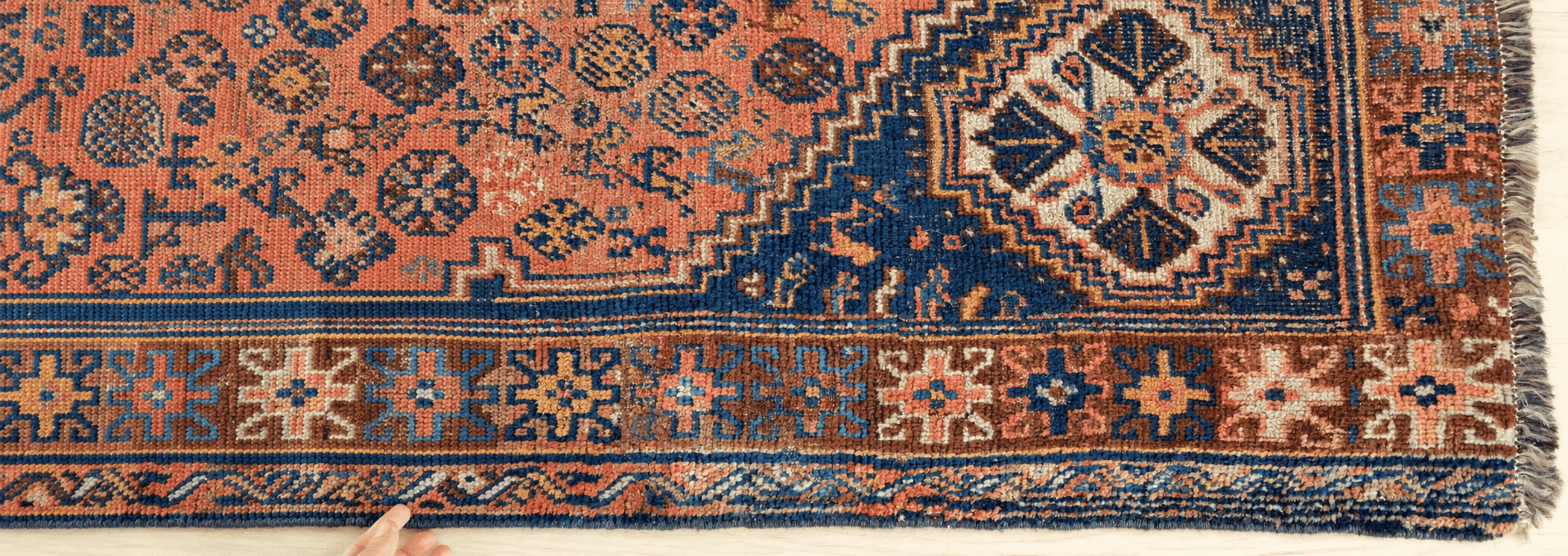
8. Check for stains, odours and evidence of previous cleaning
Stains and odours are not always obvious in product photographs. They are also not necessarily reasons to reject a rug, but their cause and implications should be understood.
Stains
Examine the field, borders, corners and reverse for:
- Water marks or tide lines.
- Oil or grease stains.
- Discolouration from previous cleaning.
- Residue from spills or household products.
- Local colour changes that may indicate previous spot treatment.
A stain that looks minor on the surface may have penetrated the foundation. Conversely, a visible mark may be largely cosmetic and safely treatable.
Do not assume that every stain can be removed without affecting the original dyes.
Odours
If you can inspect the rug in person, note any persistent musty, damp, chemical or smoke-related odour.
A musty smell can indicate previous damp storage, microbial activity or accumulated contamination, although smell alone cannot establish the cause. A chemical odour may relate to previous treatment, storage materials or other sources.
Ask whether the rug has been washed, when it was last cleaned, how it was dried and whether any odour problem has been reported.
Previous washing and chemical treatment
A professional wash can improve the appearance of a suitable rug, but cleaning history matters particularly for fragile antiques.
Inappropriate cleaning can cause dye bleeding, shrinkage, distortion, fibre damage or deterioration of unstable repairs. Museum textile conservators likewise assess the condition, structure and previous treatment of a carpet before selecting a cleaning method.
For that reason, do not assume that an antique rug should be washed simply because it looks dusty or faded. A qualified specialist should determine whether cleaning is appropriate and which method is safe.
9. Look at the reverse to understand how the rug was made
The reverse is one of the most useful places to examine construction. It reveals the relationship between the pile, knots and foundation more clearly than the decorative surface alone.
A traditional hand-knotted rug generally displays its design on the back, with individual knots visible within the woven structure. The degree of clarity varies according to knotting technique, pile density, materials and construction.
A machine-made rug typically has a more mechanically regular structure. A hand-tufted rug may have a separate backing that conceals the pile-forming process.
These differences can help establish how a rug was made, but they do not establish its exact age or country of origin by themselves.
What an experienced buyer should observe
- The regularity and character of the knot rows.
- The relationship between the visible pattern and the reverse.
- Whether the foundation is consistent with the seller's description.
- Any abrupt changes in weave or knot structure.
- Repairs, patches, reinforcement or unusual backing materials.
Does a higher knot count mean a better antique rug?
Not necessarily.
Knot density affects the level of detail that can be achieved, but it is only one aspect of a rug's construction. A coarser village or nomadic rug may be highly desirable because of its drawing, colour harmony, wool quality, cultural significance and rarity.
Likewise, a finely knotted rug may have mediocre wool, a weak foundation or extensive restoration.
The relevant question is whether the construction is appropriate to the rug's type, intended use and claimed quality—not whether it achieves the highest possible knot count.
10. Verify the claimed age and origin
Age and origin are among the most consequential claims in the antique rug market because they can significantly influence price.
Yet a visual resemblance to a known Persian design does not prove that a rug was woven in Iran. Similar motifs have been used across different regions, and weaving traditions have travelled through trade, migration and workshop production.
How specialists assess age
A credible assessment considers multiple clues together, including:
- Knotting technique and weave structure.
- Warp and weft materials.
- Wool quality, yarn preparation and spinning characteristics.
- Design, drawing and regional weaving conventions.
- Dye evidence and colour changes.
- Finishing techniques and the nature of wear.
- Known repairs and documented ownership history.
No single feature is a universal age test. Hand-spun yarn, for example, may support a particular attribution when considered alongside other evidence, but its presence alone does not establish a date.
Similarly, natural dyes, irregular knots and a worn appearance can all occur in rugs of different ages.
For important pieces, a specialist may need to combine visual examination, historical comparison, material analysis and documentary research. Scientific dye analysis, for instance, has been used by museum researchers to investigate the materials and construction of historic carpets.
What evidence should the seller provide?
Ask for a written description that states:
- The approximate date or period of weaving.
- The claimed country and, where supportable, region of origin.
- The basis for the attribution.
- The known materials and construction.
- Any known restoration or treatment history.
- Relevant ownership records, previous invoices, collection records or publications, if available.
Not every genuine antique has a documented chain of ownership. The absence of paperwork does not automatically make a rug inauthentic. However, an undocumented age claim should be presented as an estimate, not as a proven historical fact.
A credible description distinguishes between what is known, what is strongly supported and what remains uncertain.
11. Evaluate provenance and documentation
Provenance refers to the documented history of an object's ownership, custody or collection.
For an antique rug, useful records might include a previous sales invoice, an old collection inventory, an auction catalogue, a museum publication or a specialist report that clearly relates to the same piece.
Provenance can strengthen confidence in a rug's history, but documents need to be evaluated carefully.
A generic certificate of authenticity, a handwritten date or an old-looking label is not sufficient proof on its own. Check whether the document identifies the specific rug through photographs, dimensions, distinctive features or a clear inventory reference.
If the seller provides an appraisal, determine whether it addresses identity, age, condition, restoration, market value or only one of these subjects.
These are separate questions. An appraisal that gives a market value without explaining the basis for the age or origin claim may not resolve the buyer's main concern.
For a valuable purchase, request that the key claims appear on the invoice or sales agreement. This creates a clearer record of what was represented at the time of sale.
12. Understand how condition affects value
A rug's age is only one component of its value. The relationship between age, quality, rarity, condition and restoration is more important than any single feature considered in isolation.
For a vintage or antique Persian rug, the main factors include:
Factor
Why it matters
Age and attribution
A credible date and origin can affect historical significance and market demand.
Design and artistic quality
Balanced composition, distinctive drawing and an appealing palette can increase desirability.
Wool and other materials
Fibre quality, yarn preparation and material suitability influence appearance and durability.
Structural condition
A stable foundation is essential for safe handling and continued use.
Pile preservation
Remaining pile affects texture, appearance and suitability for foot traffic.
Restoration
The extent, quality and visibility of repairs influence originality and value.
Rarity and provenance
Scarcity and credible historical documentation may add significance.
Market demand
Value depends on the particular rug, the buyer and the market in which it is offered.
A practical example
Imagine two rugs described as nineteenth-century Persian village carpets.
The first has moderate pile wear, slightly repaired edges, stable foundation threads and a well-preserved design. The second has a fuller-looking surface but extensive repiling, several patches and a weakened foundation.
The second rug may initially appear more attractive. Yet the first could be the more sensible purchase if its asking price reflects its condition and the buyer wants an authentic, usable antique.
The outcome would depend on the rugs' actual quality, originality, rarity and market prices. The example illustrates why appearance alone is an unreliable guide to value.
Calculate the likely cost of ownership
Before purchasing a rug that needs work, consider the full cost rather than the asking price alone.
Other costs may include specialist transport, insurance, professional assessment or appropriate storage.
Obtain a written restoration estimate before committing to substantial work. Repair costs can vary considerably according to the type of rug, the materials, the extent of damage and the skill required.
Do not assume that restoration will increase resale value by more than its cost. The objective may be preservation and enjoyment rather than financial return.
13. Decide whether the rug suits your intended use
A rug can be authentic, beautiful and historically interesting without being suitable for every room.
Before buying, consider where it will be placed and how it will be used.
A quiet living room or bedroom
A rug with stable, moderate wear may work well in a lower-traffic setting, particularly when its design and colour are the main priorities.
A busy family area
Prioritise a sound foundation, secure edges and adequate pile. Fragile antiques and rugs with exposed structural threads may be unsuitable for regular heavy traffic.
A collector's interior or decorative display
Historical character, design, rarity and originality may carry more weight, but fragile pieces still require appropriate support, handling and protection from light.
A rug that is suitable for display may not be suitable for daily use. Conversely, a robust vintage rug with some cosmetic wear may be more practical for a household than a more delicate and expensive antique.
Choose according to both the textile's condition and your intended use.
14. Questions to ask before you buy
Before paying for a vintage or antique Persian rug, ask the seller the following questions.
- How old is the rug, and what evidence supports that estimate?
- Where was it woven, and how confident is the regional attribution?
- Is it hand-knotted, and what are the pile, warp and weft materials?
- Are the fringe and side edges original, reinforced, replaced or reconstructed?
- Has the rug been repiled, rewoven, patched or otherwise restored?
- Are there areas of exposed foundation, splitting, brittle fibres or insect damage?
- Has it been washed, chemically treated, recoloured or artificially distressed?
- Are there stains, persistent odours or known dye-stability problems?
- Can the seller provide clear photographs of the front, reverse, ends, edges and repaired areas?
- Can the age, origin, dimensions and known restoration history be recorded in writing?
- Is an independent inspection possible before purchase?
- What is the return policy if the rug differs materially from its description?
A reputable seller should be willing to explain the rug's strengths and limitations. Uncertainty about an exact date is not necessarily a warning sign; refusing to disclose known damage or making unsupported claims of exceptional age is more concerning.
15. Buying online: what photographs and videos should you request?
Buying an antique rug online requires more than viewing a carefully staged main photograph. Lighting, camera processing and screen settings can alter the appearance of wool, fading and colour.
For an informed decision, request the following photographs and video views.
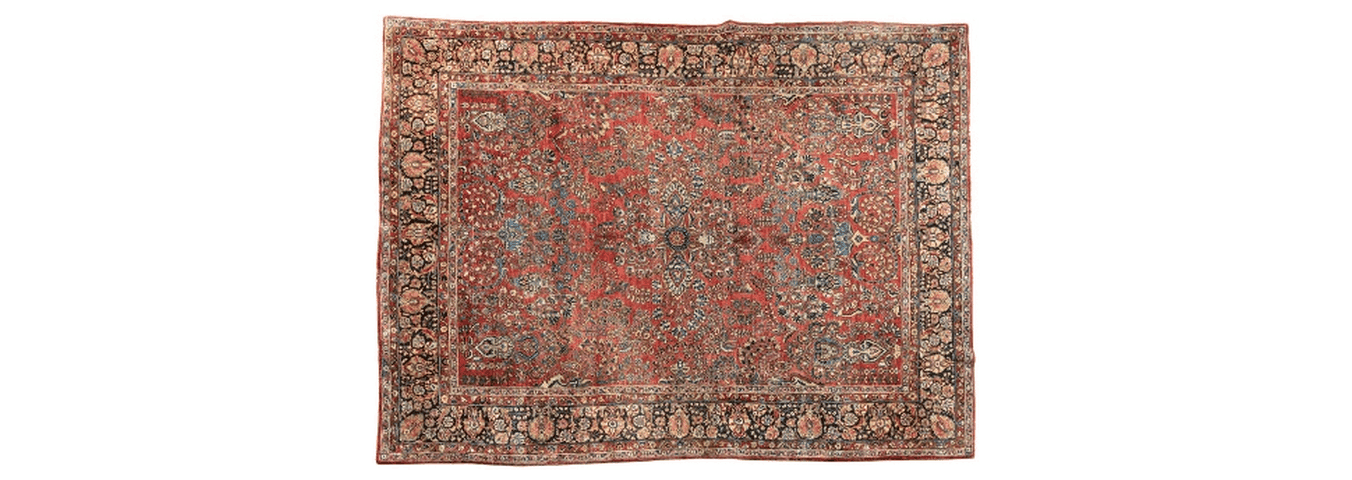
1. The complete front
The entire rug, including all four corners and the full border, photographed as evenly as possible.
2. The complete reverse
A clear view of the foundation, knot structure and any backing, patches or obvious repairs.
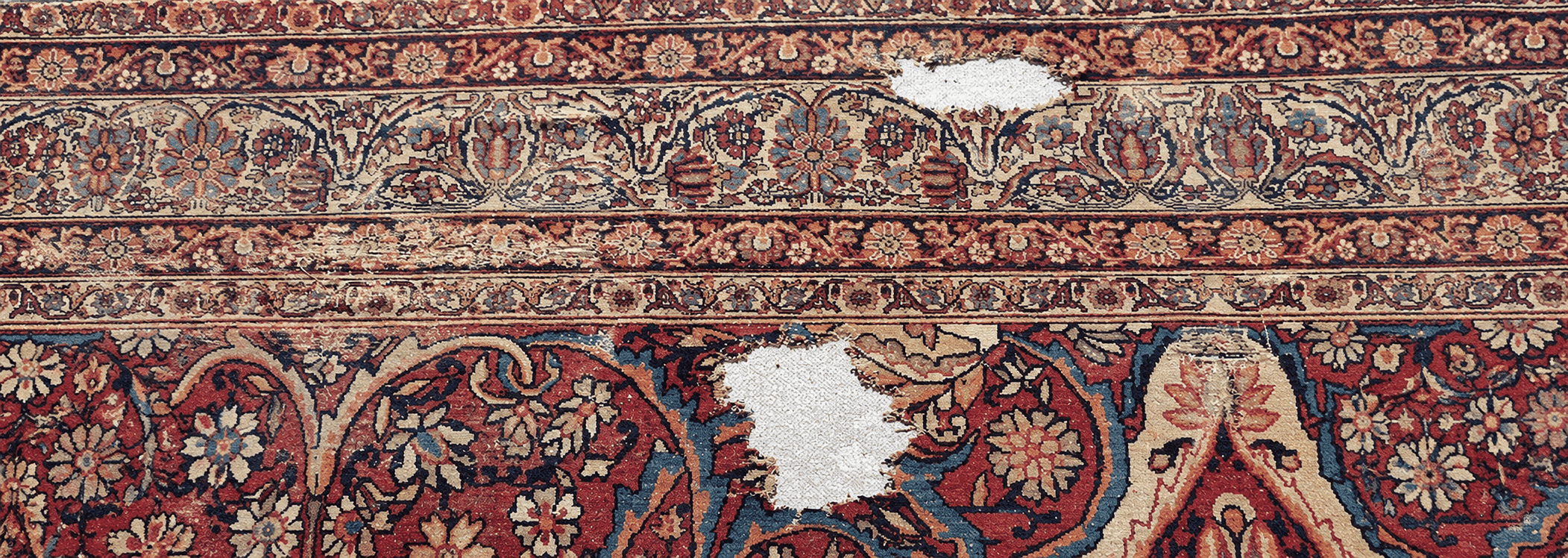
3. Pile and wear details
Close-ups of the centre, walking areas, corners and any exposed foundation.
4. Both ends and side edges
Detailed views showing the fringe, edge wrapping, reinforcement and any loss of material.
For a rug with visible repairs, request close-ups of each significant area from both sides.
A short video can be particularly useful when it shows the rug being viewed from different angles under consistent lighting. It may reveal changes in pile direction, uneven texture and surface distortion that are less obvious in still images.
For an expensive piece, a live video inspection can also allow you to ask the seller to show specific areas in real time.
Photographs cannot establish every aspect of authenticity or fibre strength, but good documentation can significantly reduce avoidable uncertainty.
16. Red flags: when to pause or walk away
Not every imperfection is a reason to reject an old rug. Some problems, however, justify delaying the purchase until further evidence is available.
Unsupported age claims
The seller insists that the rug is exceptionally old but cannot explain the basis for the date or provide a credible description of its construction.
Concealed or undisclosed restoration
Significant patches, repiling or reconstructed ends are visible, but the seller claims the rug is entirely original or refuses to clarify the work.
Serious structural weakness
The foundation appears fractured, the body is splitting, or the textile sheds fibres and cannot be handled confidently.
Artificial ageing presented as historical age
The rug's faded or distressed appearance is used as the principal evidence of antiquity, without a credible explanation of its manufacture and history.
Refusal to provide basic documentation
The seller will not supply requested photographs, disclose known condition issues or record material claims in writing.
One red flag does not always prove dishonesty or make the rug worthless. It means the risk needs to be investigated before you proceed. If a seller will not allow a reasonable inspection of a high-value rug, walking away may be the most prudent decision.
17. A practical inspection checklist before purchase
Use this checklist during an in-person viewing or when reviewing an online listing.
Frequently asked questions
1) How can I tell if a Persian rug is genuinely antique?
Begin with the rug's construction, materials, weave, design and finishing. Compare these features with credible examples from the claimed region and period. Consider the wear and repair history, and review any supporting documentation. No single visual feature conclusively establishes age; valuable or disputed pieces may require independent specialist assessment.
2) Is a rug over 100 years old always valuable?
No. Age may contribute to historical significance and desirability, but value also depends on quality, rarity, condition, design, provenance and market demand. Severe structural damage or extensive reconstruction can outweigh the advantages of age.
3) Are repaired antique Persian rugs worth buying?
Yes, in many cases. Well-executed repairs can preserve a rug and make it suitable for continued use. What matters is the amount of original material that survives, the stability and quality of the repairs, and whether the price reflects the rug's actual condition.
4) Does a natural dye prove that a rug is antique?
No. Natural dyes are used in both old and modern rugs, while synthetic dyes have been used in Persian rug production since the nineteenth century. Dye analysis may contribute to an assessment, but it should be interpreted alongside construction, materials and other evidence.
5) Should an antique rug have original fringe?
Original fringe can be desirable because it preserves part of the rug's original structure. However, many old rugs have had their ends reinforced or reconstructed. A competent repair does not automatically make a rug a poor purchase, provided the work is disclosed and the structure is sound.
6) Can a faded rug be more valuable than a brightly coloured one?
It can be, depending on its design, age, materials, originality and condition. Attractive natural colour variation may appeal to collectors, but fading alone does not establish age or increase value. Artificial distressing should not be confused with historical patina.
7) What is the most serious damage to look for?
There is no single answer for every rug, but a severely weakened foundation, extensive splitting, active insect damage or substantial loss of structural threads deserves particular attention. These problems can affect safe handling and may require costly specialist intervention.
8) Is an independent appraisal necessary before buying?
It is especially advisable when a rug is expensive, described as rare, attributed to a significant historical period, or accompanied by claims that materially affect its price. An independent specialist can assess the evidence and condition without relying solely on the seller's description.
9) What photographs should I request when buying online?
Request full photographs of the front and reverse, close-ups of the pile, both ends, both side edges, any damaged areas and all known repairs. Ask for accurate measurements and, where useful, a short video showing the rug under consistent lighting. Screen images alone cannot reliably establish exact colour, fibre strength or authenticity.
Final advice: buy the rug, not just the story
A vintage or antique Persian rug can bring depth, character and genuine textile craftsmanship into a home. Its value, however, lies in more than its appearance or the age attributed to it.
Examine the pile. Inspect the fringe and side edges. Look at the foundation. Understand the repairs. Ask how the age and origin were determined, and insist on a description that distinguishes evidence from assumption.
The strongest purchase is not necessarily the oldest, the most expensive or the most visually perfect rug. It is the rug whose quality, condition, history, intended use and price make sense together.
At Rugeast, we believe that informed buyers should understand both the beauty of a handmade rug and the practical considerations behind owning one. Taking time to examine those details helps you choose a rug you can appreciate with greater confidence for years to come.
Explore our collection of vintage and antique rugs to compare designs, sizes, colours and individual pieces. For a rug you are particularly interested in, request additional photographs or a closer inspection of its condition before making your decision.