
What Makes a Persian Rug Worth Its Price? A Buyer's Guide
Buying a Persian rug is about more than choosing a pattern or finding a colour that suits your home. Every hand-knotted rug has its own combination of materials, craftsmanship, regional character, age and condition.
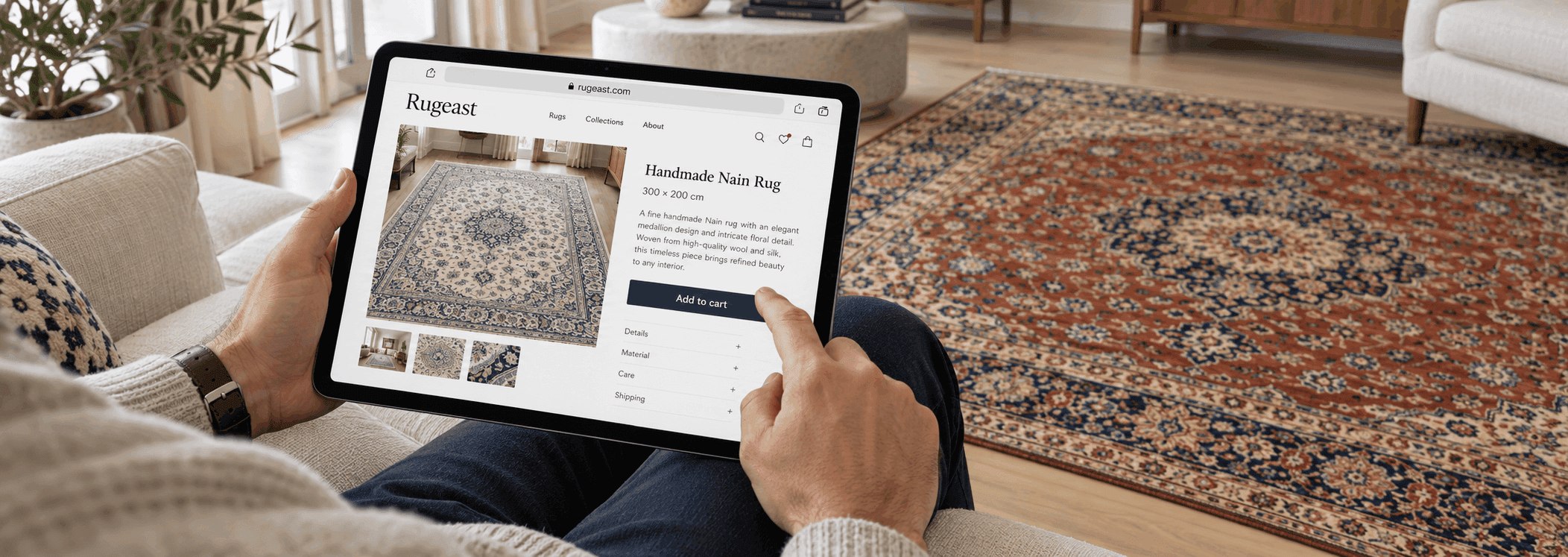
Buying a Persian rug is about more than choosing a pattern or finding a colour that suits your home. Every hand-knotted rug has its own combination of materials, craftsmanship, regional character, age and condition. Understanding these factors helps you judge whether the asking price is fair—and whether a rug is right for you.
At Rugeast, we believe that buying a handmade rug should be an informed and enjoyable experience. Drawing on three generations of family experience in the carpet trade, we look beyond appearance alone. We consider how a rug is made, where it comes from, how it has been preserved and what makes it distinctive.
We also believe that expert knowledge should lead to fairer prices. Over the years, we have developed a sourcing network across different carpet-producing regions of Iran. Combined with our experience in the trade, this network helps us find rugs at favourable purchasing prices and offer many of them to our customers at particularly competitive and fair prices.
In this guide, we explain the main factors that influence a Persian rug's price—and how to make a confident choice without paying more than the rug is worth to you.
1. Size: The Starting Point, Not the Whole Story
The size of a rug is one of the first things buyers notice, and it can have a significant effect on the price. Larger rugs generally require more material and considerably more labour.
However, price does not increase in direct proportion to size. A small, finely knotted silk rug may cost more than a much larger wool rug with a simpler design. The materials, construction, origin, condition and artistic quality all matter.
Before comparing prices, check the exact measurements. Traditional rugs may not be perfectly rectangular, and dimensions can vary slightly from one side to another.
Think about how the rug will work in your room, too. A rug that fits the space beautifully and has the right proportions may be a better purchase than a larger rug that does not suit your needs.
2. Materials: Wool, Silk and Cotton
The fibres used in a handmade rug affect its appearance, texture, durability and price.
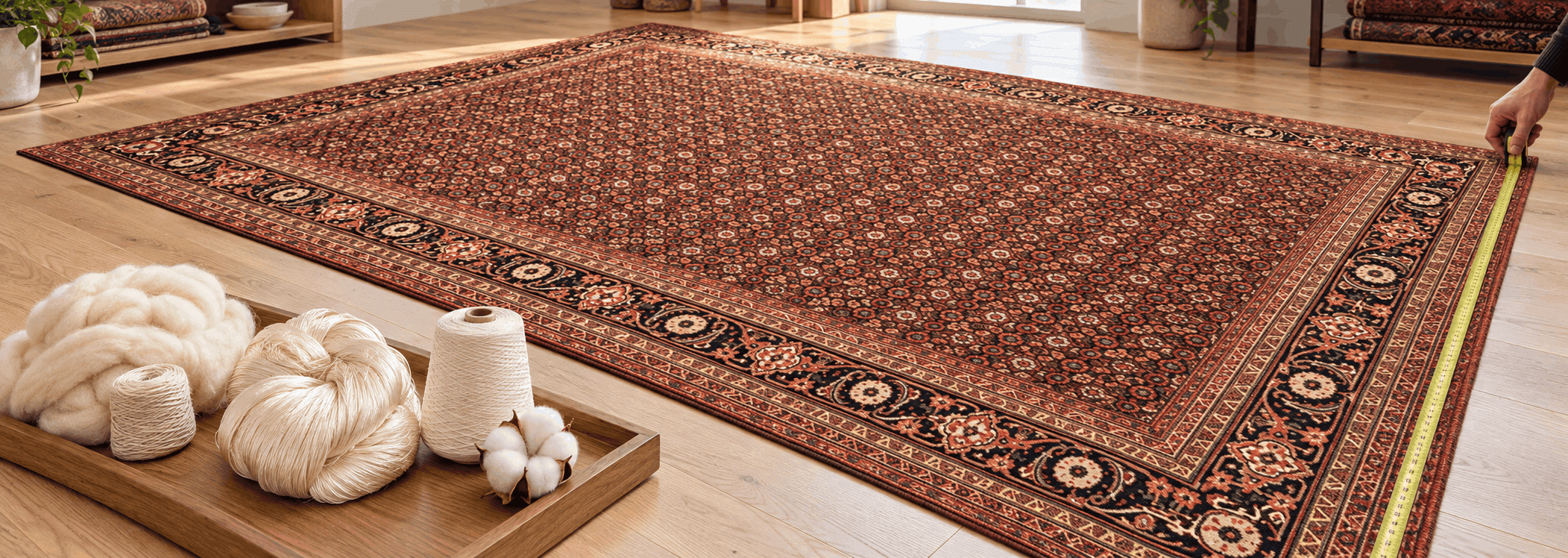
Wool is widely used for rug pile. Its quality depends on factors such as the fibre itself, preparation, spinning and finishing. Well-made wool rugs can be resilient, comfortable underfoot and suitable for many everyday living spaces.
Silk can produce a fine, luminous surface and allows intricate patterns to be expressed with considerable detail. Rugs made with a substantial amount of silk may command higher prices, although silk content alone does not determine quality or value.
Cotton is commonly used for the warp and weft—the structural foundation of many rugs. Some rugs use other materials or combinations, depending on their construction and tradition.
Natural fibres are not automatically proof of superior workmanship. Their quality, how they have been used and how well the rug has been made are what matter.
When comparing two rugs, look beyond a simple label such as “wool” or “silk”. Ask how the materials contribute to the particular rug's construction, appearance and intended use.
3. Knot Density and Craftsmanship
Knot density is often discussed when evaluating handmade rugs. It usually describes the number of knots within a measured area and can indicate how finely a design has been executed.
A higher knot density can make intricate details easier to achieve, particularly in some finely knotted city rugs. However, more knots do not automatically mean a better rug.
A coarser tribal or village rug may be highly valued for its confident drawing, balanced composition, beautiful wool, distinctive colours or regional character. Its appeal may lie in qualities that cannot be measured by knot count alone.
Other aspects of craftsmanship matter, too:
- The consistency and strength of the weave.
- The quality and preparation of the yarn.
- The clarity and balance of the design.
- The finishing of the edges and ends.
- The rug's overall stability and condition.
A good rug should be assessed as a complete object, not reduced to a single technical number.
4. Origin and Regional Character
Iran has a rich diversity of carpet-making traditions. Different regions have developed their own approaches to design, materials, colour and construction.
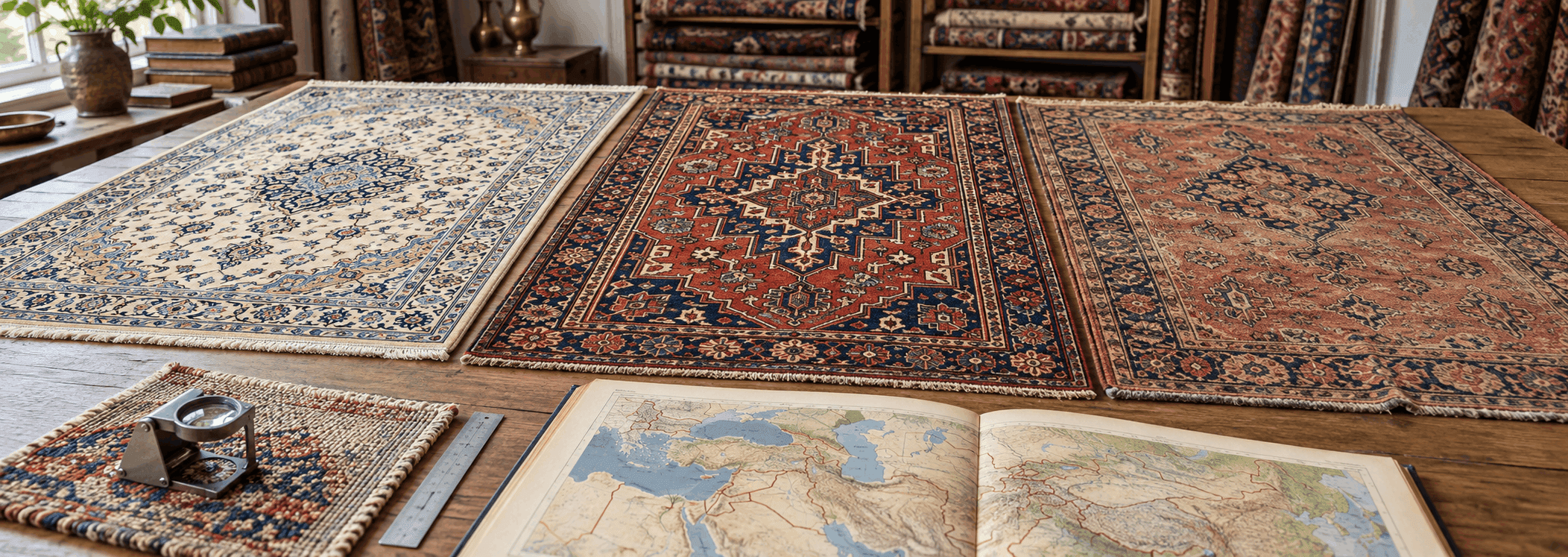
For example, Tabriz rugs are known for a broad range of designs and levels of refinement. Kashan rugs often feature balanced floral compositions and central medallions. Isfahan rugs can display intricate drawing and carefully coordinated colours. Qashqai and other tribal rugs may be distinguished by more geometric designs, expressive motifs and a strong sense of regional identity.
These are broad descriptions, not rigid rules. There is considerable variation within every tradition.
The place of manufacture can influence a rug's price, but the name of a famous weaving region does not automatically make a rug more valuable. The actual piece must be considered: its workmanship, materials, design, condition and the reliability of its origin description.
A transparent seller should distinguish between a confirmed place of manufacture and a stylistic attribution where the exact origin is uncertain.
5. Age: New, Vintage or Antique?
Age can influence a rug's value, but older does not always mean more expensive.
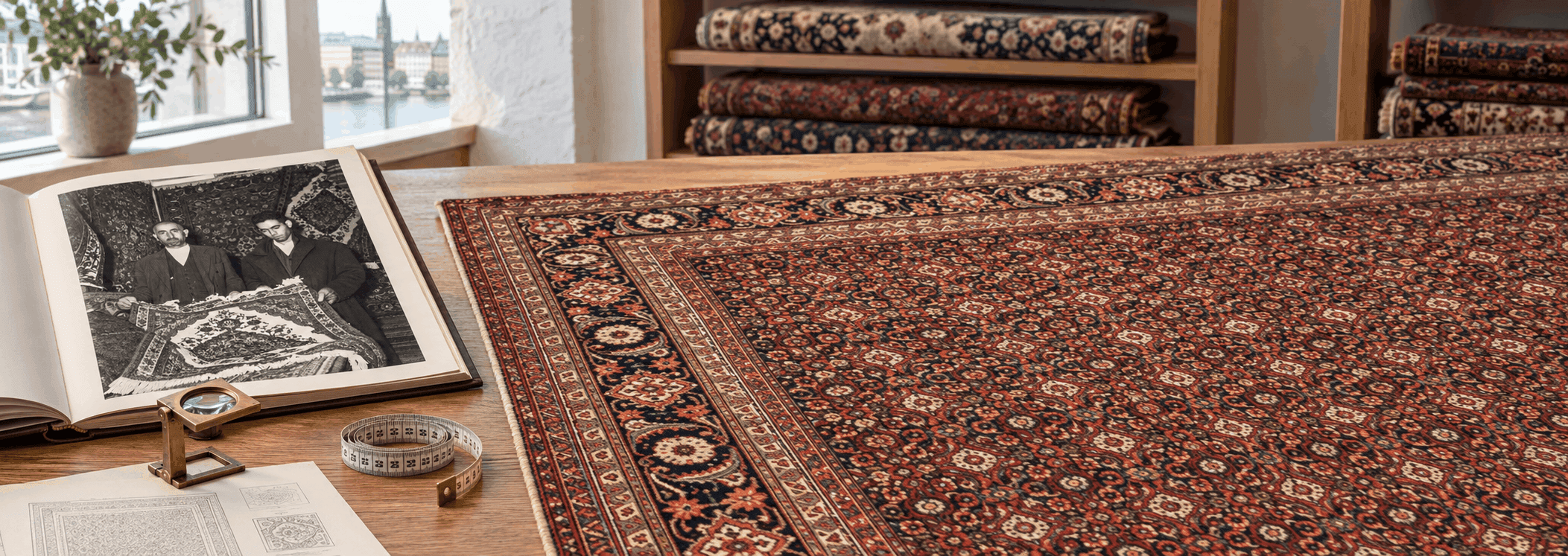
A new rug may offer excellent craftsmanship, fresh colours and a well-preserved pile. A vintage rug may appeal to buyers who appreciate the character that develops over time. An antique rug can have historical, artistic or collecting interest, particularly when it has a distinctive design and a well-documented history.
However, age alone does not establish rarity or investment value. The condition, quality, design, provenance and demand for a particular type of rug are all important.
Be cautious when a rug is described as “antique” without a clear explanation of its estimated age. If age is central to the asking price, ask what information supports the estimate.
6. Condition and Restoration
Two rugs of similar size, origin and design can have very different values because of their condition.
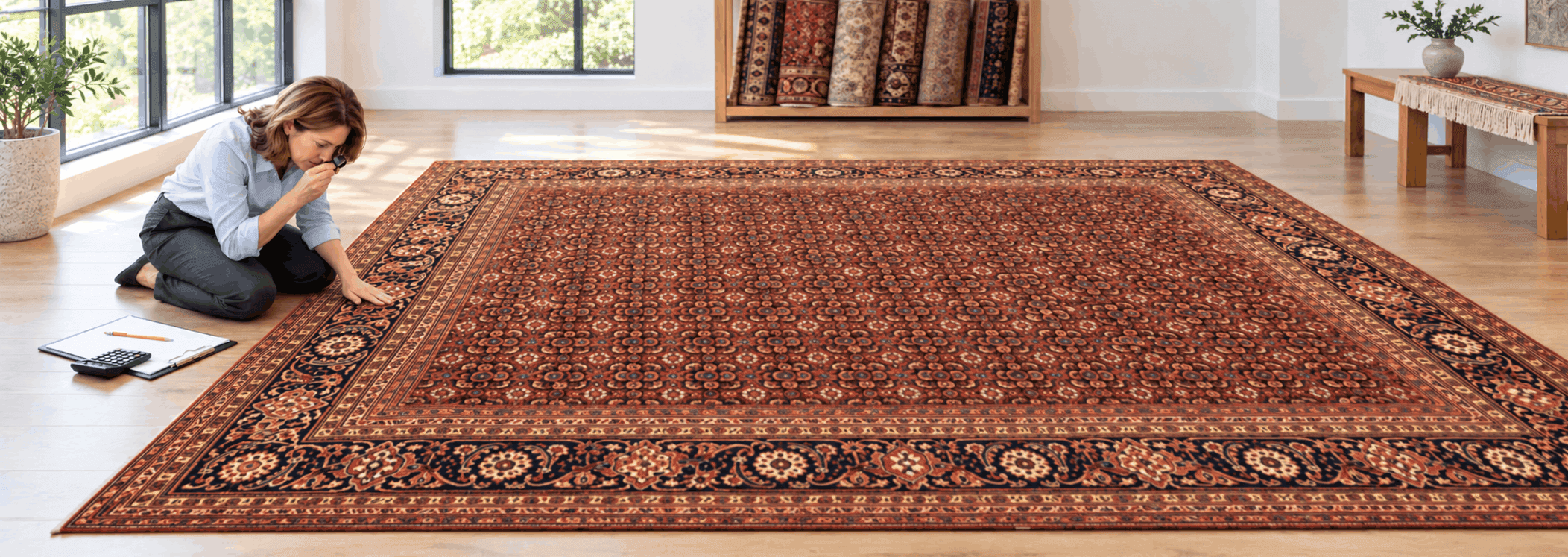
When evaluating a rug, consider:
- Whether the pile is evenly preserved or worn in places.
- Whether the edges and ends are secure.
- Whether there are stains, colour changes or repairs.
- Whether the rug lies flat or shows structural distortion.
- Whether any restoration has been carried out professionally.
Restoration is not necessarily a disadvantage. Skilled repairs can preserve a rug and allow it to continue being used. What matters is the quality of the work and whether the condition has been described honestly.
For older and collectible rugs, original features, historical integrity and the extent of restoration may be particularly relevant.
7. Design, Character and Rarity
Some rugs attract attention because of the complexity of their patterns. Others stand out through an unusual colour combination, a distinctive tribal motif, an expressive drawing or an uncommon format.
A rug's artistic character can contribute substantially to its appeal and market value. Rarity may also matter, but it should be assessed carefully. A rug is not necessarily rare simply because it looks unusual or is described that way in a sales listing.
Ask what makes the particular piece distinctive. Is it the design, the quality of the weave, the materials, its regional character, its age or a documented history?
A meaningful answer is more useful than a general claim that a rug is unique.
8. Authenticity, Provenance and Documentation
Authenticity and provenance are important, especially when buying a higher-value rug.
Authenticity can refer to different things: whether a rug is hand-knotted, where it was made, which tradition it belongs to, or whether its description accurately represents its materials and age.
Provenance concerns the traceable history of a rug, such as documented ownership or previous sales. Not every rug comes with a complete ownership history, and a certificate does not necessarily prove every claim about a rug.
When documentation is provided, check what it actually confirms, who issued it and whether it relates to the specific piece.
Clear product information, accurate photographs and honest descriptions help buyers make better decisions.
9. Why a Fair Price Depends on More Than the Asking Price
A rug's price should be considered in relation to its quality, condition and the information available about it. Two similar-looking rugs may differ significantly in construction, materials or workmanship.
The seller's sourcing network and purchasing terms can also influence the final price. This is an important part of how Rugeast approaches the market.
How Rugeast works to offer competitive prices
Our family has been involved in the handmade carpet trade for three generations. Over the years, we have developed a network of sourcing relationships across different carpet-producing regions of Iran. This gives us access to a varied selection of rugs and helps us identify pieces that can be purchased on favourable terms.
Because we work to source many rugs at competitive purchasing prices, we can offer particularly fair and attractive prices on much of our collection. In many cases, our prices are more competitive than those offered by other sellers for comparable rugs.
This advantage comes from our sourcing experience, regional relationships and knowledge of the carpet market—not from a decision to compromise on the qualities that make a rug worth owning.
We believe that customers should be able to appreciate a handmade rug's craftsmanship and character while paying a price that reflects its actual qualities. Our aim is to make well-chosen rugs more accessible by combining informed selection with fair pricing.
Of course, every rug is different. A fair comparison should consider its exact dimensions, materials, construction, condition, origin and design, rather than comparing prices by name or appearance alone.
Explore our hand-knotted Persian and Oriental rugs to compare different styles, sizes and materials.
10. Is a Persian Rug a Good Investment?
Some handmade rugs become more desirable over time, but not every rug increases in value.
Future resale value depends on factors such as quality, rarity, condition, provenance, changing tastes and market demand. Buying a rug solely in the hope of making a profit can be risky.
For most buyers, the more meaningful question is whether the rug offers lasting enjoyment, suits their home and represents good value for its price.
A rug that you enjoy living with for many years can be a worthwhile purchase even if its future resale value is uncertain.
11. A Practical Checklist Before You Buy
Before purchasing a handmade rug, ask yourself:
- Are the exact dimensions suitable for my room?
- Are the materials and construction clearly described?
- Is the rug hand-knotted, and what do I know about its workmanship?
- Is the stated origin confirmed or an informed attribution?
- What is its condition, and are repairs or wear disclosed?
- Do the photographs show the rug clearly, including important details?
- Does the price make sense in relation to its actual characteristics?
- Are shipping, payment and return conditions clear?
- Have I compared genuinely comparable rugs rather than relying on size or design alone?
- Does this rug offer the right balance of quality, appearance and price for me?
If you are uncertain about a detail, ask the seller before purchasing. A good buying experience should leave you informed, not pressured.
Frequently Asked Questions
1) What determines the price of a Persian rug?
The main factors include size, materials, craftsmanship, knot density, origin, age, condition, design and rarity. The reliability of the product description and the rug's provenance can also influence its market value.
2) Are more expensive Persian rugs always better?
No. A higher price may reflect finer materials, complex workmanship, rarity or other desirable features, but it does not automatically mean that a rug is the right choice for every buyer. Compare the actual characteristics of each piece.
3) Does a higher knot density mean better quality?
Not necessarily. Knot density can be useful when assessing certain types of rugs, but it does not measure wool quality, design, durability, regional character or the overall success of the craftsmanship.
4) Why can Rugeast offer competitive prices?
Rugeast combines three generations of family experience in the carpet trade with a sourcing network developed across different regions of Iran. These relationships help us purchase many rugs on favourable terms and pass part of that advantage on to customers through fair and competitive prices.
5) Is an older rug always more valuable?
No. Age is only one factor. Condition, workmanship, design, rarity, provenance and market demand all influence value. A well-preserved newer rug can be a better choice than an older rug in poor condition.
6) What should I compare when shopping for a Persian rug online?
Compare exact dimensions, materials, construction, origin, condition, photographs, price and the seller's terms. Make sure the rugs are genuinely comparable before concluding that one offers better value.
Final Thoughts: Quality, Knowledge and a Fair Price
A Persian rug's value is not determined by a single number, knot count or place name. It comes from the combination of its materials, craftsmanship, design, condition, origin and individual character.
At Rugeast, we bring together three generations of carpet-trade experience and a sourcing network across Iran to select rugs with care and work towards particularly competitive purchasing prices. This allows us to offer many of our rugs at fair and attractive prices, without treating low prices as a substitute for quality or honest product information.
Our recommendation is simple: look beyond the label, understand the rug in front of you and compare like with like. A good purchase is one in which the quality makes sense, the price is fair and you are happy to live with the rug for years to come.
Discover the collection at Rugeast and choose a rug that suits your home, your taste and your budget.