
Persian Carpets in a New Context: Inside the MAK Vienna Textile and Carpet Collection
The MAK – Museum of Applied Arts in Vienna invites visitors to explore these questions through its new presentation of the permanent textile and carpet collection.
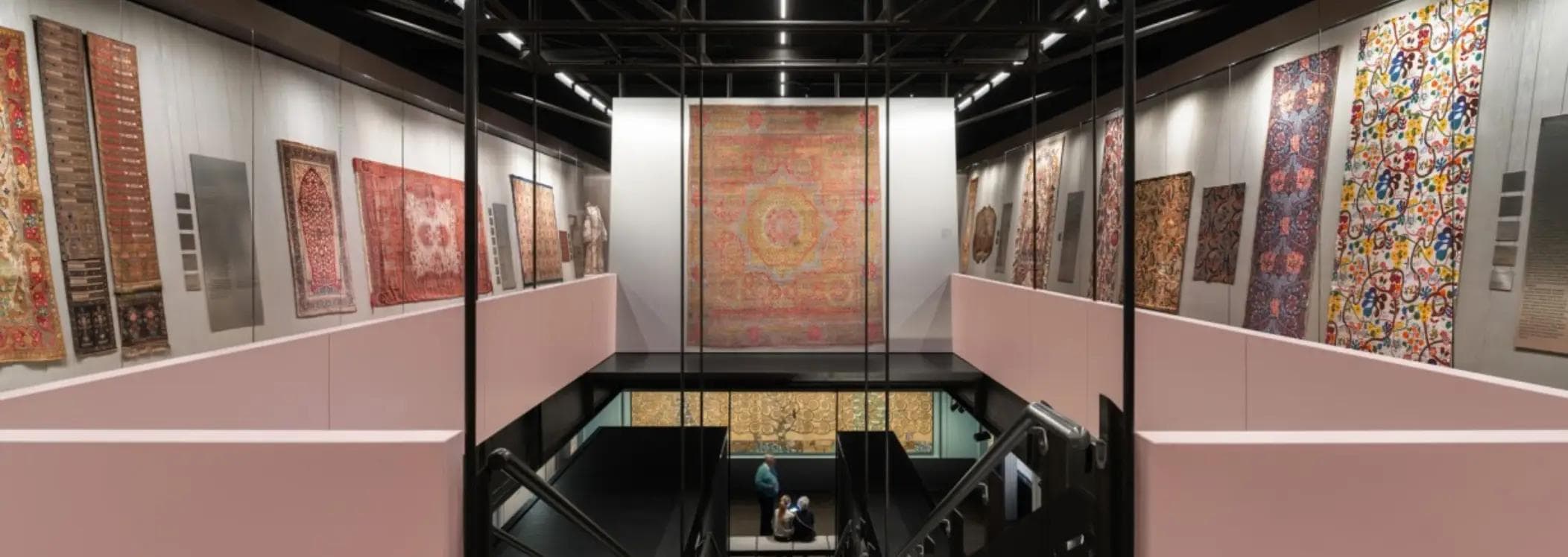
How should we look at a historic carpet? As a beautiful decorative object, a masterpiece of craftsmanship, a valuable collector's item—or as a piece of material history that connects different cultures, trading networks and artistic traditions?
The MAK – Museum of Applied Arts in Vienna invites visitors to explore these questions through its new presentation of the permanent textile and carpet collection. Opened on 25 March 2026, the presentation brings historic textiles into a broader visual and cultural context, including Persian and Mamluk carpets from the sixteenth and seventeenth centuries.
Designed by the internationally recognised design studio Formafantasma, the presentation encourages visitors to look beyond individual objects and consider the relationships between materials, techniques, artistic traditions and the histories that shaped them.
For anyone interested in Persian rugs, textile history or the relationship between traditional craftsmanship and contemporary design, this is a noteworthy development in the European museum landscape.
Why This New Presentation Matters for Persian Carpet History
Persian carpets are often admired for their intricate patterns, rich colours, fine materials and remarkable weaving techniques. Yet their significance extends far beyond their appearance.
A historic carpet can tell us about the technical knowledge of its makers, the artistic preferences of its time, the availability of materials and the cultural environment in which it was produced. Depending on the evidence available, it may also provide insights into historical trade, patronage and the movement of artistic ideas.
The MAK's approach creates an opportunity to explore these wider connections.
Rather than treating carpets as isolated masterpieces, the presentation places them within a broader collection of historical textiles. This encourages visitors to consider how different textile traditions developed, how their techniques and visual languages compare, and what they reveal about the societies that produced them.
For Persian carpets in particular, this perspective is valuable. It connects the appreciation of individual pieces with a deeper understanding of the history of design, craftsmanship and material culture.
Persian and Mamluk Carpets: Two Distinct Artistic Traditions
Among the historically significant works highlighted in the collection are Persian and Mamluk carpets dating from the sixteenth and seventeenth centuries.
These two traditions offer different perspectives on the history of carpet weaving.
Persian carpets and the Safavid artistic tradition
The sixteenth and seventeenth centuries were an important period in the development of Persian carpet art, particularly under Safavid patronage.
Carpets associated with this period are known for their sophisticated compositions, carefully organised patterns and complex relationships between colour and ornament. Some historic examples also reveal connections between carpet design and other artistic disciplines, including manuscript painting, architectural decoration and textile design.
However, Persian carpets should not be understood as a single, uniform category. Regional traditions, workshop practices, intended uses and the circumstances of production varied considerably. A meaningful assessment of an individual carpet therefore requires attention to its construction, materials, design and historical evidence.
Mamluk carpets and their distinctive visual language
Mamluk carpets belong to a different historical and artistic tradition associated with the Mamluk Sultanate, which ruled Egypt and parts of the eastern Mediterranean before the Ottoman conquest of Egypt in 1517.
Historic Mamluk carpets are particularly recognised for their intricate geometric compositions, dense ornamentation and distinctive use of colour. Their designs reflect an artistic tradition that developed within its own cultural and historical setting.
Placing Persian and Mamluk carpets within a wider textile collection creates opportunities for informed comparison. Visitors can consider similarities in structure and ornament while also recognising the distinctive histories of each tradition.
Such comparisons are most useful when they respect historical differences rather than assuming that visual similarities necessarily indicate direct influence or shared origins.
Beyond Patterns: Understanding Materials and Weaving Techniques
One of the most rewarding ways to study a handmade carpet is to look beyond its surface design.
Every carpet is the result of a series of technical and artistic decisions. These may include the selection of wool or silk, the preparation of yarn, the arrangement of warp and weft, the choice of knotting technique, the density of the weave, the use of dyes and the organisation of the pattern.
Together, these elements help us understand how a carpet was made and what kinds of knowledge were required to produce it.
The same principle applies to historical textiles more broadly. Woven fabrics, embroidered textiles and other decorative cloths represent different combinations of materials, techniques and creative decisions. Studying them alongside carpets can reveal the diversity of textile craftsmanship across different periods and regions.
For visitors, this approach offers an important lesson:
Understanding a handmade carpet means looking beyond its colours and patterns to appreciate the materials, techniques and human knowledge behind it.
This is particularly relevant for people buying handmade rugs today. Learning how traditional carpets are constructed can make it easier to recognise differences in quality, understand product descriptions and ask more informed questions about a rug's origin and production.
Trade, Cultural Exchange and the Wider History of Textiles
The MAK's textile collection brings together objects from different periods and geographical regions, including Europe and East Asia. Considered collectively, these objects offer a way to explore the historical relationships between textile production, cultural exchange and international trade.
For centuries, textiles were valuable commodities. Their movement between regions helped circulate materials, techniques, patterns and artistic ideas. Historical trading networks, including those commonly associated with the Silk Roads, formed part of this wider story.
However, the history of textile exchange was complex. Similar patterns do not necessarily prove direct contact between two workshops, and not every object can be linked to a particular trade route without supporting evidence.
The value of a comparative museum presentation lies partly in the questions it encourages visitors to ask:
- How did textile designs develop in different cultural settings?
- What can materials and weaving structures tell us about historic production?
- How were technical skills preserved and transmitted across generations?
- What role did trade and cultural contact play in the development of decorative arts?
These questions are relevant to Persian carpet history because they place individual rugs within a wider history of human creativity, craftsmanship and exchange.
They also remind us that traditional carpets are not simply decorative products. They are material records of the knowledge, resources and artistic choices of the people who made them.
Exhibition Design: How the Way We Display Objects Shapes What We See
The new presentation was designed by Formafantasma, the internationally active design studio known for its research-driven approach to design and material culture.
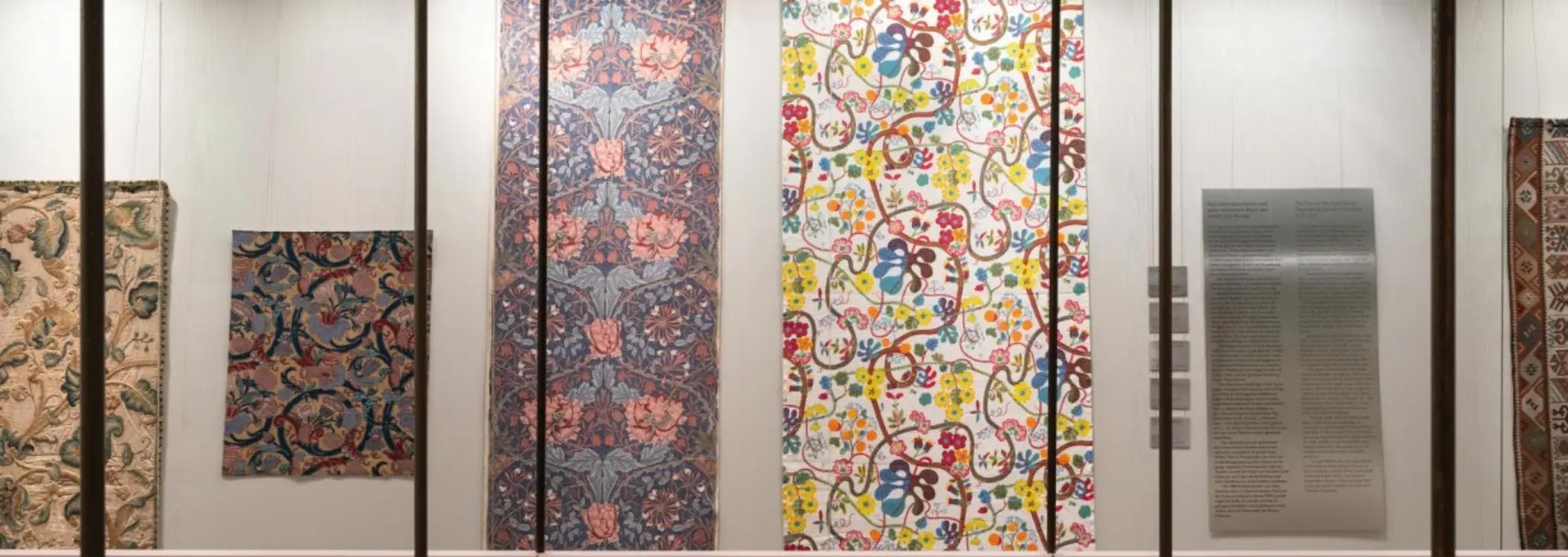
According to the museum's exhibition information, the presentation uses display systems, including large vitrines and sliding arrangements, alongside carefully considered lighting to support the presentation of the collection and address the needs of its objects.
This is especially important for historic textiles.
Many antique fabrics and carpets are sensitive to light and environmental conditions. Their display requires a balance between allowing visitors to appreciate their details and protecting materials that may have survived for centuries.
Yet exhibition design influences more than conservation. It also shapes the way visitors interpret what they see.
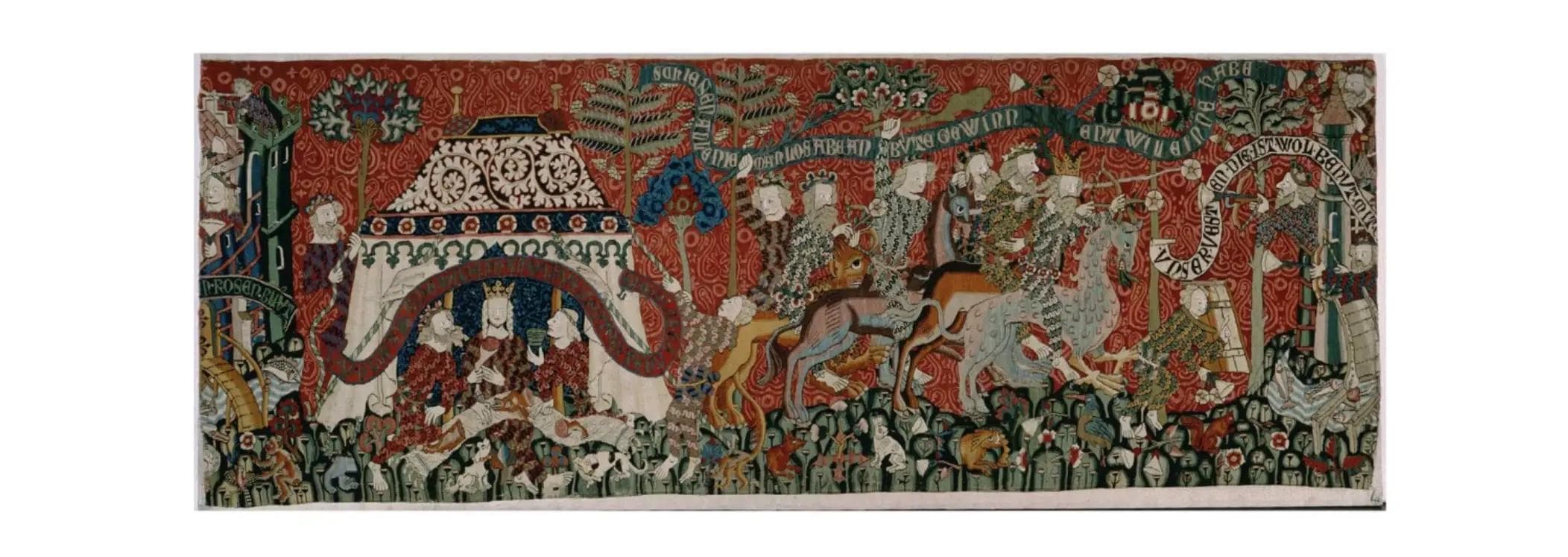
When a carpet is displayed on its own, attention may focus primarily on its beauty, colour and composition. When it is presented alongside other historical textiles, visitors are encouraged to consider additional questions about technique, material, function and cultural context.
In this sense, a museum is not simply a place where historical objects are stored. Through its selection and presentation of objects, it also helps visitors develop new ways of understanding history.
The MAK's new presentation offers an opportunity to experience historic carpets as part of a broader story of design and material culture.
What Can Today's Rug Buyers Learn from Historic Carpets?
For European customers interested in buying a handmade Persian rug, a visit to a collection such as the MAK's can offer more than an appreciation of historic art.
It can also provide a useful foundation for understanding handmade rugs available today.
Historic carpets demonstrate how materials, weaving structures and design choices contribute to the character of a finished piece. They also encourage buyers to look beyond colour and appearance when assessing a rug.
Useful questions include:
- Where was the rug made, and what evidence supports its stated origin?
- Which materials were used?
- What can its construction and weaving technique tell us?
- How are its patterns organised?
- Is information about its provenance or production available?
- What care will it require in everyday use?
These questions are relevant whether someone is choosing a traditional Persian rug for a classic interior or looking for a handmade piece to complement contemporary European furniture.
It is important, however, to distinguish historic museum objects from contemporary rugs. Their purposes, conditions, provenance and market values are different. The age of an antique carpet does not automatically make it more valuable than every modern example, just as a high knot density alone does not determine the overall quality of a rug.
At Rugeast, we believe that informed choices begin with understanding. Learning about the materials, craftsmanship and cultural background of handmade rugs allows buyers to appreciate them not only as interior design elements, but also as the results of specialised human skill and longstanding artistic traditions.
Persian Carpets as Part of Europe's Shared Cultural Experience
Historic Persian carpets have long attracted the attention of collectors, museums, designers and scholars in Europe. Their visual complexity and technical sophistication make them important objects for the study of decorative arts.
Yet their significance becomes even clearer when they are considered alongside other textile traditions.
The MAK's new presentation provides an opportunity to explore this broader perspective. By placing Persian and Mamluk carpets within a diverse historical textile collection, it encourages visitors to look at rugs through several connected lenses: craftsmanship, materials, design, cultural history and the movement of ideas.
For European audiences, this approach offers a way to engage with Persian carpet heritage without needing prior specialist knowledge.
For those who already appreciate handmade rugs, it provides a reminder that each piece belongs to a much wider history of artistic production and human ingenuity.
Ultimately, the importance of a historic carpet lies not only in the beauty we see, but also in the knowledge, skills and cultural experiences that its structure and design can help us discover.
Exhibition Information: MAK Vienna Textile and Carpet Collection
Exhibition: New Presentation of the MAK Permanent Collection of Textiles and Carpets
Museum: MAK – Museum of Applied Arts
Location: Vienna, Austria
Presentation period: 25 March 2026 – 31 December 2030
Exhibition design: Formafantasma
Featured historical traditions: Persian and Mamluk carpets from the sixteenth and seventeenth centuries
For current visitor information and details of the collection, consult the museum's official website:
Visit the official MAK exhibition page
Frequently Asked Questions
Where can visitors see the historic Persian carpets featured in the MAK collection?
The carpets are part of the textile and carpet collection at the MAK – Museum of Applied Arts in Vienna, Austria. Visitors should consult the museum's official website for current admission details and practical visitor information.
When does the new MAK textile and carpet presentation run?
The presentation period announced by the museum is 25 March 2026 to 31 December 2030.
Which historic carpets are highlighted in the collection?
The presentation includes Persian and Mamluk carpets dating from the sixteenth and seventeenth centuries, shown in the broader context of the museum's historical textile collection.
Why are Persian carpets important in textile history?
Persian carpets are important for their weaving techniques, materials, artistic compositions and connections to the history of decorative arts. Depending on the individual object and available evidence, they can also contribute to research into historical production, patronage and cultural exchange.
What is the significance of displaying carpets alongside other textiles?
Comparative displays help visitors explore similarities and differences in materials, construction, design and production techniques. They also encourage a broader understanding of textiles as part of material and cultural history rather than viewing carpets solely as decorative objects.
Who designed the new presentation?
The exhibition design was entrusted to Formafantasma, a design studio known for its research-led approach to design and material culture.
Can the history of Persian carpets help buyers choose a rug today?
Yes. Understanding materials, weaving structures, design traditions and provenance can help buyers ask more informed questions and appreciate the craftsmanship behind a handmade rug. However, historic museum pieces and contemporary rugs must be assessed according to their different characteristics and purposes.