
Tuyserkan Rugs: A Complete Guide to the Handmade Carpets of Western Iran
Tuyserkan rugs are handmade carpets associated with Tuyserkan and its surrounding villages in western Iran, within Hamadan Province. They belong to the diverse family of village and regional Persian rugs, inherited design knowledge and the practical needs of everyday life.
1. What Are Tuyserkan Rugs?
Tuyserkan rugs are handmade carpets associated with Tuyserkan and its surrounding villages in western Iran, within Hamadan Province. They belong to the diverse family of village and regional Persian rugs, where weaving traditions developed through local materials, household production, inherited design knowledge and the practical needs of everyday life.
Unlike carpets produced in major urban workshops according to carefully controlled designs, many traditional Tuyserkan rugs reflect the character of village weaving. Their designs can be geometric, their proportions distinctive, and their decorative details expressive of the individual weaver's interpretation of familiar patterns.
A traditional Tuyserkan rug is often recognised by a combination of characteristics rather than one single feature:
- Geometric compositions and angular motifs
- Prominent central medallions, often diamond-shaped or elongated
- Strong contrasts between dark backgrounds and warm reds
- Wool pile and cotton foundations in many examples
- Hand-knotted construction using the symmetrical Turkish knot
- Relatively substantial pile and robust village-style weaving
- Traditional small and medium sizes, including runners and room-sized rugs
However, Tuyserkan carpets are not a uniform product. Rugs from different villages, periods and individual weaving households may differ considerably in their patterns, colour combinations, materials and quality.
The most interesting way to understand a Tuyserkan rug is to see it not merely as a decorative object, but as the result of a regional weaving culture shaped by geography, household life, local resources and the artistic imagination of its makers.
2. Where Is Tuyserkan? Geography and Landscape
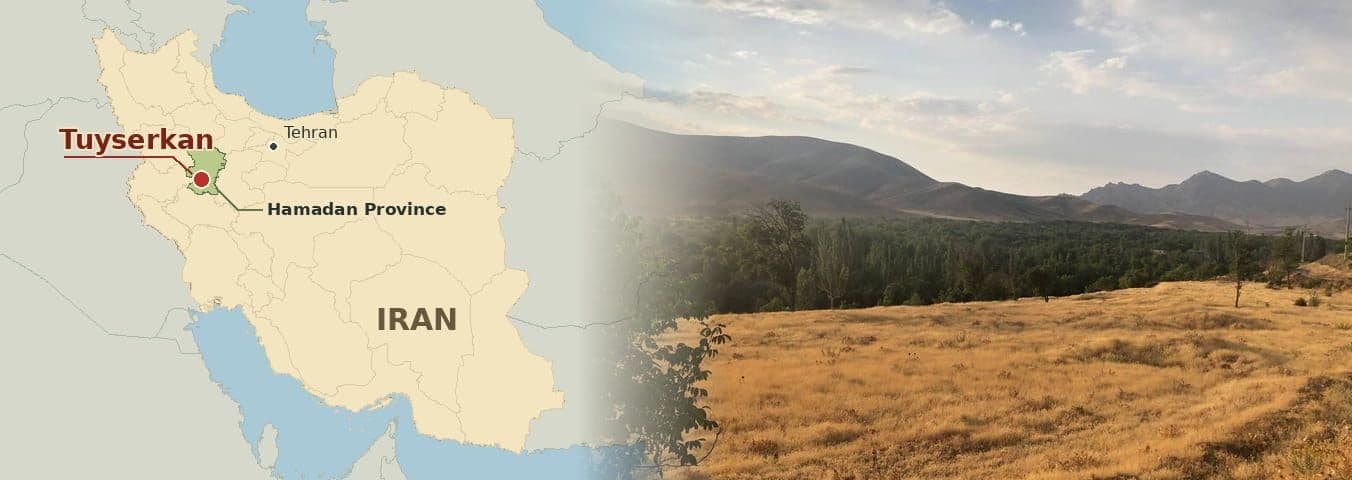
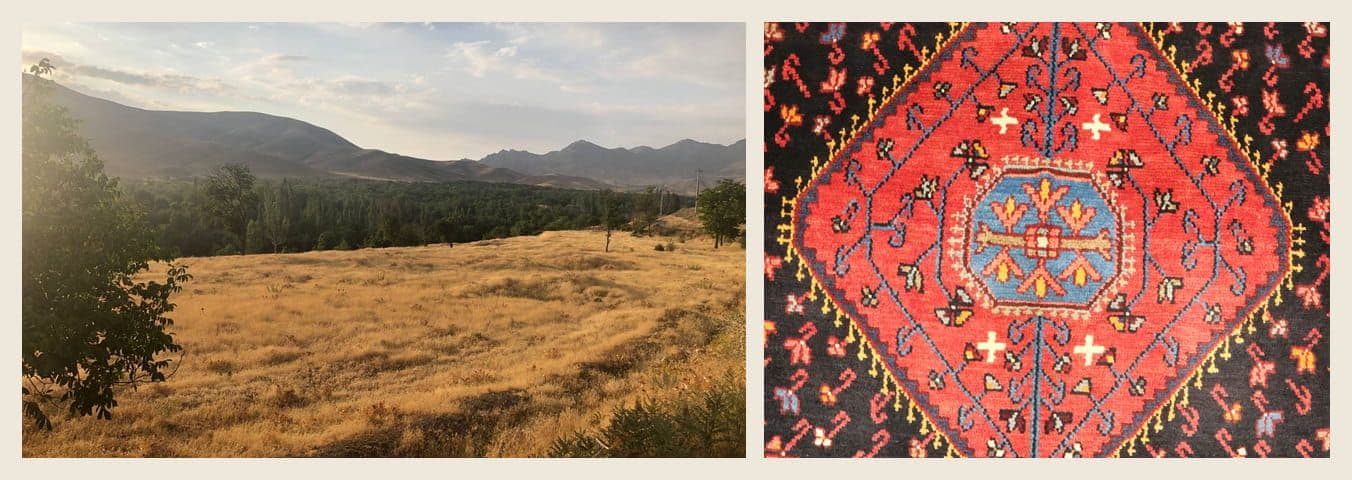
Tuyserkan is a town and county in Hamadan Province, in western Iran. Its landscape is associated with the mountainous environment of the Zagros region and the foothills and surrounding highlands near Mount Alvand.
The region lies within a broader cultural and geographical area in which agriculture, livestock keeping, village settlements and traditional handicrafts have historically played important roles in local life.
The surrounding landscape is particularly known for its agricultural production, including walnuts, which remain an important part of the area's identity and economy.
The influence of geography on carpet weaving
Geography has an important role in the development of traditional textiles.
In rural communities, weaving was often closely connected to the household economy. Families could use wool from locally raised animals, while weaving provided a productive activity during periods when agricultural work was limited.
The colder seasons, village lifestyles and the practical need for durable floor coverings helped sustain the production of woollen carpets.
The geographical isolation of some settlements may also have helped local traditions survive, allowing individual villages to preserve particular designs, colour preferences and weaving habits.
It is important, however, not to assume that every carpet attributed to Tuyserkan was made using wool from the immediate locality or dyed exclusively with local plants. Materials were traded, and weaving practices changed over time.
Tuyserkan within the wider Hamadan weaving region
Tuyserkan is part of a broader carpet-producing landscape associated with Hamadan Province.
This region includes many distinct weaving centres, each with its own combination of design traditions, weaving structures, colour preferences and commercial history.
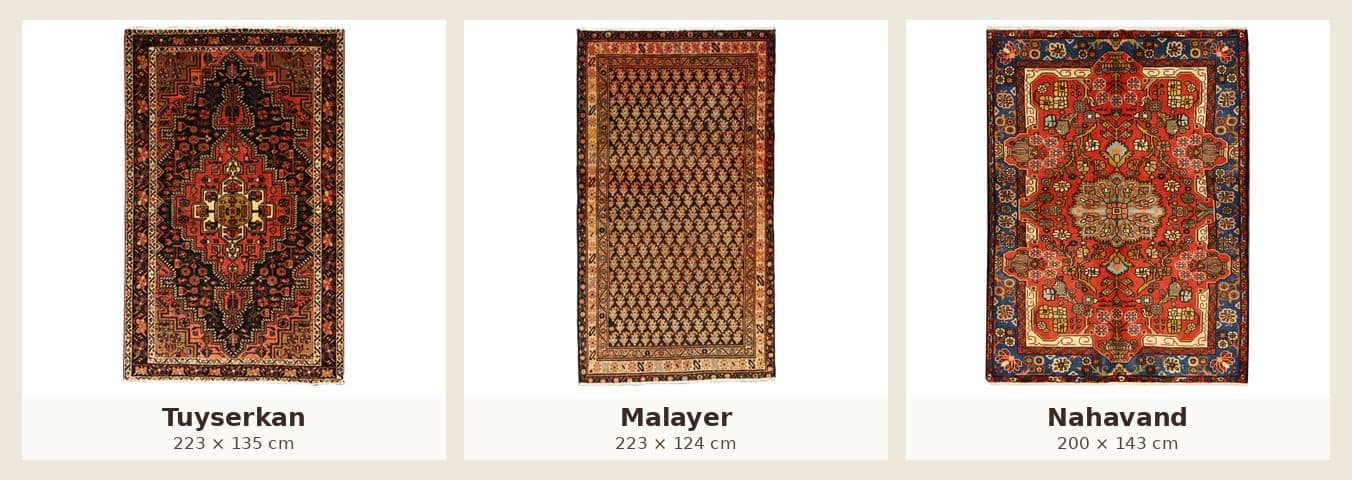
Tuyserkan carpets share certain technical and aesthetic characteristics with rugs from neighbouring weaving areas, including Malayer and Nahavand. Yet the combination of local motifs, proportions, colour palettes and construction details can give a Tuyserkan rug its own visual character.
A rug's regional identity should therefore be assessed through several characteristics together, rather than relying on a single motif or technical feature.
3. The History of Carpet Weaving in Tuyserkan
A relatively recent documented regional carpet tradition
One of the particularly interesting aspects of Tuyserkan carpets is the distinction between the ancient history of the region and the documented history of carpet weaving under the Tuyserkan name.
Tuyserkan has a long history of settlement and cultural activity. Archaeological evidence from locations in the wider area points to ancient human occupation. Nevertheless, the existence of ancient settlements does not automatically establish an equally ancient tradition of carpet weaving.
The source document supplied for this article describes the regional carpet-weaving tradition as less than approximately one hundred years old, while also noting that older carpets and the development of weaving in villages suggest a meaningful local tradition. This should be understood as a statement about the available regional account, not a definitive archaeological date for the beginning of weaving.
The distinction is important: the history of a town may stretch back many centuries or millennia, while a particular identifiable carpet style may have developed much later.
Village weaving and household production
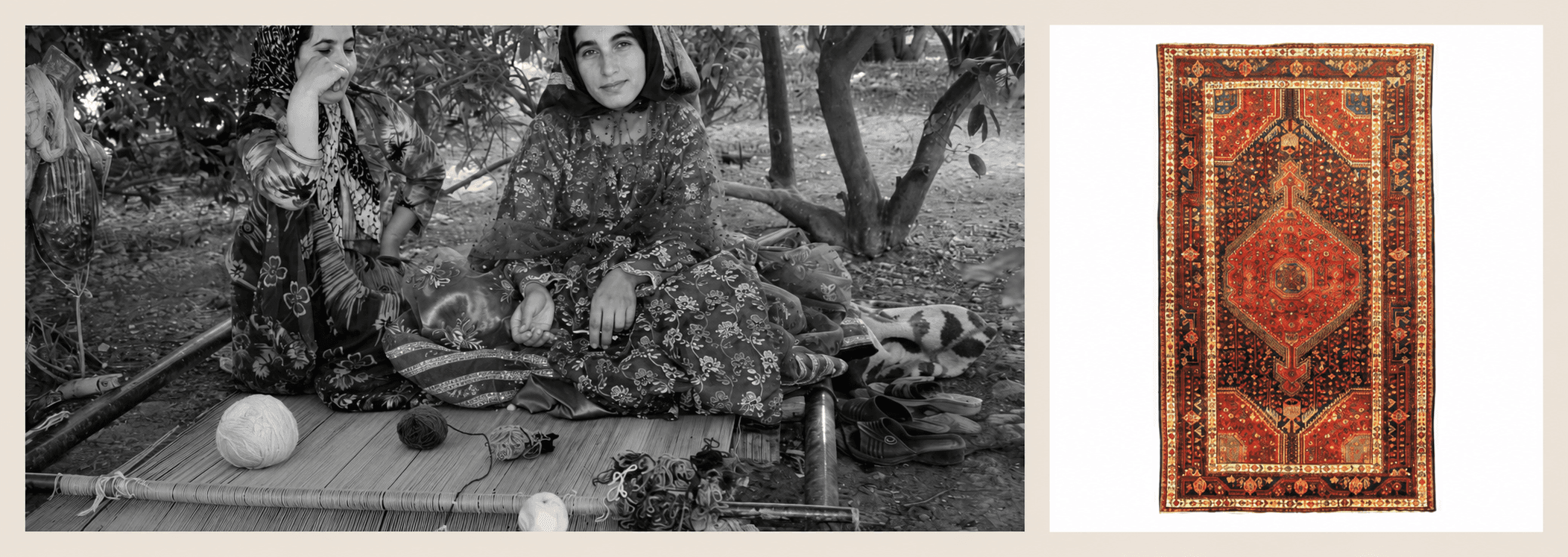
Traditional weaving in Tuyserkan was particularly associated with villages and rural households.
Carpet weaving could be integrated into family life, with women frequently participating as weavers. The loom became a place where technical skills, decorative ideas and patterns were transmitted between generations.
Unlike the formal design systems used in some large carpet workshops, village weavers often relied on remembered patterns, visual examples, small pattern guides or ornak.
An ornak could serve as a reference for the arrangement of motifs, but the weaver might interpret it freely. This flexibility could lead to small variations in the size of motifs, symmetry, spacing and border details.
These variations are among the qualities that make village carpets fascinating to collectors and textile enthusiasts.
A local account of the introduction of weaving
The source article includes a local account concerning Hamzeh Ardalan, described as an influential regional figure, who reportedly brought a carpet weaver named Master Yusuf from Tabriz.
According to this account, Master Yusuf contributed to the development or introduction of carpet weaving in certain villages, including Fathabad.
This story is valuable as part of local oral history. However, without independent historical documentation, it should be presented as a regional tradition rather than a confirmed historical event.
It also illustrates a broader phenomenon in Iranian carpet history: weaving knowledge, designs, technical methods and commercial connections often moved between regions through travelling craftsmen, merchants and family networks.
The transition from household craft to commercial production
Like many rural weaving areas of Iran, Tuyserkan's carpet production was influenced by changing economic conditions.
Traditional household weaving gradually became connected to wider commercial markets. Traders and intermediaries helped bring raw materials, designs and market requirements into villages.
As demand changed, so did the materials and colours used by weavers. Synthetic dyes became more common, commercial yarns increasingly replaced some traditional materials, and production was adapted to different price levels.
Today, the volume of production in Tuyserkan is reported to be lower than in some earlier decades. Older rugs may therefore be particularly interesting to buyers seeking examples of earlier village weaving traditions.
4. The Main Designs and Motifs of Tuyserkan Rugs
Design is one of the most recognisable aspects of Tuyserkan carpets.
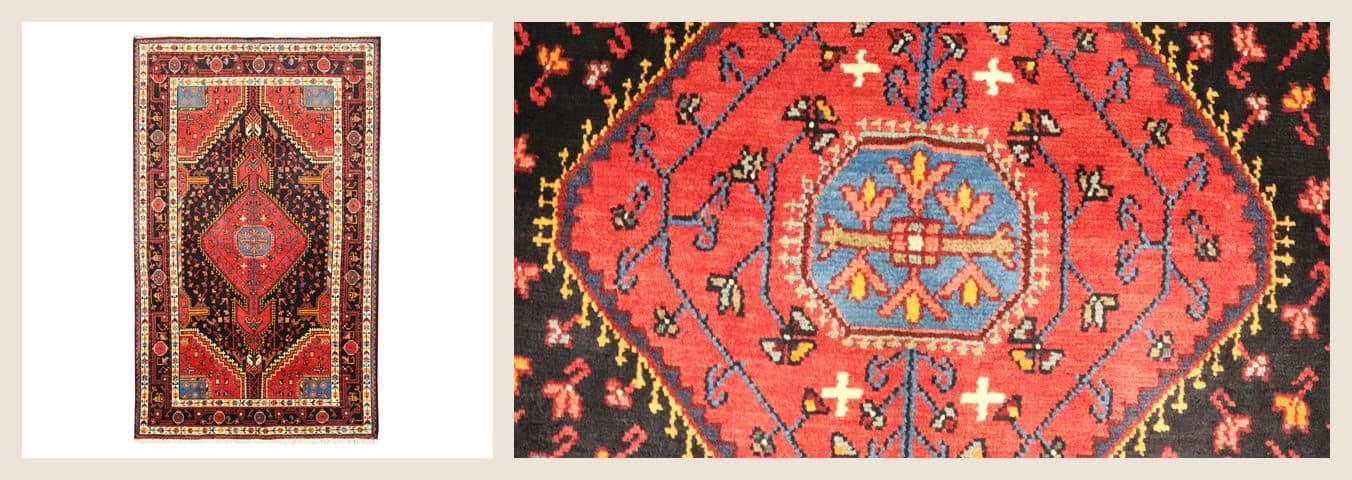
Many examples feature geometric forms, strong outlines, angular transitions and a central medallion that creates a clear visual focus.
The patterns are often structured around a central axis, but the details may be less rigid than those of workshop carpets designed from a formal drawing.
4.1 The central medallion
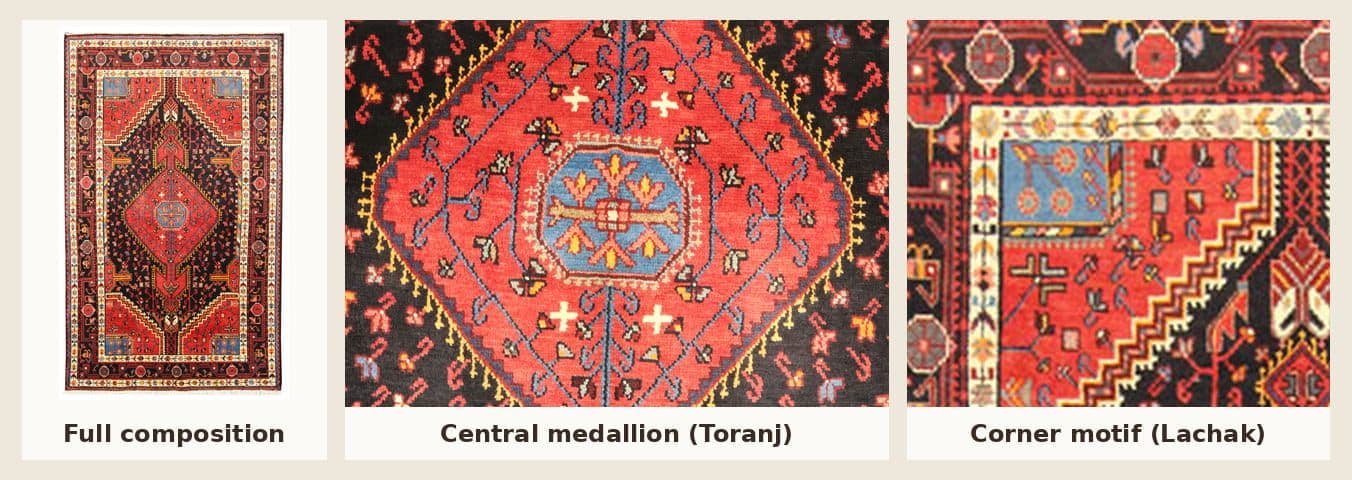
The central medallion is a prominent feature in many Tuyserkan rugs.
It may take the form of an elongated diamond, polygon, stepped geometric figure or a more complex shape incorporating smaller motifs.
The medallion often occupies a large portion of the field, creating a strong contrast between the central composition and the surrounding decorative elements.
In some examples, the central medallion is surrounded by smaller geometric ornaments, stylised flowers, animal forms or repeated symbols.
The overall structure can appear bold and graphic, making these carpets visually effective in both traditional and contemporary interiors.
4.2 The Lachak and Toranj composition
Some Tuyserkan rugs follow the classical Persian arrangement known as Lachak and Toranj .
In this composition:
- The Toranj is the central medallion.
- The Lachak refers to quarter-medallion elements positioned in the corners of the field.
- The surrounding field provides space for smaller motifs and decorative details.
The medallion may be geometric rather than floral, and its shape can be elongated or angular.
This combination of central and corner elements gives the carpet a balanced structure while allowing the weaver to introduce individual variations.
4.3 The Asadughi design
One of the local design names mentioned in the source document is Asadughi, also written as Asadoghi or Agha Sadeghi.
According to the local account included in the source, this design is associated with the village of Abu Darda.
The name may refer to a particular pattern tradition, a local interpretation or a historical association. The precise origin of the name and the development of the design require further documentation.
In rugs described as Asadughi, the composition may include a prominent geometric centre, angular forms and a combination of repeated decorative motifs.
The design is especially useful when discussing Tuyserkan rugs because it demonstrates how local pattern names can preserve regional identity even when the underlying motifs are shared with neighbouring weaving areas.
4.4 Malicheh and Ajdar
The source also refers to Malicheh and Ajdar.
These names are associated with local pattern terminology, with Ajdar reported as another name for a Malicheh-related design.
The word Ajdar is associated with the dragon in Persian cultural vocabulary, although the interpretation of the specific motif in a carpet should depend on the actual woven form rather than the name alone.
Geometric designs in village carpets sometimes preserve names whose origins are no longer fully understood by contemporary weavers or merchants.
4.5 Zageh patterns
Zageh is another regional design name mentioned in the source.
The source associates certain weaving traditions and patterns with villages including Abu Darda, Malicheh and Zageh.
These village associations are important because they suggest that Tuyserkan's carpet identity is not limited to the town itself. It is the wider network of settlements and weaving households that helped develop the region's distinctive carpet vocabulary.
4.6 Geometric motifs
Common geometric elements found in Tuyserkan-style rugs may include:
- Diamonds and lozenges
- Hexagonal and polygonal forms
- Stepped outlines
- Angular hooks
- Stylised flowers
- Small medallions
- Repeated border motifs
- Symmetrical arrangements
Geometric design is particularly well suited to hand weaving because it can be constructed through the systematic placement of knots.
The visual language can be highly structured while still allowing considerable creative freedom.
4.7 Animals, birds and symbolic forms
Village rugs may contain stylised representations of birds, animals or other figurative elements.
These motifs are not always realistic. Instead, they may be simplified into geometric shapes that fit naturally into the carpet's overall design.
In some rugs, a bird may appear as a small decorative element; in others, animal forms may be integrated into the field or border.
Because village weavers often worked from memory or familiar design references, motifs could change shape over time.
A motif that appears animal-like to a modern viewer may have a different meaning within its local weaving tradition.
4.8 Why patterns vary from one rug to another
Not every Tuyserkan rug follows the same design.
The differences may be influenced by:
- The village where the rug was woven
- The weaver's personal interpretation
- The pattern reference used
- The age of the rug
- The intended size
- The buyer's preferences
- The availability of yarn and colours
- The influence of neighbouring weaving traditions
For this reason, it is better to speak of characteristic design tendencies than of a single fixed Tuyserkan pattern.
5. Colours and Dyeing Traditions
Colour is one of the most expressive characteristics of Tuyserkan rugs.
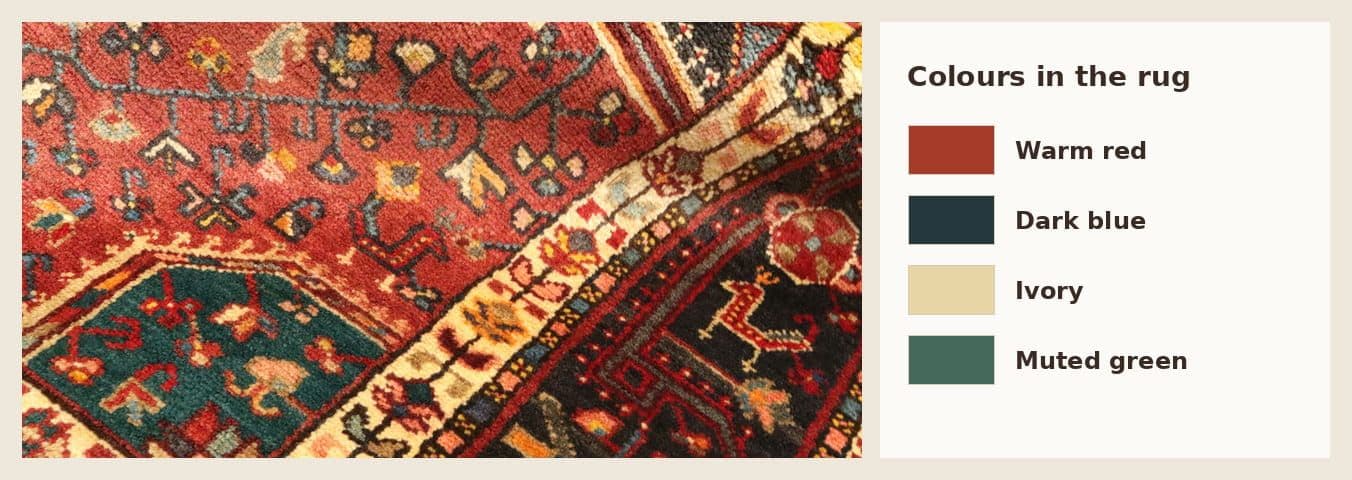
Many examples use a strong contrast between dark blue or navy backgrounds and warm red motifs. Other colours may include ivory, beige, brown, muted blue, yellow, green and occasional secondary tones.
The palette often gives these carpets a distinctive appearance: bold, grounded and visually rich without necessarily relying on a large number of colours.
Red and dark blue
Red is frequently an important colour in regional Persian village carpets. In Tuyserkan examples, red may appear in the central medallion, field motifs, corner decorations or borders.
Dark blue and navy can create a contrasting background that makes red and lighter motifs stand out.
The source document notes that deep blue and dark backgrounds, including navy and black, are common in contemporary examples, while strong reds and blues are important regional colours.
These combinations can produce a carpet with a dramatic visual presence.
Ivory and lighter colours
Ivory, cream and beige can provide contrast within the design.
They may appear in:
- Main borders
- Secondary borders
- Motif outlines
- Small floral or geometric details
- Medallion highlights
Lighter colours are particularly useful in balancing darker fields and preventing the design from appearing visually heavy.
Natural dyes
Historically, many Iranian village carpets used dyes obtained from plants, insects and other natural sources.
Natural dye traditions across Iran include materials such as madder for red tones, indigo for blue, and various plant-based materials for yellow and other shades.
However, the precise dye sources used by Tuyserkan weavers in particular periods cannot be established simply from the carpet's appearance.
The supplied source mentions the use of natural dyes in earlier village weaving and occasional use of plant-based dyes in some contemporary rural production.
Synthetic dyes
Synthetic dyes became increasingly common in Persian carpet production as they became commercially available and more affordable.
Their use allowed weavers to obtain a wider range of colours and more consistent shades, but it also changed the appearance of some regional carpets.
In Tuyserkan rugs, both natural and synthetic dyes may be encountered, depending on age, origin and production circumstances.
A bright red, dark blue or green cannot, by itself, prove whether a carpet was dyed naturally or chemically.
How colour changes with age
The appearance of an old rug is influenced by more than the original dye.
Factors include:
- Exposure to sunlight
- Washing and cleaning
- Oxidation
- Wear of the wool pile
- Previous repairs
- Differences in the original dye batches
- Storage conditions
A well-aged wool carpet may develop subtle tonal variations that contribute to its character.
Some older rugs have a softer, more muted appearance, while others retain surprisingly strong colours.
It is important not to confuse age-related colour variation with poor dye quality without examining the carpet in detail.
6. Weaving Structure and Technical Characteristics
Understanding the structure of a Tuyserkan rug helps explain its appearance, weight, durability and suitability for different uses.
6.1 The Turkish or symmetrical knot
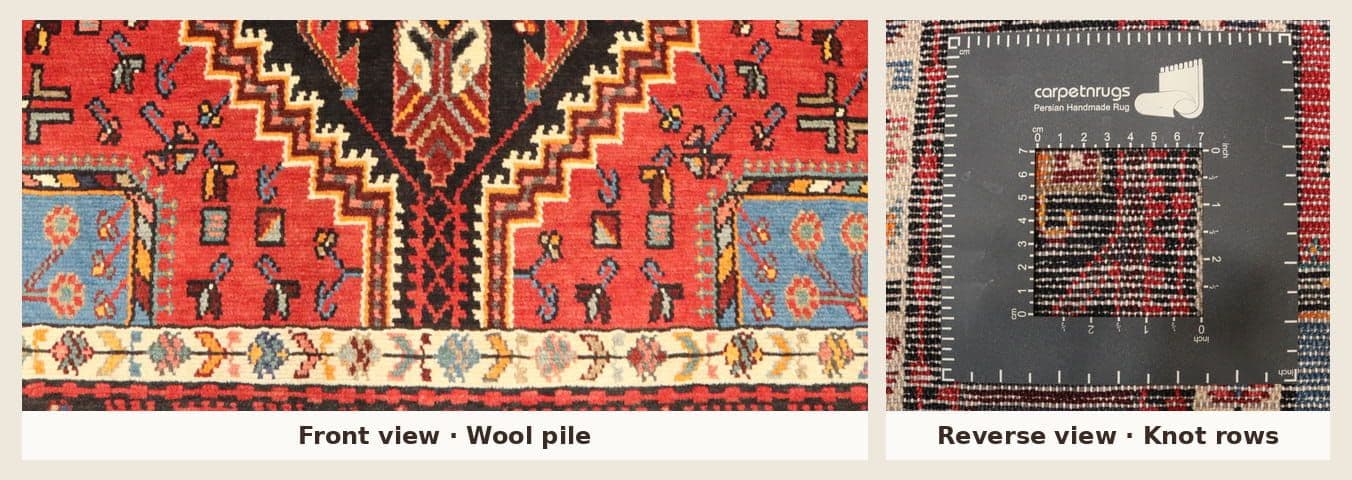
Many Tuyserkan rugs are woven using the symmetrical knot, commonly called the Turkish knot or Ghiordes knot.
In this technique, the yarn wraps around both warp threads and is secured in a symmetrical manner.
The symmetrical knot is used widely in western Iran, Anatolia and several other weaving regions.
The presence of a Turkish knot is consistent with the weaving traditions of the region, but it is not sufficient on its own to identify a rug as Tuyserkan.
Many rugs from other regions also use the same knot.
6.2 Cotton foundation
The source article describes cotton warp and cotton weft as common in Tuyserkan rugs.
Cotton provides a stable foundation for the knotted pile.
The warp threads form the longitudinal structure of the rug, while the weft threads pass between rows of knots and help secure the weaving.
The strength and condition of the foundation are important factors in a rug's overall durability.
6.3 Wool pile
Wool is commonly used for the pile of traditional Tuyserkan rugs.
Wool is valued for its resilience, insulating properties and ability to retain a rich appearance when properly maintained.
The source describes the use of hand-spun wool in some traditional examples, although the yarn used in any individual rug should be assessed rather than assumed.
The quality of wool can vary significantly.
Factors that influence pile quality include:
- Fibre quality
- Preparation and spinning
- Yarn thickness
- Dyeing process
- Knotting technique
- Finishing
- Wear and maintenance
6.4 Single-weft construction
The source describes contemporary Tuyserkan carpets as generally single-wefted.
In regional carpet terminology, this refers to the number and arrangement of weft insertions between knot rows.
Single-weft construction is found in many western Iranian village carpets.
The technical structure should be assessed alongside knot type, pile, foundation, density and overall workmanship rather than treated as an isolated indicator of quality.
6.5 Thick pile and substantial texture
Many Tuyserkan carpets are relatively coarse or medium-coarse in construction, with a substantial wool pile.
This gives them a tactile quality that differs from fine, closely knotted workshop carpets.
The pile may feel thick and soft, and the carpet can have a solid appearance.
A thicker pile is not automatically an indicator of superior quality. It can be a characteristic of the regional style, but the wool quality, knotting, foundation and finishing determine how well the carpet performs over time.
6.6 Knot density
The source article gives a contemporary density range of approximately 35–40 knots within its stated regional counting convention.
However, knot-density terminology and measurement conventions can vary. Measurements may refer to knots per square decimetre, knots per square metre, or different counting systems.
For that reason, a rug's density should always be described using a clearly defined measurement method.
A lower knot density does not necessarily mean a poor-quality rug.
A coarser village carpet may be designed for durability, visual clarity and everyday use rather than extremely detailed imagery.
7. Sizes and Formats of Tuyserkan Rugs
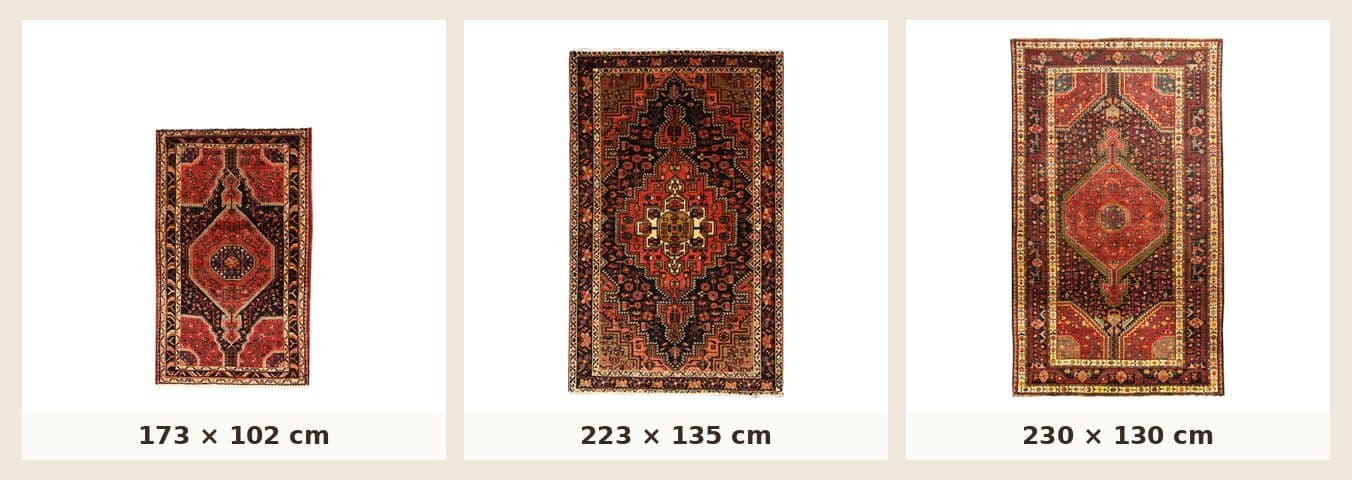
Tuyserkan rugs have traditionally been produced in a range of sizes, from small decorative pieces to larger carpets suitable for living spaces.
The source article mentions sizes ranging approximately from small rugs of around two square metres to carpets of approximately twelve square metres, although individual examples vary.
Common formats found within the wider regional weaving tradition may include:
- Small rugs
- Prayer-sized or decorative pieces
- Zar-o-nim and other traditional Iranian formats
- Medium-sized room rugs
- Long runners
- Larger rectangular carpets
Why smaller formats are important
Smaller rugs and runners were particularly practical in village homes.
They could be used in different rooms, placed beside beds, positioned in corridors or used to cover specific areas of the floor.
Their dimensions were often influenced by the size of the loom and the practical needs of the household or buyer.
Because many Tuyserkan designs are geometric and visually strong, even a relatively small rug can become a prominent feature in a room.
8. Tuyserkan Rugs Compared with Malayer and Nahavand Rugs
Tuyserkan is part of a rich carpet-producing landscape in western Iran. It is useful to compare its rugs with those of nearby weaving centres, especially Malayer and Nahavand.
These regional traditions share geographical proximity and certain technical and aesthetic influences, but they are not identical.
Tuyserkan vs. Malayer
Malayer rugs are known for a wide range of designs, including geometric, floral and all-over compositions.
Depending on the village and period, Malayer carpets may have highly distinctive repeated motifs and varied field structures.
Tuyserkan rugs often display a strong geometric character and may feature prominent medallions, angular forms and dark backgrounds.
However, the distinction is not absolute. Some Tuyserkan rugs resemble neighbouring Malayer examples, and some Malayer rugs may share design elements found in Tuyserkan.
Tuyserkan vs. Nahavand
Nahavand rugs are also part of the western Iranian village-carpet tradition.
They can exhibit geometric patterns, strong colour combinations and substantial wool pile.
Differences may be found in proportions, motif arrangements, construction details and the characteristics of particular village traditions.
The source document suggests that Tuyserkan rugs are often narrower or shorter in proportion than some Nahavand rugs and describes certain Tuyserkan examples as using materials of comparatively lower quality. This should not be applied as a universal judgement to every rug from either region.
9. Vintage and Older Tuyserkan Rugs
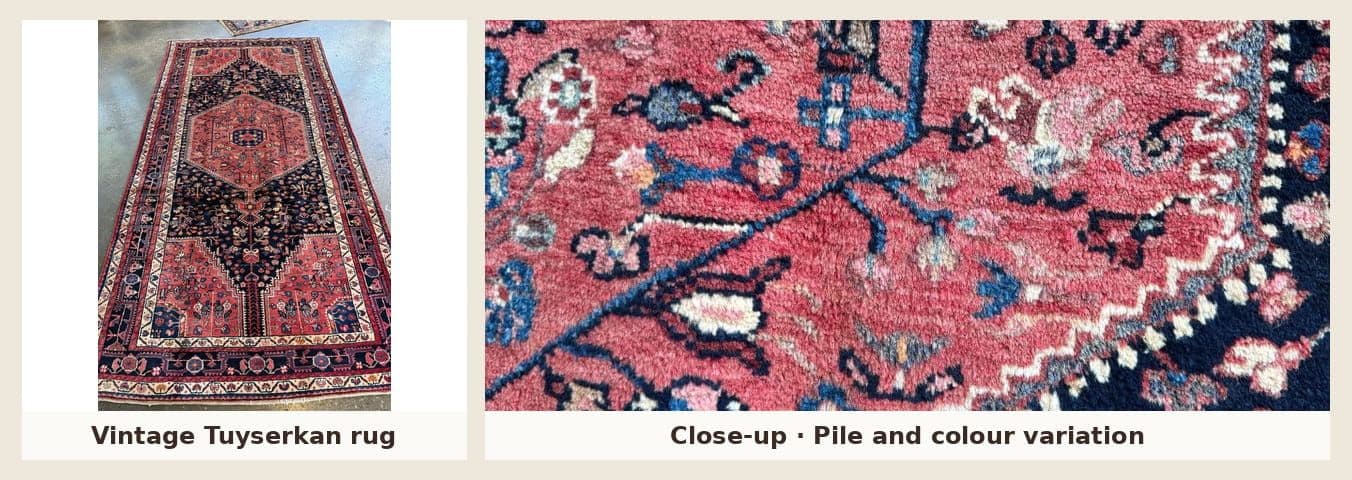
Older Tuyserkan rugs can be particularly interesting because they preserve earlier weaving practices, colour combinations and design interpretations.
The value of an older carpet does not depend only on its age.
A rug may be attractive because of:
- Its original design
- The quality of its wool
- The clarity of its pattern
- The richness of its colours
- Its condition
- Its proportions
- Its rarity
- Its documented origin
- The presence of traditional details no longer common in modern production
Patina and the character of older wool
Age can change the appearance of a carpet.
The surface may develop a soft sheen, the pile may become more compact, and colours may become more muted.
Some older carpets have a particularly appealing balance of dark and light tones.
This visual character is sometimes described as patina, although the term should not be used to disguise serious wear or damage.
Signs of wear
When evaluating a vintage Tuyserkan rug, buyers should examine:
- Pile thickness and consistency
- Areas of exposed foundation
- Edge condition
- Fringe condition
- Repairs
- Colour changes
- Possible moth damage
- Previous washing
- Structural stability
A worn rug may still be beautiful and suitable for use, but its condition should be understood before purchase.
Why older examples may be difficult to find
The production of village rugs depends on the availability of skilled weavers, materials, economic conditions and market demand.
If production declines, older rugs may become more visible in the market than newly woven examples.
This does not automatically make every old Tuyserkan rug rare or valuable, but it can increase interest in well-preserved examples that represent earlier regional traditions.
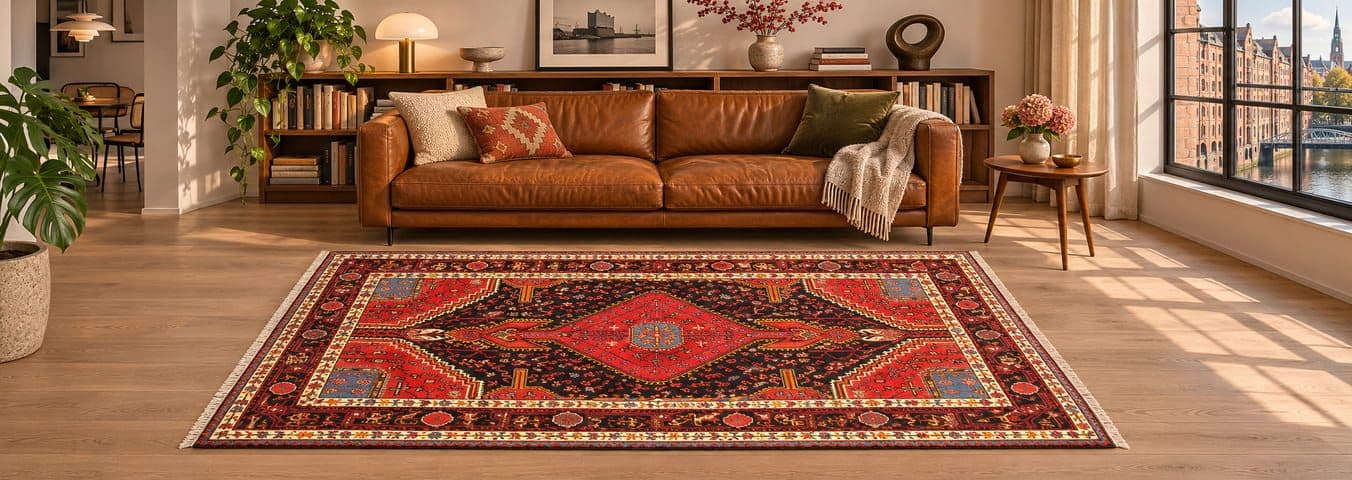
10. Tuyserkan Rugs in Modern Interior Design
The geometric character of Tuyserkan rugs makes them especially interesting for contemporary interior design.
Their bold outlines, angular medallions and rich colours can create a visual contrast with modern furniture, neutral walls and simple architectural spaces.
Minimalist interiors
In minimalist rooms, a Tuyserkan rug can introduce colour, texture and visual identity without requiring additional decorative objects.
A rug with a dark navy background and red geometric motifs can create a strong focal point in a room with white, beige or light grey walls.
Scandinavian interiors
The combination of natural wood, simple furniture, soft lighting and handmade textiles works particularly well with village carpets.
A Tuyserkan rug can bring warmth into an otherwise restrained interior.
Its wool pile adds texture, while the geometric pattern introduces a sense of craftsmanship and individuality.
Traditional and eclectic interiors
Tuyserkan carpets can also work in more traditional settings.
They can complement wooden furniture, antique pieces, bookshelves, leather seating and other natural materials.
In eclectic interiors, a geometric village carpet can help connect objects from different periods and styles.
Choosing the right colour
A rug with a dark background can anchor a seating area.
A carpet with a more faded palette may work well in a room where the rug should contribute texture without dominating the space.
A strong red design can become the main decorative element of a room.
The choice should depend on the rug's actual colour, size, furniture arrangement and lighting.
11. How to Identify an Authentic Tuyserkan Rug
Identifying the origin of a handmade rug is a process of examining several characteristics together.
No single feature can conclusively prove that a carpet was woven in Tuyserkan.
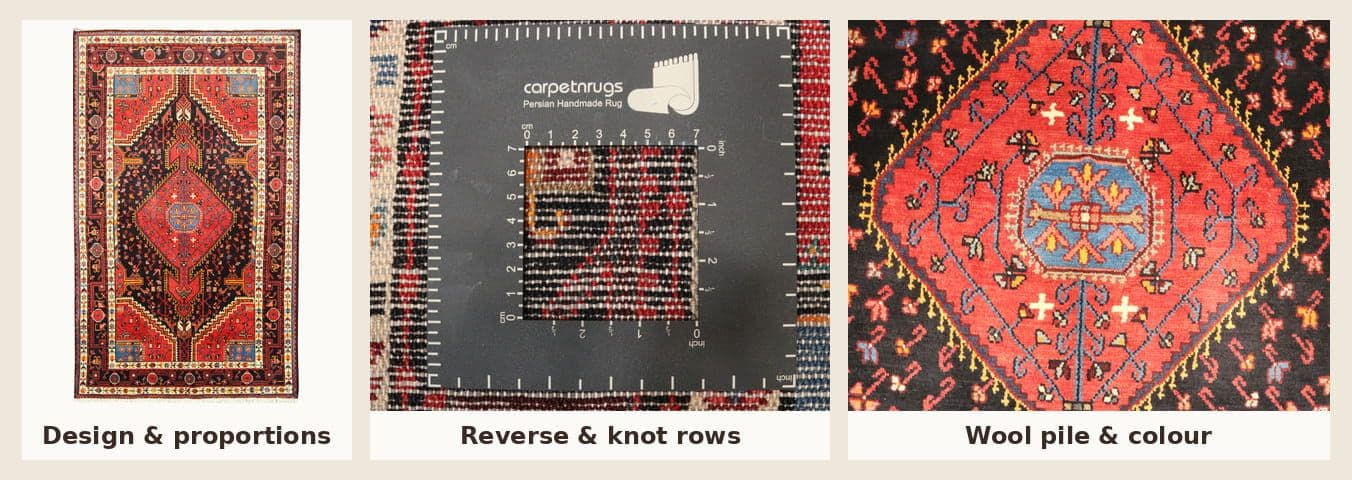
Step 1: Examine the design
Look for the geometric character, central medallions, angular forms, borders and colour combinations associated with the region.
Compare the design with documented examples, but avoid assuming that a particular motif belongs exclusively to Tuyserkan.
Step 2: Examine the back
The reverse side reveals the knot structure and the arrangement of warp and weft.
Look for:
- Hand-knotted structure
- Knot shape
- Knot consistency
- Foundation materials
- Weft arrangement
- Pattern visibility
- Overall weaving regularity
Step 3: Examine the wool
Wool quality can reveal a great deal about a carpet.
Observe the texture, resilience, pile condition, spinning characteristics and how the wool responds to light.
The quality of the wool is often more important for long-term performance than the rug's knot count alone.
Step 4: Examine the colour palette
The combination of colours can help support a regional attribution.
However, dyes can vary considerably with age, production period and the availability of materials.
Colour should therefore be treated as one part of the assessment.
Step 5: Consider size and proportions
Traditional formats and proportions may offer clues about a carpet's regional origin.
Narrow rugs and runners are common across several western Iranian weaving traditions, so their size alone cannot identify a Tuyserkan carpet.
Step 6: Assess the entire carpet
The strongest attribution combines:
- Design
- Structure
- Materials
- Colour
- Dimensions
- Age
- Regional comparisons
- Provenance, where available
For valuable older rugs, a specialist examination is recommended.
12. How to Buy a Tuyserkan Rug: A Practical Guide
A Tuyserkan rug can be an excellent choice for someone looking for a handmade Persian carpet with a distinctive geometric design, a substantial wool texture and an individual character.
Before buying, consider the following.
Choose the right size
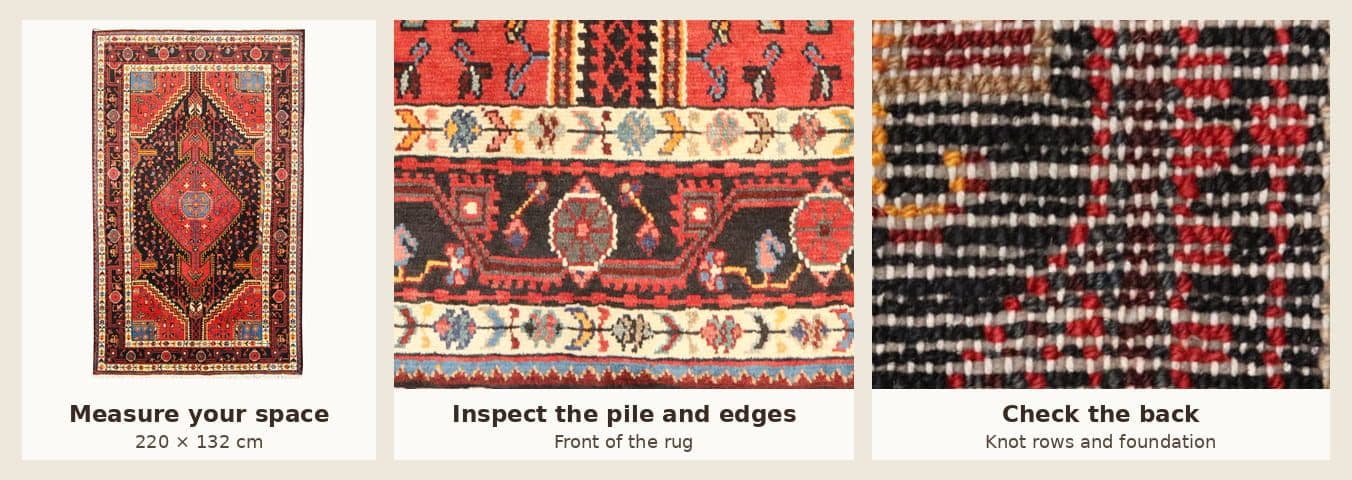
Measure the area where the rug will be placed.
For a living room, consider whether the rug should sit beneath the front legs of the sofa, define the entire seating arrangement or act as an accent.
For hallways, check both the length and width carefully.
Look beyond the knot count
A carpet with fewer knots can still be attractive, durable and well made.
For village rugs, the wool, knotting quality, foundation, design and finishing are often more meaningful than knot density in isolation.
Inspect the wool and pile
The pile should be assessed for wear, unevenness, damage and previous repairs.
If buying online, detailed photographs of the front, back, edges and pile are particularly useful.
Understand the colours
Natural and synthetic dyes can both be found in handmade carpets.
If dye type is important to you, it should be verified rather than inferred from the colour alone.
Ask about the origin
A reliable seller should be able to explain why a rug is attributed to Tuyserkan and what characteristics support that attribution.
If a carpet's origin is uncertain, the description should communicate that uncertainty honestly.
Consider the design in your home
Geometric carpets can be visually powerful.
Think about the rug's dominant colour, the scale of the medallion, the complexity of the border and how these features will interact with your furniture.
Buy for craftsmanship and character
The best carpet is not necessarily the most expensive or the finest knotted.
It is the one whose craftsmanship, condition, materials, design, size and price make sense together.
13. Caring for a Tuyserkan Wool Rug
A handmade wool rug can last for many years when properly cared for.
Regular vacuuming
Regular vacuuming helps remove dust and loose dirt.
Use an appropriate setting and avoid aggressive brushing, especially on older or fragile rugs.
Protect from excessive sunlight
Strong direct sunlight can gradually fade some colours.
If possible, rotate the rug periodically to help reduce uneven fading.
Deal with spills quickly
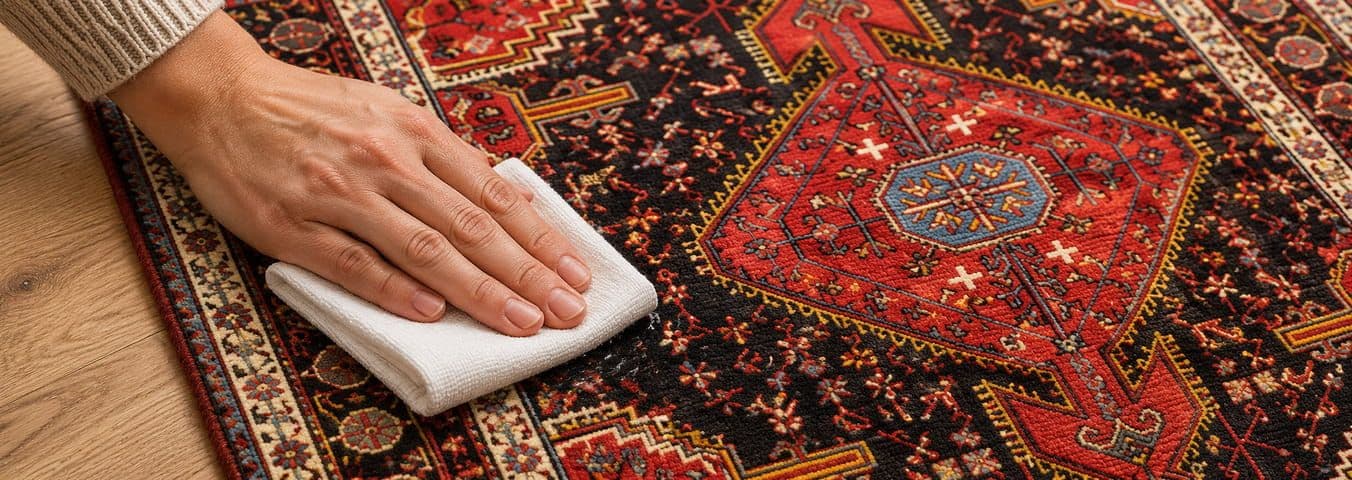
Blot spills with a clean absorbent cloth.
Avoid rubbing, which may push the liquid deeper into the pile or spread the stain.
For difficult stains, professional advice is preferable to experimenting with household chemicals.
Professional cleaning
Handmade Persian rugs should be cleaned according to their materials, dyes, age and condition.
Professional rug washing is particularly important for older rugs, rugs with unstable dyes, heavily soiled carpets and rugs with structural damage.
Rotation
Rotating a rug can help distribute wear more evenly, particularly in areas with frequent foot traffic or furniture placement.
14. The Cultural Value of Tuyserkan Rugs
A village carpet is more than a piece of floor covering.
It represents the relationship between a community and its materials, landscape, domestic life, artistic traditions and economic circumstances.
In Tuyserkan, the carpet-weaving tradition belongs to a wider cultural landscape shaped by rural settlements, agricultural life, local craftsmanship and regional exchange.
The patterns of a carpet may preserve memories of earlier designs, while the materials and construction reflect practical knowledge passed between generations.
Even when a carpet was produced for commercial sale, its design and construction could retain elements of a household craft tradition.
This is one of the reasons handmade village carpets remain culturally significant.
They offer a connection to a form of artistic production in which the maker's individual interpretation is often visible in the finished object.
15. Frequently Asked Questions About Tuyserkan Rugs
What is a Tuyserkan rug?
A Tuyserkan rug is a handmade carpet associated with Tuyserkan and surrounding villages in Hamadan Province, western Iran. It is generally classified within the regional village-rug tradition and is known for geometric designs, wool pile and traditional Persian weaving techniques.
Where are Tuyserkan rugs made?
They are associated with Tuyserkan and nearby rural settlements in Hamadan Province, Iran. Traditional production has been particularly connected with village weaving communities.
What patterns are common in Tuyserkan rugs?
Common design characteristics include geometric motifs, central medallions, angular forms, Lachak and Toranj compositions and local pattern names such as Asadughi, Malicheh, Ajdar and Zageh.
What colours are used in Tuyserkan rugs?
Traditional and contemporary examples may feature red, dark blue, navy, ivory, beige, brown and other colours. The exact palette depends on the rug's age, origin and materials.
Are Tuyserkan rugs hand-knotted?
Traditional Tuyserkan carpets are handmade and hand-knotted. Many examples use the symmetrical Turkish knot, although construction should be examined on an individual rug.
What materials are used?
Many rugs use wool for the pile and cotton for the foundation. Material choices can vary by period, village, production circumstances and quality.
Are Tuyserkan rugs durable?
Many traditional examples have substantial wool pile and robust village-style construction. Durability depends on wool quality, knotting, foundation, condition, maintenance and the way the rug is used.
Are Tuyserkan rugs suitable for modern homes?
Yes. Their geometric designs and strong colours can work well in minimalist, Scandinavian, contemporary, traditional and eclectic interiors.
Are older Tuyserkan rugs more valuable?
Not necessarily. Age is only one factor. Condition, design, wool quality, rarity, provenance and craftsmanship all contribute to a rug's desirability and value.
How can I distinguish a Tuyserkan rug from a Malayer or Nahavand rug?
Regional attribution requires examining several features together, including design, colour, structure, materials, proportions and provenance. Because these weaving regions are geographically close and share traditions, there can be significant overlap.
Do Tuyserkan rugs use natural dyes?
Some older examples and some village-produced carpets may use natural dyes. Synthetic dyes are also common. Dye type should not be determined solely from appearance.
Are Tuyserkan rugs still being woven?
Carpet weaving continues in the wider region, although production has reportedly declined compared with some earlier periods. Availability varies, and many rugs offered in the market may be older examples.
16. Conclusion: The Distinctive Character of Tuyserkan Rugs
Tuyserkan rugs represent an important part of the village carpet traditions of western Iran.
Their appeal lies in the combination of geometric design, expressive colour, woollen texture, practical construction and the individuality of handmade weaving.
They are not defined by one pattern or one technical feature. Rather, their regional identity emerges from the relationship between the landscape, village communities, weaving traditions, local design vocabulary and the changing history of carpet production.
For collectors and interior enthusiasts, Tuyserkan rugs offer something particularly appealing: a handmade Persian carpet whose beauty comes not only from its decorative composition, but also from the character of its craftsmanship.
A well-chosen Tuyserkan rug can bring warmth, texture, colour and cultural depth into a contemporary home while preserving the visual language of a regional weaving tradition.