
Nahavand Rugs: Discover a Lesser-Known Tradition of Persian Carpet Weaving
Nahavand belongs to the diverse weaving heritage of western Iran. Rugs attributed to the region can feature floral patterns, vase-like motifs, central medallions and varied colour combinations.
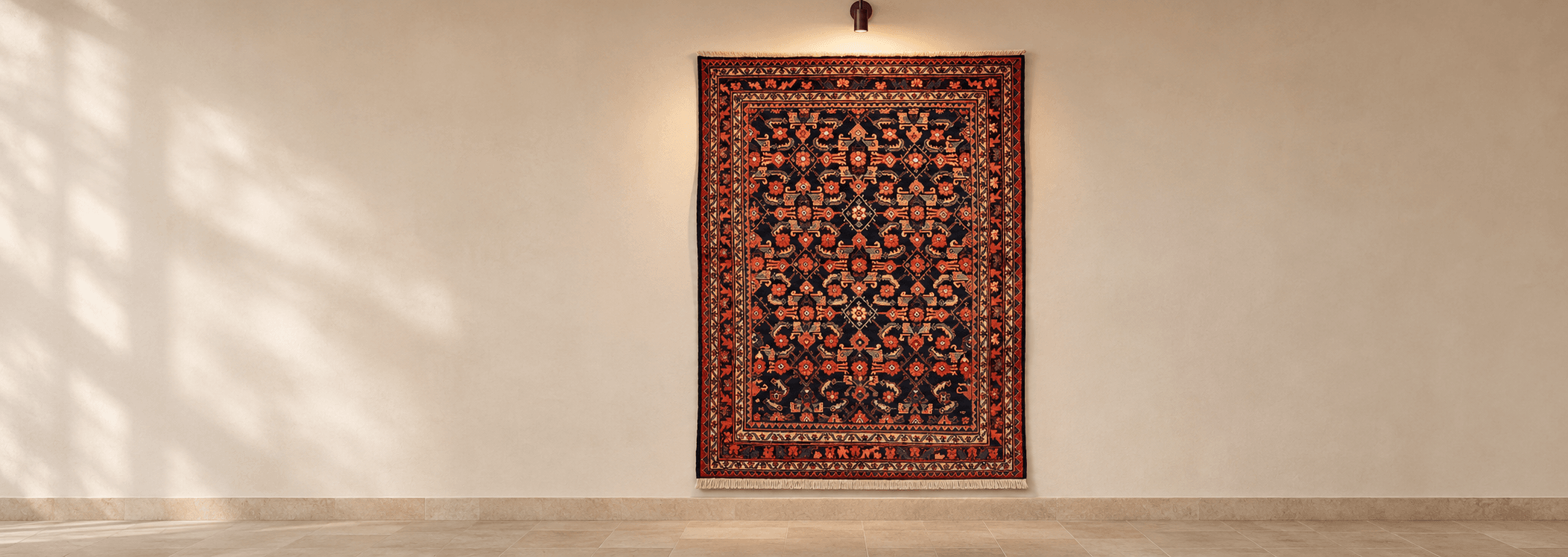
When people think of Persian rugs, they often picture rich colours, intricate floral patterns and beautifully detailed designs. Yet the world of Persian carpet weaving extends far beyond its best-known names. Alongside famous weaving centres such as Tabriz, Kashan and Nain, there are regional traditions that deserve greater attention from today's rug enthusiasts.
Nahavand rugs are one such example.
Associated with the town of Nahavand in Iran's Hamadan Province, these rugs belong to the wider weaving tradition of western Iran. Examples attributed to the region may feature floral motifs, striking colour combinations and designs in which the border and central field appear to flow into one another.
For anyone interested in handmade rugs with a distinctive regional character, discovering Nahavand is an opportunity to look beyond the familiar names and explore another part of Iran's rich weaving heritage.
In this guide, we will look at where Nahavand rugs come from, what makes their designs interesting, which colours and patterns you may encounter, and what to consider when buying and caring for a handmade rug.
1.Where Do Nahavand Rugs Come From?
Nahavand lies in the south-western part of Hamadan Province, in western Iran, within the broader Zagros region. Like several neighbouring areas, it has a tradition of carpet weaving closely connected with local life and craftsmanship.
Historically, weaving was more than a way to produce a household furnishing. Skills were passed from one generation to the next, while designs developed through a combination of local taste, available materials, contact with neighbouring weaving areas and changing market demands.
This helps explain why Nahavand rugs should not be viewed as a single, uniform product. Rugs associated with the region can differ in their patterns, colours, dimensions and construction.
Carpet weaving in Nahavand is also recognised in Iranian cultural heritage sources. However, it is important to distinguish the history of a regional weaving tradition from the documented age of a particular design. The existence of a long-standing carpet-making tradition does not, by itself, prove that every pattern seen today has remained unchanged for centuries.
For collectors and buyers alike, this distinction matters. A rug's appeal is not determined by age alone. Design, craftsmanship, condition, materials and the story that can reliably be told about its origin all contribute to its interest and value.
2. What Makes Nahavand Rugs Interesting?
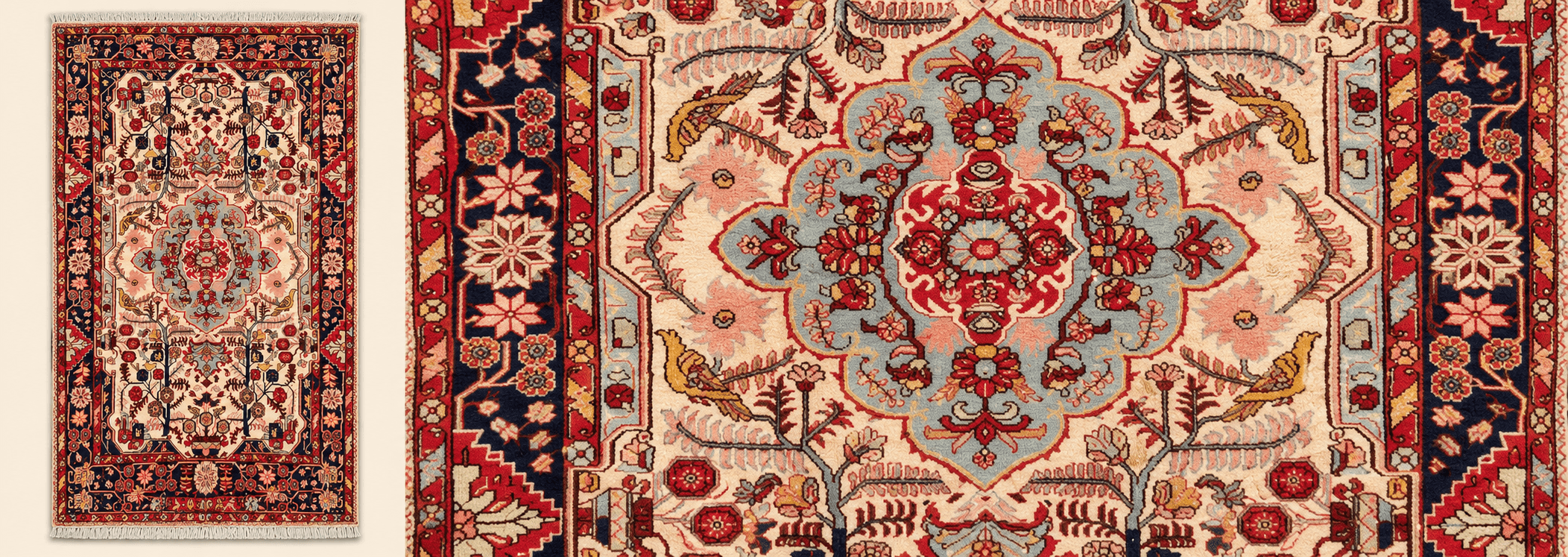
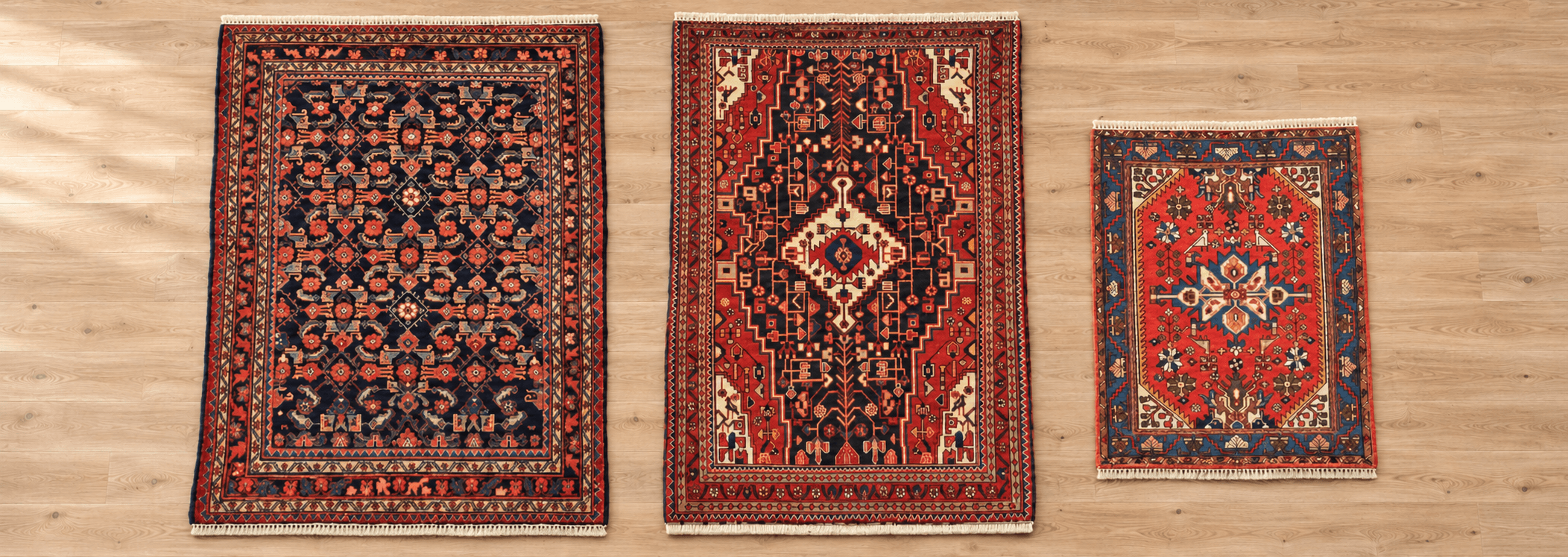
There is no single design that defines every rug attributed to Nahavand. Some examples have a central medallion, while others feature floral arrangements, vase-like motifs or more freely organised patterns.
One particularly interesting feature described in some regional examples is the relationship between the border and the central field.
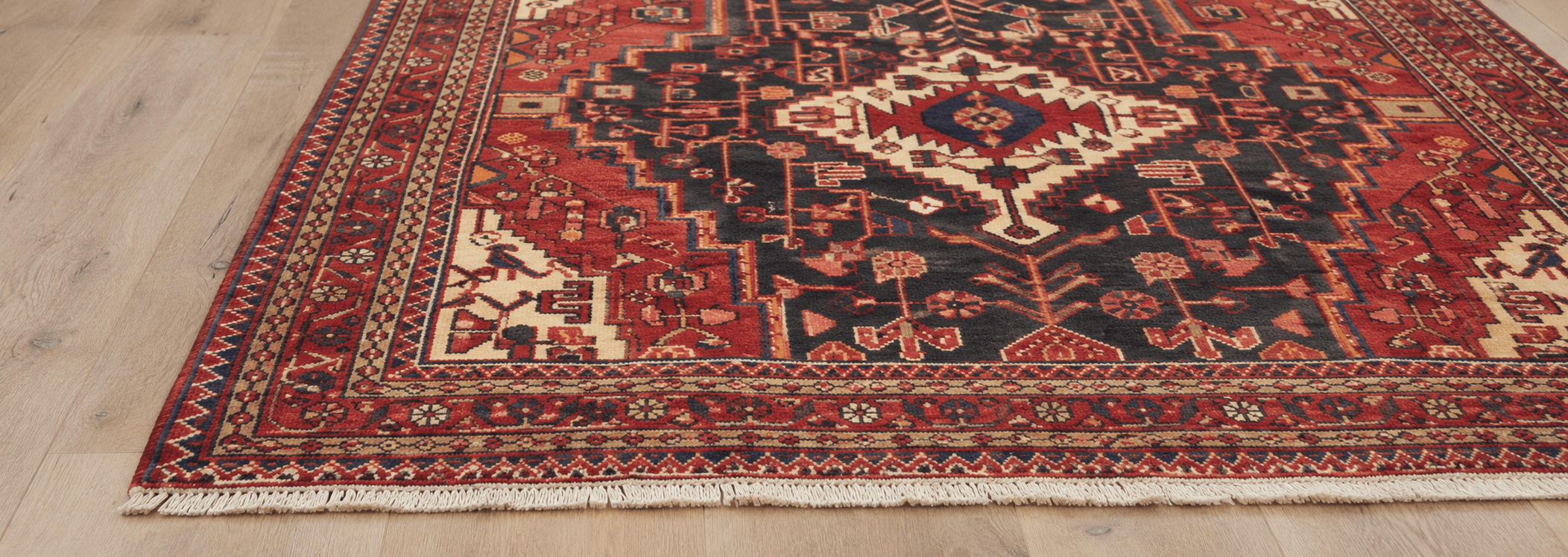
The border is the decorative band running around the outside of a rug. The field is the main area inside it. In certain rugs attributed to Nahavand, floral elements appear to extend from the border into the field, creating a sense of movement rather than keeping the two areas completely separate.
This is one of the visual details worth looking for when comparing examples.
Other features that may catch the eye include:
- Floral motifs: Flowers, leaves and branching forms play an important role in many designs.
- Expressive colour combinations: Contrasting colours can give the patterns depth and visual energy.
- Regional variation: Rugs attributed to Nahavand are not all alike. Individual examples may differ considerably in design, size and weaving structure.
These characteristics can help us appreciate a rug's style, but none is conclusive proof of where it was made. A reliable regional attribution should take several features into account, along with any available information about the rug's history.
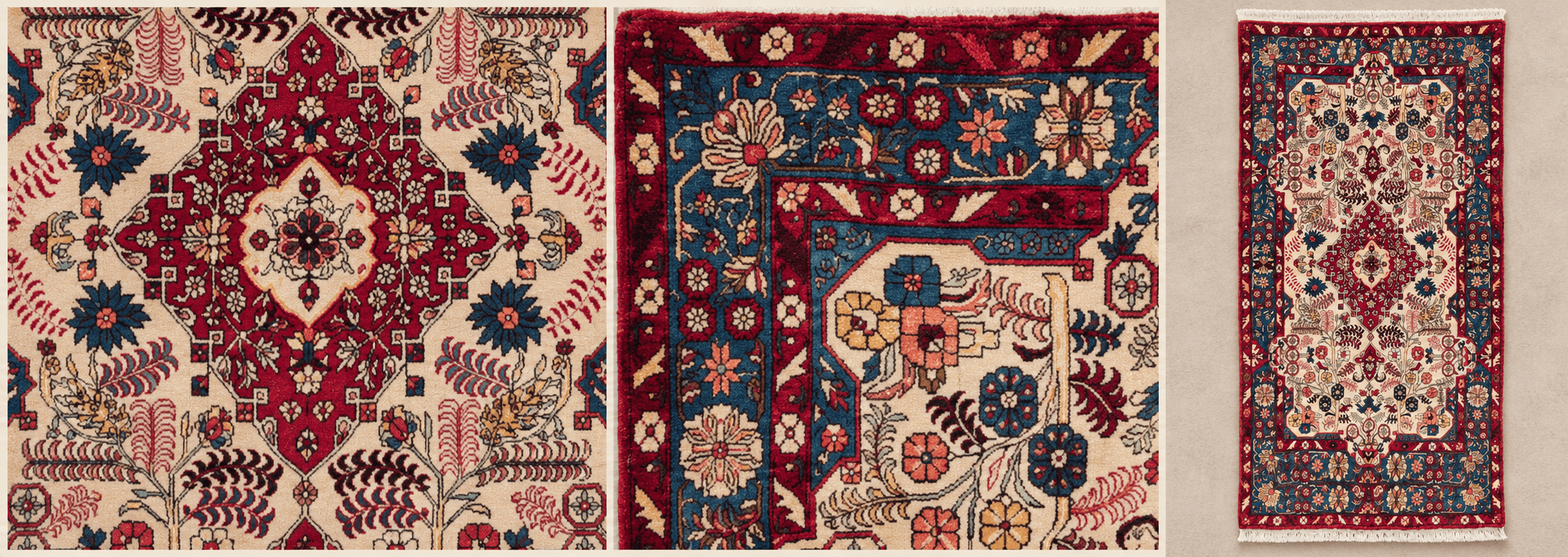
3. Nahavand Rug Designs: From Floral Patterns to Central Medallions
One of the pleasures of exploring Persian rugs is discovering how different patterns organise the space of a carpet. Some designs are inspired by flowers and plants; others rely on geometric forms or a strong central arrangement. Many combine these elements.
Several design types are mentioned in descriptions of rugs attributed to Nahavand.
The Lattice and Medallion Layout
A traditional Persian medallion design usually has a prominent motif in the centre, often balanced by decorative elements in the corners. In Persian rug terminology, this arrangement is commonly known as lachak-toranj, referring to the corner pieces and central medallion.
This composition is found in many Persian weaving traditions, including examples attributed to Nahavand. The presence of a medallion alone, however, does not establish a rug's place of origin. Its shape, surrounding motifs, border and overall design must be considered together.
Vase and Floral Designs
Some descriptions of Nahavand rugs mention vase-like arrangements and floral compositions. Depending on the individual rug, flowers and branches may form the main focus of the design or appear alongside other decorative elements.
For contemporary interiors, these patterns can be particularly appealing. They bring detail and character to a room, especially when paired with simpler furniture and understated colours.
Kalleh-Goli: A Local Design Associated with Eshvand
Among the local design names associated with the region is Kalleh-Goli, also referred to in some accounts as Kalleh-Gi Eshvand. The name is linked in local descriptions to the village of Eshvand and to floral arrangements appearing around the rug.
One account describes bouquets positioned around the carpet, with elements extending towards the central field. This offers an interesting clue to the visual character of the design.
However, the precise history of the name and the date when the pattern first appeared have not been firmly established in the sources consulted. It is therefore more accurate to present this as a local design tradition associated with Eshvand rather than as a historically proven origin story.
Other names, including Lat-Sifi, Gol-Khar, Tarikhi and Gol-Heydar, also appear in descriptions of local weaving traditions. The available information does not define all these designs in sufficient detail to describe their exact shapes with confidence. Clear photographs and further documentation from local weavers and collectors would help preserve this knowledge.
4. The Colours of Nahavand Rugs
Colour is often the first thing we notice when looking at a rug. In rugs attributed to Nahavand, the palette can vary, and no single colour should be treated as a defining feature of every example.
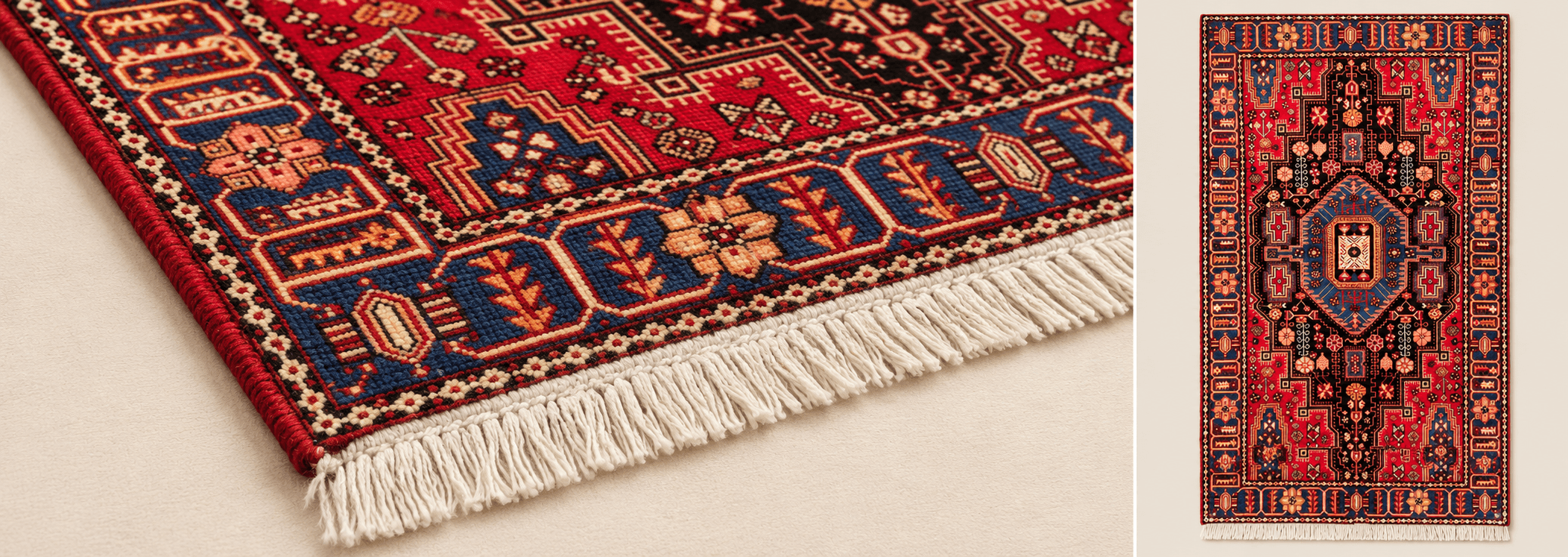
Some descriptions emphasise red and related warm shades. Other examples are noted for dark blue grounds and strong contrasts between the background and the pattern.
These differences may reflect the individual weaver's choices, the period of production, the intended market and the materials used.
A dark ground can make lighter floral motifs stand out, while a lighter background can give a rug a different visual character. The overall effect depends on how the colours work together, rather than on any one shade in isolation.
Are Nahavand Rugs Made with Natural Dyes?
Natural dyes have a long history in Persian carpet weaving, while synthetic dyes also became part of rug production over time. It is therefore unsafe to assume that every old rug was naturally dyed or that every newer rug uses synthetic colours.
The appearance of a rug in a photograph is not enough to establish which dyes were used. If natural dyes are important to your purchase, ask the seller what evidence or production information supports the claim.
A practical buying tip: Choose colours that work with your room and personal taste, but also examine the condition of the rug and ask questions about its materials and history.
5. How Are Nahavand Rugs Made?
A handmade pile rug is created by tying individual knots around its underlying structure. These knots form the visible pattern and contribute to the texture and character of the finished carpet.
Rugs attributed to Nahavand, like rugs from other parts of western Iran, can vary in their construction. Knotting methods, the arrangement of the wefts, wool quality and pile height may differ from one example to another.
You do not need to be a carpet specialist to make a more informed purchase. A few practical checks can tell you a great deal about a rug's condition.
Look at the back as well as the front. Check the edges and fringes, and look for areas where the pile has worn down. Ask whether the rug has been repaired or restored, and whether the seller can provide information about its materials and origin.
An older rug does not necessarily need to look new to be attractive. Gentle signs of age can be part of its character. However, significant wear, poorly executed repairs or structural damage should be understood before you buy.
The key is to assess the individual rug rather than assume that every example from a particular region has the same construction or quality.
6. Do Nahavand Rugs Suit Modern European Interiors?
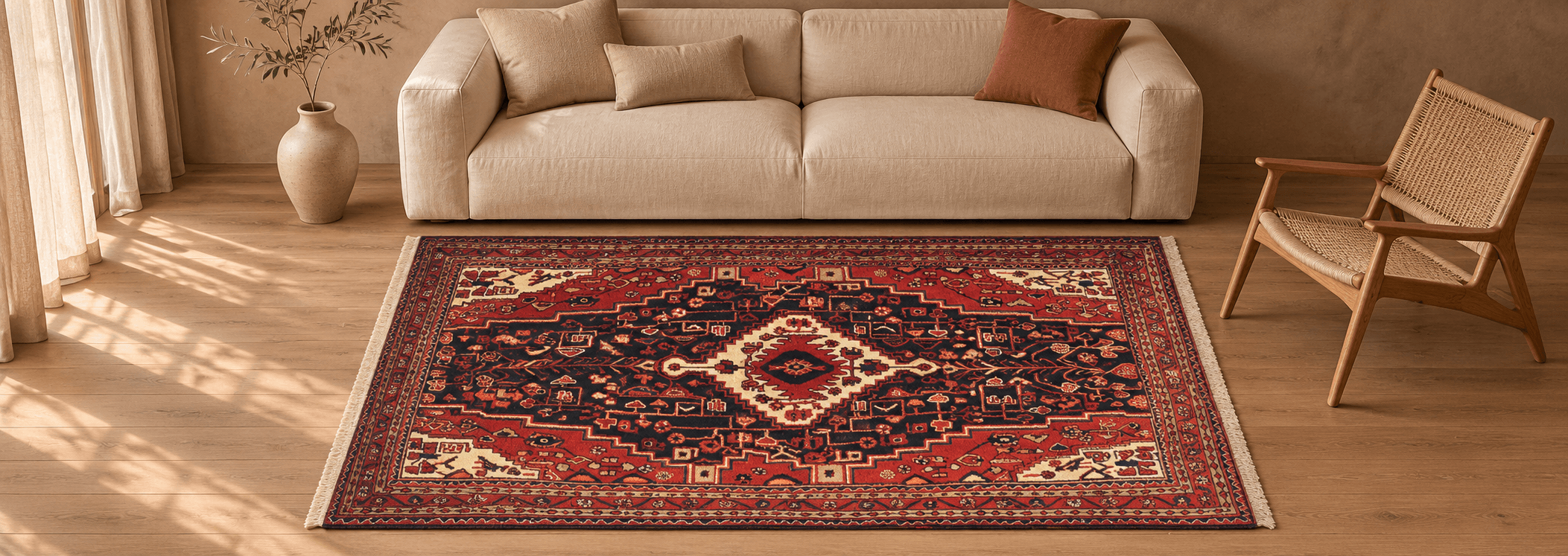
Handmade Persian rugs can work beautifully in a wide range of interiors, from traditional homes to contemporary spaces with pale walls, simple furniture and wooden floors.
A rug attributed to Nahavand may be a good choice for such settings, depending on its colours, pattern and size.
In the Living Room
A floral rug with a strong palette can become the focal point of a living room. If your sofa and other furnishings are relatively understated, the rug can introduce colour, pattern and a sense of history without requiring major changes to the rest of the room.
In a Contemporary Interior
Modern interiors often rely on clean lines and a restrained colour palette. A patterned handmade rug can provide a welcome contrast, bringing warmth and individuality to the space.
With Natural Materials and Warm Colours
Wood, linen, leather and earthy tones can work well alongside many traditional rug designs. The best combination depends on the rug itself: some palettes create a subtle, harmonious effect, while others make a deliberate statement.
Choosing the Right Size
Before buying, measure the area where you intend to place the rug. Think about how it will sit in relation to the sofa, chairs, dining table or other furniture.
A rug that is too small can look disconnected from the rest of the room, while a well-proportioned one can help bring the furniture arrangement together.
7. What Should You Check Before Buying a Nahavand Rug?
If you are considering a Nahavand rug, the regional name is only one part of the story. The individual rug's materials, condition, design and available provenance information matter just as much.
Ask About Its Origin
Find out why the seller attributes the rug to Nahavand. Is the attribution supported by a documented ownership history, information from the original supplier or another reliable source? Or is it based mainly on similarities in pattern and style?
An honest seller should explain the basis for the attribution and be clear when the exact place of manufacture cannot be confirmed.
Examine the Materials and Condition
Ask about the pile material and the rug's construction. If it is an older piece, pay particular attention to the fringes, edges, back and areas that receive the most foot traffic.
Be Careful with Age Descriptions
Terms such as old, semi-antique and antique are not interchangeable. Ask what is known about the rug's age and how that estimate was made. A worn appearance alone does not establish a precise date.
Ask About Repairs and Cleaning
Previous repairs, restoration work and professional washing can affect a rug's appearance and condition. These details should be disclosed before purchase, particularly for older or more valuable pieces.
Choose for Your Home, Not Just for the Name
Think about the room, the amount of foot traffic, the size you need and the colours you enjoy living with. A rug should appeal to you as an object in its own right, not simply because it carries a particular regional name.
8. How to Care for a Nahavand Rug
With sensible care, a handmade rug can remain part of a home for many years. The right approach depends on its materials, construction, condition and the stability of its colours.
A few general habits are useful:
- Vacuum regularly, using a setting suitable for the rug's condition.
- Deal with spills promptly, absorbing moisture without rubbing aggressively.
- Avoid bleach and harsh household cleaning products.
- Limit prolonged exposure to strong direct sunlight.
- Seek professional advice before washing an older rug or one with potentially sensitive colours.
For a stubborn stain or a full wash, the safest method depends on the individual rug. If you are unsure about its dyes or condition, consult a specialist in handmade rug cleaning before attempting treatment.
Conclusion: Discover the Character of Nahavand Rugs
Nahavand belongs to the diverse weaving heritage of western Iran. Rugs attributed to the region can feature floral patterns, vase-like motifs, central medallions and varied colour combinations. Some descriptions also draw attention to the way floral elements connect the border with the main field.
Yet the appeal of a Nahavand rug goes beyond any checklist of design features. Each rug should be appreciated on its own merits, with its craftsmanship, condition, colours and documented history considered together.
There is also more to learn about the local names and patterns associated with the region. Better photographs, recorded accounts from weavers and further study of older examples could help preserve this knowledge for future generations.
At Rugeast, we believe that understanding a handmade rug makes choosing one a more rewarding experience. Knowing something about its design, construction and cultural background helps you look beyond appearance alone and find a rug that feels right for your home.
Frequently Asked Questions About Nahavand Rugs
Where do Nahavand rugs come from?
Nahavand rugs are associated with the town of Nahavand in Hamadan Province, western Iran. They belong to the wider carpet-weaving traditions of the region.
What patterns are found on Nahavand rugs?
Examples attributed to Nahavand may feature floral and vase-like designs, central medallions and local patterns such as Kalleh-Goli, associated in some accounts with Eshvand. Designs vary between individual rugs.
What colours are typical of Nahavand rugs?
There is no single colour palette that defines every Nahavand rug. Red and other warm shades appear in some descriptions, while dark blue grounds and contrasting floral patterns are noted in others.
Are Nahavand rugs handmade?
Nahavand is associated with a traditional carpet-weaving heritage. However, when buying an individual rug, check its construction and the seller's description rather than relying on the regional name alone.
How can I identify an authentic Nahavand rug?
Consider the pattern, construction, materials, condition and any available information about its origin. Similarity to a regional design is useful, but it does not by itself prove where a rug was made.
Do Nahavand rugs suit modern interiors?
Yes. Depending on their colours and patterns, rugs attributed to Nahavand can work in both traditional and contemporary homes. A richly patterned rug can provide contrast in a room with simple furniture and neutral colours.
Are Nahavand rugs durable?
Durability depends on the individual rug's materials, construction, condition and how it is used and maintained. It is best to assess each piece rather than assume all rugs from the region have the same performance.
How should I clean a Nahavand rug?
Regular vacuuming and prompt attention to spills are sensible starting points. For full washing, difficult stains or older rugs with potentially sensitive colours, consult a professional handmade-rug cleaner.