
Erased Design Rugs: When Traditional Patterns Meet Contemporary Art
Erased Design brings together two seemingly contrasting ideas: the rich decorative traditions of Oriental rugs and the visual simplicity of contemporary art.
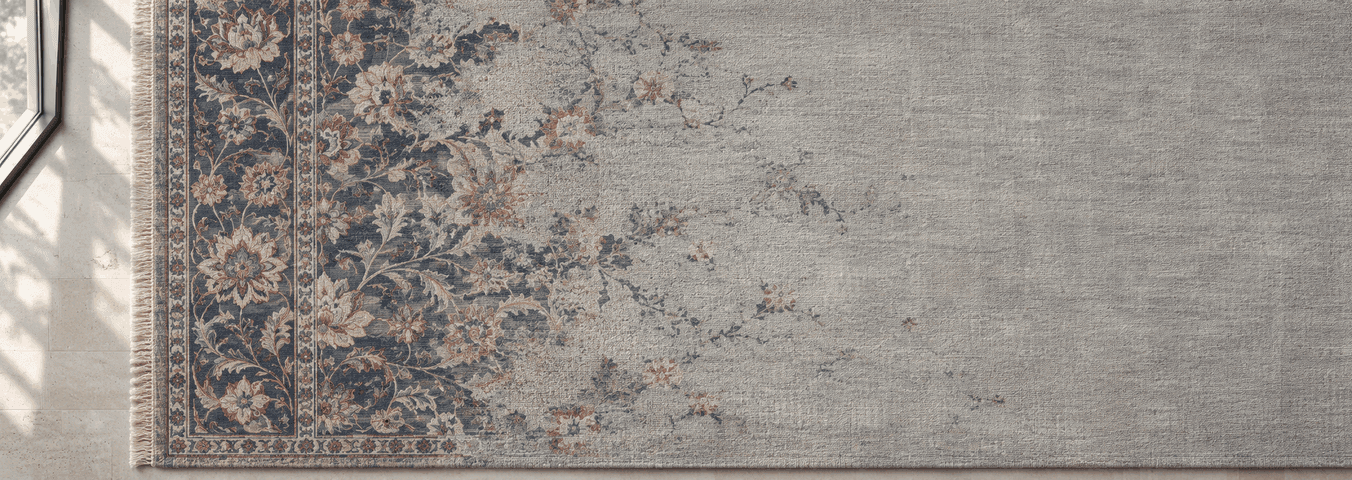
What Happens When a Rug Begins to Forget Its Pattern?
Imagine an old Persian rug.
Its central medallion is still visible. Delicate flowers and intricate borders reveal the skill of the weaver who created it. Yet, across part of its surface, the pattern gradually disappears.
Some details remain remarkably clear. Others seem to have dissolved into the background, as though time has quietly removed them.
Now imagine that nothing has actually been lost.
The rug is newly woven. Its structure is intact. The fading, the missing details and the apparent traces of age have all been carefully considered by a contemporary designer.
This is the fascinating world of Erased Design rugs.
At first glance, these carpets may resemble antique pieces softened by decades of use. Look more closely, however, and an entirely different story begins to emerge.
Their beauty lies not only in the patterns that remain, but also in the spaces where those patterns have deliberately disappeared.
Erased Design brings together two seemingly contrasting ideas: the rich decorative traditions of Oriental rugs and the visual simplicity of contemporary art.
For European homeowners who appreciate traditional craftsmanship but prefer a quieter, more understated interior, this combination can be particularly appealing.
Yet Erased Design is much more than an interior design trend. It raises interesting questions about artistic expression, cultural heritage, craftsmanship and our relationship with objects that appear to carry the marks of time.
To understand these rugs properly, we need to look beyond their faded appearance.
1. What Exactly Is an Erased Design Rug?
An Erased Design rug is a carpet in which parts of the original pattern have been deliberately removed, obscured, softened or visually interrupted.
The effect may be created during the design process, through the selection of colours and materials, by varying the pile height, or through specialist finishing techniques.
The defining characteristic is the intentional relationship between visible and missing patterns.
A traditional Persian carpet might feature a complete central medallion, symmetrical corner designs and carefully organised borders.
An Erased Design interpretation could retain part of that composition while allowing other areas to fade into a nearly plain background.
The result is neither entirely traditional nor completely abstract.
It exists somewhere between the two.
Erased, distressed, faded and overdyed: understanding the differences
These terms are frequently used interchangeably in rug retailing, although they do not describe exactly the same thing.
Term
What it usually means
Erased Design
A deliberate design approach in which selected parts of a pattern appear removed or obscured
Distressed Rug
A rug with an aged or worn appearance, created naturally or artificially
Faded Rug
A rug whose colours or patterns have become less intense
Overdyed Rug
A rug that has undergone an additional dyeing process, often allowing its earlier pattern to remain faintly visible
Vintage Rug
An older rug, with the precise age classification varying between sellers and markets
Antique Rug
A rug of significant age, generally assessed according to its provenance, condition and relevant market conventions
An Erased Design rug does not necessarily have to be old, damaged or chemically treated.
Indeed, some of the most interesting examples are newly hand-knotted carpets in which the disappearing pattern was planned before the first knot was tied.
This distinction matters when assessing craftsmanship, durability and value.
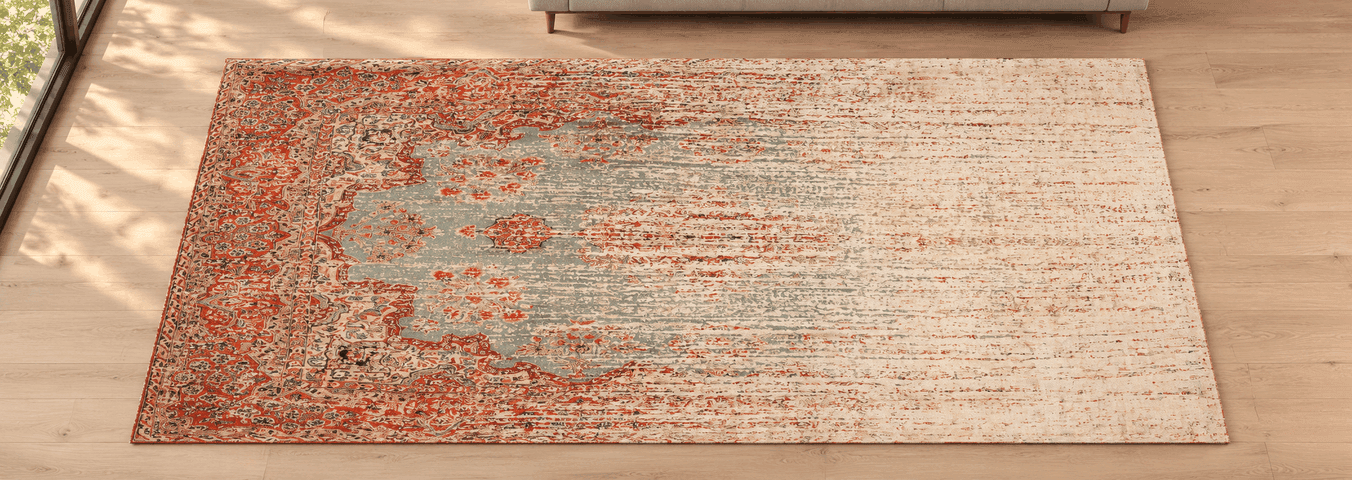
2. From Naturally Worn Persian Rugs to Deliberately Erased Patterns
For centuries, handmade rugs have changed gradually through use.
Foot traffic wears down the pile. Natural and artificial light may alter colours. Cleaning, repairs and environmental conditions can affect the appearance of the surface.
In older carpets, these changes sometimes produce extraordinary visual effects.
A once-brilliant red may become softer. Dark blue areas may lose some of their original intensity. Parts of a floral pattern may remain clearly visible while others become difficult to distinguish.
The resulting surface tells a story of use, age and survival.
Historically, however, such changes were not necessarily considered desirable.
A worn carpet could be less valuable than a comparable example in excellent condition, particularly when damage affected its structural integrity or obscured important design features.
Contemporary interior design has introduced a different perspective.
Today, some buyers are attracted precisely to the irregularities, softened colours and visual character that develop with age.
A naturally worn rug can provide something that a perfectly uniform surface may lack: individuality.
When signs of age become a design language
Erased Design takes this appreciation of ageing a step further.
Instead of waiting for decades of use to change a carpet, designers explore how the visual impression of time can be incorporated into a new composition.
The important difference is intention.
In a naturally worn antique rug, fading and abrasion are consequences of its history.
In a contemporary Erased Design rug, similar visual effects may be carefully planned.
This does not make the two equivalent.
A genuinely antique Persian rug carries historical information, evidence of its original craftsmanship and traces of its actual life.
A newly woven Erased Design rug offers a contemporary artistic interpretation of some of those visual qualities.
Both can be beautiful, but they should be understood and described honestly.
Did Erased Design originate in Persia?
Persian rugs have provided an important source of visual inspiration for contemporary carpet designers.
Their intricate medallions, floral compositions, geometric structures and regional design traditions offer remarkable opportunities for reinterpretation.
However, it would be misleading to claim that Erased Design, as a modern design approach, was invented in Persia.
The deliberate use of fragmentation, visual interruption and apparent deterioration developed within a broader international context of contemporary design.
Persian carpet heritage remains one of its important sources of inspiration, rather than a proven single point of origin.
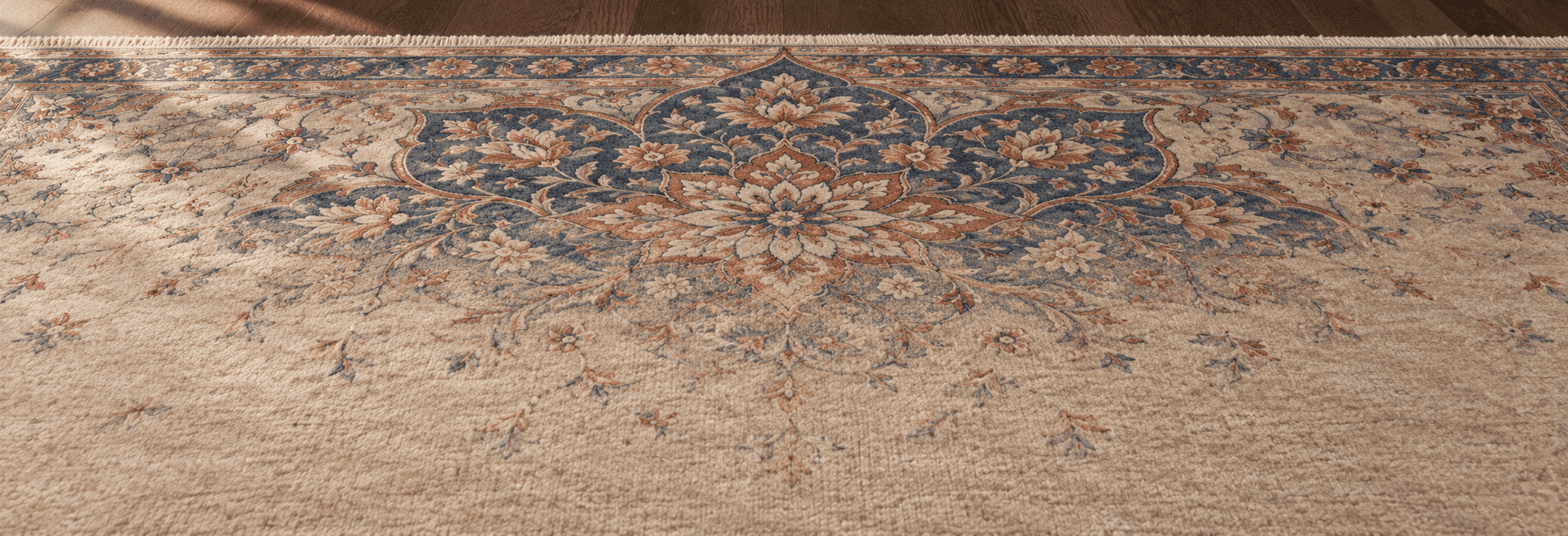
3. Jan Kath and the Reinvention of the Oriental Rug
Among the contemporary designers associated with this approach, German rug designer Jan Kath has played a particularly influential role.
His work demonstrates how traditional hand-knotting techniques and historical Oriental patterns can be brought into dialogue with contemporary visual ideas.
Rather than simply reproducing classical carpets, his collections explore what happens when familiar patterns are interrupted, fragmented or partially concealed.
The result is often striking: a carpet that retains the craftsmanship and visual references of an Oriental rug while appearing entirely at home in a contemporary European interior.
Erased Classic: disrupting traditional order
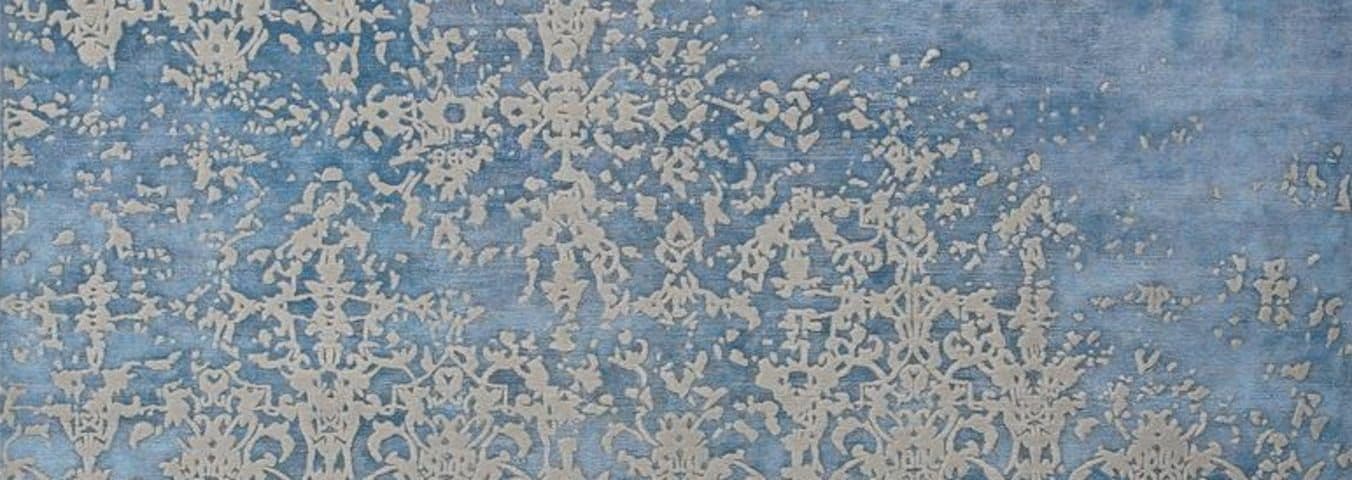
In the Erased Classic collection, classical patterns are combined with areas that appear faded, worn or visually broken.
The contrast is central to the design.
Traditional Oriental carpets often depend on repetition, rhythm and carefully organised ornamentation.
By interrupting this order, the designer changes the way we experience the entire composition.
The eye moves between intricate details and quieter areas, between recognisable historical motifs and abstract surfaces.
The collection also draws inspiration from the appearance of abandoned industrial spaces and the visual traces left by time and nature.
Rather than concealing irregularity, it makes irregularity part of the artistic expression.
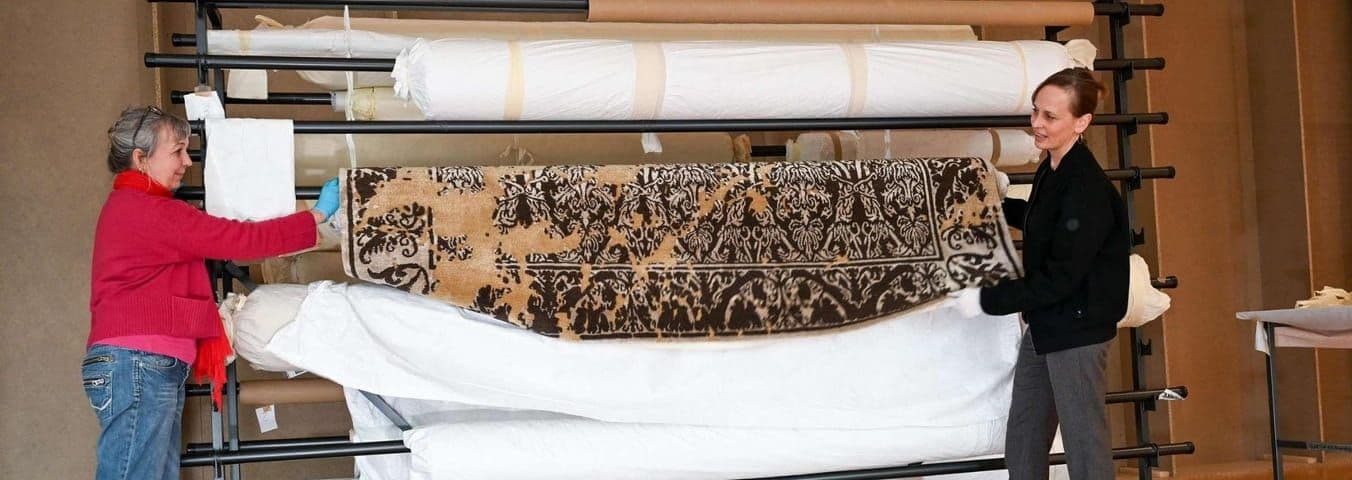
Erased Heritage: revisiting historical carpet traditions
The Erased Heritage collection places particular emphasis on historical patterns.
Its visual references include traditional designs associated with Bidjar in Iran, Mamluk carpets and Konya in Turkey.
These patterns are not merely copied.
They are reinterpreted through a contemporary design language that combines recognisable historical elements with areas of visual disruption.
The underlying message is particularly relevant to the future of handmade carpets: traditional designs do not have to remain unchanged in order to remain meaningful.
They can become the foundation for new artistic interpretations.
Erased Artwork: the surface as part of the creative process
In Erased Artwork, the finishing process itself becomes an important part of the visual result.
According to the designer's published descriptions, specialist treatments are used to create distinctive surface effects.
This illustrates an important technical distinction.
Some Erased Design rugs achieve their appearance entirely through the original weaving plan.
Others depend partly on treatments carried out after weaving.
Although the finished carpets may look similar, their production methods and technical characteristics can differ considerably.
A museum example: Alcaraz Sky
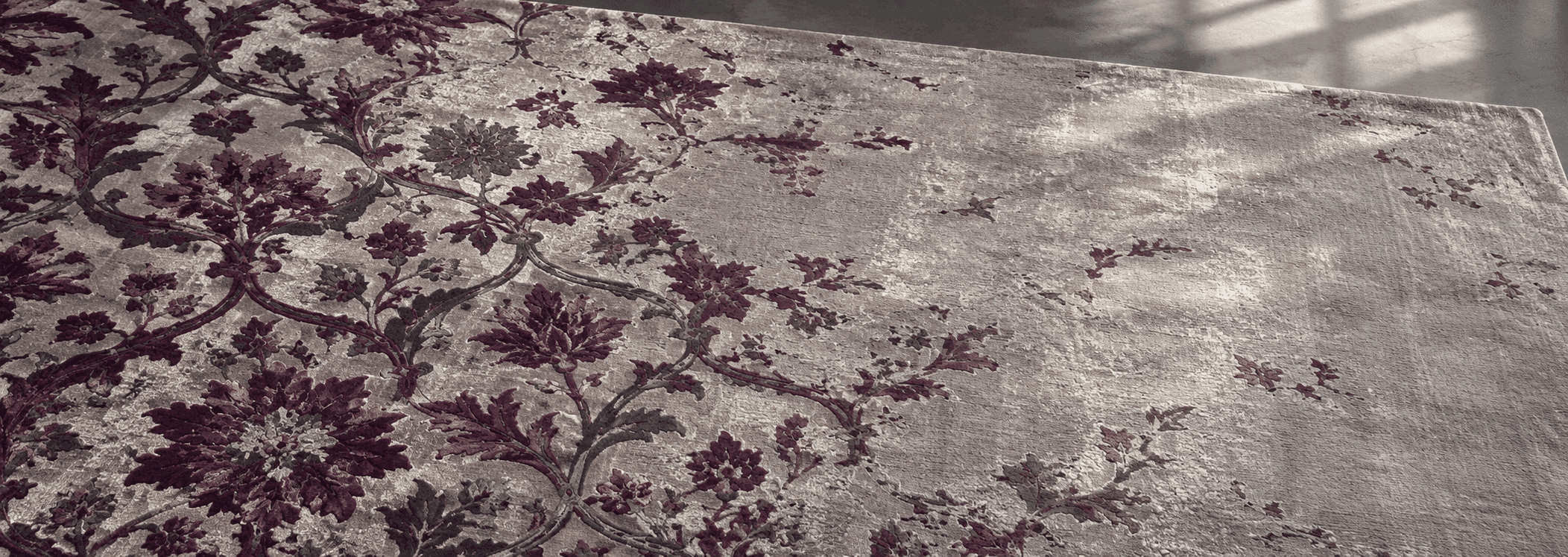
One particularly informative example is Alcaraz Sky, designed in 2011 and represented in the collection of the Museum Angewandte Kunst in Frankfurt.
The carpet combines wool and silk, with variations in the surface contributing to the impression that parts of a classical pattern are disappearing beneath a cloud-like layer.
Its importance lies in the relationship between material and image.
The fading effect is not simply a printed illustration of an old rug.
It is connected to the physical properties of the carpet itself.
The way different fibres reflect light and the way the pile is finished contribute to the visual experience.
This is one of the most interesting possibilities offered by contemporary hand-knotted rug design: the surface can communicate through texture as well as colour.
4. The Beauty of What Is Missing: Understanding the Artistic Philosophy
Why should a partially erased pattern be attractive?
After all, traditional carpet design has often celebrated completeness, symmetry and technical precision.
The answer lies in the relationship between order and interruption.
An Erased Design rug can be visually compelling precisely because we recognise the structure that has been disturbed.
The carpet as a visual memory
A handmade rug can be understood as a record of cultural knowledge.
Its patterns may reflect regional traditions, workshop practices, artistic influences and generations of accumulated skill.
When a contemporary designer partially obscures these patterns, the result may suggest the way human memory works.
Some details remain vivid.
Others become indistinct.
We recognise fragments of a larger story without necessarily seeing the whole picture.
This is an interpretation rather than a universal explanation of the designer's intentions, but it offers a useful way of understanding the emotional appeal of these carpets.
Negative space: allowing the pattern to breathe
In visual design, negative space refers to areas that are not occupied by the dominant subject or decorative elements.
A densely patterned Persian rug may contain intricate ornamentation across almost its entire surface.
By contrast, an Erased Design rug may include substantial areas with little visible pattern.
These quieter sections can create a sense of openness.
They also give greater visual importance to the motifs that remain.
Imagine a traditional central medallion surrounded by an elaborate floral field.
If much of the surrounding pattern is softened, the remaining section of the medallion may become more prominent.
The design can feel simpler without losing its connection to traditional craftsmanship.
Why the mind completes unfinished patterns
One useful concept comes from Gestalt psychology, particularly the principle of closure.
Human perception often attempts to recognise complete forms even when parts of those forms are missing.
When we see only a fragment of a familiar geometric motif, we may mentally reconstruct the rest.
In an Erased Design rug, this can make the viewer more actively involved in interpreting the pattern.
Rather than simply observing a complete composition, we participate in making sense of what remains.
The effect depends on how much visual information is preserved.
If too little of the original pattern survives, the connection may become difficult to recognise.
Is imperfection a form of beauty?
There are interesting conceptual parallels between Erased Design and the Japanese aesthetic idea of Wabi-Sabi, which values qualities associated with impermanence, irregularity and incompleteness.
Both can encourage appreciation of surfaces that do not appear perfectly uniform.
However, these similarities should not be confused with proof of a direct historical connection.
Erased Design is better understood within its own context of contemporary textile and interior design, while recognising that broader aesthetic ideas can help explain its appeal.
5. Four Ways a Traditional Pattern Can Disappear
Not all Erased Design rugs use the same visual approach.
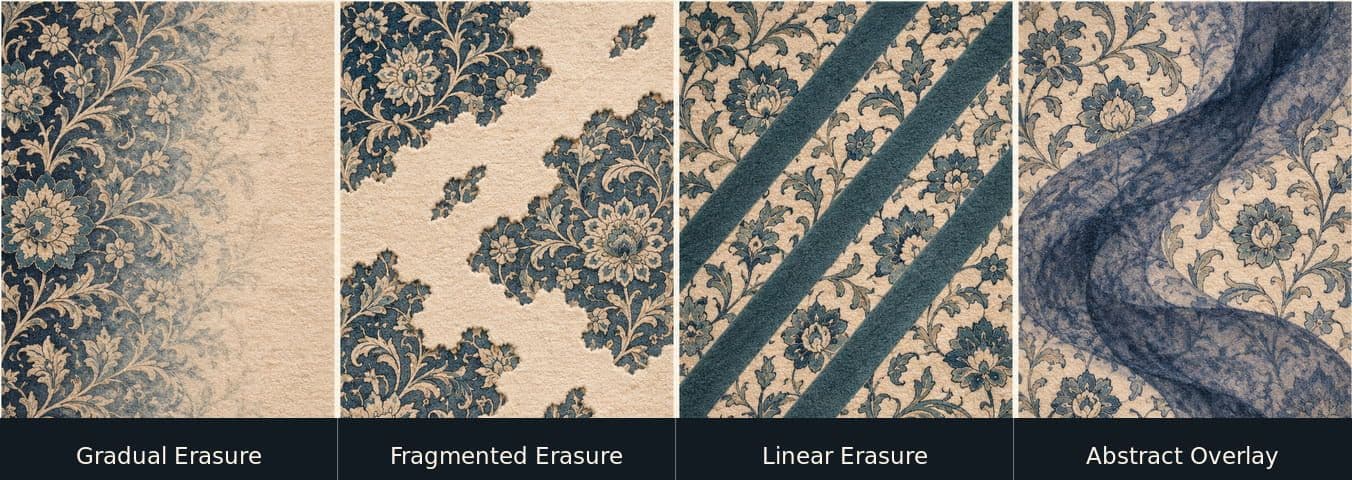
For clarity, we can distinguish four broad compositional methods. These are useful analytical categories rather than an official industry classification.
Gradual Erasure
The pattern slowly loses definition across the surface. One area may remain richly detailed while the opposite side becomes almost plain. This creates a gentle transition between ornament and simplicity.
Fragmented Erasure
Irregular sections of the pattern appear to be missing. The remaining motifs resemble fragments of a larger composition, creating a sense of age, movement or visual disruption.
Linear Erasure
Vertical, horizontal or diagonal bands interrupt the traditional design. This introduces a geometric structure that can contrast strongly with floral or curvilinear motifs.
Abstract Overlay
A new visual layer appears to cover or interrupt the original pattern. The historical design remains partly visible beneath an abstract composition.
How much of the original pattern should remain?
There is no universal formula.
A successful design does not depend on erasing a particular percentage of the surface.
The result depends on the scale of the original motifs, the distribution of colour, the location of the missing areas and the relationship between detailed and quiet sections.
In some rugs, a small interruption can create a strong visual effect.
In others, a much larger area may need to be softened before the composition feels balanced.
The designer's challenge is to create a convincing relationship between what is preserved and what is transformed.
6. How Are Erased Design Rugs Made?
The manufacturing process is one of the most important subjects for anyone interested in buying or evaluating an Erased Design rug.
A similar appearance can be achieved through very different techniques.
Understanding these differences helps explain why two visually comparable rugs may have different prices, textures and long-term performance.
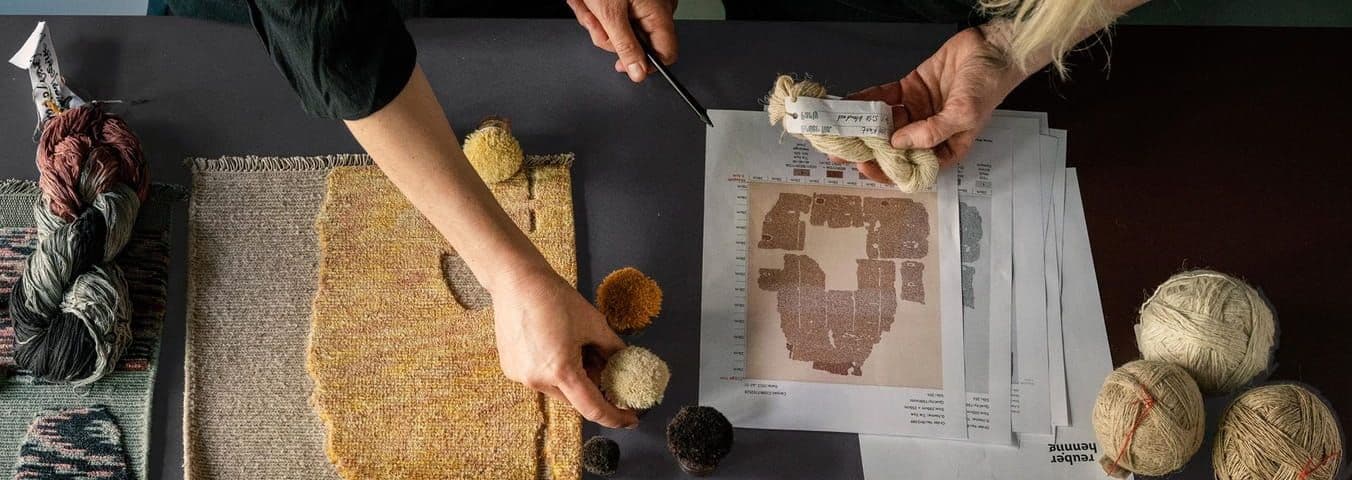
Method 1: Designing the erased pattern before weaving
This is one of the most controlled ways to create the effect.
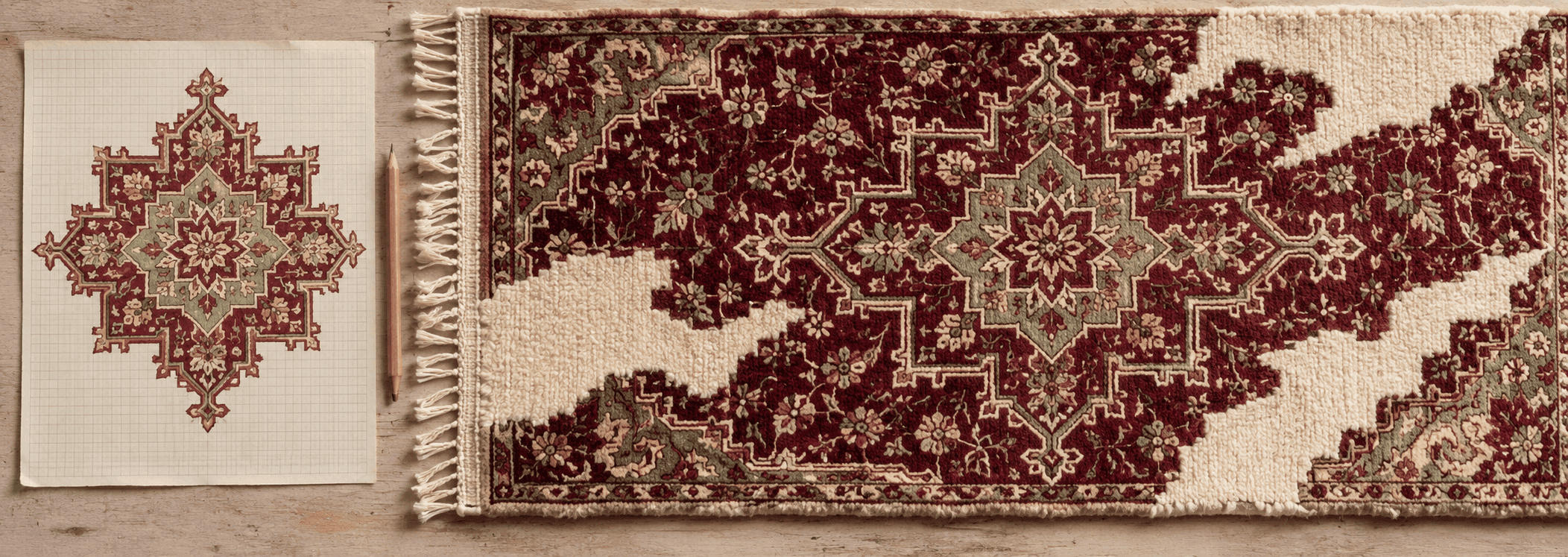
The designer begins with a complete pattern, which may be a traditional Persian composition or an entirely new design.
Selected areas are then modified.
Some motifs may be removed, while others are redrawn using colours close to the background.
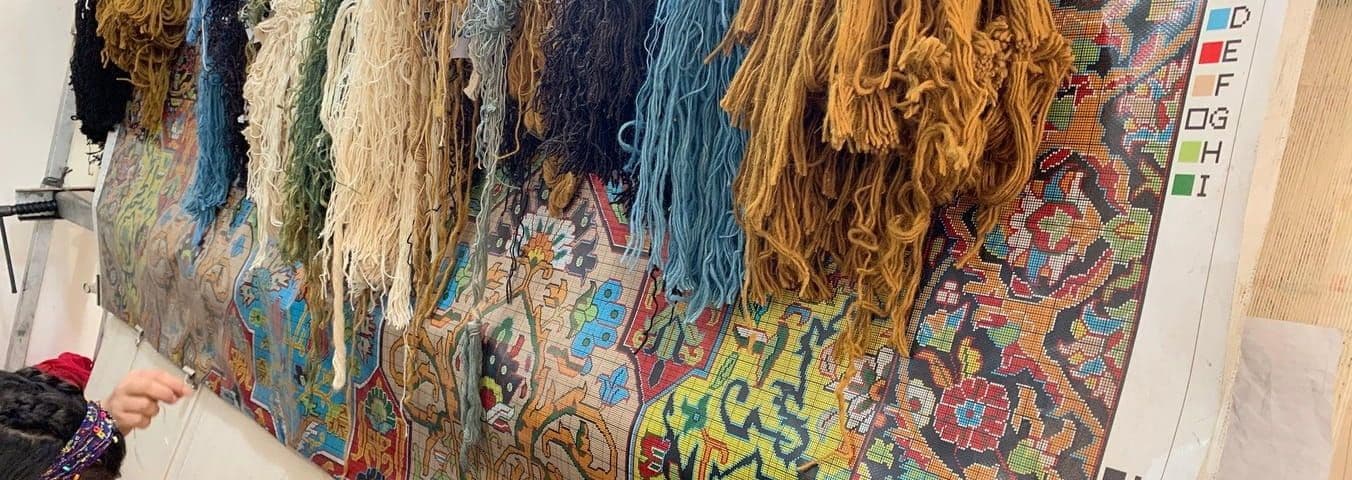
The final design is translated into a weaving plan.
The weaver follows this plan, creating the disappearing pattern as part of the rug's original construction.
The important advantage is that the faded appearance does not require the finished rug to be deliberately damaged.
The pattern is incomplete by design, but the carpet itself can be structurally sound.
Method 2: Colour transitions and reduced contrast
Patterns do not have to disappear completely to become less visible.
A motif can be softened simply by reducing the difference between its colour and the surrounding background.
For example, a dark blue floral pattern might gradually shift towards lighter blue-grey tones.
As the contrast decreases, the pattern becomes harder to distinguish.
Designers can also reduce colour saturation, replacing strong reds, blues or greens with more muted tones.
The final result depends on the relationship between the colours, the materials and the lighting conditions.
Method 3: High–low pile construction
In some rugs, variations in pile height contribute to the design.
Shorter and longer pile areas interact differently with light and shadow.
This can make certain motifs appear more prominent while others become visually subdued.
However, pile height alone does not automatically erase a pattern.
The effect usually depends on the combination of pile structure, colour and fibre properties.
Method 4: Combining wool and silk
Wool and silk offer different visual qualities.
Wool generally produces a softer, more matte appearance, while silk can reflect light more strongly.
When used together, these fibres can create subtle changes in how a pattern is perceived.
A motif that appears prominent from one angle may become less noticeable from another.
This can add depth and movement to the surface.
However, material selection should also reflect the intended use of the rug.
A delicate silk-rich carpet intended for a quiet sitting room may require different care from a robust wool rug used in a busy family living area.
Method 5: Specialist finishing and ageing treatments
Some rugs acquire their distressed or erased appearance after weaving.
Possible techniques include controlled pile finishing, additional dyeing or other specialist treatments.
The exact processes vary between manufacturers.
Some may significantly alter the surface of the carpet.
It is therefore important not to assume that all artificially aged rugs have the same durability.
For rugs subjected to intensive finishing, the quality of the process and the condition of the fibres should be considered carefully.
A visually convincing Erased Design rug should not be judged only by how successfully it resembles an old carpet.
Its craftsmanship and construction remain essential.
7. Persian Carpet Heritage: A Remarkable Source of Contemporary Inspiration
Persian carpet design offers an extraordinary range of possibilities for contemporary reinterpretation.
Its regional traditions include bold geometric compositions, intricate floral patterns, large-scale decorative motifs and highly sophisticated arrangements of colour.
For Erased Design, these traditions are particularly interesting because the original patterns often remain recognisable even after parts have been removed.
Yet each regional style presents different design opportunities.
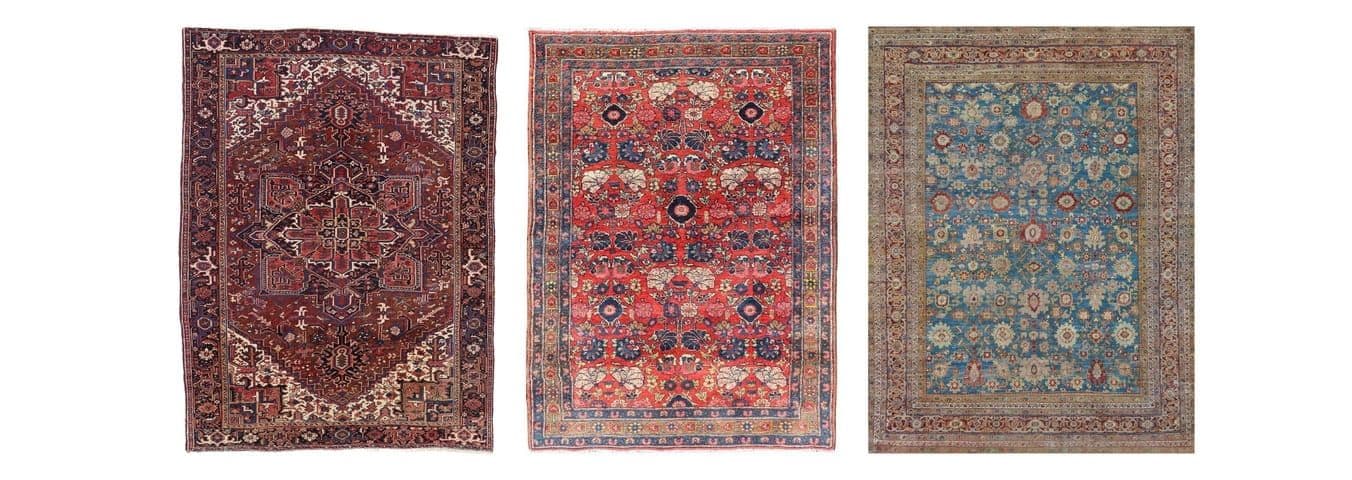
Heriz: strong geometry and architectural character
Heriz carpets, traditionally associated with north-western Iran, are widely recognised for their powerful geometric medallions, angular motifs and distinctive compositions.
Their visual strength makes them particularly suitable for experimentation with interrupted patterns.
A designer might preserve one section of the central medallion while allowing parts of the surrounding field to fade.
The result could retain the architectural character of a Heriz design while introducing a contemporary sense of openness.
For European interiors, such a rug could work particularly well in spaces featuring natural wood, leather, stone or understated furniture.
It is important, however, to distinguish between a rug genuinely woven in the Heriz region and a contemporary rug inspired by Heriz patterns.
The two descriptions are not interchangeable.
Bidjar: intricate detail and layered complexity
Bidjar carpets are known for their sophisticated patterns and, in many traditional examples, their dense and robust construction.
Their decorative vocabulary offers considerable potential for layered erasure.
A richly detailed field can be partially obscured while selected floral or geometric elements remain visible.
This creates a contrast between areas of complexity and visual calm.
The effect can be especially interesting when the original pattern contains multiple levels of detail.
Kashan: elegance, curves and gentle transitions
Classical Kashan carpets often feature graceful floral compositions, central medallions and carefully organised borders.
Their curvilinear designs lend themselves to softer interpretations of erasure.
Instead of sharply interrupting the pattern, a designer might gradually reduce its contrast until the floral details seem to dissolve into the background.
Such an approach can preserve the elegance of the original composition while making it feel lighter and more contemporary.
Sultanabad: generous patterns and understated elegance
Historical Sultanabad carpets are particularly admired for many of their large-scale floral designs and comparatively open compositions.
These characteristics make them attractive sources of inspiration for contemporary rugs with muted colours and restrained ornamentation.
A Sultanabad-inspired Erased Design might combine large botanical motifs with areas of soft beige, warm grey or faded blue.
For a European home where the furniture and architecture already provide strong visual elements, this balance can be especially effective.
Respecting the identity of traditional patterns
Reinterpreting a historical carpet design involves more than borrowing decorative shapes.
Regional rug traditions reflect generations of artistic knowledge, craftsmanship and cultural exchange.
A thoughtful contemporary interpretation should acknowledge those origins.
It should also describe the finished product accurately.
A newly woven rug inspired by a historical Persian design is not automatically an antique Persian carpet, nor does it necessarily originate from the region associated with the pattern.
Transparency is an important part of respecting both the buyer and the heritage behind the design.
8. A Design Experiment: Reimagining a Heriz Carpet
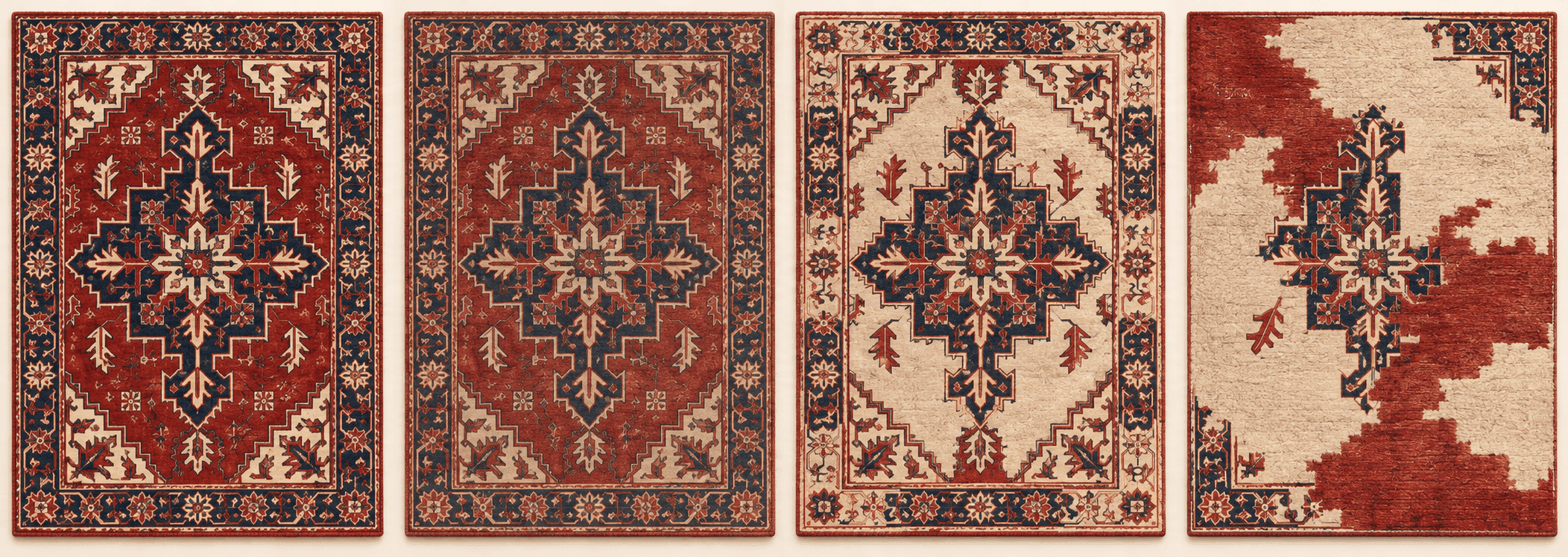
One way to understand Erased Design more clearly is to imagine four contemporary interpretations of the same traditional Heriz pattern.
The first would preserve the original composition.
The second would introduce a gentle reduction in contrast across selected areas.
The third would remove larger sections of the field while retaining important parts of the central medallion.
The fourth would transform the composition more radically, allowing the traditional pattern to become part of a largely abstract surface.
Each approach would produce a different relationship between heritage and contemporary expression.
The most successful version would not necessarily be the one with the greatest amount of erasure.
Instead, its quality would depend on how convincingly the remaining pattern, colour distribution and empty areas work together.
This kind of design exercise illustrates an important principle:
Erased Design is not simply about making a traditional rug look older. It is about reconsidering how a traditional composition can function visually.
9. Erased Design Rugs in European Interiors
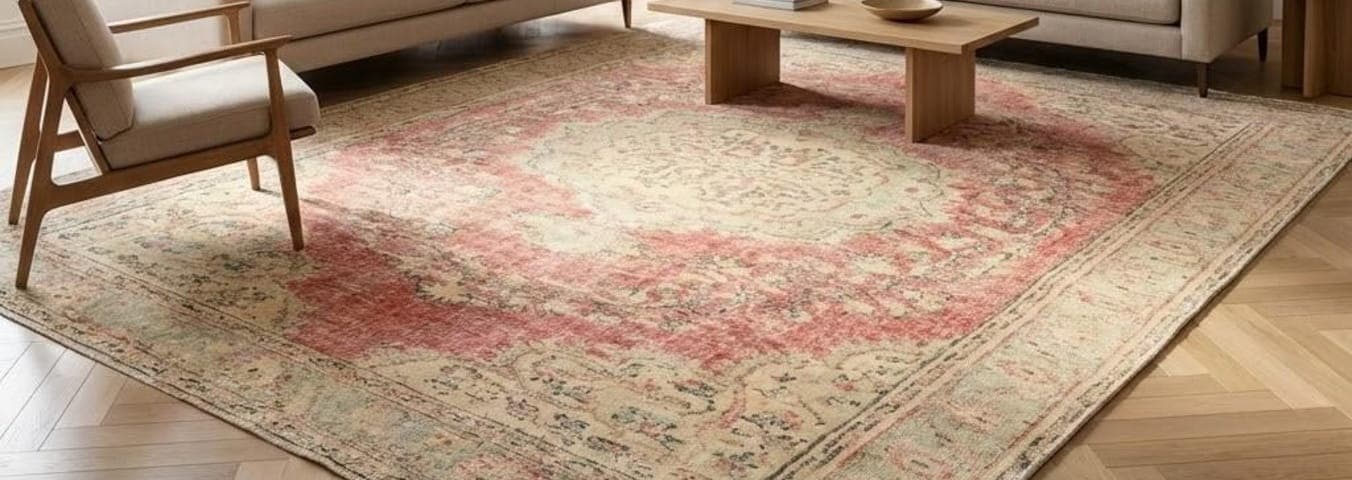
One of the reasons Erased Design rugs appeal to contemporary interiors is their ability to introduce historical character without necessarily dominating the room.
A richly coloured classical Persian carpet can be a magnificent focal point.
However, not every interior calls for such a strong decorative statement.
Some homeowners prefer a more restrained atmosphere, particularly in spaces with minimalist furniture, architectural details or carefully selected materials.
An Erased Design rug can provide a middle ground.
Scandinavian-inspired interiors
Scandinavian interiors often emphasise natural materials, practical furniture, light colours and visual simplicity.
A softly faded rug can introduce warmth and texture without disturbing that sense of calm.
Consider a living room with pale oak flooring, a cream sofa, linen curtains and simple wooden furniture.
A rug featuring fragments of a traditional Persian pattern in muted blue, sand and warm grey could add depth while remaining visually understated.
Industrial lofts and contemporary apartments
Industrial interiors frequently combine concrete, exposed brick, metal and large open spaces.
Against these materials, a handmade rug can provide welcome softness.
A distressed or erased Oriental design may create a particularly interesting contrast.
Its historical motifs introduce a human, handcrafted quality, while its fragmented appearance connects naturally with the raw character of the architecture.
Modern interiors in historic European buildings
Many European homes combine original architectural features with contemporary furniture.
High ceilings, decorative plasterwork, parquet flooring and traditional windows may coexist with modern sofas, lighting and storage.
An Erased Design rug can help connect these different periods.
It refers to historical ornamentation without necessarily reproducing a fully traditional decorative scheme.
Choosing the right colours
Colour selection should always consider the actual room.
Warm beige, muted terracotta and soft brown can work beautifully with oak, walnut and natural textiles.
Blue-grey and charcoal tones may complement cooler interiors with stone, concrete or metal.
However, colour perception can change significantly depending on daylight, artificial lighting and the direction of the pile.
For this reason, detailed photographs and, where possible, a live video presentation are particularly useful when buying a handmade rug online.
Choosing the right size
A beautiful rug can lose much of its impact if its proportions are wrong for the room.
In a living room, the rug should usually relate clearly to the seating arrangement.
In a dining room, it should be large enough for chairs to remain comfortably supported when pulled back, where practical.
In a bedroom, the rug should provide a comfortable and visually balanced area around the bed.
The right dimensions depend on the furniture layout rather than the design style alone.
10. How to Choose a High-Quality Erased Design Rug
A beautiful faded appearance does not automatically indicate high quality.
As with any handmade carpet, the most important considerations include construction, materials, workmanship, condition and suitability for the intended use.
Look beyond the surface
Begin by examining the rug's overall construction.
For a hand-knotted carpet, the back can provide useful information about the structure and execution of the knots.
However, no single feature, including knot density, is sufficient to determine overall quality.
A well-made rug should be assessed in relation to its design, materials and intended purpose.
Ask how the erased effect was created
This is particularly important.
Was the pattern designed to look faded before weaving?
Were different pile heights or fibres used?
Was the rug subjected to additional dyeing or specialist finishing?
The answers can help buyers understand both the appearance and the care requirements.
Consider the materials
Wool is valued for its resilience, natural texture and suitability for many everyday interiors.
Silk can introduce exceptional detail and luminosity, but its suitability depends on construction and use.
Cotton is commonly used in the foundations of many handmade carpets.
Different combinations produce different results.
Understand what you are paying for
The price of an Erased Design rug may reflect several factors, including:
Materials and workmanship
Size and complexity of construction
Design development
Production location
Designer or brand recognition
Availability and market demand
An expensive rug is not automatically artistically superior, just as a relatively affordable rug is not necessarily poorly made.
The key is to understand the relationship between quality, design and price.
A practical buying checklist
Before making a purchase, ask yourself whether the seller clearly explains the rug's origin, age, materials, dimensions, construction and condition.
If the rug is described as antique, vintage, distressed or erased, the description should be consistent with the product's actual characteristics.
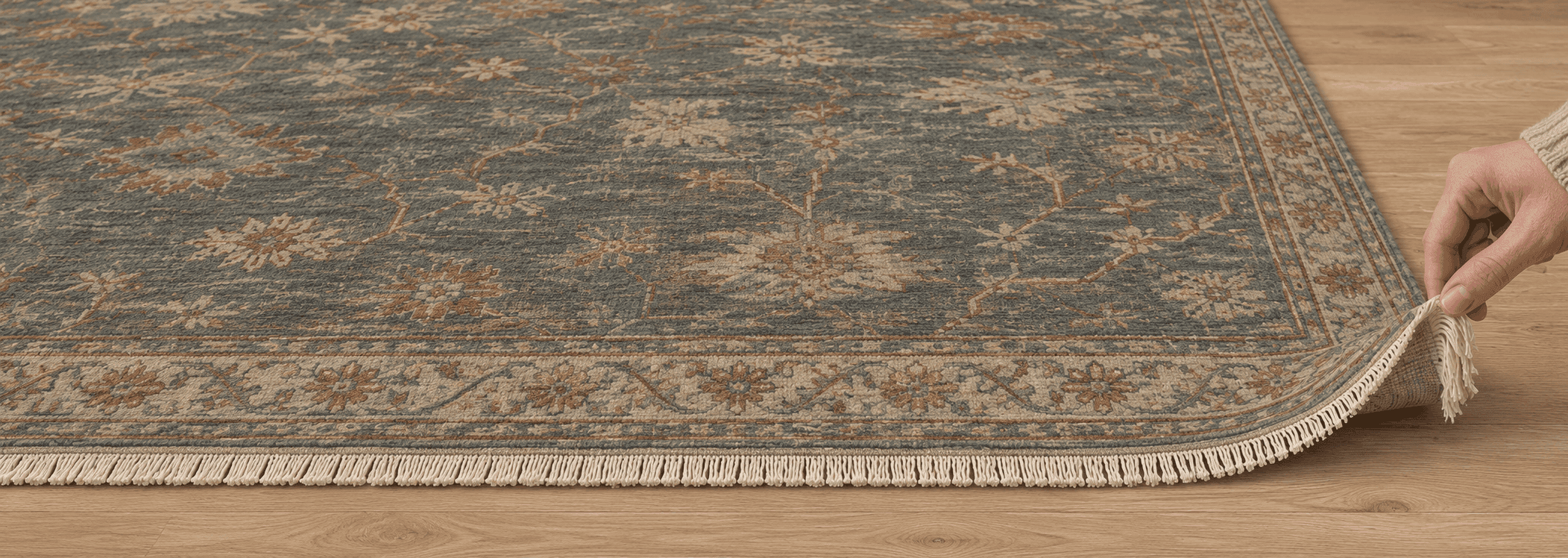
Detailed images of the front, back, edges and pile can help.
For online purchases, transparent shipping arrangements, return conditions and access to knowledgeable advice are also important.
11. Caring for an Erased Design Rug
The care requirements of an Erased Design rug depend primarily on its materials and construction.
A newly woven wool rug with a pre-designed faded pattern may be cared for much like another comparable hand-knotted wool carpet.
A silk-rich rug or one subjected to specialist finishing may require more specific attention.
For routine care, use an appropriate vacuum cleaner without aggressive rotating brushes, particularly where the pile is delicate.
Rotate the rug periodically to distribute wear and exposure to light more evenly.
Avoid prolonged exposure to strong direct sunlight where possible.
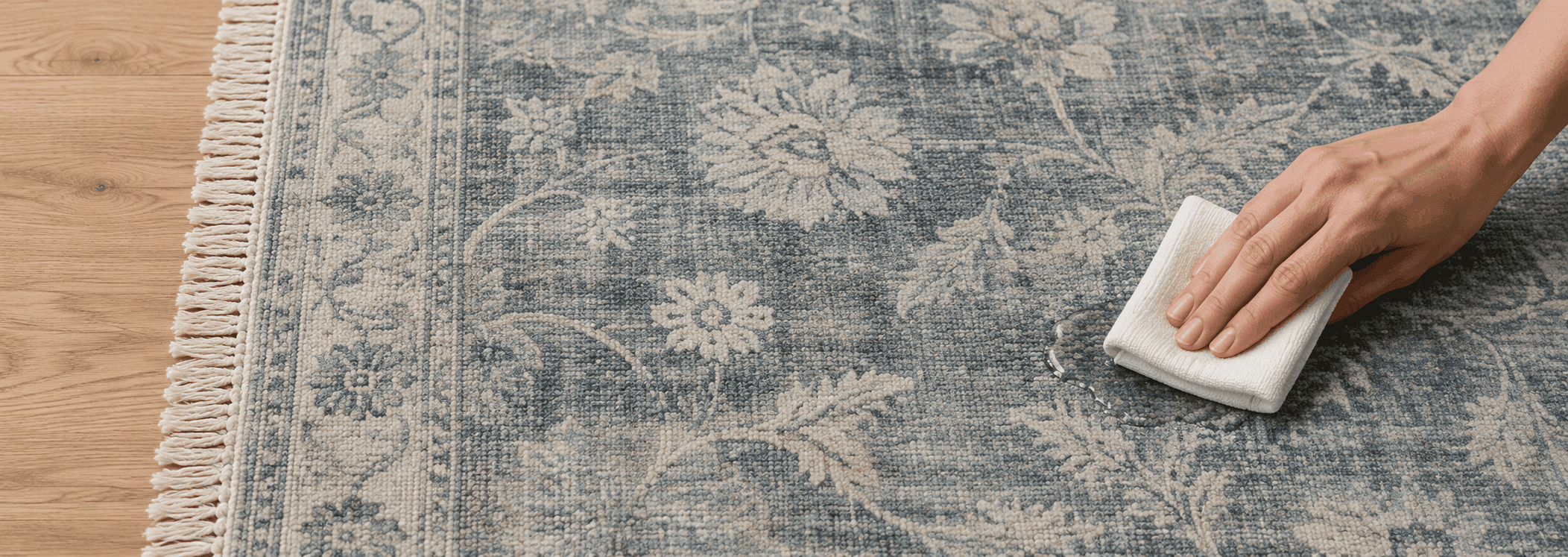
Spills should be addressed promptly, but aggressive household cleaning products should not be applied without checking their suitability.
For rugs with unusual dyes, finishing treatments or sensitive fibres, professional cleaning advice is recommended.
The most important principle is simple: a rug designed to look worn should not be treated as though its structure is already expendable.
12. Are Erased Design Rugs Sustainable?
Sustainability is an increasingly important consideration for European consumers, but it requires careful and specific claims.
A handmade rug may offer long service life, repairability and the use of natural fibres.
These can be meaningful advantages.
However, none automatically proves that a particular product has a low environmental impact.
The overall assessment also depends on factors such as fibre sourcing, dyeing, water consumption, energy use, transport and finishing processes.
A rug made with intensive post-production treatments may have a different environmental profile from one whose faded appearance was created entirely during weaving.
Similarly, reusing an older carpet may extend its useful life, but the environmental benefit depends on the work required and the resulting durability.
Rather than relying on vague descriptions such as “eco-friendly”, responsible sellers should provide verifiable information about materials, production and care.
13. The Future of Erased Design: Beyond a Passing Trend
Erased Design has the potential to be more than a fashionable surface effect.
Its lasting artistic value depends on how intelligently designers engage with the traditions they reinterpret.
Simply adding faded patches to a classical pattern does not necessarily produce a compelling contemporary rug.
A successful design requires an understanding of proportion, colour, visual rhythm and the relationship between ornament and empty space.
Digital design tools can help artists experiment with these relationships before weaving begins.
They can test different compositions, adjust colours and explore alternative levels of erasure.
Yet the final result still depends on the knowledge and skill of the people who create the carpet.
For Persian rug traditions, this presents an important opportunity.
Historical patterns can continue to inspire new work without losing their cultural significance.
The challenge is to encourage innovation while acknowledging the origins of the designs and the craftsmanship that makes their reinterpretation possible.
14. Frequently Asked Questions
What is an Erased Design rug?
An Erased Design rug features patterns that have been deliberately faded, obscured or visually interrupted. The effect may be created during weaving or through specialist finishing.
Are Erased Design rugs always handmade?
No. Erased Design describes a visual approach rather than a manufacturing method. Buyers should check whether a particular rug is hand-knotted, hand-tufted, flatwoven or machine-made.
Are Erased Design rugs antique?
Not necessarily. Many are newly made rugs inspired by the appearance of older carpets. A distressed appearance does not establish age.
What is the difference between an erased rug and an overdyed rug?
An erased rug emphasises the selective disappearance of patterns. An overdyed rug has undergone an additional dyeing process, which may soften or obscure its original design. The two effects can overlap but are not identical.
Do Erased Design rugs wear out more quickly?
Not inherently. Durability depends on the materials, construction and finishing methods. A faded pattern woven into a new rug does not, by itself, indicate weakness.
Are these rugs suitable for modern European homes?
Yes. Their combination of traditional motifs and quieter areas can work particularly well with contemporary furniture, natural materials and restrained colour schemes.
Can an old Persian rug be transformed into an Erased Design rug?
Some alterations are technically possible, but irreversible treatments can damage a rug's structure, authenticity and value. Historically significant or valuable carpets should be assessed by a qualified specialist before any modification.
Are Erased Design rugs suitable for underfloor heating?
Some may be suitable, depending on the construction, backing, thickness and heating system. The rug manufacturer's guidance and the heating system's requirements should be checked.
Are Erased Design rugs more expensive than traditional Persian carpets?
Not necessarily. Prices vary according to materials, craftsmanship, size, designer, brand and market conditions.
How can I tell whether the faded effect is intentional?
Product information, construction details and the seller's explanation are important. In some rugs, the effect is clearly integrated into the original weaving design; in others, it may result from wear or subsequent treatments.
Conclusion: A New Life for Traditional Patterns
A traditional Persian rug is often admired for the completeness of its design.
Every flower, border and medallion contributes to a carefully organised composition.
Erased Design challenges the idea that all these elements must remain visible for the carpet to be beautiful.
By deliberately concealing parts of a pattern, contemporary designers can create new relationships between ornament and simplicity, history and modernity, presence and absence.
At its best, Erased Design does not merely imitate an old carpet.
It offers a new interpretation of what a handmade rug can express.
For European interiors, this can mean enjoying the character of traditional Oriental patterns in a quieter and more contemporary form.
For the wider world of carpet design, it suggests something more significant: the rich heritage of handmade rugs can continue to evolve.
The patterns of the past need not disappear.
Sometimes, allowing part of them to fade is precisely what helps us see them differently.