
Khurjeen Rugs: A Lesser-Known Persian Weaving Tradition
Khurjeen rugs are a lesser-known category within the diverse world of Persian weaving. They are particularly interesting for collectors and rug enthusiasts who want to explore traditions beyond the better-known names such as Tabriz, Kashan, Isfahan and Heriz.
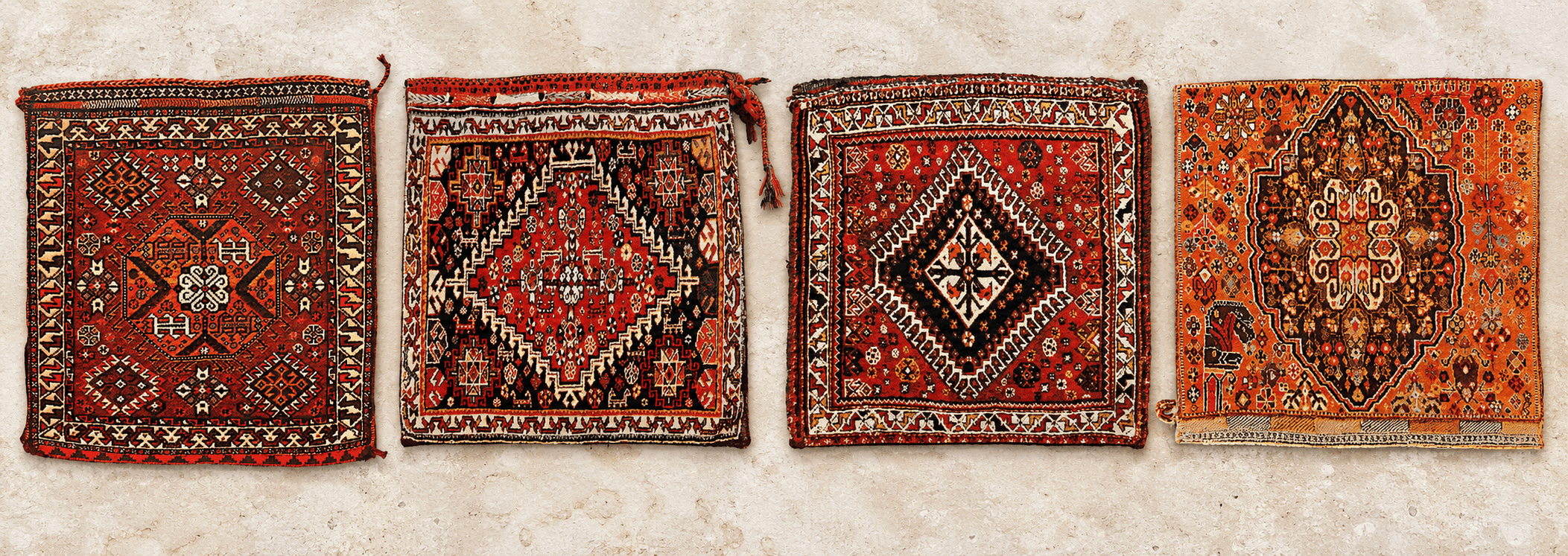
Khurjeen rugs are a lesser-known category within the diverse world of Persian weaving. They are particularly interesting for collectors and rug enthusiasts who want to explore traditions beyond the better-known names such as Tabriz, Kashan, Isfahan and Heriz.
The term “Khurjeen” is associated with a type of Persian woven textile traditionally connected with saddle bags and portable textiles. In carpet and rug contexts, the name can also be used in connection with pieces that reflect the patterns, colours and weaving traditions associated with this form.
Because Khurjeen is not as standardized as major Persian city-rug categories, individual pieces can vary considerably in design, construction, size and materials. This variation is part of what makes them interesting.
What Is a Khurjeen?
The word Khurjeen refers traditionally to a type of Persian saddlebag or double-sided bag designed to be carried over an animal. Historically, such bags were practical objects used by nomadic and rural communities.
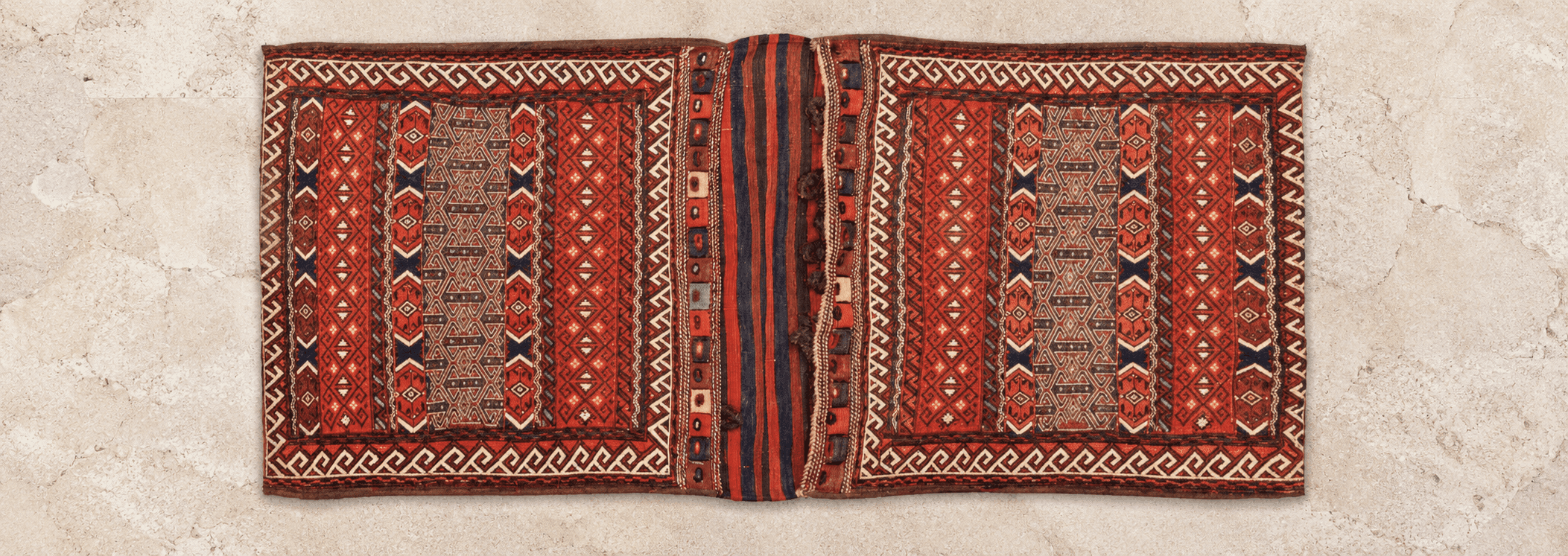
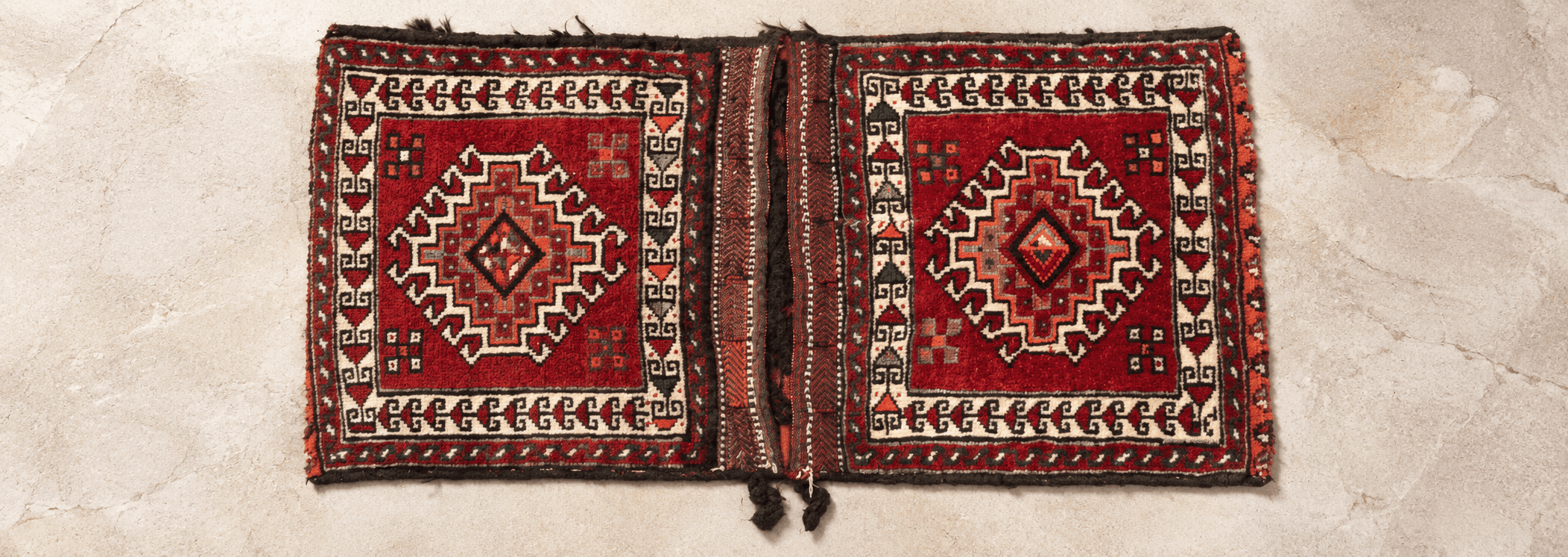
A traditional khurjeen usually consists of two woven compartments joined together at the centre. When placed over a horse, mule or donkey, one compartment hangs on each side of the animal.
Because these textiles had a practical purpose, their decoration was not simply ornamental. Weaving combined function with regional artistic traditions.
Over time, examples of these textiles became appreciated as decorative and collectible pieces in their own right.
The Connection Between Khurjeen and Persian Rug Weaving
Khurjeen textiles belong to the broader tradition of Persian tribal and village weaving.
Many communities that produced practical woven objects also made rugs, kilims, bags and other household textiles. As a result, similar motifs and colour combinations can appear across different types of woven pieces.
A Khurjeen-inspired textile may therefore share visual characteristics with Persian tribal rugs without being identical to a conventional floor carpet.
This distinction is important when identifying a piece. The name should describe the object's traditional form and weaving context rather than automatically being treated as a specific Persian rug-making school.
Traditional Designs and Motifs
One of the most appealing features of Khurjeen textiles is their strong geometric character.
Designs can include diamonds, stepped forms, medallion-like compositions, stylised flowers, stripes and repeated geometric borders. Some examples use highly structured patterns, while others have more spontaneous compositions.
The motifs can overlap with designs found in other Persian tribal weaving traditions. For this reason, a single geometric pattern is rarely enough to identify the exact origin of a textile.
Instead, experts consider the complete composition, including the structure, materials, colours, finishing and regional characteristics.
Colours Found in Khurjeen Textiles
Traditional Persian tribal weaving is known for expressive colour combinations, and Khurjeen pieces can reflect this aesthetic.
Deep reds, dark blues, brown, ivory and earthy tones are frequently associated with traditional Persian woven textiles. Depending on the individual piece and its period, brighter orange, yellow or green accents may also appear.
Older textiles can develop subtle changes in colour over time. Natural wear, exposure to light and differences between dye batches can create variations across the surface.
These changes can contribute to the visual character of an older textile, but colour variation alone should not be used as proof of age or authenticity.
How Were Khurjeen Textiles Made?
Traditional Khurjeen pieces were woven by hand using techniques suited to their practical function.
Wool was an important material because it was durable and readily available in many rural and nomadic communities. Depending on the region and construction, other fibres could also be used.
The structure of a traditional khurjeen had to be strong enough for regular transportation and everyday use. This practical requirement influenced the choice of materials and weaving techniques.
Because these objects were produced in different communities, there is no single construction method that applies to every Khurjeen.
Khurjeen and Nomadic Life
The history of Khurjeen weaving is closely connected with mobility.
For nomadic communities, textiles had to serve practical purposes while also providing an opportunity for creative expression. A woven bag could be used to transport personal belongings, food or other supplies while displaying the weaver's skills.
The combination of function and decoration is characteristic of many forms of Persian tribal weaving.
Patterns could be passed down through families and adapted by individual weavers. This helps explain why older examples can show considerable variation even when they belong to a similar regional tradition.
Khurjeen Rugs and Decorative Interiors
Today, Khurjeen textiles and Khurjeen-inspired pieces can be used in ways that are very different from their original purpose.
Their geometric patterns and handmade texture can work particularly well in contemporary interiors. A small textile can be displayed as a wall hanging, placed over a piece of furniture or incorporated into a layered textile arrangement.
Their relatively unusual appearance can also make them an interesting alternative to more familiar Persian rug designs.
When using an older textile as decoration, however, its condition should be considered carefully. Antique woven pieces can be more delicate than modern decorative textiles.
How to Identify a Khurjeen Piece
Identification should begin with the object's construction and original form.
A traditional khurjeen is typically associated with a double-sided bag structure, although individual examples and later decorative adaptations can differ.
The weaving technique, foundation, yarn, motifs and finishing details can provide additional clues.
The back of the textile can be particularly useful because it may reveal how the piece was woven and whether different sections were constructed separately.
Regional attribution requires caution. Persian weaving traditions have influenced one another for centuries, and motifs travelled between communities.
For valuable or old examples, professional examination can provide a more reliable assessment of origin, age and condition.
Why Khurjeen Textiles Are Worth Discovering
Khurjeen pieces offer a different way to understand Persian textile history.
Rather than focusing only on famous carpet centres, they reveal how weaving was integrated into everyday life. A textile could be useful, durable and decorative at the same time.
This combination makes Khurjeen weaving particularly interesting for anyone exploring Persian tribal and village textiles.
Their relatively uncommon presence in mainstream rug collections can also make individual examples visually distinctive.
Khurjeen Rugs: A Window Into Persian Textile Heritage
Khurjeen weaving represents an important but less familiar part of Persian textile culture. Its roots in practical saddle bags and portable textiles show how closely craftsmanship was connected with everyday life.
The geometric designs, rich colours and handmade construction found in these pieces reflect the creativity of Persian rural and nomadic communities.
For collectors and interior enthusiasts, discovering Khurjeen textiles is an opportunity to look beyond the most famous Persian rug categories and explore a more specialized part of Iran's weaving heritage.
At RugEast, we believe that understanding these lesser-known traditions makes Persian rugs and textiles even more fascinating. Every handmade piece can carry clues about the community, techniques and traditions that shaped it.
FAQ
1) What is a Khurjeen?
A Khurjeen is traditionally a Persian woven saddlebag or double-sided carrying bag designed to be placed over an animal. It was historically used by rural and nomadic communities.
2) Are Khurjeen rugs handwoven?
Traditional Khurjeen textiles were made by hand using weaving techniques suited to their practical purpose. Materials and construction can vary between regions and individual examples.
3) Are Khurjeen textiles valuable?
Value depends on factors such as age, condition, materials, craftsmanship, rarity, design and provenance. Because Khurjeen pieces vary considerably, each example should be assessed individually.