
What Is an Afshar Rug? History, Designs & Features
Afshar rugs are a distinctive part of Iran’s rich carpet-weaving heritage. Known for their geometric patterns, expressive colours and traditional craftsmanship, these handmade rugs reflect the artistic traditions of the Afshar people.
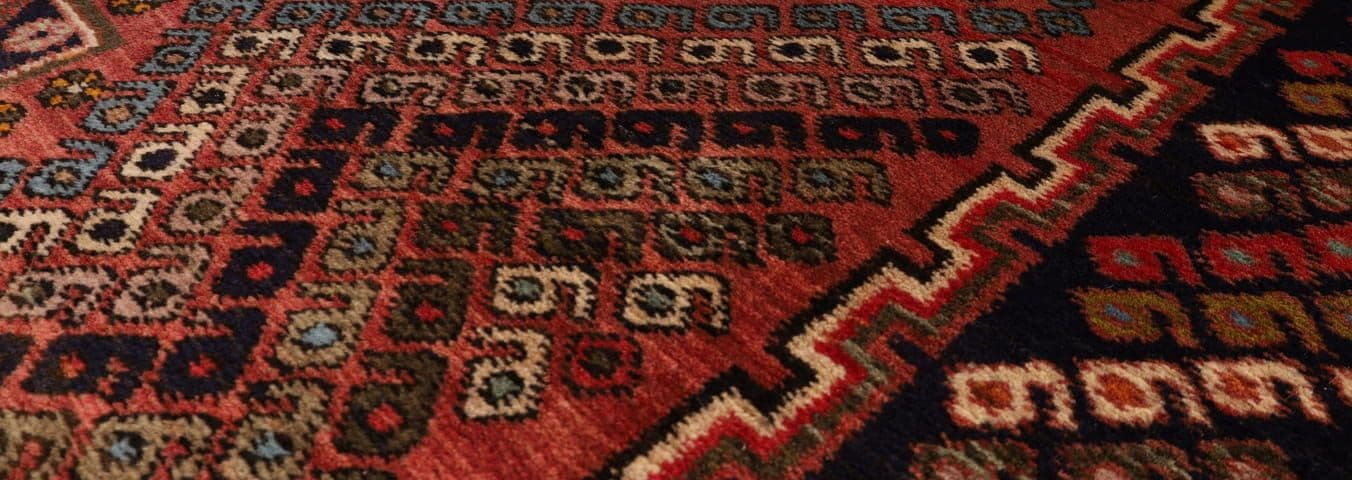
Afshar rugs are a distinctive part of Iran’s rich carpet-weaving heritage. Known for their geometric patterns, expressive colours and traditional craftsmanship, these handmade rugs reflect the artistic traditions of the Afshar people.
Unlike the elaborate floral designs associated with many Persian city rugs, Afshar carpets often feature bold shapes, stylised flowers, diamond medallions and motifs inspired by everyday tribal life. Their individual character makes them particularly appealing to people who appreciate handmade textiles with a strong cultural identity.
Understanding an Afshar rug means looking beyond its appearance to explore its origins, construction, materials and weaving traditions.
Where Do Afshar Rugs Come From?
Afshar rugs are associated with the Afshar people, a Turkic-speaking group with a long history in Iran and neighbouring regions. Although Afshar communities have lived in different parts of the country, the area around Kerman in southeastern Iran is particularly important to their carpet-weaving tradition.
Afshar weaving developed in both nomadic and settled communities. Historically, weaving was closely connected to daily life, with families producing rugs and other textiles for domestic use, transport and trade.
As communities became more settled, their weaving traditions continued to evolve. Consequently, Afshar rugs are not limited to a single design or construction style. Their appearance can vary according to the village, workshop, period and individual weaver.
What Makes an Afshar Rug Different?
One of the most recognisable characteristics of Afshar rugs is their combination of geometric structure and decorative freedom.
While some Persian rugs follow highly symmetrical workshop designs, traditional Afshar rugs often display a more individual approach. Their patterns may include small irregularities, unusual proportions and imaginative combinations of familiar motifs.
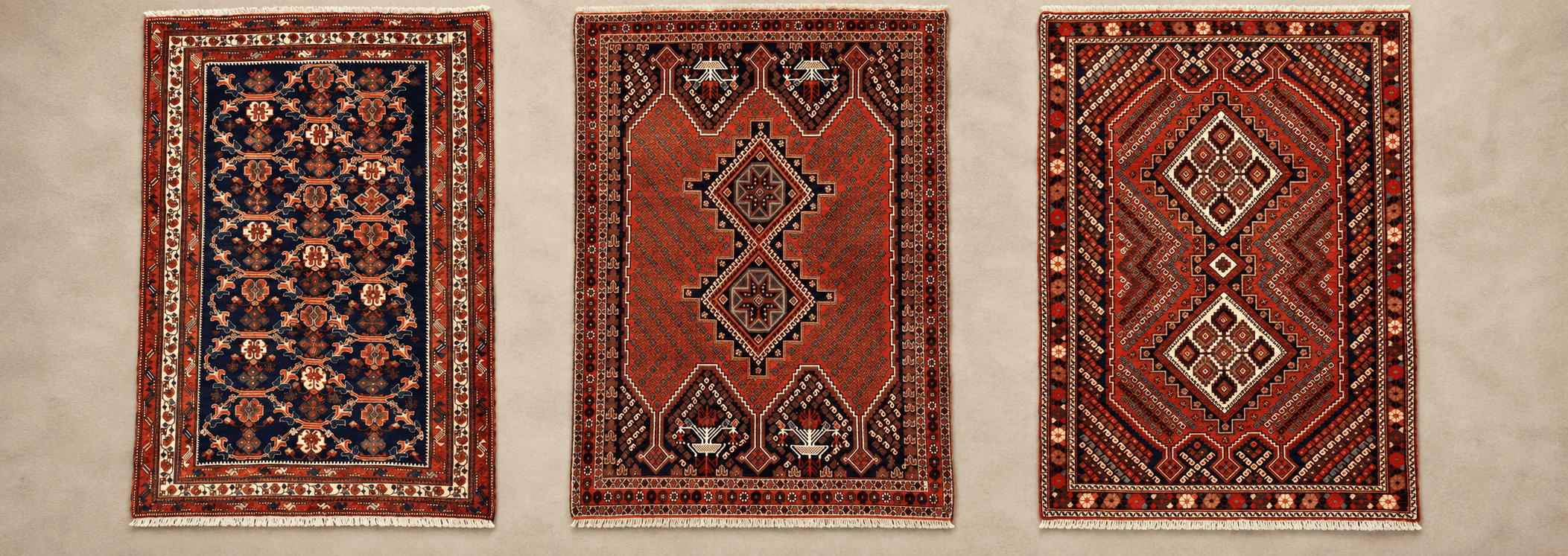
Common design elements include diamond-shaped medallions, geometric flowers, angular leaves, stylised animals and repeated borders.
Some Afshar rugs feature a central medallion, while others use an all-over design. The distinctive boteh motif, sometimes described as a curved leaf or paisley shape, also appears in certain examples.
However, no single pattern can reliably identify every Afshar rug. Designs have changed over time, and weaving traditions have influenced one another across different regions.
Traditional Afshar Rug Colours
Colour is another important part of the Afshar weaving tradition.
Traditional examples frequently combine deep reds, dark blues, ivory and warm earth tones. Depending on the rug, additional colours may include orange, green, brown and softer shades of blue.
These combinations can create a striking contrast between the central field, decorative motifs and surrounding borders.
Older Afshar rugs may display abrash, a subtle variation in colour caused by differences between yarn batches or dyeing conditions. Rather than appearing as perfectly uniform blocks of colour, some areas may gradually shift in tone.
Abrash can add visual depth and character, although it is not exclusive to Afshar rugs and should not be treated as proof of age or authenticity.
How Are Afshar Rugs Made?
Traditional Afshar rugs are hand-knotted, usually with wool pile. Wool has long been valued for its resilience, warmth and suitability for creating richly coloured textiles.
The foundation varies between individual rugs. Some examples have wool warps and wefts, while others incorporate cotton, particularly in more settled weaving traditions.
Many Afshar rugs use symmetrical knots, commonly called Turkish or Ghiordes knots. Nevertheless, construction can differ between regions and periods, so the knot type should not be used as the only identifying characteristic.
Hand-spun wool is found in many older and traditionally produced examples. Slight differences in yarn thickness can give the surface a lively texture and contribute to subtle variations in colour.
The finished pile may be relatively short or moderately thick, depending on the rug’s construction and intended use.
Afshar Rugs and Tribal Design
The appeal of Afshar rugs is closely connected to their tribal weaving heritage.
Historically, many designs were passed between generations rather than reproduced from detailed technical drawings. Weavers could adapt familiar patterns, change proportions or introduce motifs according to personal preference.
This freedom helped create the diversity associated with Afshar weaving.
Small geometric flowers, birds, animals and abstract symbols may appear alongside medallions and repeated decorative borders. Some motifs reflect wider Persian and regional textile traditions, making it difficult to assign a fixed symbolic meaning to every design.
Instead of interpreting each shape as a specific symbol, it is often more useful to appreciate the overall composition and the weaver’s individual choices.
Are All Afshar Rugs Antique?
No. Afshar rugs have been produced across different periods, and examples can range from antique and vintage pieces to more recently woven carpets.
Older rugs may show natural wear, softened colours, repairs or changes in pile height. However, these features alone cannot establish a rug’s age.
Newer Afshar rugs can preserve traditional designs and techniques while offering a different range of sizes, colours and finishes.
When purchasing an Afshar rug, it is important to distinguish between its actual age, its design tradition and any claims about its geographical origin.
How to Identify an Afshar Rug
Identifying an Afshar rug requires examining several characteristics together.
The design is often the first clue. Geometric medallions, repeated borders and a lively combination of colours may suggest an Afshar weaving tradition.
The materials and construction provide additional information. Examining the back can reveal the knot structure, foundation and density of the weave.
The rug’s proportions, finishing techniques and overall composition can also help distinguish it from related tribal and village carpets.
However, many Persian weaving traditions share similar motifs and materials. An accurate attribution may therefore require an experienced rug specialist, especially when examining an older or unusual piece.
Decorating With an Afshar Rug
Afshar rugs can work beautifully in both traditional and contemporary interiors.
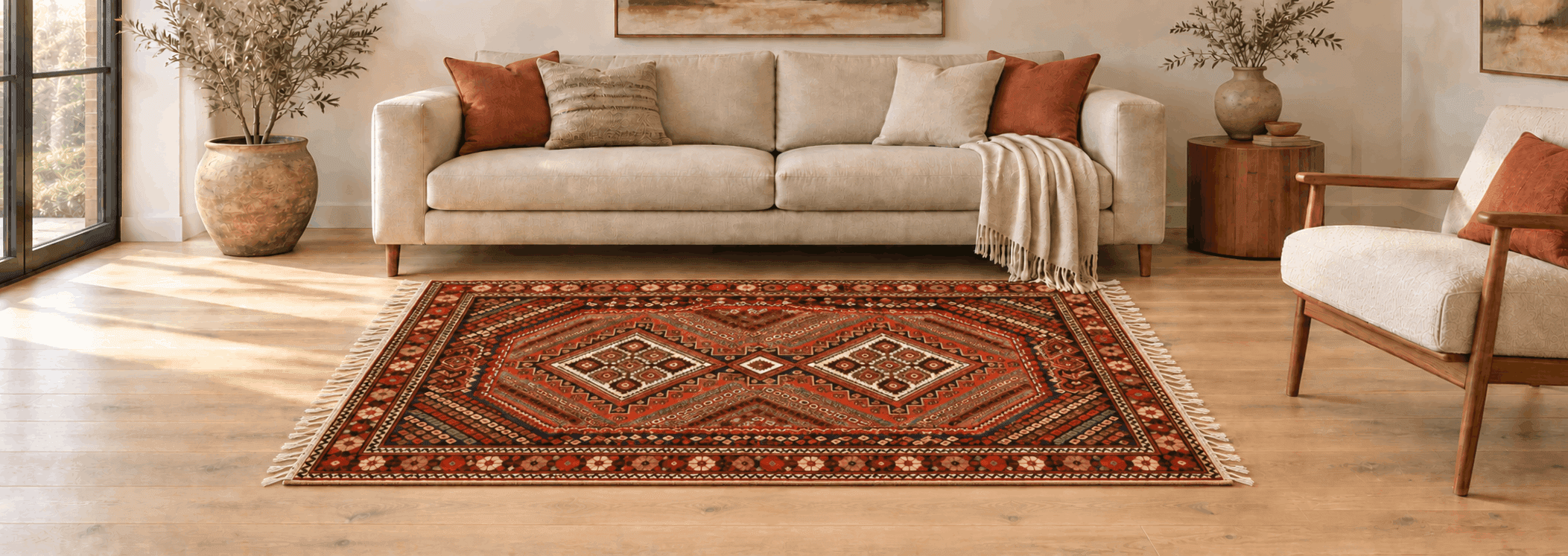
Their geometric designs bring structure to a room, while their rich colours introduce warmth and visual interest. A traditional Afshar rug can complement wooden furniture, natural fabrics and neutral walls.
In a minimalist interior, its patterns can become a focal point without requiring additional decorative elements.
Smaller Afshar rugs are particularly suitable for bedrooms, reading corners and entrance areas, while larger examples can help define a living space.
As with any handmade rug, the right choice depends on its dimensions, condition, colour palette and intended placement.
Discovering the Character of Afshar Rugs
Afshar rugs demonstrate the diversity of Persian carpet weaving. Their geometric motifs, expressive colours and individual construction reflect traditions shaped by generations of weavers.
Whether antique, vintage or newly made, a well-chosen Afshar rug can bring craftsmanship and a sense of history into a home.
At RugEast, we celebrate the variety of handmade Persian rugs and the regional weaving traditions behind them. Understanding the distinctive characteristics of Afshar carpets is an important part of appreciating their enduring appeal.
FAQ
1) Are Afshar rugs handmade?
Traditional Afshar rugs are hand-knotted, usually with wool pile. Their foundations, knotting techniques and finishing details can vary according to their origin and period.
2) Are Afshar rugs valuable?
Their value depends on age, condition, craftsmanship, materials, design, rarity and documented origin. Antique examples may attract collectors, but not every old Afshar rug is necessarily valuable.
3) What is the difference between Afshar and other Persian rugs?
Afshar rugs are particularly associated with tribal and village weaving traditions, geometric designs and distinctive colour combinations. However, their characteristics overlap with those of other Persian rugs, so identification requires examining several features together.