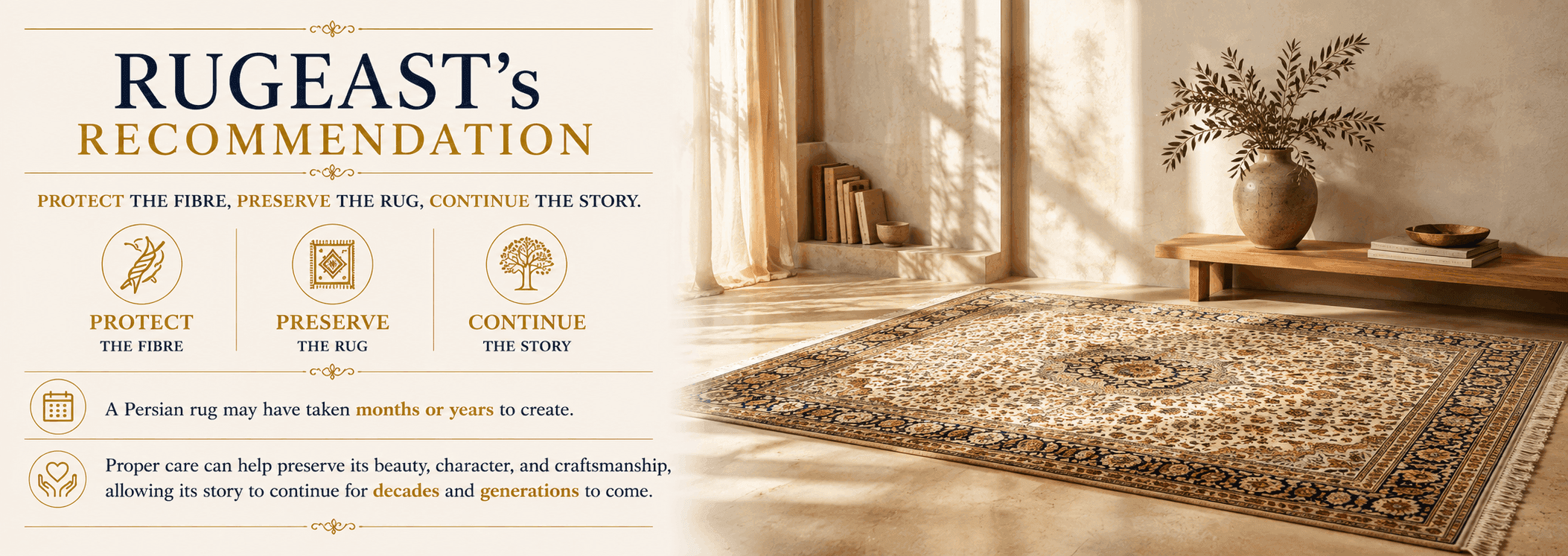
The Biology of Wool Fibre: Why Wool Is So Special in Persian Rugs
Wool belongs to a special group of natural fibres known as protein fibres. Its primary structural protein is keratin, the same broad family of proteins found in materials such as human hair and nails.
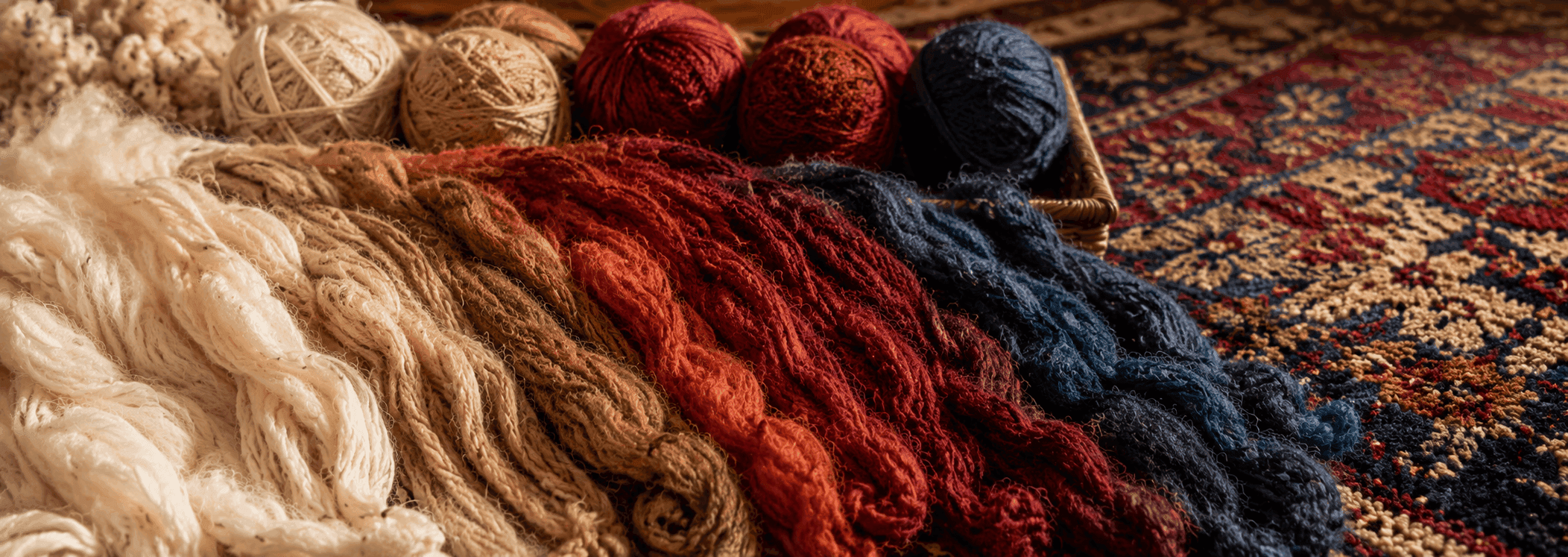
When you touch a high-quality Persian rug, you are feeling the result of a remarkable natural material.
Wool may appear simple from the outside, but under a microscope it is a highly organised biological fibre with a sophisticated structure.
Its unique properties are largely responsible for the qualities that make wool so valuable in handmade rugs:
- resilience,
- softness,
- elasticity,
- warmth,
- moisture management,
- dye affinity,
- and long-term durability.
Understanding this microscopic structure helps explain something that every experienced Persian rug weaver already knows through generations of practical knowledge:
Not all wool is the same.
The origin, breed, climate, nutrition, fibre diameter, processing and age of the fleece can all influence the behaviour of wool in a finished rug.
1. Wool Is a Natural Protein Fibre
Wool belongs to a special group of natural fibres known as protein fibres.
Its primary structural protein is keratin, the same broad family of proteins found in materials such as human hair and nails.
Keratin gives wool much of its mechanical character.
It contributes to:
- strength,
- flexibility,
- resilience,
- resistance to deformation.
But keratin is only part of the story.
The remarkable behaviour of wool comes from the way its protein molecules are organised into larger structural components.
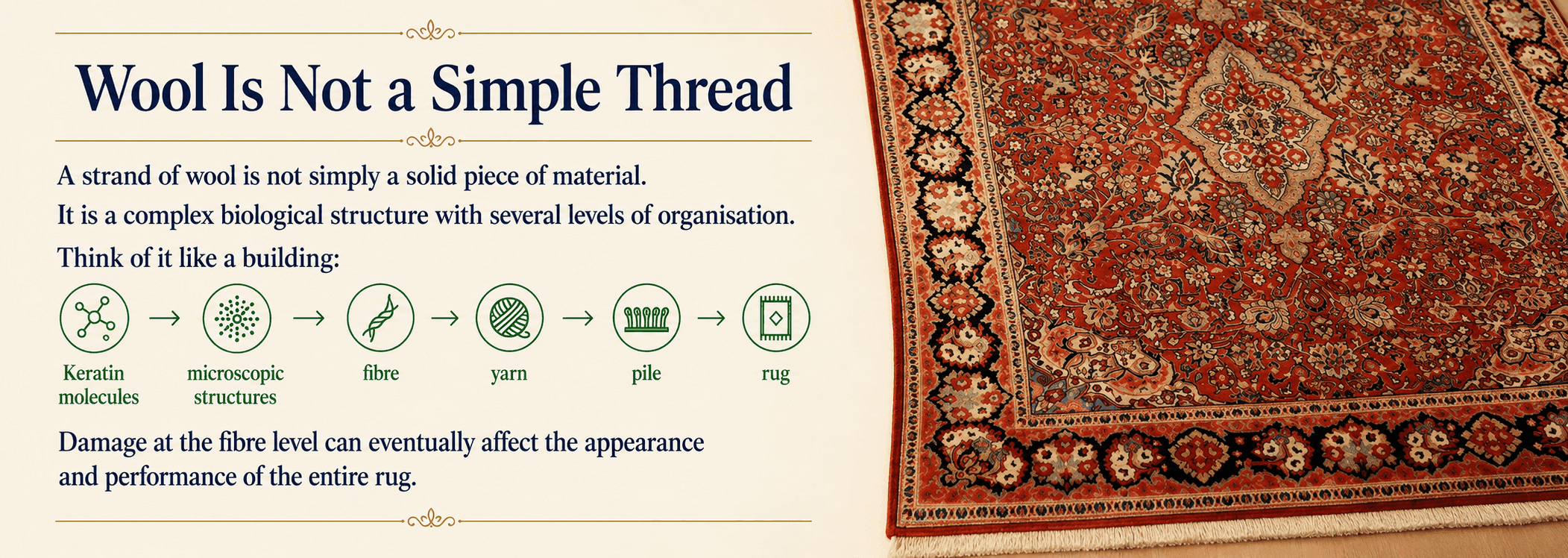
2. The Basic Anatomy of a Wool Fibre
A wool fibre can be understood through several important structural regions.
The most important are:
Cuticle
The outer protective layer.
Cortex
The main internal region of the fibre.
Medulla
A central region that may be present in some coarser animal fibres but is not a defining feature of fine wool fibres.
This distinction matters because wool quality varies considerably.
3. The Cuticle: Wool's Natural Protective Surface
The outer surface of wool is covered by tiny overlapping scales known as the cuticle.
These scales are extremely small and cannot normally be seen individually with the naked eye.
They form a protective surface around the fibre.
The cuticle contributes to several important characteristics of wool.
It helps the fibre:
- resist certain forms of abrasion,
- interact with moisture,
- respond to friction,
- retain its structure.
The scale structure is also one reason wool behaves differently from many synthetic fibres.
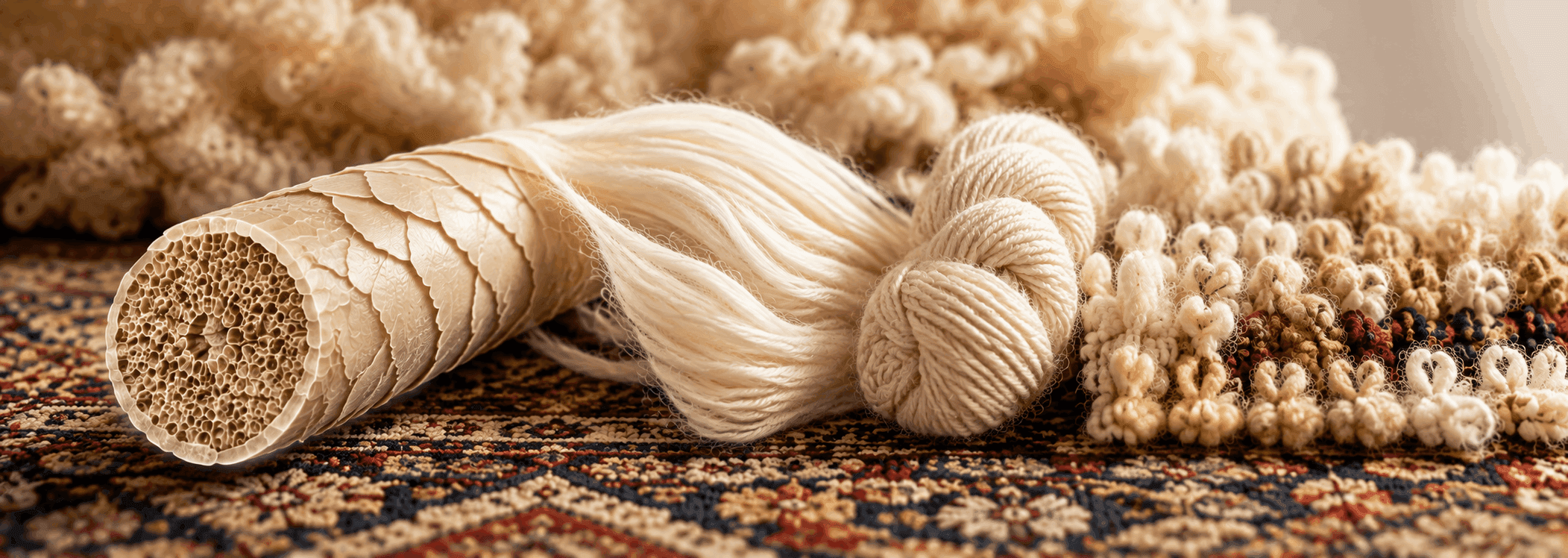
4. The Cortex: The Engine Inside the Fibre
Beneath the cuticle lies the cortex, which forms the major internal part of the wool fibre.
The cortex contains elongated cells and complex protein structures.
Its organisation contributes strongly to:
- elasticity,
- strength,
- flexibility,
- recovery after compression.
This is particularly important in rugs.
A rug is constantly exposed to mechanical stress.
People walk over it.
Furniture may compress it.
The pile bends and recovers thousands of times.
Good wool is able to tolerate this repeated movement remarkably well.
5. Wool and Elasticity
Elasticity is one of the most valuable properties of wool in handmade carpets.
Imagine the pile of a Persian rug beneath a chair or under thousands of footsteps.
If the fibre permanently collapsed after every compression, the rug would quickly become flat and worn.
Wool behaves differently.
Its natural structure allows it to bend, compress and recover.
This does not mean wool is indestructible.
Repeated stress, poor-quality fibre, excessive abrasion and environmental damage can still cause permanent wear.
But high-quality wool has a natural advantage over many less resilient materials.
6. Why Wool Feels Warm and Comfortable
Wool is famous for its ability to provide warmth.
This is not simply because wool is "thick."
Its fibre structure helps create tiny spaces that can trap air.
Air is a poor conductor of heat, so these microscopic spaces contribute to wool's insulating behaviour.
This helps explain why traditional wool rugs can feel:
- warm in winter,
- comfortable underfoot,
- less cold than many hard flooring surfaces.
7. Wool and Moisture
One of the most fascinating properties of wool is its interaction with moisture.
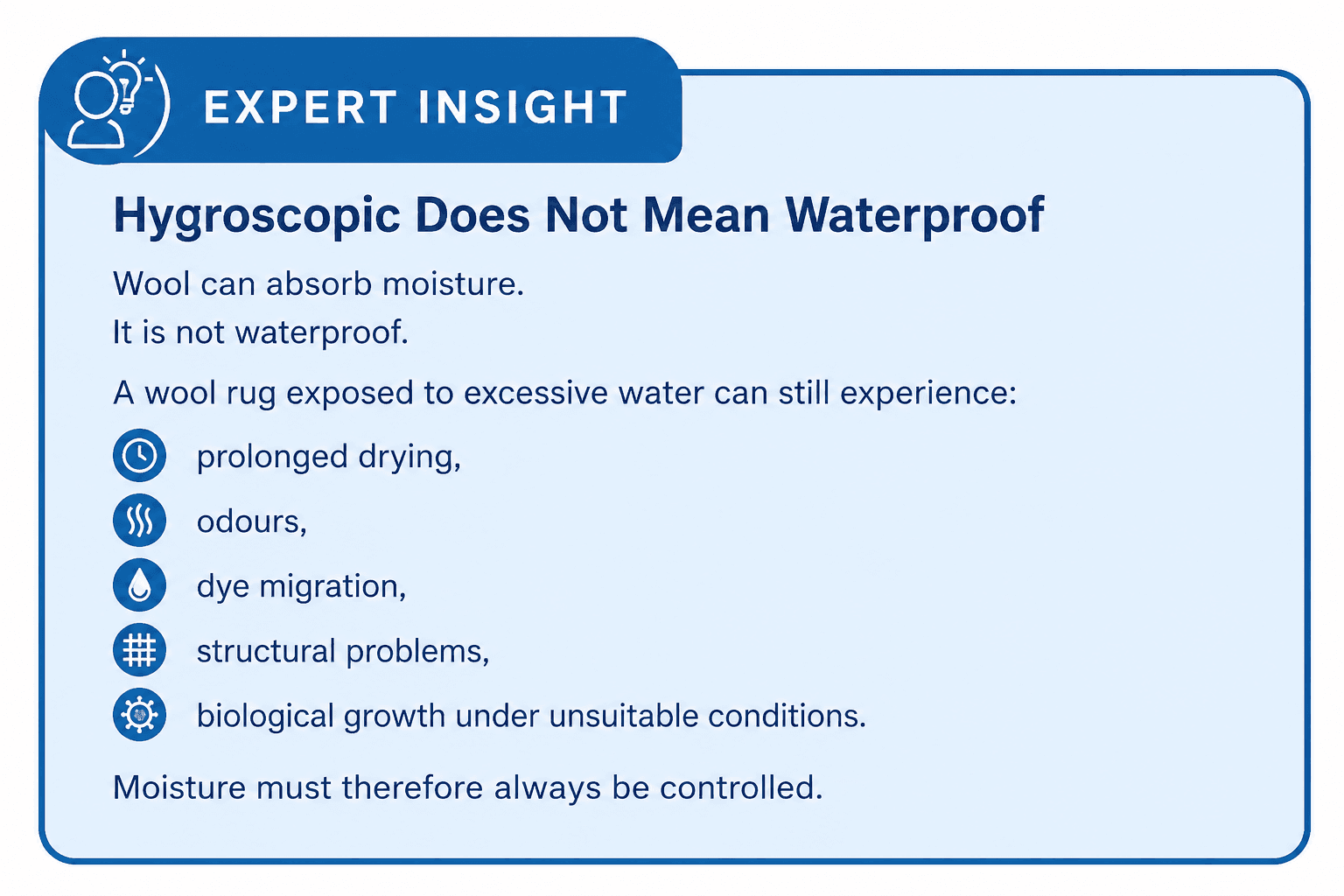
Wool is hygroscopic, meaning it can absorb and release water vapour from the surrounding environment.
This does not mean a wool rug should be soaked.
Quite the opposite.
Excess liquid can create serious problems when a rug is not dried correctly.
However, wool's ability to interact with atmospheric moisture is an important natural characteristic.
It helps explain why wool can feel different from synthetic fibres in changing indoor environments.
8. Wool and Natural Dyes
The relationship between wool and natural dyes is one of the great reasons Persian rugs have such distinctive colour.
Wool has chemical properties that allow many dyes to bond effectively with the fibre.
Traditional dyers learned through generations how to prepare:
- wool,
- mordants,
- dye baths,
- temperature,
- timing.
The result can be colours with extraordinary depth and variation.
This is one reason a naturally dyed Persian rug may appear to change character as light moves across its surface.
9. Why Fibre Diameter Matters
Not all wool fibres have the same thickness.
Fibre diameter is one of the important characteristics used when assessing wool.
Generally, finer fibres tend to produce a softer handle, while coarser fibres may provide different structural and performance characteristics.
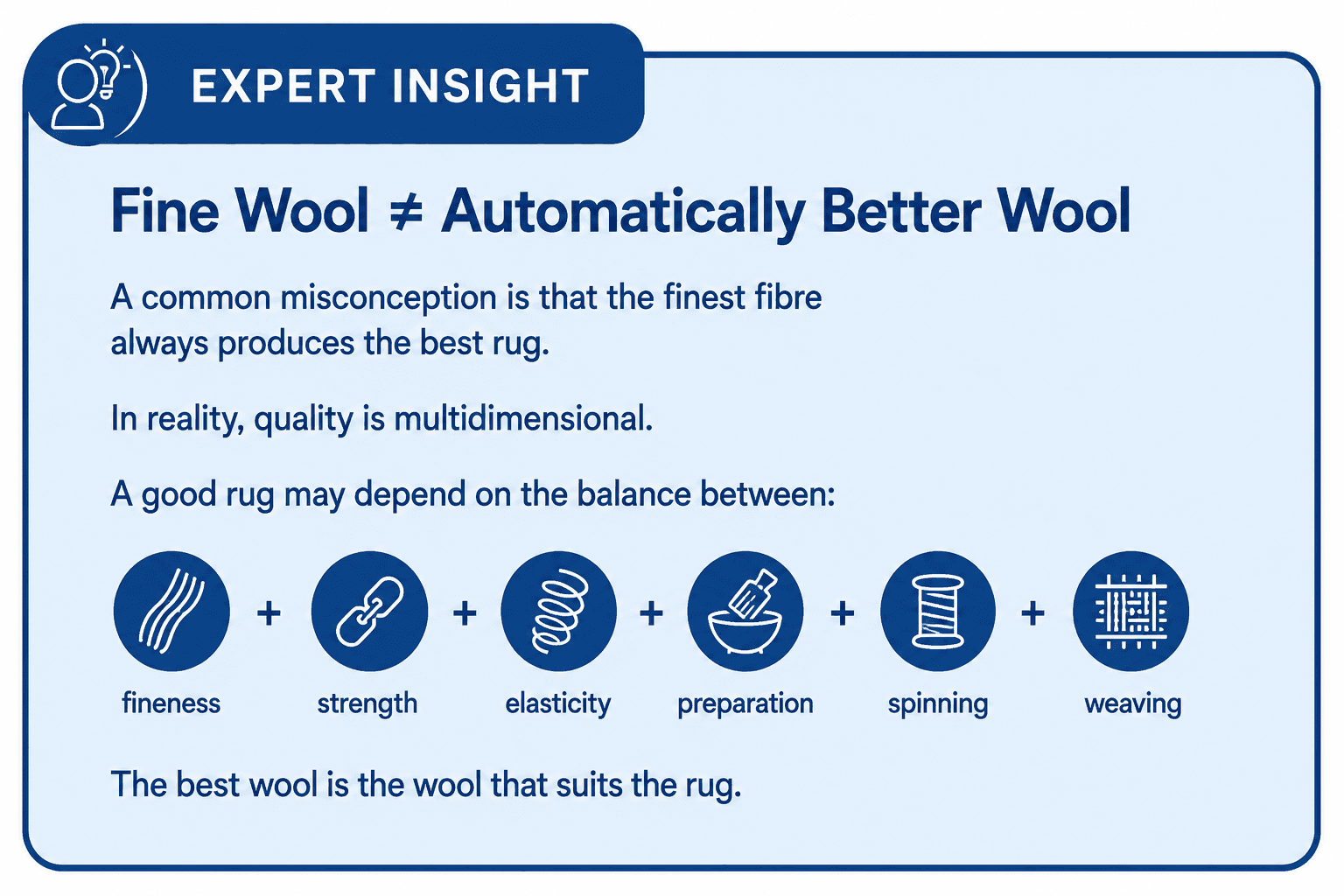
However, "finer" does not automatically mean "better."
For a Persian rug, the ideal wool depends on:
- rug type,
- intended use,
- weaving tradition,
- pile construction,
- regional characteristics.
A durable tribal rug and a finely detailed city carpet may require different wool characteristics.
10. Wool, Yarn and the Finished Rug
The fibre itself is only the beginning.
Before becoming part of a Persian rug, wool generally passes through several stages:
Fleece
↓
Sorting
↓
Cleaning
↓
Carding or preparation
↓
Spinning
↓
Dyeing, where applicable
↓
Yarn
↓
Weaving
↓
Finished rug
At every stage, decisions influence the final result.
Poor preparation can compromise excellent raw wool.
Excellent preparation can help preserve the natural advantages of good wool.
11. Why Traditional Wool Can Look Different From Modern Wool
Traditional Persian rug wool is not necessarily identical to highly processed industrial wool.
Traditional production may preserve characteristics associated with:
- regional sheep,
- local climate,
- hand preparation,
- traditional spinning,
- natural variation.
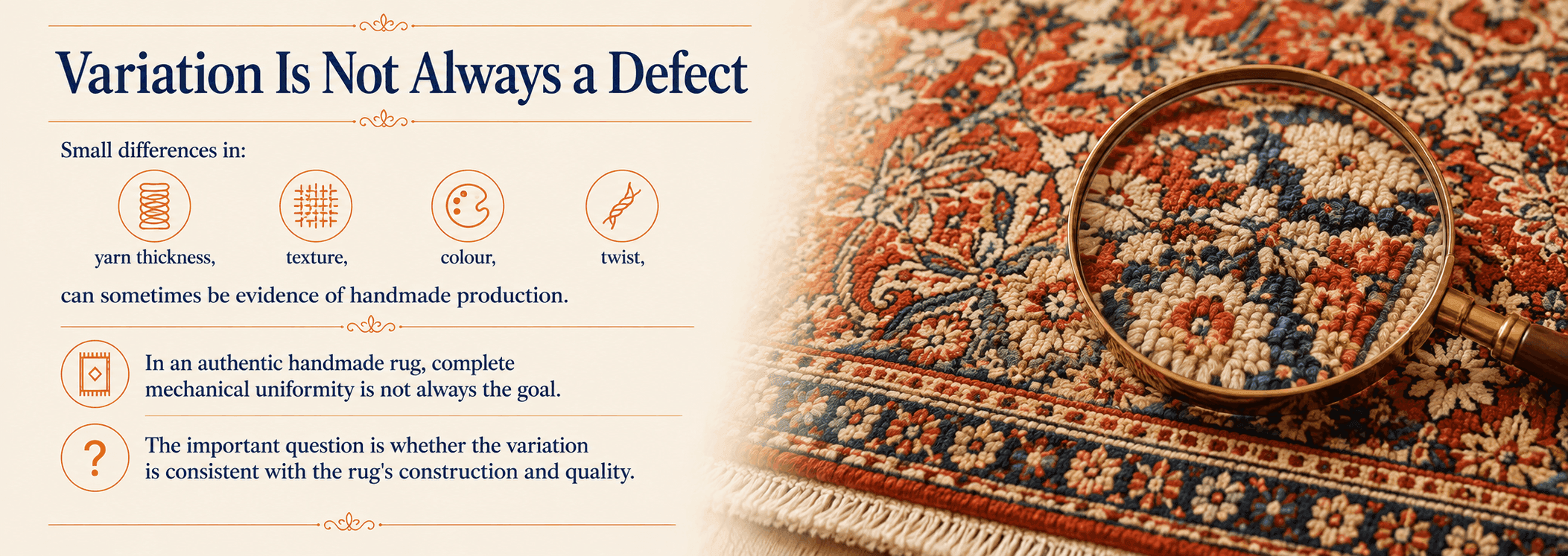
This variation can be part of the character of handmade rugs.
A perfectly uniform industrial yarn and a traditionally prepared wool yarn are not necessarily trying to achieve the same result.
One is designed for standardisation.
The other may be part of a regional craft tradition.
12. Wool Quality and Ageing
One of the most fascinating aspects of Persian rugs is the way good wool can age.
With proper care, high-quality wool can develop:
- a beautiful patina,
- a softer surface,
- subtle changes in lustre,
- greater visual depth.
Age alone does not necessarily destroy a rug.
Poor care does.
Excessive moisture, harsh chemicals, prolonged abrasion, insects and inappropriate storage can accelerate deterioration.
This is why understanding wool biology is directly connected to conservation.
13. What Happens When Wool Is Damaged?
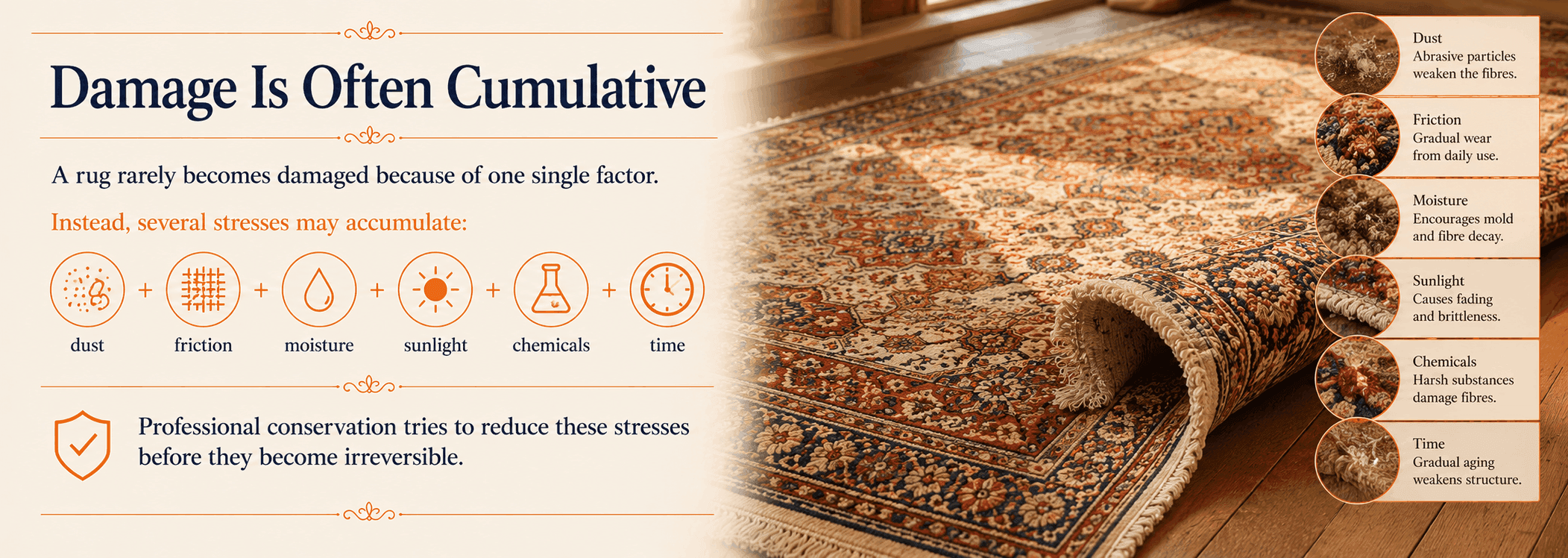
Wool can suffer from several forms of damage.
Mechanical Damage
Caused by:
- excessive friction,
- furniture,
- heavy traffic,
- aggressive brushing.
Chemical Damage
Caused by inappropriate:
- cleaning agents,
- bleaching products,
- chemical treatments.
Environmental Damage
Associated with:
- excessive humidity,
- unsuitable storage,
- prolonged intense sunlight,
- extreme environmental conditions.
Biological Damage
Certain insects and microorganisms can damage natural fibres under favourable conditions.
14. Why Wool Biology Matters When Cleaning a Persian Rug
Understanding fibre structure changes the way a professional approaches cleaning.
For example:
If you know that wool:
- contains a complex protein structure,
- responds to moisture,
- has a scaly cuticle,
- can be affected by chemicals,
- and depends on its internal structure for resilience,
you immediately understand why aggressive cleaning is inappropriate.
Professional cleaning is therefore not about making the rug "as clean as possible."
It is about achieving the appropriate level of cleaning without compromising the material.
Rugeast Professional Principle
Clean the Rug — Do Not Fight the Fibre
The purpose of professional cleaning is not to force a natural material to behave like a synthetic one.
It is to work with the material's natural properties.
15. What This Means for Persian Rug Owners
You do not need to become a textile scientist to care for a Persian rug properly.
But understanding a few basic principles can prevent major mistakes.
Remember:
Wool likes controlled care.
Wool benefits from gentle handling.
Wool is resilient but not indestructible.
Wool can tolerate normal use better than many people expect.
Wool can be damaged by inappropriate cleaning.
The older and more valuable the rug, the more important professional assessment becomes.
Practical Wool Care Checklist
Before cleaning a Persian wool rug, ask:
☐ Do I know whether the rug is wool, silk or a mixture?
☐ Are the colours stable?
☐ Is the rug antique or especially valuable?
☐ Does it have previous repairs?
☐ Are the edges and foundation strong?
☐ Has the rug been exposed to moisture?
☐ Is professional cleaning more appropriate than home treatment?
Frequently Asked Questions
Is Persian rug wool different from ordinary wool?
It can be. Persian rugs may use wool with regional, breed and processing characteristics that differ significantly from industrial carpet wool.
Why is wool so popular in Persian rugs?
Because wool combines resilience, elasticity, warmth, comfort and good dye affinity, making it highly suitable for handmade rugs.
What is keratin in wool?
Keratin is the primary structural protein in wool. It contributes to the fibre's strength and flexibility.
What is the cuticle of a wool fibre?
The cuticle is the outer layer of overlapping microscopic scales that surrounds the fibre.
Why does wool recover after being compressed?
Its internal protein structure gives the fibre natural resilience, allowing it to recover from moderate bending and compression.
Can water damage wool rugs?
Yes. Although wool naturally interacts with moisture, excessive or poorly controlled water can cause prolonged drying, odour, dye migration and other problems.
Is finer wool always better?
No. Fibre fineness is only one quality factor. Strength, elasticity, preparation, spinning and suitability for the specific rug are also important.
Why do old Persian rugs sometimes look better with age?
Good-quality materials and proper care can allow a rug to develop attractive patina and visual depth over time.
Can harsh chemicals damage wool?
Yes. Inappropriate chemicals can alter fibres, colours and surface characteristics.
Should an antique Persian rug be cleaned at home?
A valuable antique rug should generally be professionally assessed before any significant wet cleaning or chemical treatment.
Related Reading
For a broader understanding of cleaning and preservation, continue with our:
Complete Guide to Persian Rug Cleaning and Care
Conclusion
Wool is one of the great secrets behind the longevity and beauty of Persian rugs.
What appears to be a simple thread is actually a sophisticated natural fibre whose microscopic structure influences:
- texture,
- resilience,
- moisture behaviour,
- dye interaction,
- ageing,
- and durability.
Understanding wool changes the way we understand Persian rugs.
A rug is not simply a pattern woven into a surface.
It is a carefully balanced combination of fibre, colour, structure and human craftsmanship.
And when we understand the material, we can clean it more intelligently, maintain it more carefully and preserve it for generations.