
How to Store a Persian Rug Properly
You might think that rolling up a rug and tossing it into the attic or basement is sufficient. Unfortunately, natural fibers like wool, silk, and cotton are highly sensitive to their environment.
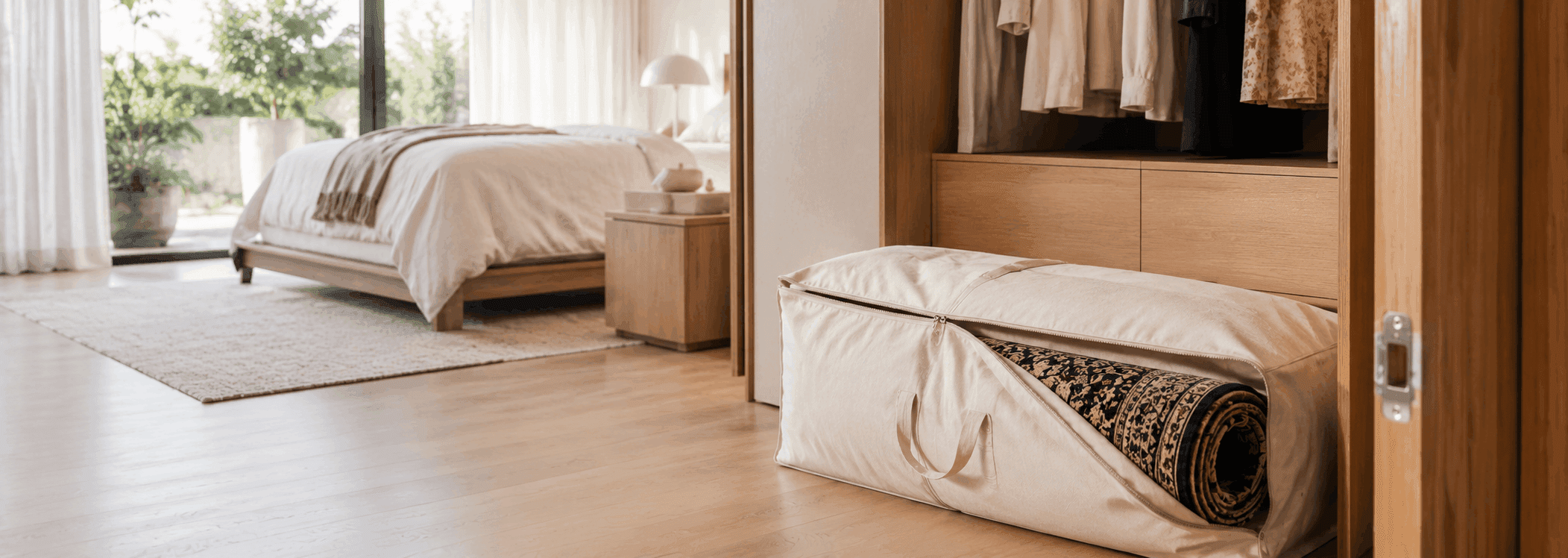
Persian rugs are more than just floor coverings; they are hand-knotted works of art, family heirlooms, and valuable investments. Whether you are moving, redecorating, or simply swapping out your rugs for the season, knowing how to store a Persian rug properly is crucial. A mistake in storage can lead to irreversible damage from moths, mold, or permanent creases.
At RugEast, we understand the craftsmanship that goes into every knot. In this comprehensive guide, we will walk you through the exact steps you need to take to prepare, pack, and store your oriental rug safely.
Why Proper Storage for Oriental and Persian Rugs Matters
You might think that rolling up a rug and tossing it into the attic or basement is sufficient. Unfortunately, natural fibers like wool, silk, and cotton are highly sensitive to their environment.
Improper storage can result in:
- Moth Infestations: Clothes moths love dark, undisturbed places and will quickly eat through wool fibers.
- Mildew and Dry Rot: Fluctuating humidity levels can cause mold growth or make the foundation of the rug brittle and prone to cracking.
- Structural Damage: Folding a rug instead of rolling it can cause permanent creases and break the foundation threads.

Step-by-Step: How to Prepare Your Persian Rug for Storage
1. Deep Clean Before Storage
Never store a dirty rug. Even microscopic food particles, pet dander, or dust can attract pests and cause odors to set in over time.
- Vacuum thoroughly: Vacuum both the front and the back of the rug to remove loose dirt and grit.
- Professional Washing: For long-term storage, we highly recommend having your rug professionally washed. Avoid chemical dry cleaning; traditional water and mild soap extraction is best for hand-knotted rugs. Ensure the rug is 100% dry before moving to the next step.
2. Protect Persian Rugs from Moths and Insects
Once the rug is completely clean and dry, you need to protect it against pests.
- Avoid chemical mothballs directly on the rug, as the harsh chemicals can strip the lanolin from the wool and leave a terrible odor.
- Instead, use a safe, natural insect repellent or an acid-free moth spray specifically designed for textiles. Cedar blocks or lavender pouches placed inside the storage area (not directly touching the fibers) are also great natural deterrents.
3. Rolling vs. Folding: The Right Technique
Never fold a Persian rug. Folding creates sharp creases that can stretch the foundation and snap the delicate warp and weft threads over time.
- How to roll: Determine the direction of the pile (run your hand across it; it will feel smooth in one direction and rough in the other). Roll the rug against the pile.
- Inward or Outward? If the rug has a fragile silk pile, roll it with the pile facing inward. If the foundation is stiff, rolling it with the pile facing outward often places less stress on the backing.
- Keep it straight: Make sure the edges remain aligned as you roll. If the rug is very large, consider rolling it around a sturdy, acid-free cardboard tube to prevent the roll from bending in the middle.

4. Wrapping the Rug: Avoid Plastic!
One of the most common mistakes is wrapping a wool rug in thick plastic. Plastic traps moisture, which can lead to condensation, mold, and dry rot.
- Use a breathable material. Tyvek paper, heavy-duty muslin cloth, or cotton sheets are ideal.
- Wrap the rolled rug entirely and secure the wrapping with twine or cotton rope. Do not use sticky tape directly on the rug.
Climate Control: Best Temperature and Humidity for Rug Storage
The storage environment is just as important as the preparation.
- Temperature: Store the rug in a climate-controlled room, ideally between 15°C and 20°C (60°F - 68°F).
- Humidity: Keep the humidity levels stable. Too dry, and the wool becomes brittle. Too humid, and mold will grow. A relative humidity of around 40-50% is perfect.
- Location: Avoid attics (too hot) and basements (too damp). Keep the rug elevated off the floor to protect against accidental leaks, and ensure it is kept away from direct sunlight to prevent the dyes from fading.
Frequently Asked Questions (FAQ)
Can I wrap my Persian rug in plastic for storage? No. Plastic prevents the natural fibers from breathing. Temperature changes can cause condensation inside the plastic, leading to mold, mildew, and irreversible rot. Always use breathable materials like cotton or Tyvek.
How long can a Persian rug stay rolled up? If properly cleaned, treated for pests, and wrapped in breathable fabric, a rug can be stored for several years. However, we recommend checking on it every 12 to 18 months.
Do I need to unroll my stored rug occasionally? Yes, it is best practice to unroll the rug once a year. This allows you to inspect it for any signs of moth activity, let the fibers breathe, and ensure no moisture has entered the wrapping.