
Why Does the Same Persian Rug Look Different From Different Angles?
A handmade Persian rug can genuinely look different depending on the direction from which you view it. The same red may appear deeper from one end and softer from the other. Blues can seem darker, while ivory and cream areas may appear brighter.
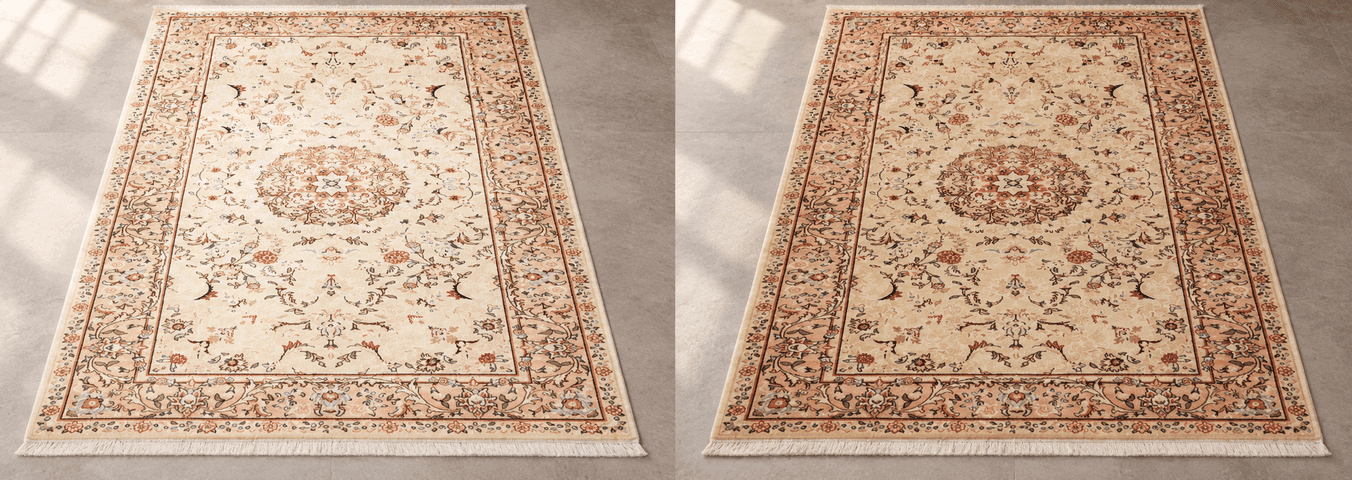
Have you ever looked at a Persian rug from one side and thought the colors looked rich, deep, and dark, only to walk around it and see a much lighter and brighter version of the same rug?
You are not imagining it.
A handmade Persian rug can genuinely look different depending on the direction from which you view it. The same red may appear deeper from one end and softer from the other. Blues can seem darker, while ivory and cream areas may appear brighter.
This fascinating effect is mainly caused by the direction of the rug's pile, the way wool fibers reflect light, and the construction of the rug. It is one of the natural visual characteristics that makes handmade Persian rugs so interesting.
What Is the Pile of a Persian Rug?
The pile is the visible surface of a Persian rug, created by thousands of individual knots.
When a weaver ties and cuts each knot, the fibers do not stand perfectly upright. They naturally lean in a particular direction. This creates what is often called the nap or pile direction.
You can actually feel this direction with your hand.
Run your hand gently across the rug one way and the surface may feel smooth. Move your hand in the opposite direction and it may feel slightly rougher or more resistant.
This direction also changes the way light interacts with the wool.
Why Does the Color Change With the Viewing Angle?
The main reason is light reflection.
Wool fibers have a natural surface and slight luster. Because the pile is angled rather than completely vertical, light hits the fibers differently depending on where you are standing.
From one direction, more light may be reflected toward your eyes, making the rug appear lighter, softer, or brighter.
From the opposite direction, you may be looking more directly into the pile, creating deeper shadows and making the colors appear darker, richer, or more saturated.
The rug itself has not changed.
Only your viewing angle and the way light interacts with the pile have changed.
The “Light Side” and “Dark Side”
This is why rug specialists sometimes talk about the light side and dark side of a Persian rug.
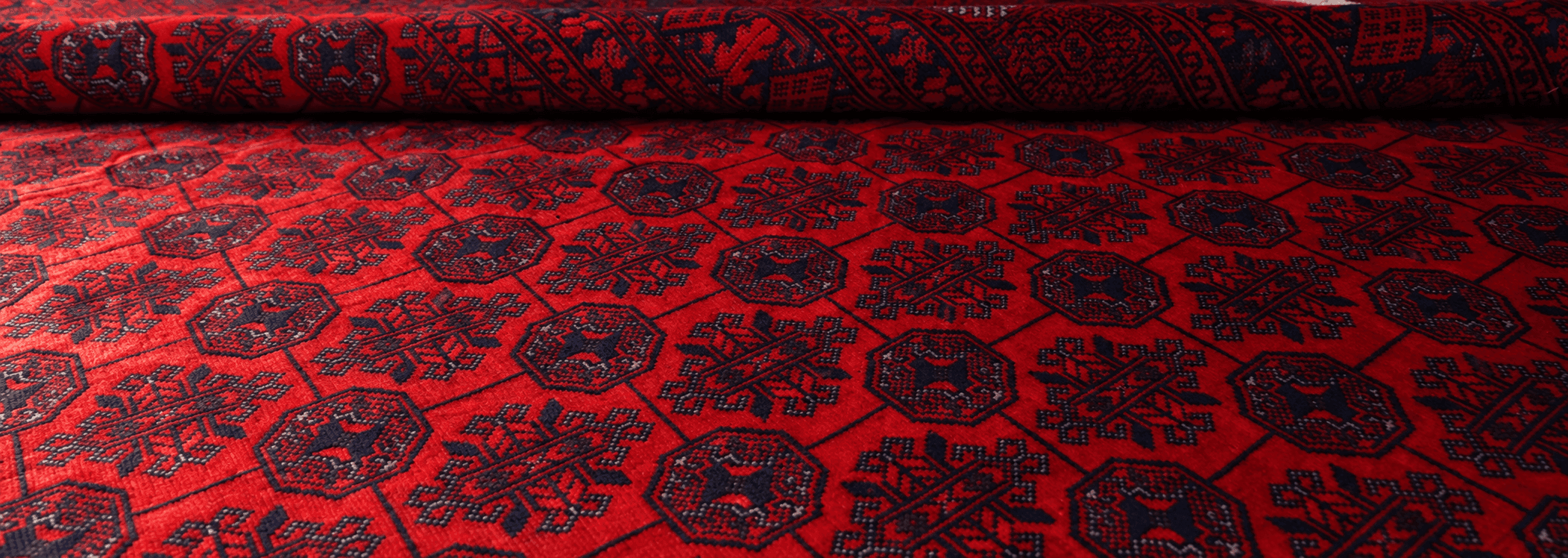
If you stand at one end, the rug may appear brighter and more reflective. Walk to the other end and the same surface can suddenly look deeper and darker.
This effect is especially noticeable in rugs with lustrous wool, deep colors, or a pronounced pile direction.
It can be surprising when you first see it because the difference may be significant enough to make the rug appear almost like two different carpets.
Why Handmade Persian Rugs Show This Effect
The phenomenon is particularly noticeable in hand-knotted rugs because of their pile construction.
Each knot is individually tied, and the pile naturally develops a directional lay as the rug is woven.
The exact appearance can vary depending on:
- Wool quality
- Pile height
- Knotting technique
- Weaving structure
- Fiber direction
- Lighting conditions
- Age and wear
The same rug may therefore look slightly different not only from opposite ends but also under different types of lighting.
Does This Mean the Rug Has Faded?
Not necessarily.
This is one of the most important distinctions to understand.
If a rug looks lighter from one end and darker from the other, the change may simply be caused by pile direction rather than fading.
Sun fading behaves differently.
UV exposure generally affects the exposed surface of the rug and follows the areas that received the most sunlight. A genuine pile-direction effect, by contrast, changes when you move around the rug.
A simple test is to change your position.
If the entire rug appears to switch between lighter and darker as you change viewing direction, you are most likely seeing pile-direction shading rather than actual color loss.
What About Abrash?
Another phenomenon that can create color variation is abrash.
Abrash refers to subtle changes in tone within an area that was intended to be one color. It can occur when different batches of dyed wool have slightly different shades and are used during the weaving process.
For example, a blue field may gradually shift from one blue tone to another across horizontal sections of the rug.
Abrash is different from pile-direction shading.
Pile shading changes when you change your viewing angle. Abrash remains in the same place.
This distinction is useful when examining an older or handmade Persian rug.
Why Some Persian Rugs Look Especially Shiny
Some Persian rugs have a noticeable natural sheen.
This can come from the characteristics of the wool itself, the way the fibers are spun and finished, and how the pile catches light.
Certain high-quality wools have a soft, natural luster that becomes particularly visible when the viewing angle changes.
This does not necessarily mean that the rug has been treated with a special coating or polish.
In a well-made handmade rug, the changing sheen can simply be part of the character of the fiber.
Does the Direction of the Rug Matter in a Room?
Yes.
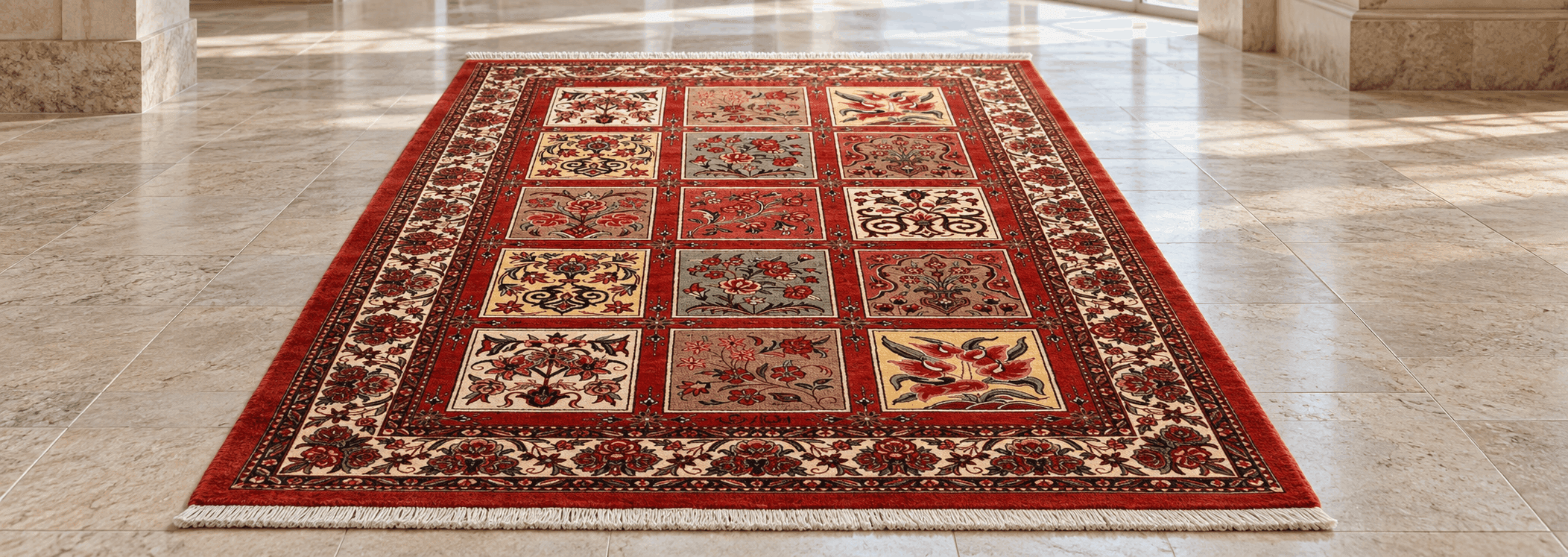
Because the appearance of a Persian rug can change depending on its orientation, the direction in which you place it can affect how its colors look in your room.
Natural daylight, windows, lamps, and the main viewing position all influence the final appearance.
Interior designers and rug specialists sometimes consider the lighter or darker direction when positioning a rug.
There is no universal rule that one direction is always correct. The best orientation depends on the room, the available light, and the appearance you prefer.
How to See the Difference Yourself
If you already own a Persian rug, try a simple experiment.
Stand at one end and look toward the opposite end.
Then walk around to the other side and look back.
You may immediately notice a difference in the depth of the colors.
Next, gently run your hand across the pile in both directions.
One direction should feel smoother, while the other may feel slightly rougher.
This is the pile direction that is responsible for much of the visual change.
For the clearest comparison, examine the rug in natural daylight rather than under a single artificial light source.
Is This a Sign of a Handmade Persian Rug?
Pile direction alone cannot prove that a rug is handmade.
However, it is an important characteristic of pile rugs and can help you understand how a hand-knotted rug was constructed.
When identifying a Persian rug, experts look at many characteristics together, including knot structure, foundation, materials, pile, design, dyes, edges, and overall construction.
No single visual feature should be used as definitive proof of origin or authenticity.
The Beauty of a Rug That Changes With Light
One of the most beautiful things about a Persian rug is that it does not always look exactly the same.
Morning sunlight can reveal one side of its character. Evening light can create another impression. Walking across the room can change the way the colors appear.
Rather than being a defect, this visual movement is part of the character of a natural-fiber, hand-crafted textile.
A Persian rug can interact with its surroundings in a way that a completely flat, uniform surface cannot.
Persian Rugs at RugEast
At RugEast, we believe that details such as pile direction, natural sheen, color variation, and hand-knotting are part of what makes Persian rugs fascinating.
When choosing a handmade rug, it is worth looking at it from different angles rather than judging its colors from a single photograph or viewpoint.
The rug you see from one side may reveal a completely different character when you walk around it.
Final Thoughts
A Persian rug can look different from different angles because its pile has a natural direction that changes how light is reflected from the wool fibers.
From one end, the rug may look bright and luminous. From the other, the same colors can appear deeper and richer.
This effect is different from fading and abrash, even though all three can affect how we perceive color.
Once you understand pile direction, you can look at Persian rugs differently—not simply as static patterns, but as textiles whose appearance changes with light, movement, and perspective.
Frequently Asked Questions
1) Why does my Persian rug look darker from one side?
The pile fibers lean in a particular direction. When viewed against that direction, they create deeper shadows and reflect light differently, making the colors appear darker.
2) Is a color change from different angles a sign of fading?
Not necessarily. If the rug changes from light to dark when you move around it, the effect is usually related to pile direction rather than fading. Actual sun fading follows the areas exposed to light.
3) What is the difference between pile shading and abrash?
Pile shading changes when you change your viewing angle. Abrash is a permanent tonal variation within the rug, usually associated with differences between dye batches or materials used during weaving.