
How to remove gouache from a carpet?
Gouache stains respond best to prompt blotting, limited moisture and mild clear detergent. Traditional gouache may soften with water after drying, while acrylic gouache is harder to remove. Avoid scrubbing, excess water and unapproved solvents; seek expert care for delicate carpets or deep spills.
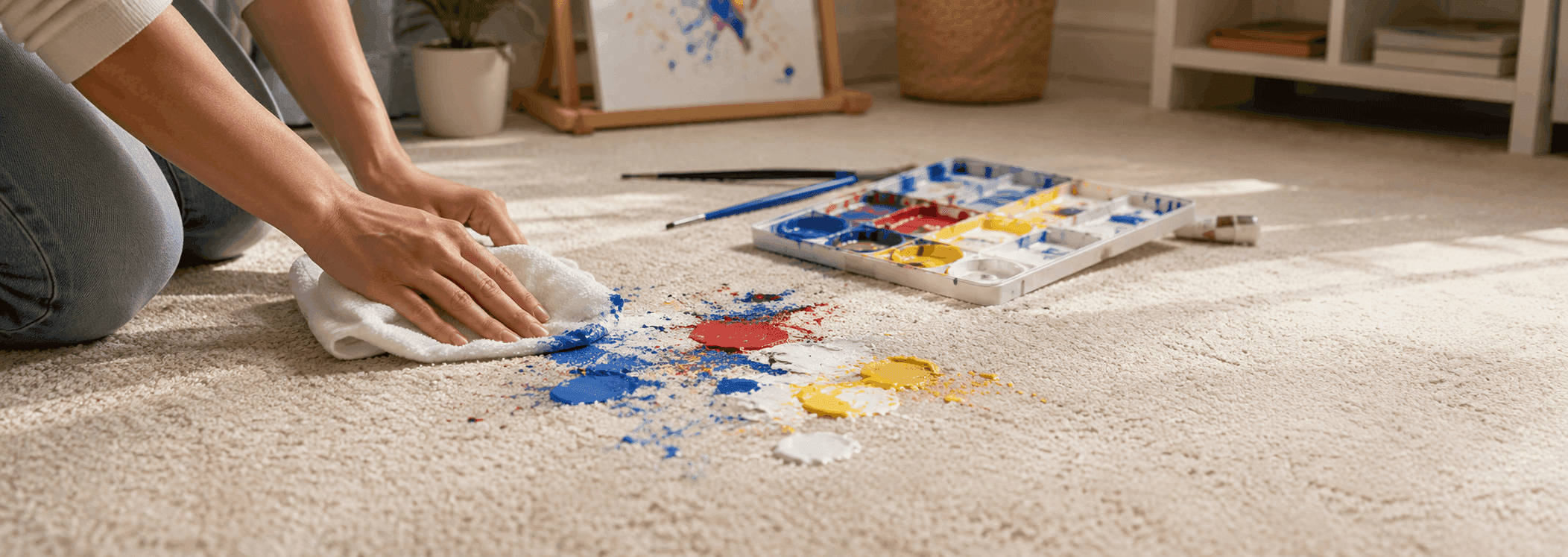
Gouache is a water-soluble, opaque paint, so a fresh spill can often be removed successfully. The outcome depends on the paint formulation, carpet material, dye stability, and how quickly treatment begins.
Traditional gouache generally responds to water after drying. Acrylic gouache behaves more like acrylic paint and may become water-resistant, making prompt treatment especially important.
Materials You May Need
- White cloths or plain paper towels
- Spoon or dull-edged scraper
- Cool or lukewarm water
- Clear dishwashing detergent
- Two small containers
- Carpet-approved spot remover, if required
- Fan for drying
- Vacuum cleaner
Avoid using a stiff brush, as vigorous scrubbing can distort the carpet pile and spread pigment.
Before You Begin
Check the carpet manufacturer’s care instructions. Test every cleaning solution on a concealed area and allow it to dry before examining the color and texture.
Professional treatment is safer for:
- Handmade, antique, or valuable carpets
- Wool, silk, viscose, or other delicate fibers
- Carpets with unstable or unknown dyes
- Large or deeply absorbed spills
- Paint that has penetrated the backing or padding
If color transfers from the carpet to a damp white cloth, stop and consult a specialist.
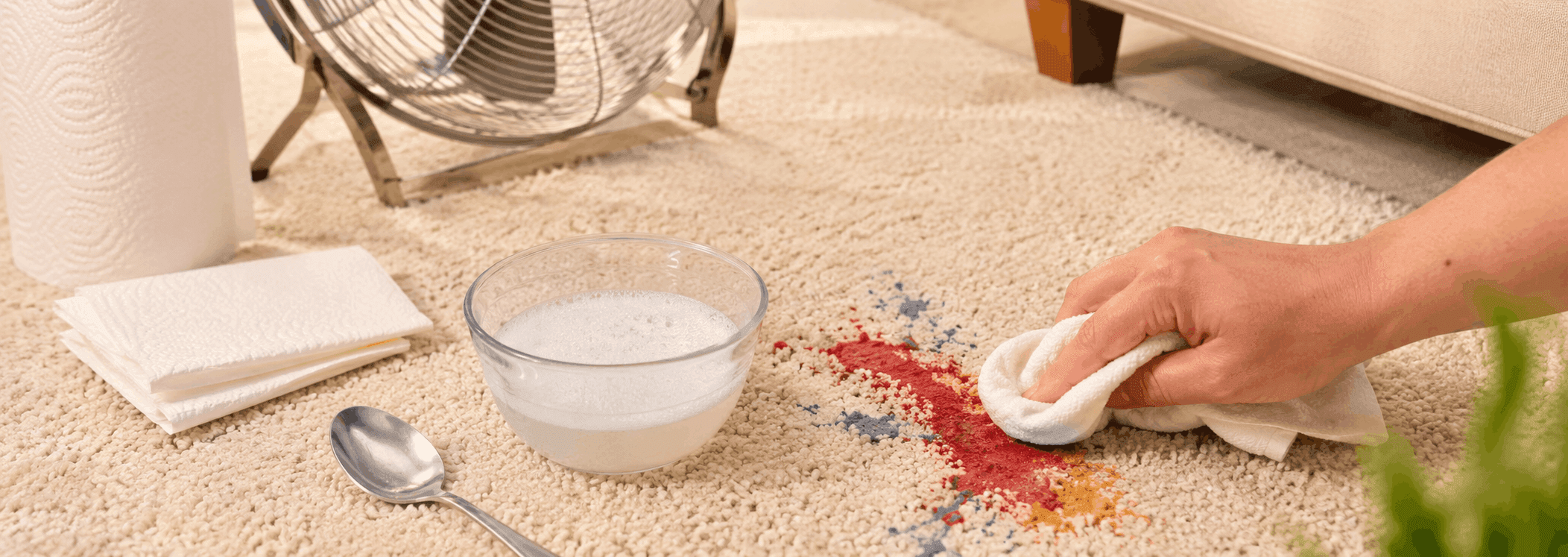
Removing Fresh Gouache
1. Remove Excess Paint
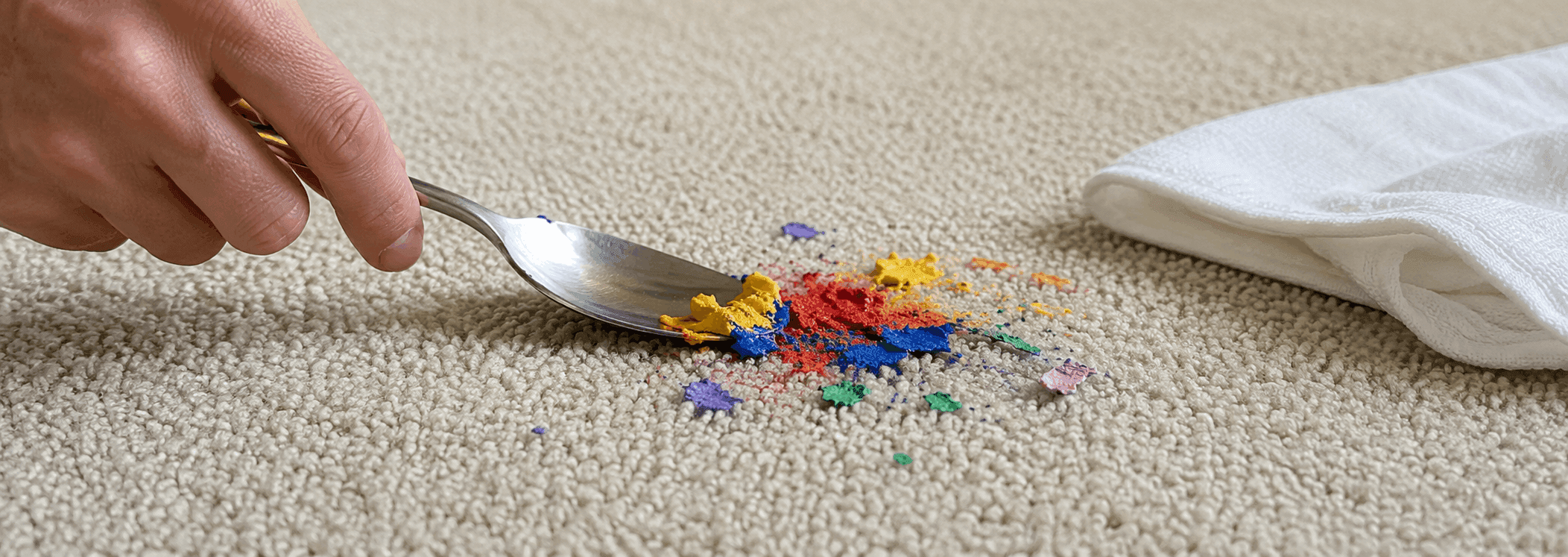
Lift thick paint carefully with a spoon or dull-edged scraper. Work from the outside toward the center to prevent the spill from spreading.
Blot the remaining liquid with a clean white cloth. Do not rub, scrub, or press hard enough to force paint into the carpet backing.
2. Blot With Water
Lightly dampen a white cloth with cool or lukewarm water. Blot from the stain’s edge toward its center, moving to a clean part of the cloth as pigment transfers.
Do not pour water directly onto the carpet or saturate the area.
3. Apply a Mild Detergent Solution
If water alone is insufficient, mix approximately ¼ teaspoon of clear dishwashing detergent with one cup of warm—not hot—water. This dilution is consistent with carpet-care guidance published by Shaw Floors.
Apply a small amount to a clean cloth rather than pouring it onto the carpet. Blot gently, allowing the solution time to loosen the paint. Repeat with clean sections of cloth until little or no color transfers.
Crayola likewise recommends water and liquid dish soap for certain washable paint stains, followed by blotting from the outer edges inward.
4. Rinse Away Detergent
Dampen another cloth with clean water and blot the treated area to remove detergent residue. Residual soap can make carpet fibers feel stiff and may attract soil.
5. Extract Moisture and Dry
Press dry white towels against the carpet to absorb as much moisture as possible. Allow the area to dry completely with good ventilation or a fan.
Avoid walking on the damp section. Vacuum only after it is fully dry.
Removing Dried Gouache
Dried traditional gouache may soften when exposed to a small amount of water.
- Carefully remove loose surface material with a spoon or dull scraper.
- Hold a damp white cloth against the spot briefly to soften the paint.
- Blot without rubbing.
- Apply the diluted detergent solution if necessary.
- Rinse by blotting with clean water.
- Absorb the moisture and dry the carpet thoroughly.
Do not scrape aggressively, as dried paint may pull or cut carpet fibers.
Dried acrylic gouache can be significantly harder to remove because its polymer binder may resist water. In that case, use only a spot remover approved by both the carpet and paint manufacturers or seek professional assistance.
Should You Use Vinegar, Baking Soda, or Rubbing Alcohol?
White Vinegar
Vinegar should not be an automatic next step. Its acidity may affect certain carpet dyes or fibers, and it offers no clear advantage over a properly diluted carpet detergent for ordinary water-soluble gouache.
Use it only if the carpet manufacturer specifically recommends it.
Baking Soda
Baking soda may absorb some odors, but it does not reliably dissolve dried paint pigment. Applying it to a wet stain can also create a paste that is difficult to extract from the carpet.
It is therefore unnecessary in the standard gouache-removal process.
Rubbing Alcohol
Alcohol can help with some washable paints, and Crayola includes it in guidance for particular paint products. However, it may affect carpet dyes, backing, adhesives, or protective treatments.
Use alcohol only after checking the carpet and paint manufacturers’ instructions. Test it first, apply it sparingly to a cloth, ventilate the room, and keep it away from flames. Never saturate the carpet.
Do not combine vinegar, alcohol, detergent, or commercial stain removers unless the product instructions expressly permit it.
Mistakes to Avoid
- Rubbing or aggressively brushing the stain
- Pouring cleaning solution directly onto the carpet
- Oversaturating the pile or backing
- Using hot water without manufacturer approval
- Applying bleach, ammonia, acetone, or paint thinner
- Mixing cleaning products
- Vacuuming wet carpet
- Using colored towels that may transfer dye
- Drying the stain with high heat
When to Call a Professional
Consult an experienced carpet cleaner when:
- The carpet is handmade, antique, wool, silk, or valuable.
- Its fiber or dye type is unknown.
- Carpet color transfers during testing.
- The spill covers a large area.
- Acrylic gouache has dried completely.
- Paint has reached the backing or padding.
- Repeated blotting produces no further improvement.
- An earlier cleaning attempt caused discoloration or texture changes.
Complete removal cannot always be guaranteed because some pigments permanently alter carpet dyes or become embedded in the fibers.
Preventing Future Paint Spills
- Paint on an uncarpeted surface whenever possible.
- Place a waterproof sheet beneath the entire workspace.
- Keep paint containers away from table edges.
- Use lidded water containers.
- Supervise children while they paint.
- Keep clean cloths nearby for immediate spill treatment.
Conclusion
Fresh gouache is usually easiest to remove with prompt blotting, limited moisture, and a weak solution of clear dishwashing detergent. Rinsing away residue and drying the carpet completely are just as important as lifting the pigment.
Vinegar, baking soda, and solvents should not be routine treatments. For delicate carpets, unstable dyes, extensive spills, or dried acrylic gouache, professional cleaning is the safer choice.
FAQs
1. How should fresh gouache paint be removed from carpet?
Lift excess paint carefully, blot with cool or lukewarm water, apply diluted clear detergent if needed, rinse by blotting and dry thoroughly.
2. Can dried gouache be removed from carpet?
Traditional gouache may soften with limited moisture, but dried acrylic gouache is more water-resistant and may require professional treatment.
3. Should rubbing alcohol or vinegar be used on gouache stains?
Only when approved by the carpet and paint manufacturers. Both may affect fibers, dyes, backing or protective treatments.