
Can I Clean a Carpet with Laundry Detergent?
Laundry detergent should not be used in carpet-cleaning machines because it can create foam, leave residue, attract dirt and harm carpets or equipment. Use an approved low-foaming formula, limit moisture and dry fully. Reserve tested mild solutions for spot care on suitable synthetic carpets only.
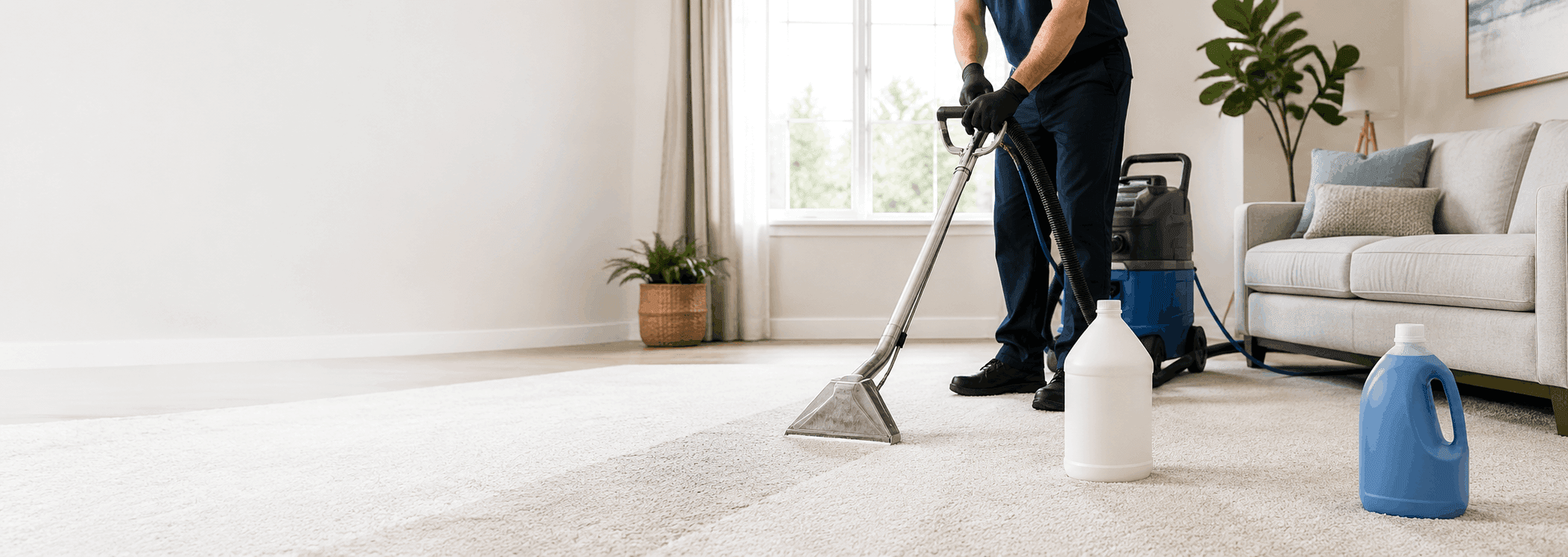
Laundry detergent may seem like a convenient substitute for carpet cleaner, but it generally should not be used in a carpet-cleaning machine. It can create excessive foam, leave sticky residue, attract new dirt, interfere with the machine, and potentially affect the carpet’s backing or stain-resistant treatment.
Use only a low-foaming solution approved by both the carpet manufacturer and the cleaning-machine manufacturer.
Carpet Cleaner or Steam Cleaner?
Machines commonly described as “steam cleaners” are often hot-water extraction cleaners. They spray water and cleaning solution into the carpet and then extract the dirty liquid.
A true steam cleaner produces high-temperature vapor and may not be suitable for every carpet. Excessive heat can damage certain fibers, dyes, adhesives, and backings. Always identify the machine and follow its instructions.
Why Laundry Detergent Is Not Recommended
Laundry detergent is formulated for washing machines, where fabric can be thoroughly rinsed with large quantities of water. A carpet cannot be rinsed as completely.
Using laundry detergent on carpet may cause:
- Excessive foaming
- Sticky or stiff fibers
- Rapid resoiling
- Difficult-to-remove fragrance or brightener residue
- Machine blockages or corrosion
- Discoloration or dye instability
- Moisture retention in the backing or padding
- Possible warranty problems
BISSELL specifically advises against using laundry detergent on carpet because residual soap can attract dirt. It also recommends selecting a formula made for the particular type of carpet-cleaning machine being used.
There is no universally safe ratio—such as one tablespoon of detergent per liter of water—because detergents, machines, and carpets differ substantially.
What to Do If Carpet Cleaner Is Unavailable
The safest choice is usually to postpone deep cleaning until you have a compatible product. If cleaning must continue:
- Read the machine manual to determine whether water-only operation is permitted.
- Check the carpet manufacturer’s care instructions.
- Do not add laundry detergent, dish soap, vinegar, ammonia, fabric softener, or another improvised product to the tank.
- Use only a product expressly approved for that machine and carpet.
- Extract as much moisture as possible and provide strong ventilation.
Rug Doctor also recommends its approved machine solutions rather than homemade mixtures.
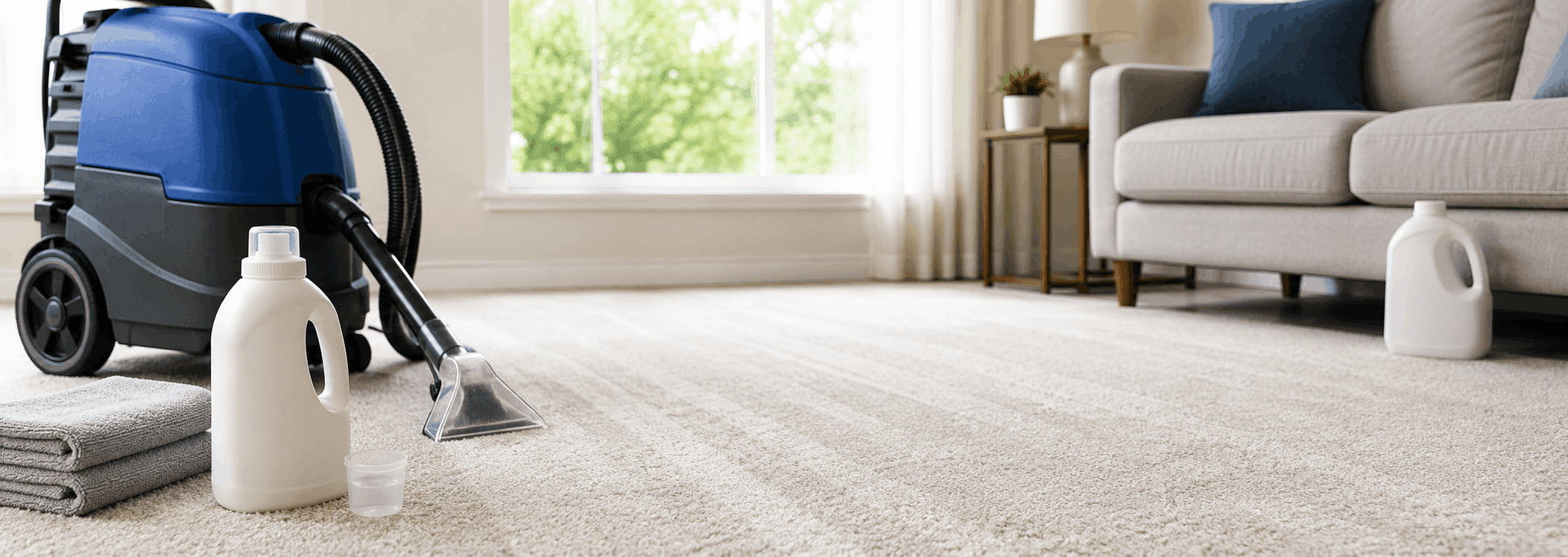
Can You Make a Homemade Carpet Cleaner?
A mild homemade solution may sometimes be suitable for treating a small spot on a compatible synthetic carpet. It should not automatically be poured into a carpet-cleaning machine.
Before applying any solution:
- Identify the carpet fiber.
- Check its care instructions.
- Test the mixture in a concealed location.
- Allow the test area to dry completely.
- Check for color transfer, fading, stiffness, or texture changes.
Handmade, antique, wool, silk, viscose, jute, and color-sensitive carpets should generally be treated by a qualified specialist.
A Mild Spot-Cleaning Solution
For some colorfast synthetic carpets, mix:
- ¼ teaspoon of clear hand-dishwashing detergent
- 1 cup of warm water
The detergent should contain no bleach or strongly colored dyes. Apply a small amount to a white cloth—not directly to the carpet—and blot the spot from its edges toward the center.
Next, blot with a second cloth lightly dampened with clean water to remove residue. Press dry towels against the area and allow it to dry completely.
This is a spot-treatment method, not a universal machine-cleaning formula.
Homemade Mixtures to Avoid
Laundry Detergent and Fabric Softener
This combination can produce foam and leave a residue that attracts soil. Fabric softener is designed to coat textile fibers and is unnecessary for carpet cleaning.
All-Purpose Cleaner or Glass Cleaner
Products intended for hard surfaces may contain solvents, ammonia, fragrances, or other substances unsuitable for carpet fibers and backings.
Vinegar in a Cleaning Machine
Vinegar is not a complete carpet detergent and may damage some machines or materials. BISSELL and Rug Doctor advise against adding it to carpet-cleaning equipment.
Ammonia Mixtures
Ammonia can irritate the skin, eyes, and lungs and may affect wool and some carpet dyes. Never mix ammonia with chlorine bleach: the combination can release dangerously toxic gases.
Hydrogen Peroxide
Hydrogen peroxide may lighten carpet dyes. Use it only when the carpet manufacturer recommends it and after a successful colorfastness test.
Baking Soda and Borax Powders
Fine powders may remain embedded in the pile, backing, or vacuum cleaner. They do not replace proper soil extraction and may be difficult to remove from thick carpet.
Essential Oils
Essential oils can leave oily marks, irritate people or animals, and may be unsafe for some pets. They should not be treated as harmless merely because they are natural.
How to Clean Carpet With an Extraction Machine
- Vacuum the carpet thoroughly.
- Pretreat stains only with an approved product.
- Test the product in a hidden area.
- Fill the machine according to its manual.
- Use the exact quantity of approved formula specified.
- Begin at the point farthest from the exit.
- Avoid repeatedly soaking the same area.
- Make additional suction-only passes to extract moisture.
- Ventilate the room and use fans if appropriate.
- Keep people and pets off the carpet until it is completely dry.
Do not assume that every carpet can be wet-cleaned. Area rugs and handmade carpets may require removal and specialist washing.
Cleaning a Small Area by Hand
For an isolated spill or stain:
- Remove solids with a spoon or dull-edged scraper.
- Blot liquid with a clean white towel.
- Test the selected cleaner in a concealed area.
- Apply a small amount to a cloth.
- Blot from the outside of the spot toward the center.
- Do not scrub aggressively.
- Rinse by blotting with a cloth lightly dampened with clean water.
- Absorb moisture with dry towels.
- Allow the area to dry fully before vacuuming.
The Carpet and Rug Institute recommends identifying the carpet and contaminant, testing cleaning agents, following label directions, and avoiding scrubbing that can distort the pile.
Substances to Avoid
Chlorine Bleach
Bleach can remove carpet color and weaken some fibers. It should not be used unless expressly permitted by the carpet manufacturer.
White Wine
Using white wine on a red-wine stain adds more liquid and does not reliably remove the original contamination. Use an approved stain-removal procedure instead.
Abrasive Cleaners and Stiff Brushes
Aggressive scrubbing may fuzz, untwist, or permanently distort carpet fibers.
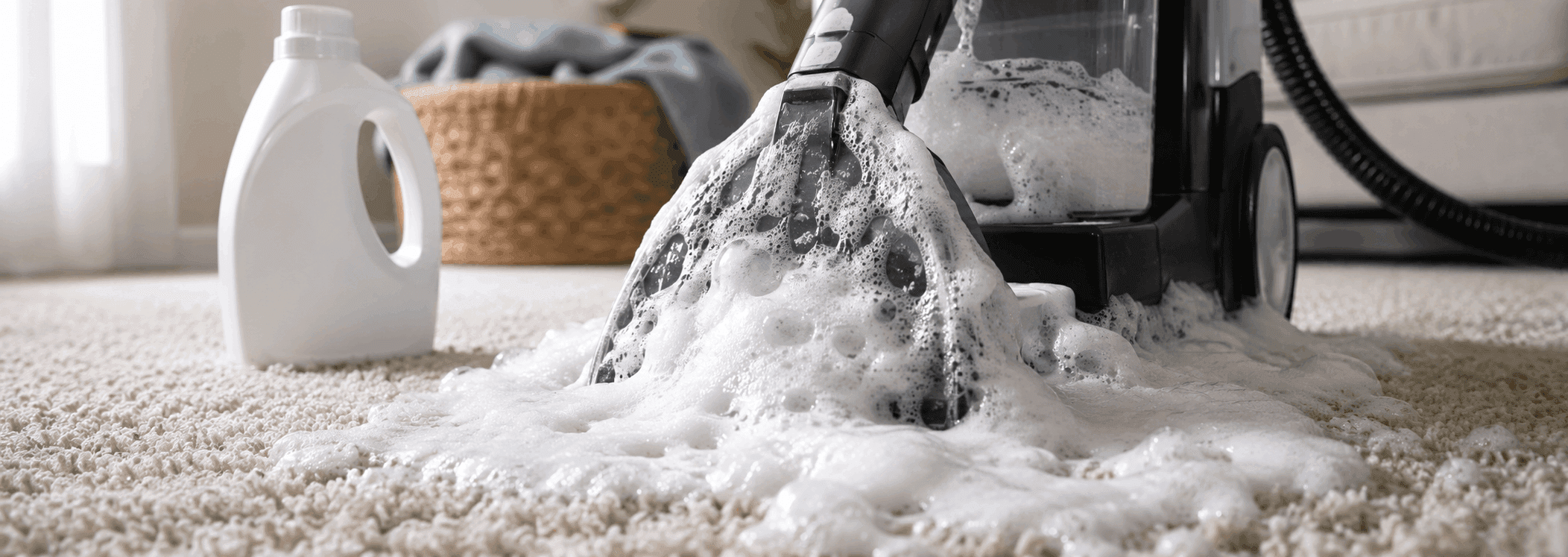
Highly Foaming Products
Dish soap, laundry detergent, and similar products can overwhelm extraction machines and leave difficult residues.
Mixed Cleaning Chemicals
Never combine cleaning products unless the labels specifically state that doing so is safe. Particularly dangerous combinations include bleach with ammonia or acidic cleaners.
Drying the Carpet Safely
Incomplete drying may lead to odors, microbial growth, backing damage, or stains that reappear through wicking.
To support drying:
- Extract as much water as possible.
- Improve ventilation.
- Use fans or dehumidification when appropriate.
- Avoid replacing furniture while the carpet is damp.
- Do not cover the wet area.
- Keep foot traffic to a minimum.
A fixed waiting period such as 24 hours does not prove that a carpet is dry. Drying time depends on humidity, airflow, carpet construction, padding, and the amount of water applied.
When to Call a Professional
Professional cleaning is advisable for:
- Wool, silk, viscose, jute, or handmade carpets
- Antique or valuable rugs
- Unstable or unknown dyes
- Extensive pet contamination
- Persistent odors
- Water or mold damage
- Large or deeply absorbed stains
- Carpet that remains wet or smells musty
- Residue left by an unsuitable cleaning product
Conclusion
Laundry detergent is not an appropriate general substitute for carpet-cleaning solution, particularly inside an extraction machine. Its foam and residue can affect both the carpet and the equipment.
For safe results, use a low-foaming product approved for the carpet and machine, follow the specified dilution, extract moisture thoroughly, and allow the carpet to dry completely. Homemade solutions should be reserved, when suitable, for carefully tested spot treatment—not improvised machine cleaning.
FAQs
1. Can laundry detergent be used in a carpet-cleaning machine?
No. It may cause excessive foam, leave sticky residue, attract dirt and potentially damage the carpet or machine.
2. What should I use instead of laundry detergent?
Use a low-foaming cleaning solution specifically approved by both the carpet manufacturer and the machine manufacturer.
3. Is a homemade carpet cleaner safe for spot treatment?
A carefully tested mild detergent solution may suit small stains on some colorfast synthetic carpets, but not delicate or handmade carpets.