
Why Are Some Persian Rugs Thicker in the Middle?
If you look closely at an older Persian rug, you may notice something unexpected: the centre sometimes feels thicker or higher than the edges. At first, this can seem unusual. After all, rugs are normally expected to have an even surface from one end to the other.
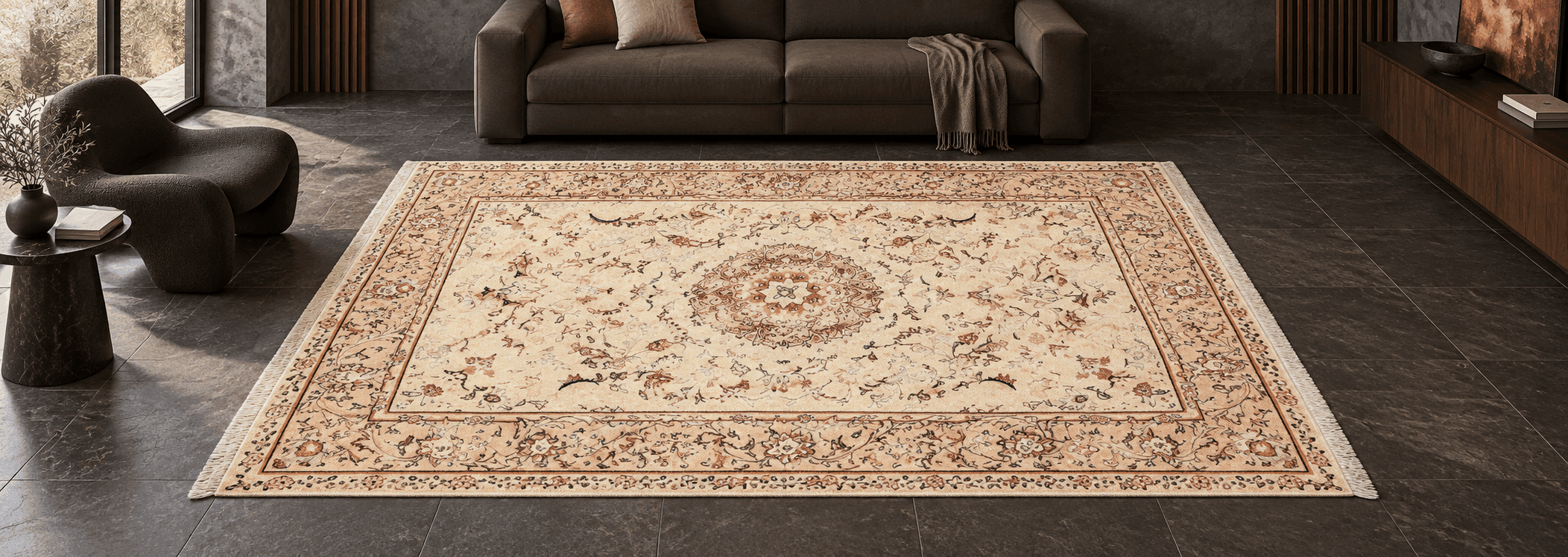
If you look closely at an older Persian rug, you may notice something unexpected: the centre sometimes feels thicker or higher than the edges. At first, this can seem unusual. After all, rugs are normally expected to have an even surface from one end to the other.
However, differences in pile height are common in handmade Persian rugs and can have several explanations. The way a rug was woven, the materials used, how it was used over time, and even how it was repaired can all affect the thickness of different areas.
A thicker centre does not automatically mean that a rug is damaged or poorly made. In many cases, it is simply part of the rug's construction and history.
The Structure of a Persian Rug
To understand why the middle of a Persian rug can feel thicker, it helps to understand how a handmade rug is constructed.
A Persian rug is built around its foundation, usually made from warp and weft threads. Knots are tied around the warp threads to create the pile, while rows of weft are inserted between groups of knots to hold the structure together.
The pile is then trimmed to create the finished surface. In a traditionally handmade rug, this process is performed manually, so small differences in pile height are possible.
The thickness of the rug can therefore vary slightly from one area to another even when the rug was originally made carefully.
Why the Centre Can Be Thicker
One important reason is the way the rug was woven.
During weaving, the weaver may use slightly different amounts of wool, yarn thicknesses or tension in different sections. Handmade rugs are not produced with the same mechanical precision as machine-made carpets.
In some rugs, the central field can also have a slightly different pile height because of how the design was constructed. Areas containing different motifs may require changes in knotting, trimming or weaving technique.
This does not necessarily indicate a manufacturing problem. Instead, it can be evidence of the individual nature of handmade production.
Pile Direction Can Change How Thick a Rug Feels
Another factor is the direction of the pile.
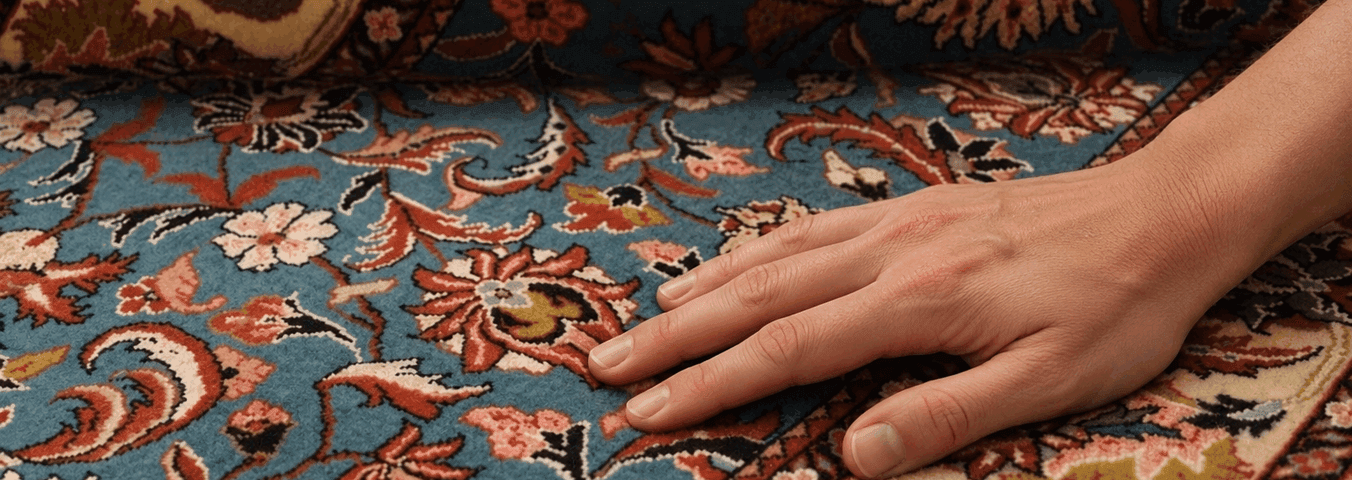
Persian rugs have a natural nap direction created by the way the knots are tied and the pile is cut. When you run your hand over the rug in one direction, it may feel smooth. In the opposite direction, it can feel rougher or appear slightly higher.
This can create the impression that one part of the rug is thicker than another.
Lighting can make the difference even more noticeable. When light hits the pile from a particular angle, some areas reflect more light while others appear darker. A section that looks visually raised may not actually have a significantly different physical thickness.
For this reason, it is useful to inspect a rug both visually and by touch.
Natural Wear Can Make the Edges Look Thinner
Age and use can also change the apparent thickness of a Persian rug.
The areas that receive the most foot traffic usually experience more wear. Depending on the layout of a room, the centre may sometimes receive less concentrated traffic than the main walking paths around entrances, sofas or furniture.
Over many years, frequently walked areas can become more polished and lower in pile.
This can make another area, including part of the central field, appear thicker simply because it has experienced less wear.
However, traffic patterns are different in every home. A rug placed in a busy hallway may wear very differently from one placed beneath a dining table or in a bedroom.
The Middle May Have Been Less Exposed to Furniture
Furniture can influence how a rug ages.
A large sofa, table or other piece of furniture may protect certain sections of a rug from direct foot traffic. At the same time, furniture legs can create pressure points.
If the central part of a rug has spent much of its life underneath furniture, it may retain more of its original pile than exposed areas.
When the furniture is eventually removed, the difference can become more noticeable.
This is one reason why an older rug can sometimes have surprisingly good pile in one area while showing considerable wear elsewhere.
Uneven Trimming During Production
Handmade Persian rugs are generally trimmed after the pile has been woven. The trimming process determines the final height of the wool surface.
Because this is done by hand, the pile is not always perfectly uniform.
A skilled weaver or finisher can achieve a remarkably even surface, but minor variations are completely possible. Some rugs may therefore have areas that feel slightly fuller or higher, particularly when examined closely.
Small differences in pile height should be considered together with the overall construction of the rug rather than judged on their own.
Repairs Can Create Differences in Thickness
Repairs are another possible explanation.
An older Persian rug may have been repaired or partially rewoven during its lifetime. A damaged section can be reconstructed using new wool, new foundation threads or different weaving techniques.
If the repaired section was trimmed differently from the original pile, it may feel higher or lower than the surrounding area.
Sometimes the difference becomes more visible as the original and replacement materials age at different rates.
For valuable or antique Persian rugs, professional inspection can help determine whether an unusual area is original construction or a later repair.
Does a Thicker Centre Mean the Rug Is Better?
Not necessarily.
Thickness alone is not a reliable way to judge the quality or value of a Persian rug.
A thick rug can have excellent materials and craftsmanship, but a thinner rug can also be beautifully made and highly valuable. Many fine Persian rugs have relatively low pile, particularly older examples where decades of use have naturally reduced the surface.
Other factors are more useful when assessing a rug, including its materials, knotting technique, construction, design, condition, age, origin and overall craftsmanship.
The relationship between pile height and condition is particularly important. A rug with thick original pile may have experienced little wear, while a thinner rug may simply be an older piece with substantial but attractive patina.
How to Check Whether the Difference Is Natural
If you notice that the centre of your Persian rug feels thicker, examine the rug from several directions.
First, run your hand across the pile and then against it. Look for changes in texture and pile direction.
Next, inspect the rug under natural or diffuse light. Changes in colour and shading may make certain areas appear more raised than they really are.
Then examine the back of the rug. The foundation, knot structure and weaving pattern can provide useful clues about whether the variation is part of the original construction.
Finally, look for signs of repair, such as changes in knot structure, yarn colour or foundation material.
If the rug is old, valuable or unusual, an experienced rug specialist can provide a more reliable assessment.
A Natural Part of a Handmade Rug's Character
A Persian rug is not manufactured as a perfectly uniform surface. It is the result of thousands of individual decisions made by a weaver, using natural materials and traditional techniques.
Small differences in thickness, pile height and texture can therefore be part of its character.
A thicker centre may reflect the original weaving process, differences in trimming, lower wear in a protected area, furniture placement or a later repair. The important point is to understand the cause before treating the variation as a defect.
At RugEast, understanding these details is part of appreciating what makes handmade Persian rugs different from mass-produced carpets. The small variations found in a handmade rug can reveal something about its construction, use and history.
FAQ
1) Are Persian rugs supposed to have an even pile height?
Not always. Handmade Persian rugs can have minor variations in pile height because they are woven and trimmed by hand. More noticeable differences may also result from wear, furniture placement or repairs.
2) Is a thicker Persian rug more valuable?
Not necessarily. Value depends on many factors, including age, origin, materials, craftsmanship, design, condition and rarity. Pile thickness alone does not determine value.
3) Can an uneven pile indicate that a Persian rug is old?
It can be one clue, but it is not proof of age. Uneven pile can result from handmade construction, trimming, wear or repairs. Age should be assessed using several characteristics together.