
The Most Expensive Persian Rugs Ever Sold
Persian rugs have been admired for centuries for their craftsmanship, intricate designs, rich colors, and cultural history. While many Persian rugs are purchased as beautiful additions to the home, some rare antique carpets have reached extraordinary prices at international auctions.
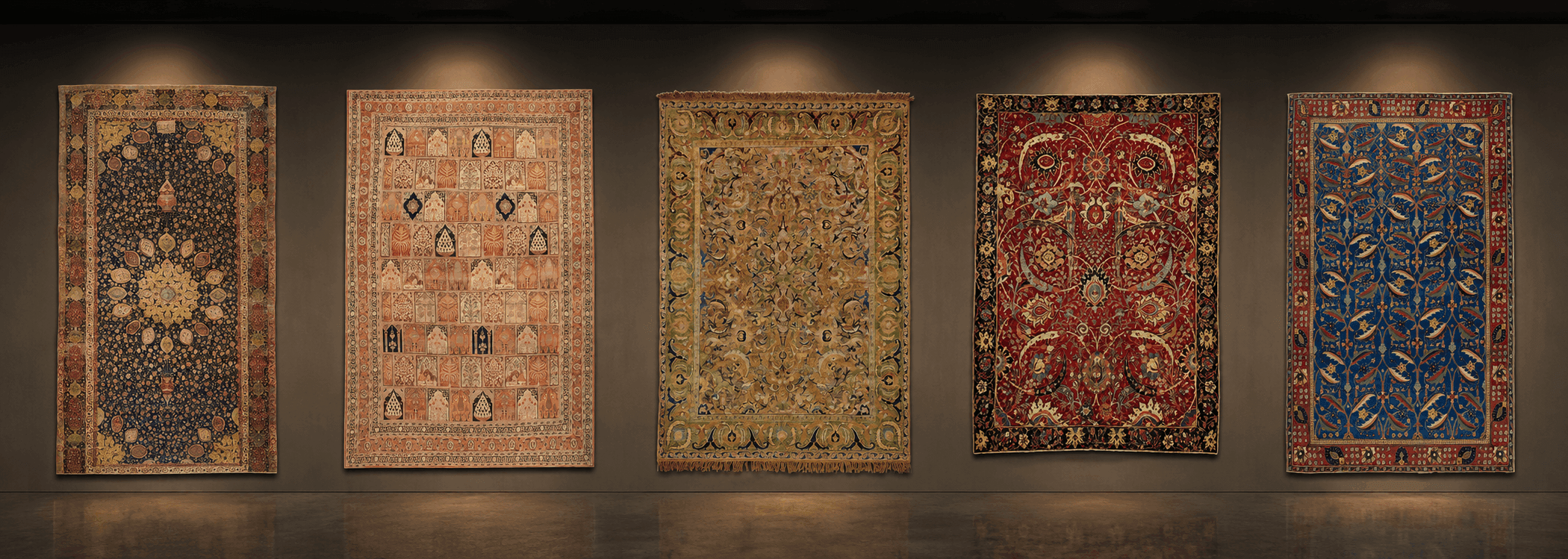
Persian rugs have been admired for centuries for their craftsmanship, intricate designs, rich colors, and cultural history. While many Persian rugs are purchased as beautiful additions to the home, some rare antique carpets have reached extraordinary prices at international auctions.
At the very top of the market, Persian rugs are no longer viewed simply as floor coverings. The rarest examples are treated as works of art, historical objects, and collectible investments.
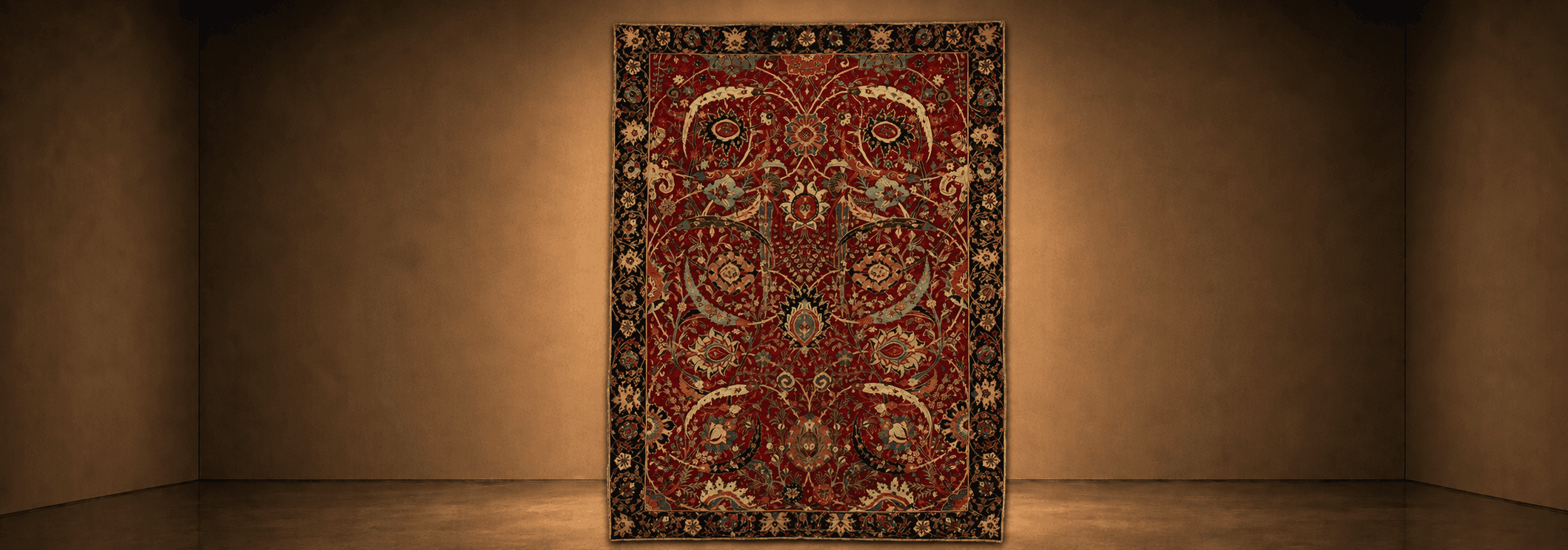
One Persian carpet in particular holds the record for the highest price ever paid for a rug at auction: the Clark Sickle-Leaf Carpet, which sold at Sotheby's New York in 2013 for $33,765,000 including the buyer's premium.
But what makes a Persian rug worth millions of dollars? And which other Persian and Persian-related carpets have achieved remarkable prices?
Let's explore some of the most expensive rugs ever sold at auction.
What Makes a Persian Rug Worth Millions?
A Persian rug can be beautiful without being extremely valuable. At the highest level of the market, however, several factors come together to create exceptional value.
Age and Historical Importance
Antique Persian rugs from the Safavid period, particularly those dating from the 16th and 17th centuries, are among the most sought-after carpets in the world.
This period is widely regarded as one of the great eras of Persian carpet production. Rugs from this time can be rare survivors of a centuries-old artistic tradition.
Rarity
Rarity is another major factor.
A carpet may be valuable because very few comparable examples have survived. Some designs, weaving techniques, and historical pieces are exceptionally difficult to find on today's market.
Condition
Age alone does not make a rug valuable.
An antique carpet that has survived centuries with an unusually well-preserved pile, original colors, structure, and edges can command a much higher price than a similar rug in poor condition.
Provenance
The history of ownership can also have a significant impact on value.
A rug that once belonged to a famous collector, museum, or historically important collection can become much more desirable to collectors.
Design and Craftsmanship
The complexity and quality of the design are also important.
Extremely detailed floral patterns, sophisticated compositions, rare motifs, and exceptional knotting can all increase the desirability of a Persian carpet.
1. The Clark Sickle-Leaf Carpet – $33.765 Million
The Clark Sickle-Leaf Carpet is the most famous example of a Persian rug reaching an extraordinary auction price.
It was sold at Sotheby's New York on June 5, 2013 for $33,765,000, including the buyer's premium. The carpet was an early 17th-century Persian carpet associated with the Kerman or Kirman weaving tradition in southeastern Persia.
Before the auction, Sotheby's estimated the carpet at only $5–7 million. The final price was several times higher than the high estimate.
The carpet measures approximately 2.67 by 1.96 meters and features an elaborate sickle-leaf, vine-scroll, and palmette design.
Its history also contributed to its importance.
The carpet was part of the collection of American industrialist and senator William A. Clark and was later held by the Corcoran Gallery of Art in Washington, D.C.
Its exceptional rarity, condition, design, provenance, and historical importance helped make it a record-breaking masterpiece.
The sale remains the auction record for a carpet.
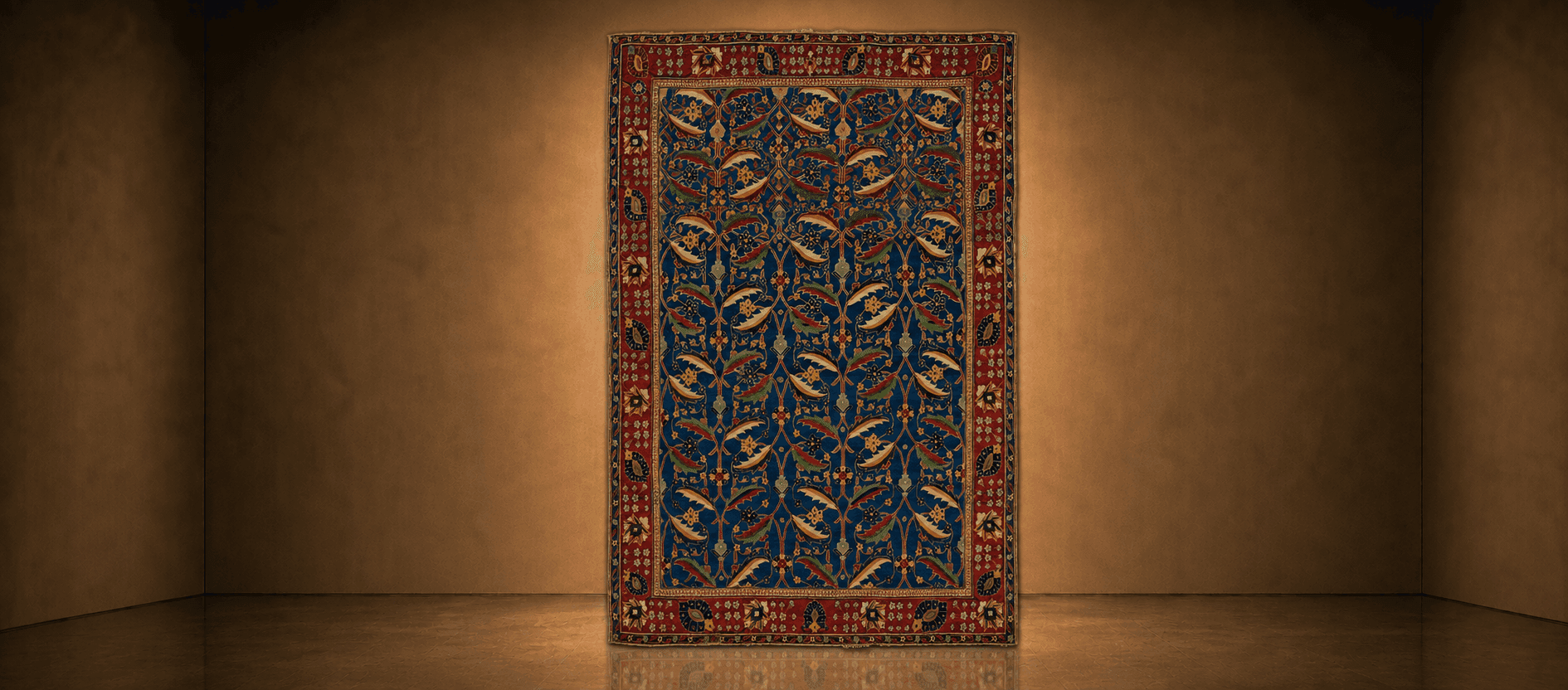
2. The Kirman Vase Carpet – $9.6 Million
Before the Clark Sickle-Leaf Carpet broke the record in 2013, another Persian carpet held the auction record.
The Kirman Vase Carpet sold at Christie's in London in April 2010 for approximately $9.6 million.
The carpet dates to the 17th century and is associated with the famous Persian vase technique.
Its design is characterized by elegant floral patterns and vase motifs, reflecting the sophisticated artistic traditions of Persian carpet weaving.
The sale was particularly significant because the $9.6 million price had previously represented the highest amount ever paid for a carpet at auction.
Although the record was later dramatically surpassed by the Clark carpet, the Kirman Vase Carpet remains one of the most important high-value Persian carpets ever sold.
3. Safavid Polonaise Carpets
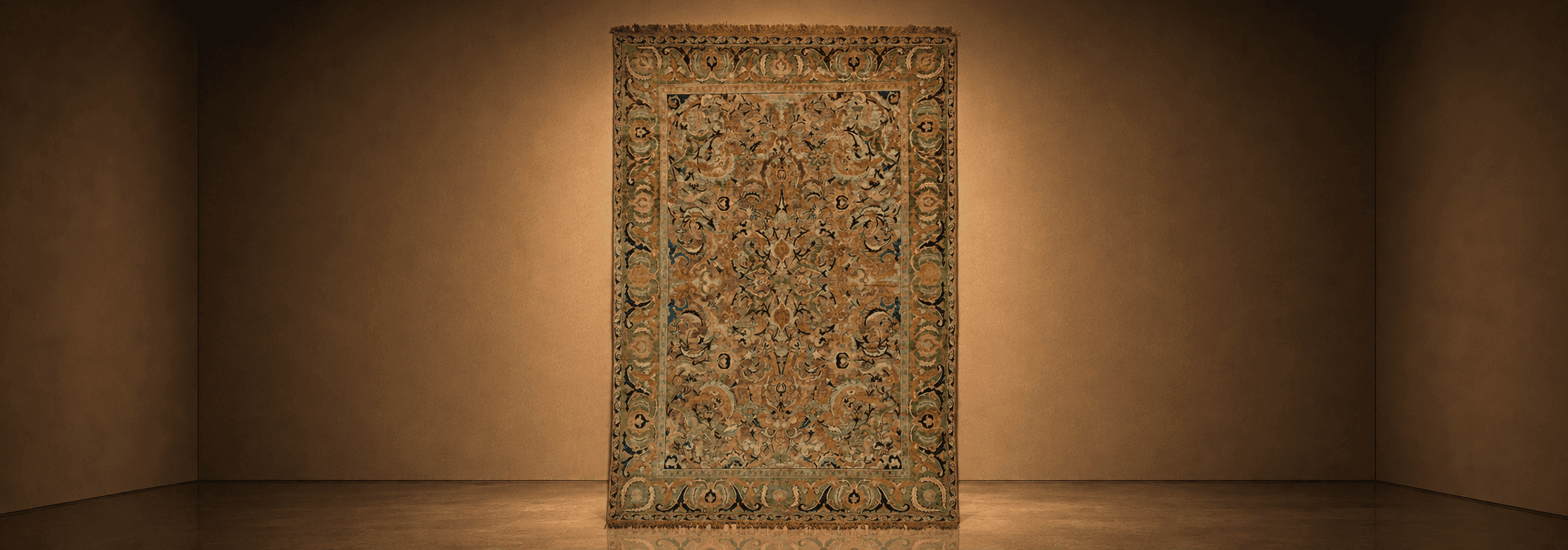
Some of the most valuable Persian carpets come from the Safavid period, particularly those associated with Isfahan and the famous Polonaise style.
These carpets are known for their luxurious materials, including silk and metallic threads, and their highly decorative designs.
One exceptional Safavid silk and metal-thread Polonaise carpet, probably from Isfahan and dating to the early 17th century, sold at Sotheby's in October 2021 for £2,322,000.
The carpet was particularly notable for its silk pile and elaborate metallic-thread decoration.
Its price demonstrates why Safavid carpets remain highly desirable among museums, collectors, and specialists.
4. Rare Tabriz and Other Persian Workshop Carpets
Not every expensive Persian rug is several centuries old.
Fine carpets from famous Persian weaving centers such as Tabriz, Kashan, Kerman, and Isfahan can also reach very high prices when they combine exceptional craftsmanship, rarity, provenance, and condition.
Tabriz carpets are particularly famous for their detailed patterns and sophisticated craftsmanship.
A rare carpet from a renowned workshop can become highly desirable when it represents an exceptional example of its particular style.
This is why collectors often look beyond age and consider the entire history and quality of a carpet.
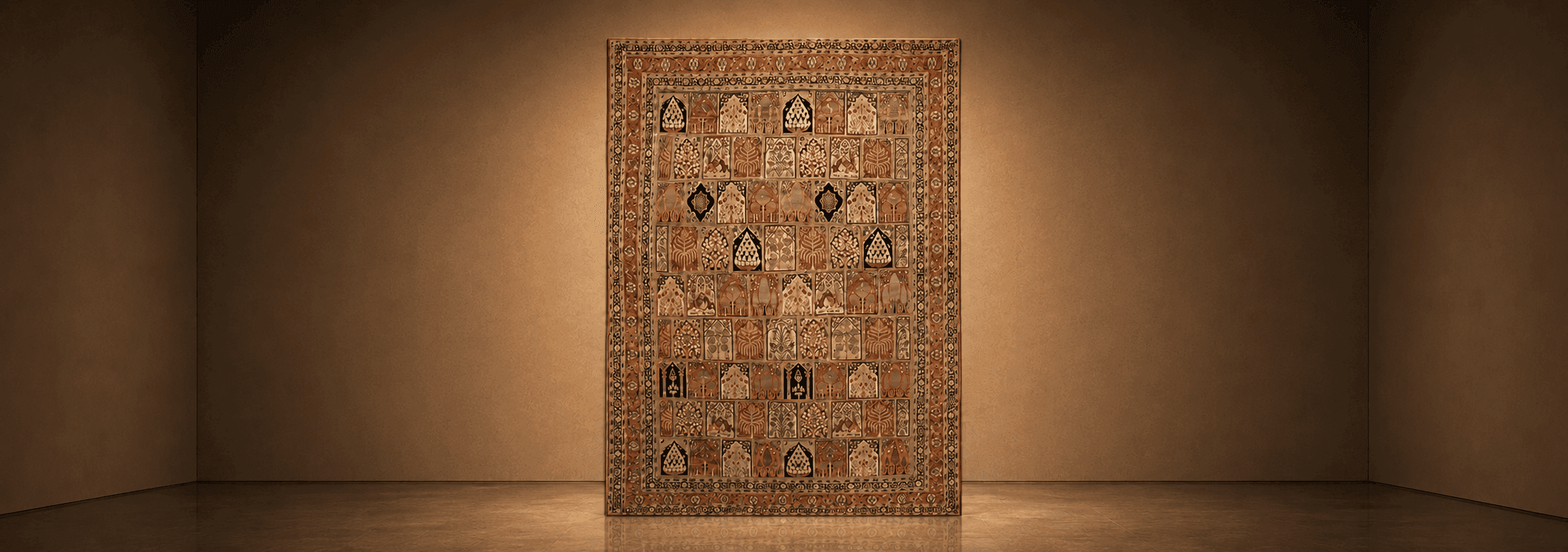
5. Persian Carpets in Museum and Private Collections
Some of the world's most important Persian carpets are no longer traded regularly.
They are held in museums, royal collections, foundations, and major private collections.
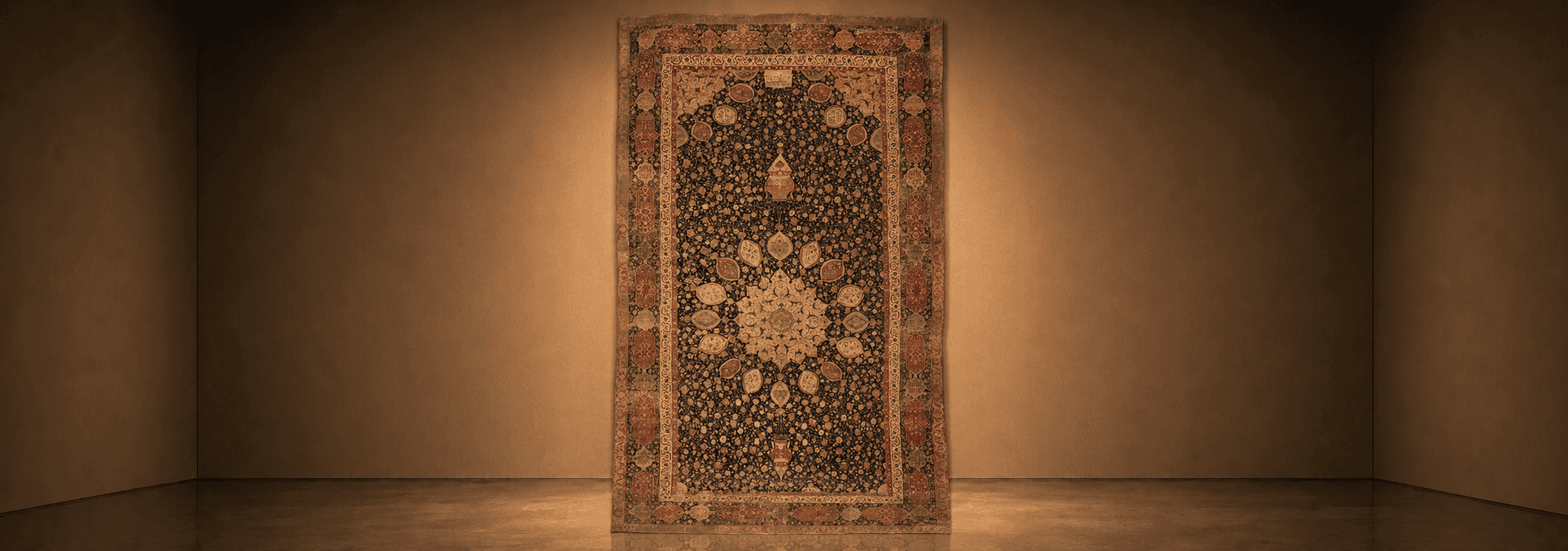
The Ardabil Carpet, for example, is one of the most famous Persian carpets in existence and is preserved at the Victoria and Albert Museum in London.
Although it is not part of a modern auction ranking, its cultural and historical significance demonstrates how some Persian carpets can transcend their monetary value.
These carpets are important not simply because they are old, but because they represent significant moments in the history of Persian art and weaving.
Why Are Antique Persian Rugs So Expensive?
The prices achieved by exceptional Persian rugs can seem surprising when compared with ordinary carpets.
The difference is that rare antique Persian rugs are often treated as collectible works of art.
A modern rug can be reproduced.
A centuries-old carpet with an exceptional design, historical provenance, and excellent condition cannot.
There is only one original.
That scarcity is a major part of the value.
Does Knot Density Determine the Value of a Persian Rug?
Knot density is important, but it is not the only factor.
A very finely knotted rug can demonstrate impressive craftsmanship, but an extremely rare tribal carpet with a simpler structure can also be highly valuable.
Collectors consider a combination of:
- Age
- Origin
- Rarity
- Condition
- Materials
- Knotting technique
- Design
- Provenance
- Historical significance
- Artistic quality
The overall combination is what determines the value.
Are Persian Rugs a Good Investment?
Some exceptional Persian rugs have demonstrated significant value over time, but that does not mean every Persian rug is an investment.
Buying a rug solely because you expect its price to increase can be risky.
The most valuable examples are usually extremely rare and difficult to find.
For most buyers, the best reason to purchase a Persian rug is its beauty, craftsmanship, history, and ability to bring character to a home.
If a particular rug later becomes more valuable, that can be an additional benefit.
How Can You Tell If a Persian Rug Is Valuable?
Determining the value of a Persian rug requires more than simply looking at its age.
Start by examining its construction, materials, design, condition, and origin.
The back of a hand-knotted rug can reveal important information about its construction and knotting technique.
However, determining the age and authenticity of an antique Persian rug can require considerable expertise.
For particularly valuable or antique rugs, professional appraisal is recommended.
Persian Rugs at RugEast
At RugEast, we believe that every handmade Persian rug has its own character and story.
Not every rug needs to be worth millions to be special.
Traditional Persian rugs bring together craftsmanship, regional traditions, natural materials, and generations of weaving knowledge.
Whether you are looking for a distinctive Gabbeh, a traditional Persian design, or a finely crafted antique-style carpet, understanding what makes exceptional rugs valuable can help you make a more informed decision.
Our goal is to make it easier to appreciate the craftsmanship behind handmade Persian rugs and choose a piece that fits your home and personal style.
Final Thoughts
The world's most expensive Persian rugs demonstrate just how valuable traditional carpet weaving can become when exceptional craftsmanship, rarity, history, and provenance come together.
The Clark Sickle-Leaf Carpet, sold for $33.765 million at Sotheby's in 2013, remains the most expensive rug ever sold at auction.
Other extraordinary Persian carpets, including rare Kirman and Safavid Polonaise examples, have also reached multi-million-dollar prices.
But the true value of Persian rugs is not always measured in millions.
Every hand-knotted Persian rug represents time, skill, tradition, and artistic expression.
That is what makes Persian rugs special—not simply their price, but the history and craftsmanship woven into every knot.
Frequently Asked Questions
1) What is the most expensive Persian rug ever sold?
The Clark Sickle-Leaf Carpet holds the auction record. It sold at Sotheby's New York in 2013 for $33,765,000 including the buyer's premium.
2) How old is the Clark Sickle-Leaf Carpet?
The carpet dates to the early 17th century and is associated with the Persian Kerman weaving tradition.
3) Why is the Clark Sickle-Leaf Carpet so valuable?
Its exceptional rarity, design, condition, historical importance, and provenance all contributed to its extraordinary auction price.
4) What was the previous record for the most expensive rug?
Before the Clark Sickle-Leaf Carpet, a Persian Kirman Vase Carpet sold at Christie's in London in 2010 for approximately $9.6 million and held the auction record.
5) Are old Persian rugs worth money?
Some antique Persian rugs can be extremely valuable. However, age alone does not determine value. Origin, rarity, condition, materials, craftsmanship, design, and provenance are also important.