
10 interesting things about handmade carpets that you should know
Persian handwoven carpets unite regional traditions, varied knots, natural and synthetic dyes, symbolic motifs and practical artistry. From the Achaemenid-influenced Pazyryk carpet to Safavid masterpieces and tribal weavings, each piece reflects technique, culture, materials and history over time.
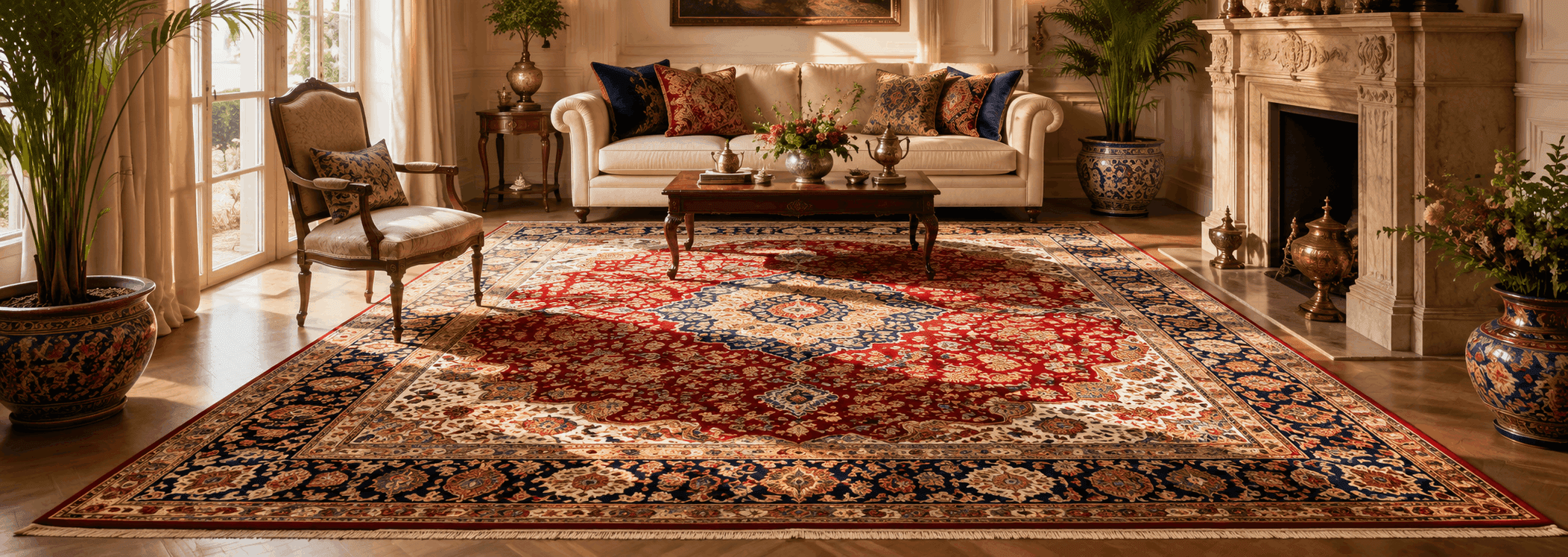
Persian carpets are among Iran’s most celebrated artistic achievements. For centuries, they have carried Iranian designs, craftsmanship, and cultural traditions into palaces, religious buildings, museums, and private collections worldwide.
The following facts reveal why Persian carpets remain so admired while correcting several common misconceptions.
1. The Pazyryk Carpet Has Achaemenid Connections—but Its Origin Is Uncertain
The Pazyryk Carpet, discovered in a frozen burial mound in Siberia, dates to approximately the fifth or fourth century BCE and is the oldest substantially preserved knotted-pile carpet known today.
Its horsemen, animals, and decorative forms show strong connections with Achaemenid Persian art. Nevertheless, scholars have not conclusively established where or by whom it was woven. It is therefore more accurate to describe it as Achaemenid-influenced than as definitively Persian.
2. Every Weaving Region Has Its Own Identity
Persian carpets encompass numerous regional traditions rather than a fixed catalog of exactly 2,000 designs. Tabriz, Kashan, Kerman, Isfahan, Heriz, Qom, Mashhad, and many smaller communities developed recognizable combinations of structure, color, and ornament.
Common design systems include:
- Central medallions
- Repeating floral fields
- Geometric compartments
- Garden plans
- Vase compositions
- Hunting scenes
- Prayer niches
- Trees and flowering plants
- Pictorial and inscriptional designs
Even when communities use related motifs, differences in drawing, proportion, palette, and weaving technique can reveal a carpet’s regional character.
3. Traditional Dyes Came from Many Natural Sources
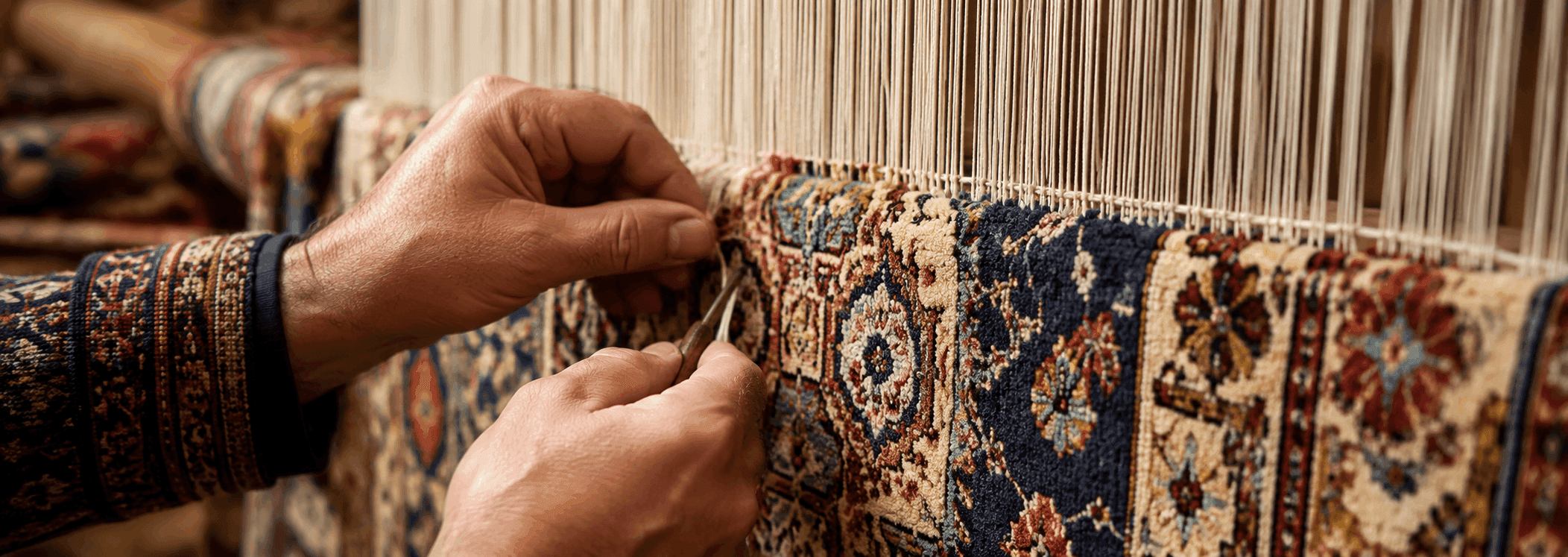
Historically, Persian dyers obtained colors from materials such as madder root, indigo, pomegranate rind, walnut husks, and certain insects. Skilled dyers combined these substances with mordants to help the colors bond with wool or silk.
Natural dyes do not automatically guarantee permanence: their stability depends on the material, recipe, water, mordant, and exposure to light. When expertly prepared, however, they can produce rich colors and subtle variations that age beautifully. The celebrated Ardabil Carpet, for example, includes colors derived from natural substances such as indigo and pomegranate rind. Victoria and Albert Museum
Synthetic dyes entered Iranian carpet production during the nineteenth century and are now widely used alongside natural dyes.
4. Persian Carpets Employ More Than One Knot
The two principal pile-knot structures are the symmetrical and asymmetrical knots. The asymmetrical form is frequently called the “Persian knot,” while the symmetrical form is often called the “Turkish knot.”
These names can be misleading because Iranian weavers use both structures. Knot choice depends more on regional practice and carpet construction than on modern national borders.
Knot density can affect fineness and the amount of detail a design can contain, but it does not determine quality by itself. Materials, drawing, color, structure, finishing, condition, and artistic coherence are equally important.
5. Motifs May Carry Meaning—but Interpretations Vary
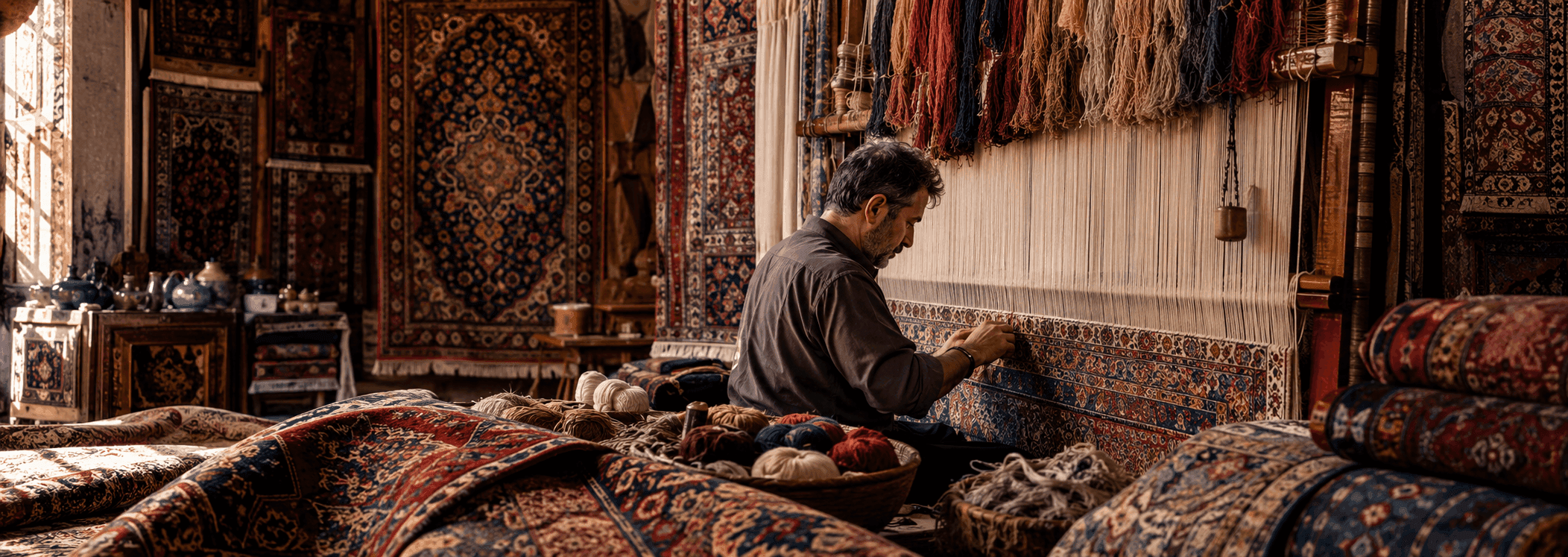
Persian carpets contain motifs such as the boteh, tree, cypress, rosette, palmette, bird, fish, and garden. These forms may evoke ideas including life, renewal, abundance, protection, spirituality, or paradise.
However, assigning one universal meaning to every motif is risky. A symbol’s interpretation can change between periods, regions, communities, and individual weavers. The boteh, for example, has been described as a leaf, shrub, flame, cypress, or floral spray—not simply as a fixed symbol of fertility.
6. Some Carpets Function as Woven Paintings
Pictorial Persian carpets depict portraits, animals, literary episodes, historical events, religious subjects, landscapes, and scenes inspired by European prints or photographs.
During the Safavid period, carpet designers drew heavily upon the visual language of manuscript painting and the royal arts of the book. Hunting carpets and figural compositions are among the most celebrated surviving examples.
Pictorial carpets were not necessarily unique commissions, although exceptionally detailed examples could require specialized designers and highly skilled weavers.
7. Not Every Handwoven Persian Carpet Is a Knotted-Pile Carpet
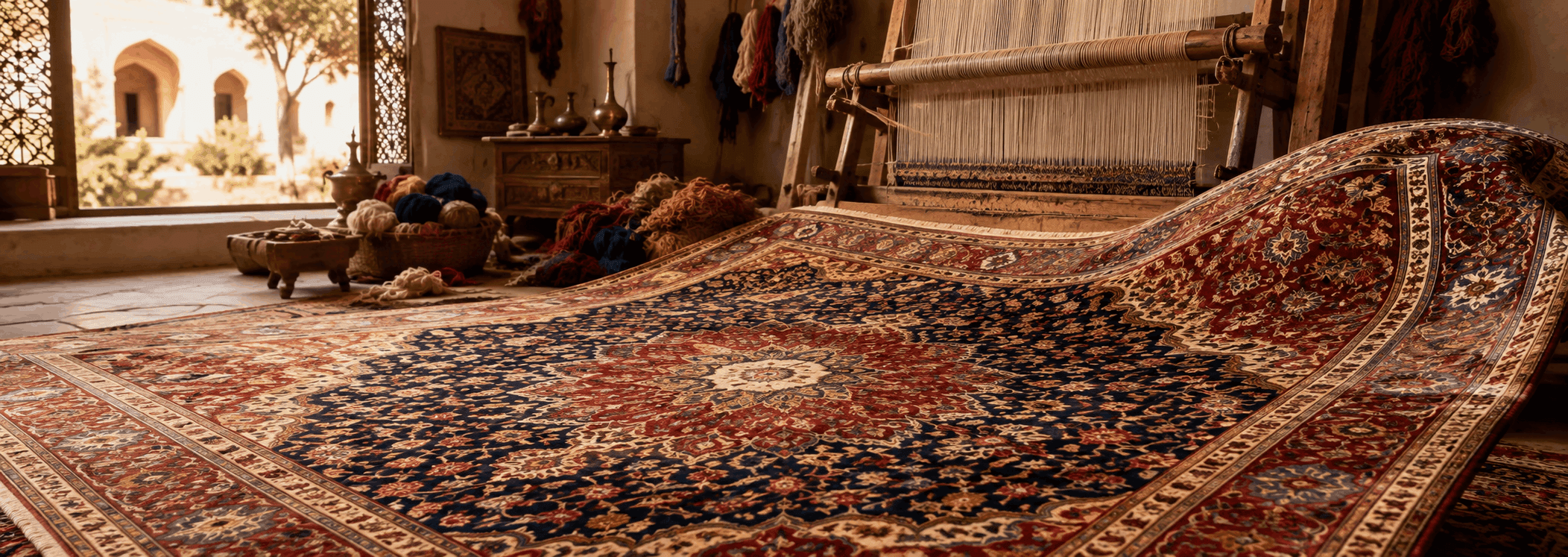
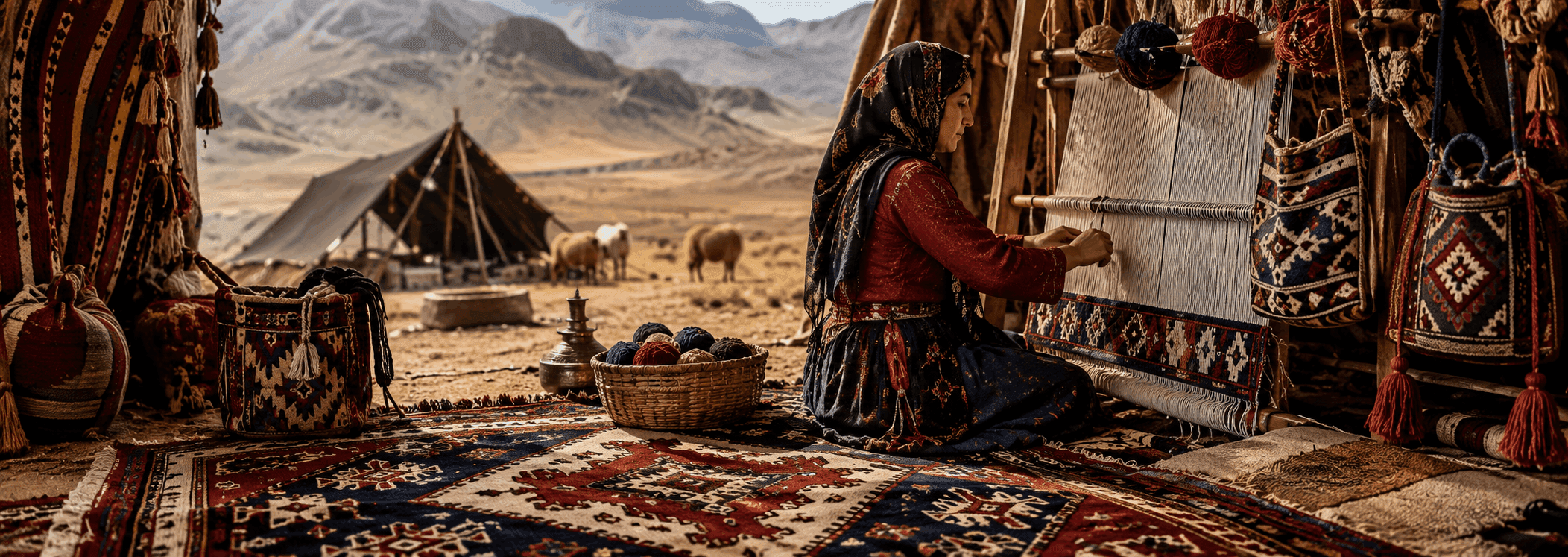
Iranian weaving includes both pile carpets and flat-woven textiles. Kilims, jajims, soumaks, saddlebags, salt bags, tent furnishings, and animal trappings form an important part of the tradition.
Some flat weaves are reversible or appear attractive on both sides. A conventional knotted-pile carpet, however, normally has a clearly defined front and back. Claims that Persian pile carpets commonly carry two entirely different usable designs—one on each side—should therefore be treated cautiously.
8. Persian Carpets Are Major Museum Masterpieces
Historic Persian carpets are held by institutions including the Victoria and Albert Museum, the Metropolitan Museum of Art, the Louvre, and the Los Angeles County Museum of Art.
Among the most famous is the Ardabil Carpet, dated 946 AH, corresponding to 1539–40 CE. It measures more than ten metres in length and contains roughly 5,300 knots per ten square centimetres. Its scale, harmonious composition, inscription, and technical refinement make it one of the defining masterpieces of Safavid art.
9. There Is No Single Universal “Persian Red”
Rich reds are strongly associated with Persian carpets, particularly those colored with madder. Nevertheless, “Persian red” is not one traditional dye formula shared by every weaving center.
Persian reds range from coral and brick to crimson, rust, and deep wine. Their appearance depends on the dye source, mordant, local water, wool, weaving region, and age of the carpet. Red is important, but blues, ivory, green, yellow, brown, and undyed wool are equally integral to Persian carpet palettes.
10. Nomadic and Tribal Weaving Is Both Practical and Artistic
Nomadic and semi-nomadic communities produced not only floor coverings but also bags, bands, bedding containers, animal ornaments, and furnishings required for mobile life.
Many designs were woven without full-scale paper cartoons. Weavers worked through learned structures, inherited motifs, memory, and individual improvisation. This did not mean that their work lacked planning: it reflected a sophisticated visual tradition transmitted through practice.
Qashqai, Afshar, Kurdish, Shahsevan, Khamseh, and other weaving communities developed distinctive traditions. The commercial label “Bakhtiari,” however, can describe carpets from a geographical area rather than works woven exclusively by ethnic Bakhtiari nomads.
Additional Facts That May Captivate Enthusiasts
- Abrash can enhance a carpet’s character. Subtle bands of changing color often result from different dye batches rather than damage.
- The direction of the pile affects color. A carpet may appear darker or lighter when viewed from opposite ends because the pile reflects light differently.
- Carpet designs connect several Iranian arts. Motifs often relate to manuscript illumination, calligraphy, architecture, ceramics, textiles, and garden design.
- Inscriptions can help date a carpet. Some examples contain poetry, religious verses, dedications, signatures, or dates, although inscriptions may occasionally be copied from older works.
- Carpets were important diplomatic gifts. Persian rulers presented luxury textiles and carpets to foreign courts, helping Iranian designs circulate internationally.
- Traditional palettes are strongly regional. Local materials, dyeing practices, markets, and cultural preferences contributed to identifiable color combinations.
Conclusion
The importance of Persian carpets lies not in a few spectacular records but in their union of technical skill, regional identity, artistic invention, and cultural memory. Each carpet can preserve evidence of its materials, makers, place of production, intended use, and historical journey—making it both a functional textile and a document of Iranian art.
FAQs
1. Is the Pazyryk Carpet definitively Persian?
No. Its designs have strong connections with Achaemenid art, but scholars have not conclusively determined where or by whom it was woven.
2. Do all Persian carpets use the Persian knot?
No. Iranian weavers use both asymmetrical “Persian” knots and symmetrical “Turkish” knots, depending largely on regional weaving practices.
3. Do Persian carpet motifs have universal meanings?
No. Motifs may represent life, protection, abundance or spirituality, but their meanings can vary by region, period, community and weaver.