
Handmade kitchen rug
Handmade rug for kitchen is not only a decorative element but also a practical choice that enhances comfort, safety, and aesthetics. Many homeowners underestimate the importance of selecting the right rug for the kitchen.
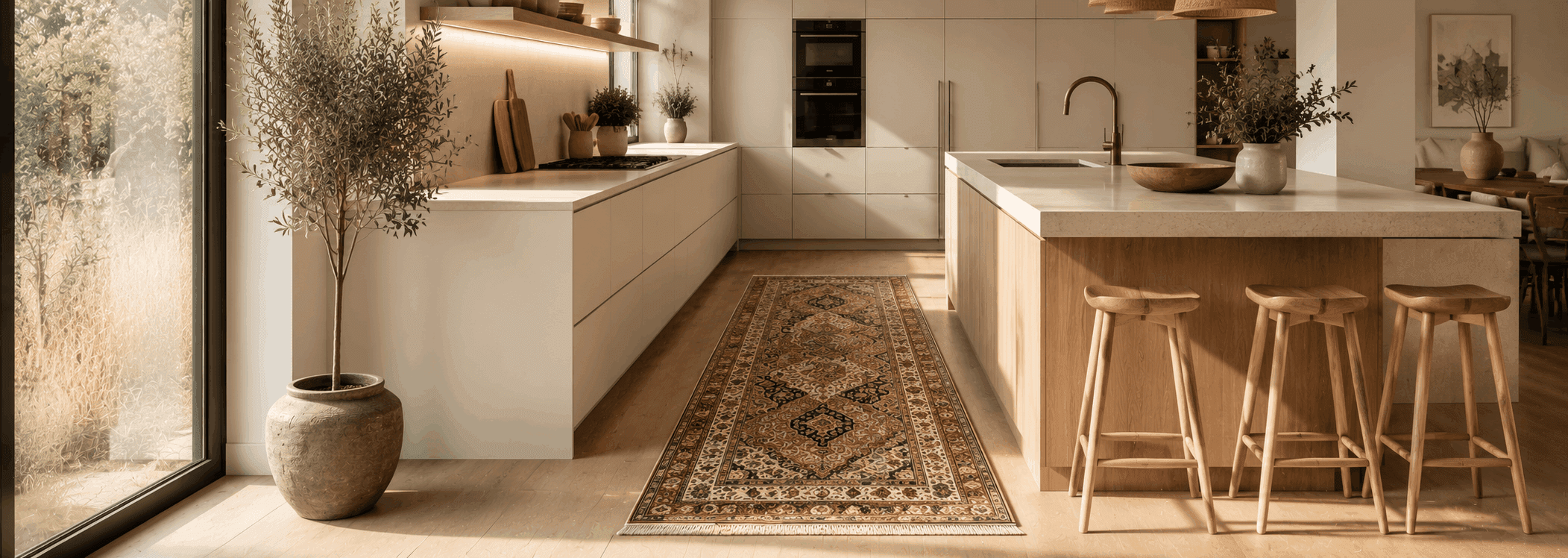
Handmade rug for kitchen is not only a decorative element but also a practical choice that enhances comfort, safety, and aesthetics. Many homeowners underestimate the importance of selecting the right rug for the kitchen. However, choosing a durable, well-sized, and stylish handmade carpet can make a significant difference in both functionality and beauty. In this guide, we will explore why a handmade rug is suitable for the kitchen, what factors to consider when buying one, and how to maintain it for long-lasting use.
Why Use a Handmade Rug in the Kitchen?
A handwoven rug for kitchen offers several benefits that make it an essential addition:
- Comfort for Long Hours of Standing
Preparing meals often requires standing for long periods. A thick handmade rug provides a soft surface underfoot, reducing fatigue and adding comfort. - Slip Resistance and Safety
Kitchens typically have tiled or wooden floors that can be slippery. A kitchen handmade carpet with the right underlay prevents slipping and ensures safety. - Thermal and Acoustic Insulation
Rugs act as natural insulators, keeping the floor warm in winter and absorbing noise, creating a calmer environment. - Protection for Flooring
Handmade rugs protect delicate wooden or tiled floors from scratches, spills, and daily wear and tear. - Visual Appeal and Harmony
A rug adds warmth, character, and color to the kitchen, tying the design elements together for a cohesive look.
Best Designs and Patterns for Kitchen Rugs
The design of a handmade rug for kitchen is crucial because it must balance style with practicality.
- Geometric and Busy Patterns
Rugs with intricate patterns or repeating geometric motifs are excellent at hiding stains and crumbs. They are perfect for high-traffic areas such as kitchens. - Traditional Oriental or Tribal Designs
Oriental and tribal rugs bring a timeless charm to the kitchen, blending well with rustic and modern styles alike. - Minimalist or Modern Styles
For contemporary kitchens, simple patterns in muted tones provide elegance without overwhelming the space.
Best Colors for Kitchen Handmade Carpets
The kitchen is prone to spills and stains, making color selection essential.
- Warm and Dark Colors
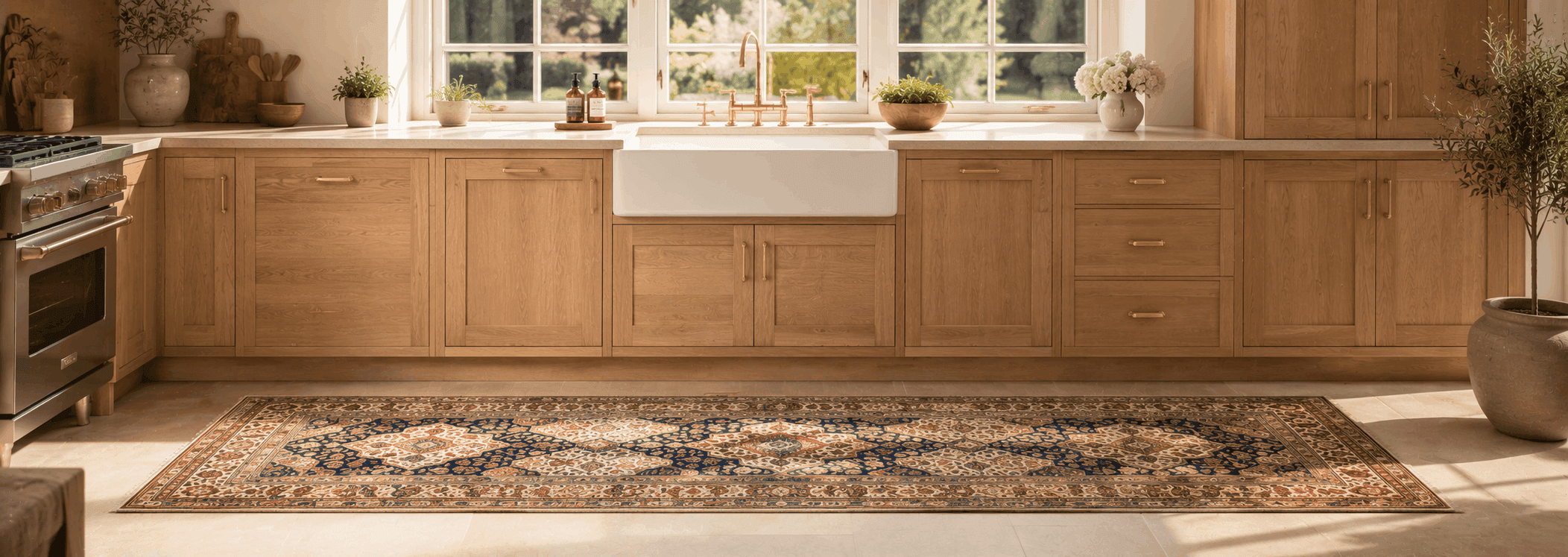
Shades like red, burgundy, navy, and earthy brown disguise stains effectively. - Multicolored Rugs
Rugs that mix several colors are highly practical because they conceal imperfections while adding vibrancy. - Neutral Tones with Subtle Patterns
Beige, gray, and taupe are ideal for modern kitchens, especially when paired with darker accents.
Choosing the Right Size for a Kitchen Handmade Rug
The size of the rug impacts both aesthetics and functionality. Common options include:
- Small Rugs (60×90 cm, 80×120 cm)
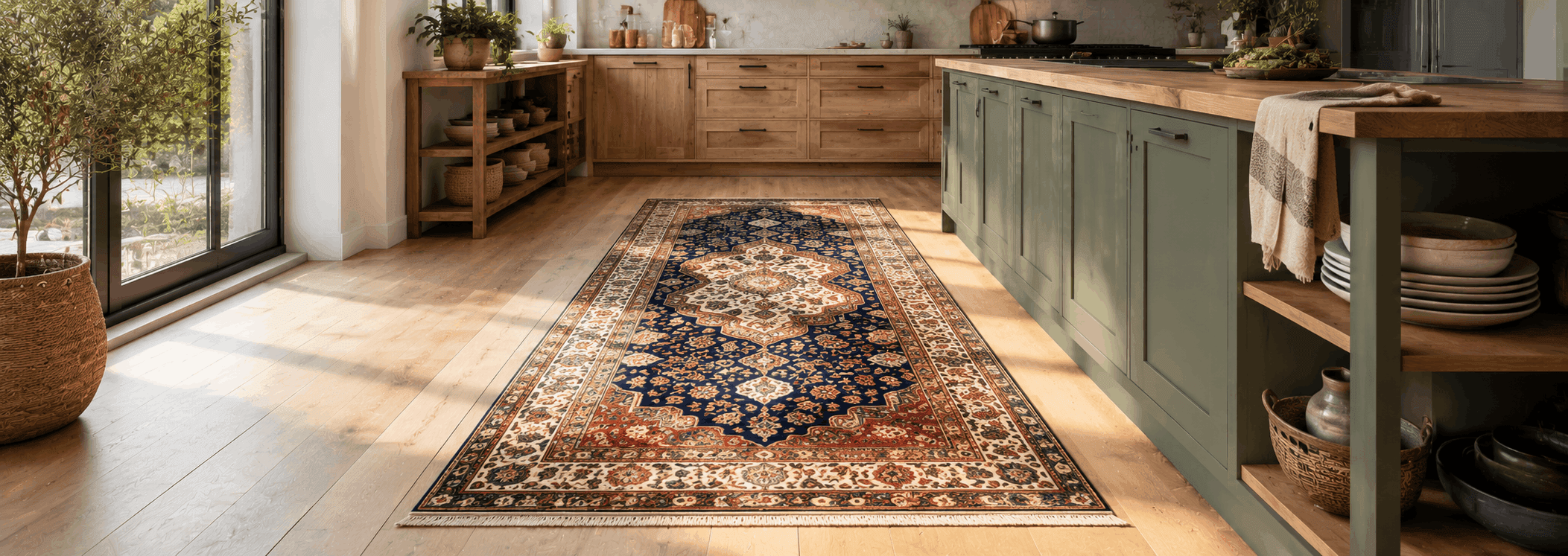
Ideal for placement in front of the sink or stove, where people stand for extended periods. - Runner Rugs (60–90 cm wide, 200–300 cm long)
Perfect for galley-style kitchens or alongside kitchen islands. - Large Area Rugs
Suitable for open kitchens with dining spaces, adding warmth to the entire area.
When choosing size, ensure the rug does not obstruct cabinets or doors.
Material and Weaving Style of handmade kitchen rug
Durability and ease of maintenance depend on the rug’s material.
- Wool Handmade Rugs
Wool is naturally stain-resistant, durable, and soft, making it the best option for kitchens. - Cotton Handwoven Rugs
Lightweight and easy to wash, cotton rugs are practical for smaller kitchens. - Low-Pile Rugs
Rugs with short piles are easier to clean and less likely to trap dirt.
Maintenance and Care
Keeping a handmade rug for kitchen clean extends its lifespan:
- Use an anti-slip pad to secure the rug.
- Vacuum regularly to remove crumbs and dust.
- Rotate the rug every few months to prevent uneven wear.
- Spot clean spills immediately to avoid stains.
- Consider professional cleaning once a year for wool rugs.
Styling Tips for Handmade Kitchen Rugs
- Match rug colors with cabinet finishes or backsplash tones.
- Use a runner rug to create visual flow in long, narrow kitchens.
- Mix vintage handmade rugs with modern appliances for a trendy contrast.
- Layer rugs in open-plan kitchens to define separate zones.
Conclusion
Choosing the right handmade rug for kitchen requires careful attention to size, color, design, and material. With proper care, a handwoven kitchen rug not only enhances comfort and safety but also elevates the overall style of your home. Investing in a quality handmade carpet ensures durability, beauty, and functionality, making your kitchen both practical and inviting.
FAQ
Are handmade rugs suitable for the kitchen?
Yes, a handmade rug for kitchen is highly suitable because it provides comfort, prevents slipping, protects the floor, and adds style to your space.
What size rug is best for the kitchen?
The best sizes are small rugs (60×90 cm, 80×120 cm) for sink or stove areas, and runner rugs (60–90 cm wide, 200–300 cm long) for narrow kitchens.
How do I clean a handmade kitchen rug?
Vacuum regularly, clean spills immediately, rotate the rug, and use a professional cleaning service once a year for wool rugs.