
How to Remove Tea Stains from Carpet
Learn how to remove tea stains from carpets safely, using blotting, cool water, and mild detergent. Compare methods for fresh and dried stains, understand limits of vinegar and baking soda, avoid damaging products, and discover when silk, handmade, antique, or delicate rugs need professional care!
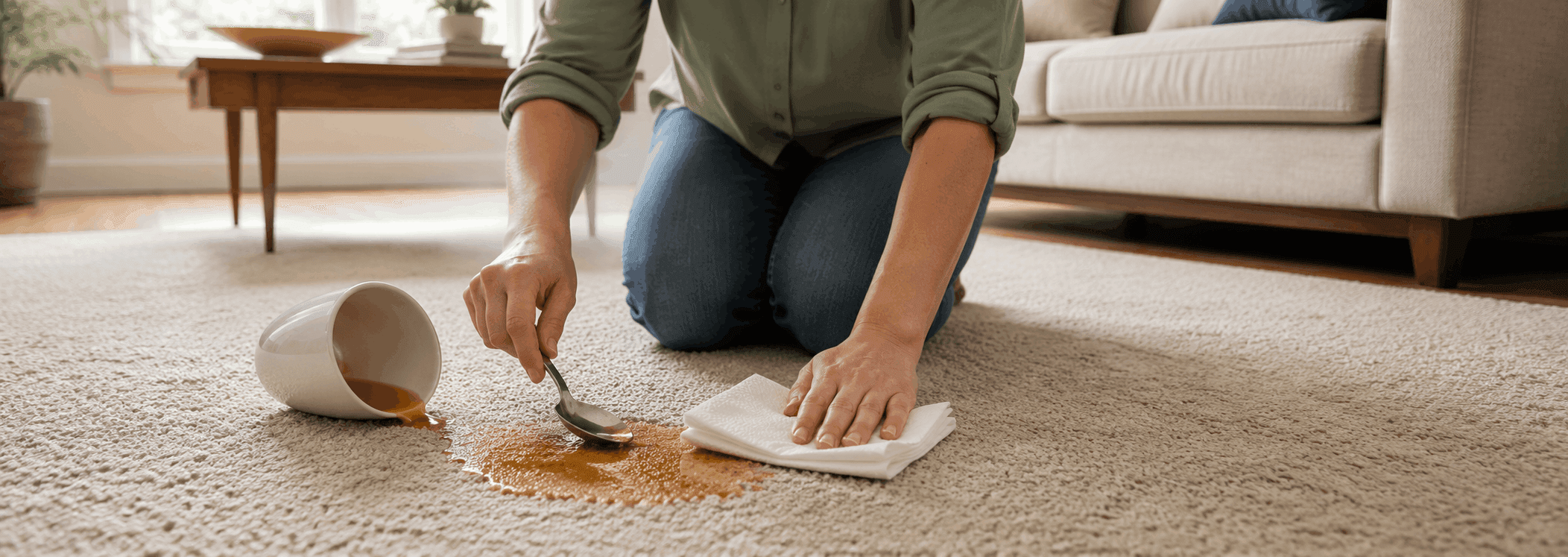
Tea can leave a noticeable stain on a carpet, especially if the spill is allowed to dry. Acting quickly makes removal easier, but the appropriate treatment depends on the carpet’s fibers, dyes, construction, and value.
Before applying any cleaning solution, test it on a small, inconspicuous area. Handmade, silk, antique, or color-sensitive carpets should generally be treated by a professional carpet cleaner or textile specialist.
What to Do Immediately After a Tea Spill
Follow these steps as soon as possible:
- Carefully remove excess liquid with a spoon if necessary.
- Blot the area with a clean white cloth or paper towel.
- Work from the outside of the stain toward its center.
- Do not rub or scrub, as this may spread the tea and damage the fibers.
- Continue blotting until the cloth absorbs little or no additional liquid.
Avoid using a vacuum cleaner on a wet spill unless it is specifically designed for extracting liquids. Using an ordinary household vacuum on moisture may damage the appliance or create an electrical hazard.
General Method for Removing a Fresh Tea Stain
For a durable, colorfast carpet:
- Blot up as much tea as possible.
- Apply a small amount of cool water to dilute the remaining stain.
- Blot again with a clean white cloth.
- Mix a few drops of mild, clear dishwashing liquid with a cup of cool water.
- Apply a small amount of the solution with a cloth—do not pour it directly onto the carpet.
- Blot gently until the stain begins to lift.
- Remove the detergent residue by blotting with a cloth dampened with clean water.
- Press a dry towel over the area to absorb moisture.
- Allow the carpet to dry thoroughly.
Do not oversaturate the carpet. Excess liquid may spread the stain, damage the backing, cause odors, or encourage mold growth.
Using a Diluted Vinegar Solution
A diluted white-vinegar solution may help remove residual discoloration from some synthetic, colorfast carpets.
- Mix one part white vinegar with two or three parts cool water.
- Test the solution on a hidden area.
- Apply a small amount to a clean white cloth.
- Blot the stain gently.
- Leave it for several minutes without allowing the carpet to become saturated.
- Blot with clean water to remove the solution.
- Dry the area with an absorbent towel.
Vinegar is acidic and may affect natural fibers, dyes, and certain carpet backings. Do not use it on silk, antique, handmade, or color-sensitive carpets without professional guidance.
Removing Tea Stains from Machine-Made Carpets
Machine-made synthetic carpets are often more tolerant of household stain treatments than handmade or silk carpets. Nevertheless, their fibers and backings vary, so consult the manufacturer’s care instructions whenever possible.
Begin with cool water and a mild detergent solution. If the stain remains, use a commercial carpet stain remover that is approved for the carpet’s fiber type.
Follow the product instructions carefully and avoid mixing different cleaning products. After treatment, rinse by blotting with clean water and dry the area completely.
Removing Tea Stains from Handmade Carpets
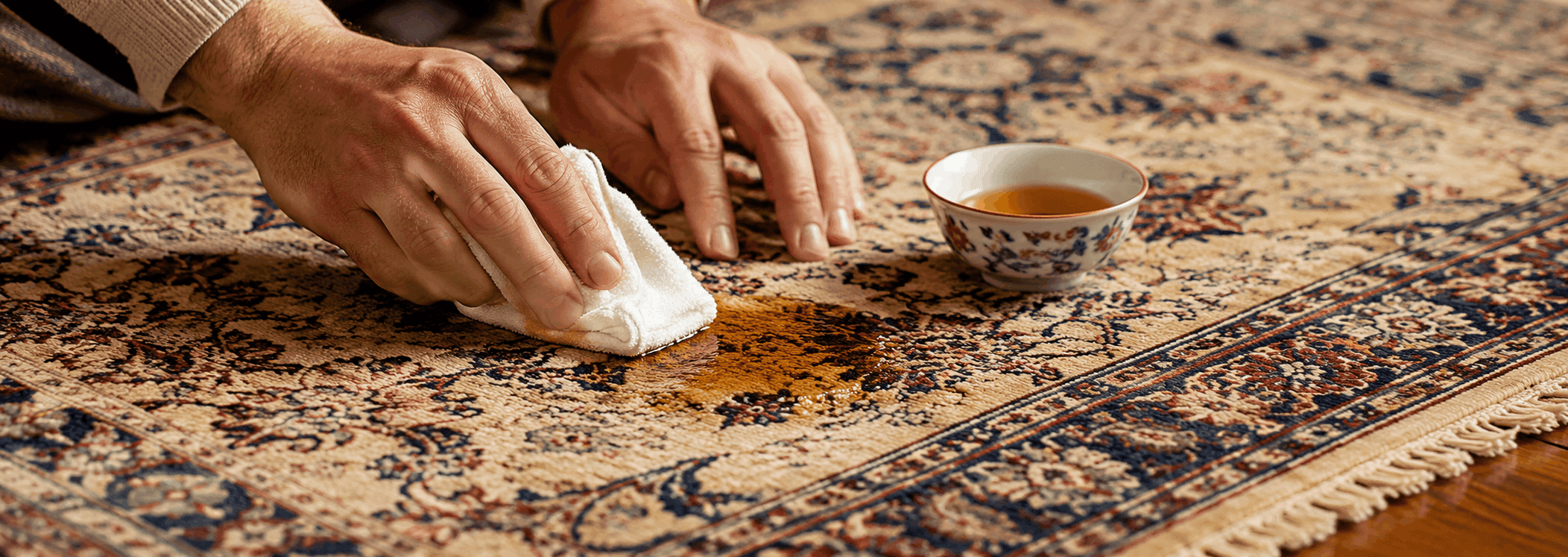
Handmade carpets require greater care because they may contain wool, cotton, silk, natural dyes, or unstable colorants.
When tea spills on a handmade carpet:
- Blot the liquid immediately with a clean white cloth.
- Avoid scrubbing, soaking, or applying heat.
- Do not use bleach, strong detergents, vinegar, baking soda, or household stain removers without testing.
- Contact a specialist if the stain remains or the dyes begin to transfer to the cloth.
A mild cleaning solution may be safe for some colorfast wool carpets, but the carpet’s construction and dyes should be assessed first.
Direct sunlight is not a reliable method for removing odors and may fade dyes or weaken fibers. Dry the carpet in a well-ventilated, shaded area instead.
Tea Stains on Silk Carpets
Silk carpets are particularly vulnerable to water marks, abrasion, dye bleeding, and fiber distortion. Household stain-removal methods can permanently alter their texture or appearance.
If tea spills on a silk carpet:
- Blot it immediately with a soft, clean white cloth.
- Do not rub the pile.
- Do not apply vinegar, baking soda, detergent, salt, or commercial stain remover.
- Arrange an assessment by a cleaner experienced with silk and handmade carpets.
When choosing a cleaning company, confirm that it regularly handles silk carpets, tests dye stability, and carries appropriate insurance.
How to Remove a Dried Tea Stain
An old stain may require several gentle treatments:
- Lightly dampen the affected area with cool water.
- Allow the moisture to soften the residue for a few minutes.
- Blot with a clean white cloth.
- Apply a small amount of mild detergent solution.
- Blot repeatedly without scrubbing.
- Rinse by blotting with clean water.
- Press the area with a dry towel and allow it to dry thoroughly.
If the discoloration persists, use an appropriate commercial stain remover or consult a professional. Old stains may have chemically altered the carpet’s dye, making complete removal impossible.
Using Baking Soda
Baking soda is sometimes recommended for tea stains, but it is more useful for absorbing odors than removing the pigments responsible for the discoloration. Powder can also become trapped in dense carpet fibers.
If the carpet manufacturer permits its use:
- Test it on an inconspicuous area.
- Apply only a small amount.
- Avoid rubbing it deeply into the pile.
- Remove it thoroughly after the treated area has dried.
A paste of baking soda and water may leave residue and should not be applied to handmade, silk, antique, or delicate carpets.
Using Salt or Carbonated Water
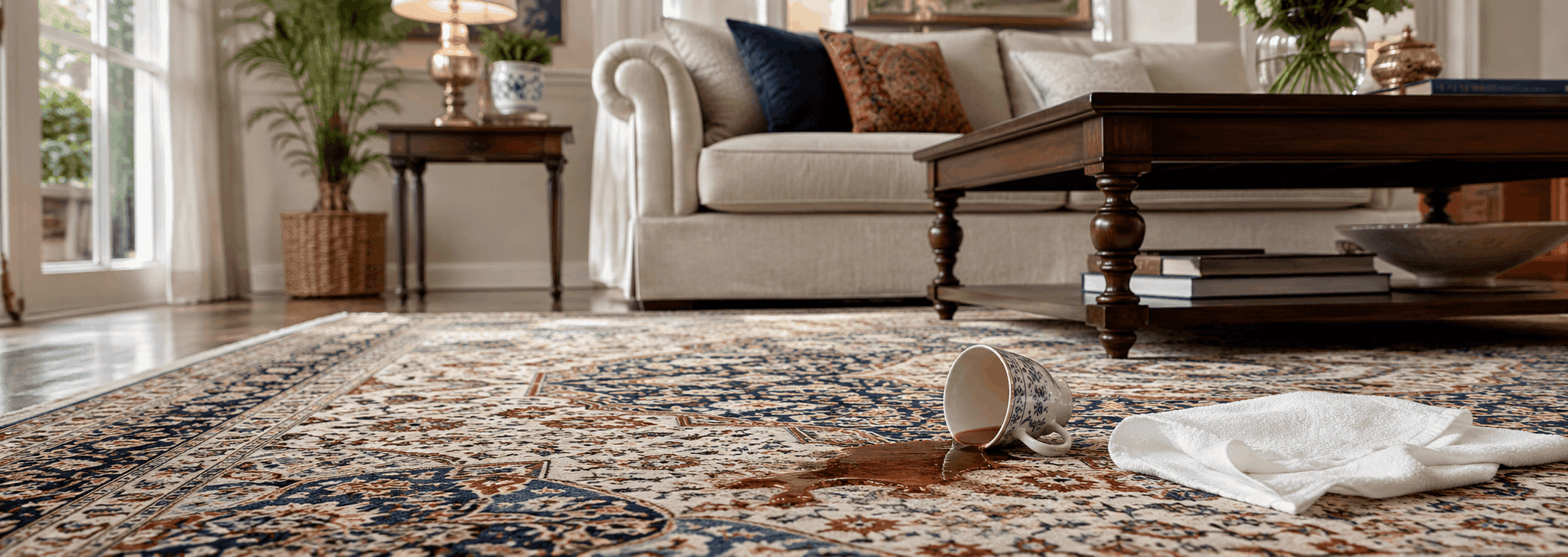
Salt does not chemically remove a tea stain and can be difficult to extract from carpet fibers. Carbonated water may help dilute a fresh spill, but plain cool water generally serves the same purpose.
If carbonated water is used, choose an unflavored, unsweetened product and apply it sparingly. Blot immediately and dry the area completely.
Do not confuse carbonated water with baking soda: one is a liquid, while the other is sodium bicarbonate powder.
Should Borax Be Used?
Borax is not the preferred treatment for tea stains. It may leave residue, irritate the skin or eyes, and damage certain fibers or dyes. Avoid using it on carpets unless the manufacturer specifically recommends it.
The expression “sweet boil” appears to be a mistranslation, possibly referring to baking soda. An unidentified substance should never be applied to a carpet.
Products and Methods to Avoid
Unless specifically approved for the carpet, avoid:
- Chlorine bleach
- Whitening products
- Hot water
- Steam applied directly to the stain
- Strong laundry detergent
- Aggressive scrubbing
- Hard-bristled brushes
- Undiluted vinegar
- Ammonia
- Hydrogen peroxide
- Mixing cleaning chemicals
- Excessive water
- Direct sunlight for drying delicate carpets
Bleach and oxidizing agents can remove the carpet’s original color along with the stain.
When to Call a Professional
Professional treatment is advisable when:
- The carpet is silk, handmade, antique, or valuable.
- Its fibers or dyes are unknown.
- Color transfers to the cleaning cloth.
- The stain is old or extensive.
- The carpet develops a persistent odor.
- The spill has penetrated the foundation or backing.
- Previous cleaning attempts have produced a water mark or discoloration.
- The carpet cannot be dried promptly and thoroughly.
Conclusion
The safest response to a tea spill is immediate blotting followed by a small amount of cool water and, when appropriate, a mild detergent solution. Avoid rubbing, excessive moisture, heat, bleach, and untested household remedies.
Machine-made synthetic carpets may tolerate careful home treatment, but silk, handmade, antique, and color-sensitive carpets require specialist attention. Testing every cleaning solution first can prevent a small tea stain from becoming permanent carpet damage.
FAQs
1. How should I remove a fresh tea stain from a carpet?
Blot immediately, dilute the stain with cool water, and gently apply a mild detergent solution if the carpet is durable and colorfast.
2. Can vinegar remove tea stains from carpets?
Diluted white vinegar may help on some synthetic, colorfast carpets, but it can harm natural fibers, unstable dyes, and delicate backings.
3. Should tea stains on silk or handmade carpets be treated at home?
No. Blot the spill carefully without rubbing, then consult a specialist experienced in cleaning silk or handmade carpets.