
Why Wool Is the Perfect Fibre for Handmade Persian Rugs
For thousands of years, humans have searched for materials that combine beauty, comfort and durability. In the world of handmade carpets, few natural materials have achieved the importance and respect of wool.
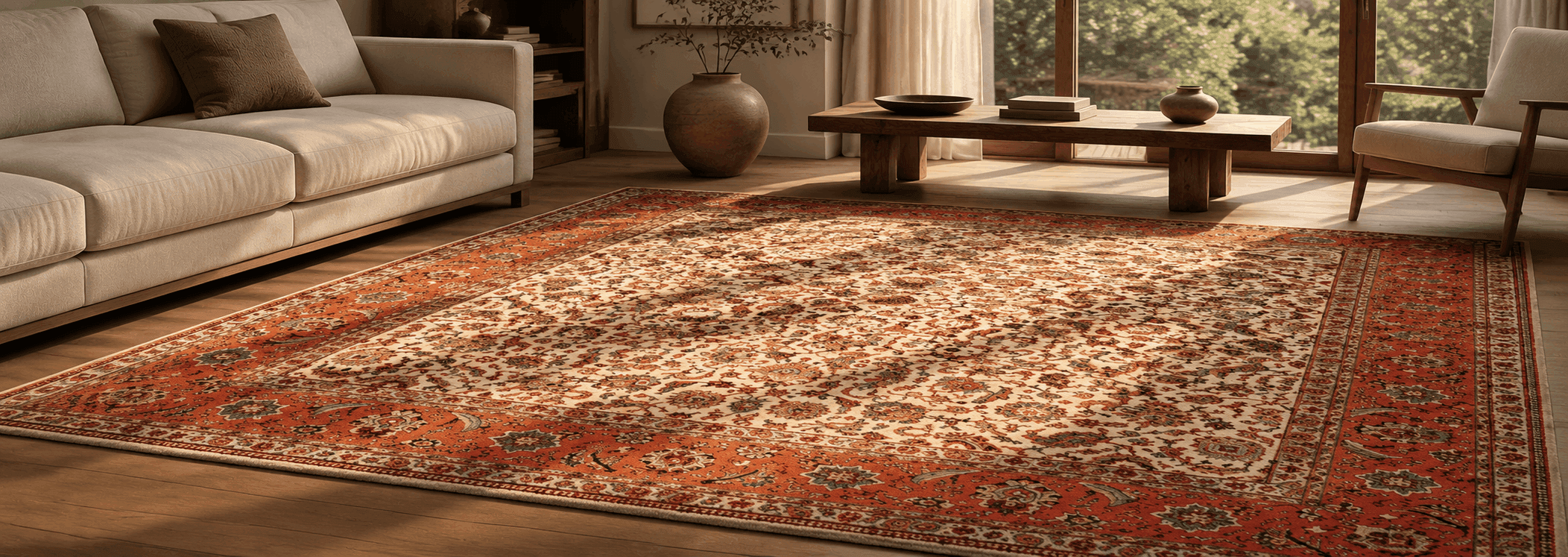
Why Wool Has Remained the Heart of Persian Rugs for Centuries
For thousands of years, humans have searched for materials that combine beauty, comfort and durability.
In the world of handmade carpets, few natural materials have achieved the importance and respect of wool.
From nomadic tribal rugs to sophisticated city carpets, wool has been one of the fundamental materials behind Persian rug craftsmanship.
But why?
Why did generations of Persian weavers choose wool when other fibres were available?
The answer lies in the extraordinary combination of properties that wool naturally provides.
Wool is:
- flexible but strong,
- soft but durable,
- warm but breathable,
- absorbent but protective,
- natural but highly functional.
This unique balance explains why a well-made Persian wool rug can remain beautiful and useful for generations.
RUGEAST
Wool Is Not Just a Material — It Is Part of Persian Rug Culture
In traditional Persian rug production, wool has always represented a connection between nature, animals, geography, craftsmanship, and human creativity.
The material itself carries the story of the region where the rug was created.
1. Elasticity: The Natural Spring of Wool
Why Wool Recovers After Pressure
One of the most important characteristics of wool is its natural elasticity.
A handmade rug is exposed to constant pressure:
- footsteps,
- furniture weight,
- movement,
- everyday use.
Without elasticity, the pile of a rug would quickly become permanently flattened.
High-quality wool behaves differently.
Its internal structure allows fibres to bend under pressure and recover much of their original shape.
This ability is called:
Resilience
Resilience is one of the main reasons wool rugs can maintain their appearance over many years.
RUGEAST
A Good Wool Rug Does Not Resist Life — It Adapts to It
A high-quality Persian rug is not a fragile decoration that must never be touched.
It is designed to live.
The best wool fibres are able to respond to daily use while maintaining their beauty and structure.
2. Durability: Why Wool Rugs Can Last for Generations
Strength Beyond Appearance
When people think about luxury textiles, they often focus on softness.
However, a Persian rug must also survive.
A rug is one of the few decorative objects in a home that is continuously exposed to physical stress.
The wool used in handmade rugs must tolerate:
- repeated walking,
- friction,
- seasonal changes,
- cleaning processes,
- decades of use.
High-quality wool provides the strength required for this demanding environment.
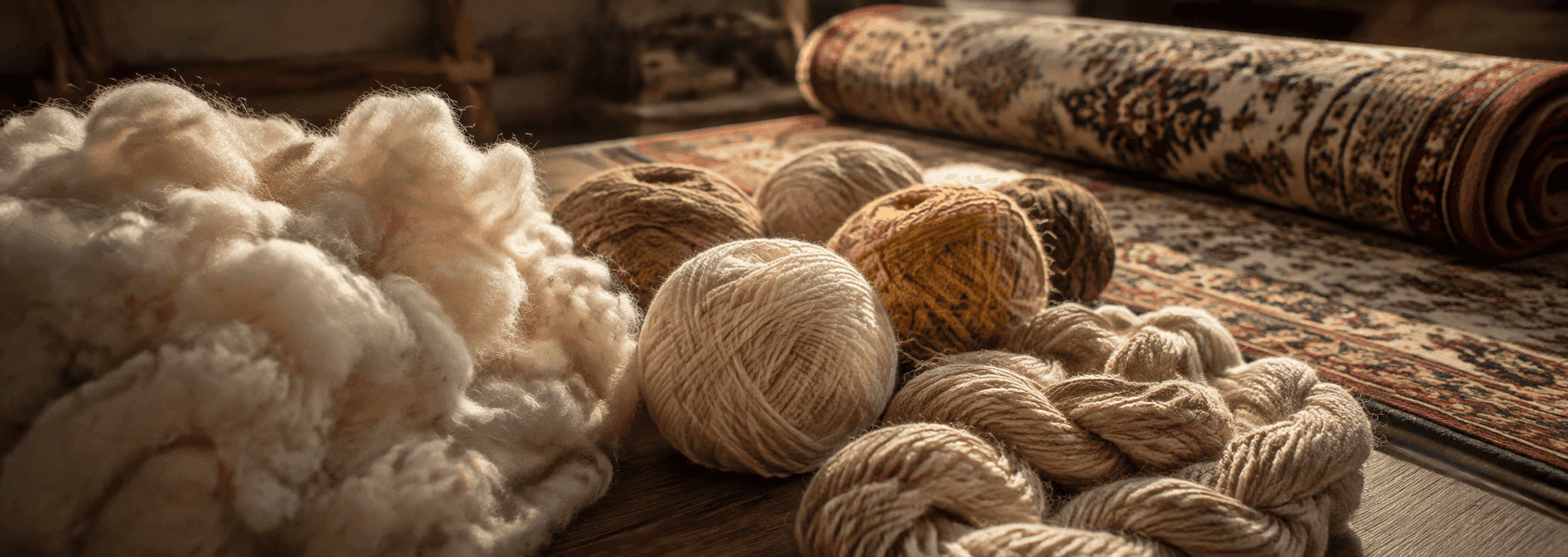
The Secret Behind Long-Lasting Persian Rugs
A durable Persian rug is not created by one factor alone.
Longevity depends on the combination of:
- good wool,
- proper spinning,
- skilled weaving,
- balanced knot structure,
- suitable maintenance.
Wool is the foundation, but craftsmanship completes the result.
RUGEAST
Why Old Persian Rugs Often Still Have Beautiful Surfaces
Many antique Persian rugs have survived for decades or even centuries because their materials were carefully selected.
Traditional weavers understood that:
A beautiful design needs a strong foundation.
The wool is part of that foundation.
3. Wool and Resistance to Daily Wear
The Difference Between Wearing and Destroying
Every rug experiences wear.
The goal of quality materials is not to prevent all change.
The goal is to allow the rug to age gracefully.
Good wool develops character over time.
Poor-quality materials often show damage more quickly.
Signs of inferior wool may include:
- rapid flattening,
- loss of texture,
- weak surface appearance,
- poor response to cleaning.
High-quality wool usually ages more naturally.
4. Moisture Balance: Wool as a Natural Climate Regulator
One of wool's fascinating characteristics is its relationship with moisture.
Wool fibres can interact with humidity in the surrounding environment.
This property contributes to the comfort of wool rugs.
A wool rug can help create a different feeling compared with many synthetic floor coverings.
It often feels:
- warmer,
- more natural,
- more comfortable.
IMPORTANT CLARIFICATION
Wool Absorbs Moisture — But Requires Proper Care
The moisture management ability of wool does not mean that wool rugs should be exposed to water.
Incorrect washing or poor drying can create serious problems.
Professional cleaning must always consider:
• Fibre structure
• Humidity
• Drying conditions
• Dye stability
5. Natural Protection: Why Wool Is Naturally Special
Wool contains natural characteristics that have helped it survive as a textile material for thousands of years.
These include:
Natural Flexibility
Allows fibres to bend without immediately breaking.
Natural Insulation
Creates comfort in different temperatures.
Natural Surface Structure
Provides unique interaction with light and touch.
Natural Resilience
Helps maintain appearance after repeated use.
RUGEAST
Traditional Weavers Chose Wool Through Experience
Long before modern laboratories analysed fibres, Persian weavers learned through centuries of observation.
They discovered which materials lasted longer, accepted dyes better, felt better, and aged beautifully.
Traditional knowledge and modern science reach the same conclusion:
Quality wool matters.
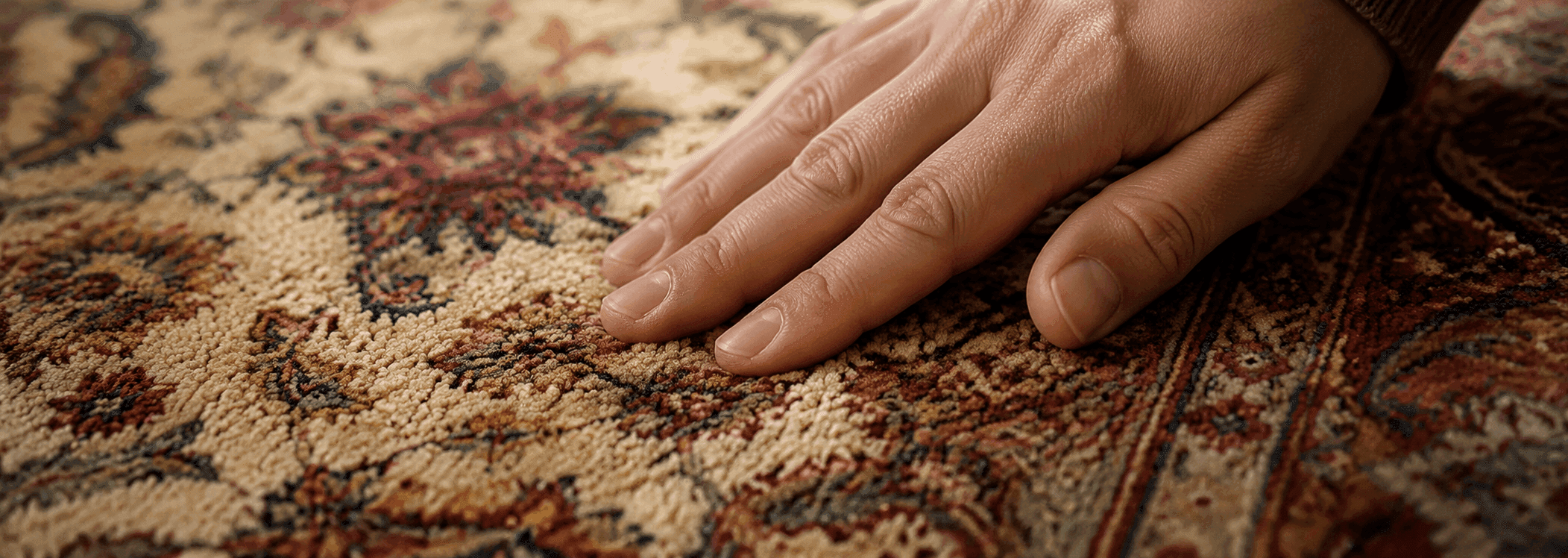
6. Wool and Comfort: Why Persian Rugs Feel Different
A handmade wool rug creates a sensory experience.
When someone walks on a good Persian rug, they notice:
- softness,
- warmth,
- natural texture.
This experience comes from the combination of:
- fibre quality,
- pile height,
- spinning method,
- weaving technique.
The wool is not only functional.
It is part of the emotional connection people develop with handmade rugs.
7. Wool and Temperature Regulation
Wool has excellent thermal properties.
It helps create a comfortable surface in different seasons.
During colder periods:
- wool provides warmth.
During warmer periods:
- its natural breathability prevents the heavy feeling associated with some synthetic materials.
This is one reason wool rugs have been used for centuries in different climates.
8. Why Wool Works So Well With Handmade Weaving
Handmade Persian rugs require a material that can cooperate with the weaver.
Wool provides:
- flexibility during knotting,
- strength during tension,
- compatibility with traditional tools,
- excellent response to dyeing.
A material that is too rigid would make traditional weaving difficult.
A material that is too weak would not survive.
Wool provides a balanced solution.
RUGEAST
The Best Fibre Is the One That Supports the Entire Rug
A Persian rug is not judged by one characteristic alone.
The best wool is not simply the softest, the finest, or the most expensive.
The best wool is the one that creates harmony between durability, beauty, usability, and artistic purpose.
9. Wool Quality and the Value of Persian Rugs
The quality of wool can influence:
- appearance,
- comfort,
- longevity,
- restoration possibilities,
- market value.
Collectors and experts often examine materials carefully because the fibre quality helps reveal the craftsmanship behind the rug.
A beautiful pattern on poor material cannot achieve the same long-term value as a well-made rug with excellent fibres.
RUGEAST
When Experts Examine a Persian Rug, They Look Beyond the Design
Professional evaluation considers:
• Fibre quality
• Knot structure
• Dyes
• Age
• Condition
• Origin
• Craftsmanship
The wool is one important part of this complete evaluation.
10. Wool Compared With Synthetic Fibres
Modern synthetic fibres can provide certain advantages:
- lower cost,
- easy mass production,
- uniform appearance.
However, they usually do not replicate all the natural characteristics of wool.
Frequently Asked Questions
Why is wool considered the best fibre for Persian rugs?
Because wool combines strength, elasticity, comfort, durability and excellent dye absorption.
Does every Persian rug use the same quality wool?
No. Wool quality varies according to region, sheep breed, preparation and weaving tradition.
Why does wool last longer than many fibres?
Its natural elasticity and resilience help it withstand repeated pressure and movement.
Can wool rugs become flat over time?
Yes, but high-quality wool generally recovers better and ages more gracefully.
Is soft wool always better?
Not necessarily. A balance between softness, strength and suitability for the rug is more important.
Why do antique Persian rugs often use wool?
Traditional weavers selected wool because it provided durability, beauty and compatibility with handmade production.
Conclusion
Wool is one of the greatest reasons Persian rugs have survived through generations.
Its natural combination of:
- elasticity,
- durability,
- comfort,
- moisture balance,
- and beauty
makes it one of the most suitable fibres ever used in handmade carpets.
A Persian rug is not valuable only because of its design.
Its true quality begins much deeper — inside the fibre itself.
Understanding wool means understanding the foundation of Persian rug excellence.
RUGEAST
Respect the Fibre. Preserve the Craft. Protect the Legacy.
Every wool fibre in a handmade Persian rug represents a connection between nature, tradition and human creativity.