
Rugeast
Since 1921

Kerman Persian rugs from the great rug city of Kerman in south-eastern Iran enchant with their unusually soft pastel palettes, flowing curvilinear florals, and a graceful, almost painterly elegance that makes them ideal for refined and light-filled living spaces.
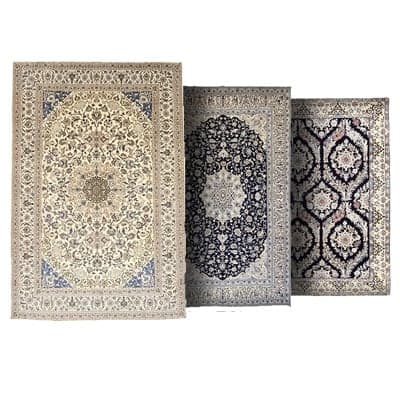 Nain Persian Rugs
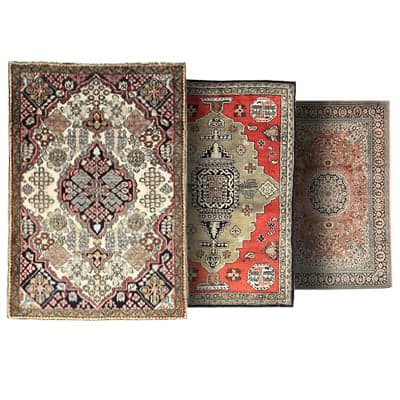 Luxury Silk Rugs
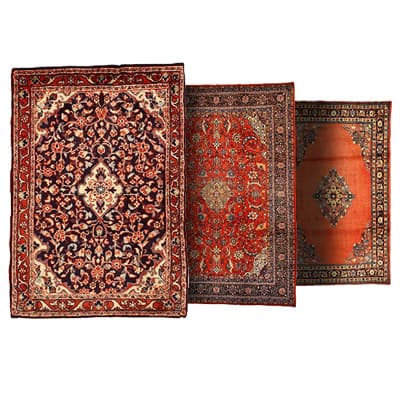 Sarough Persian Rugs
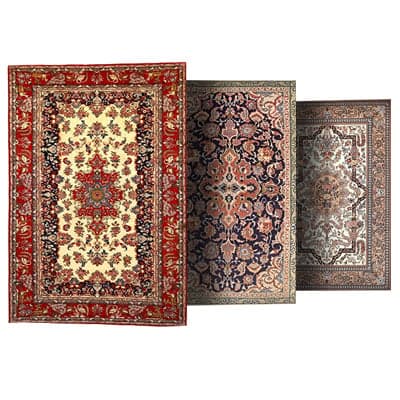 Isfahan Persian Rugs
 Ziegler & Kazak Rugs
 Abadeh Persian Rugs
 Afghan & Pakistani Rugs
 Runners Rugs
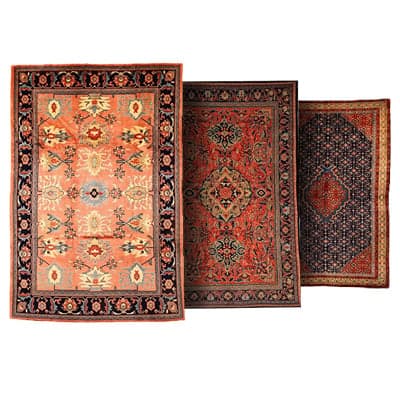 Ardebil Persian Rugs
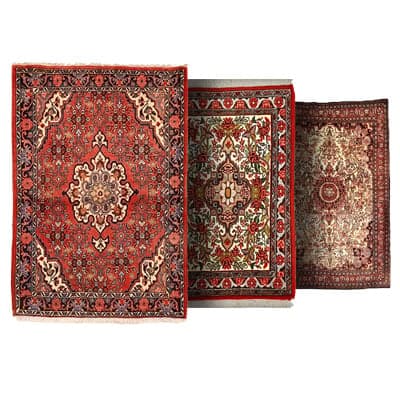 Bidjar Persian Rugs
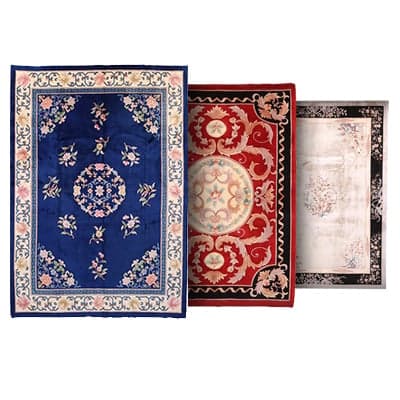 Chinese Rugs & Carpets
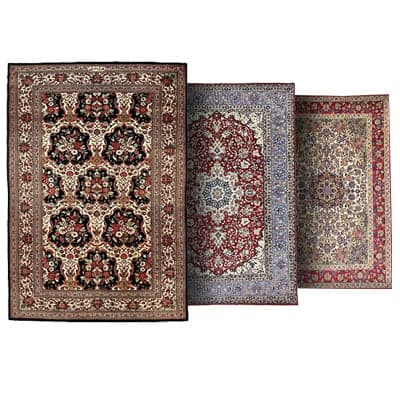 Exclusive Premium Carpets
 Ghom Persian Rugs
 Indian Carpets & Rugs
 Kashan Persian Rugs
 Mashhad Persian Rugs
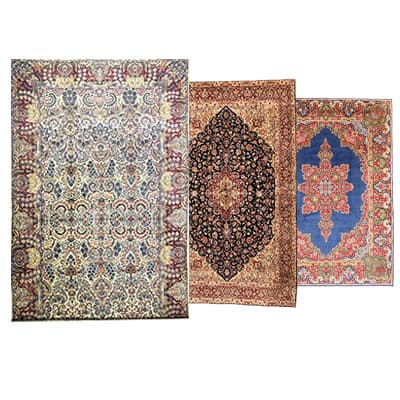 Kerman Persian Rugs
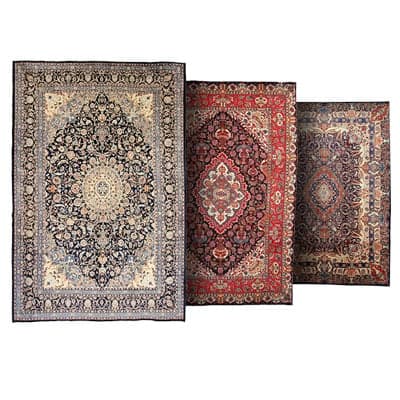 Kashmar Persian Rugs
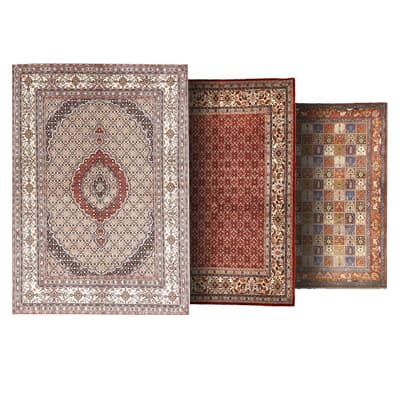 Moud Persian Rugs
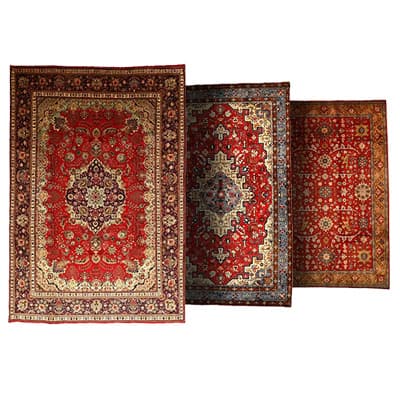 Tabriz Persian Rugs
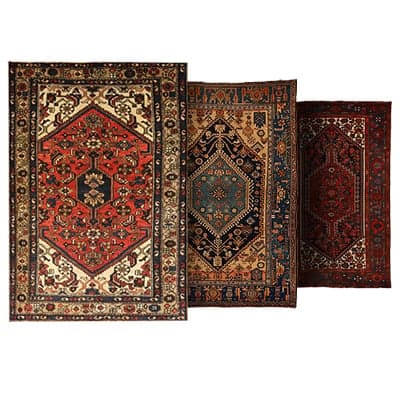 Zanjan Persian Rugs
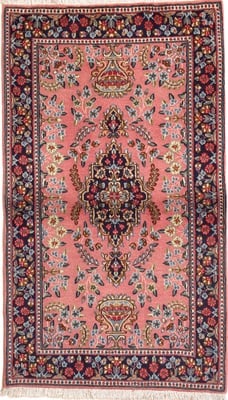
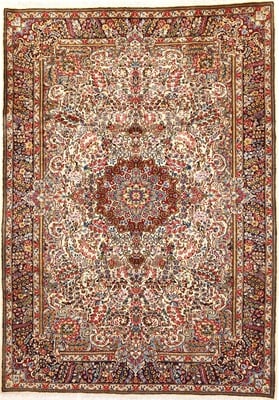
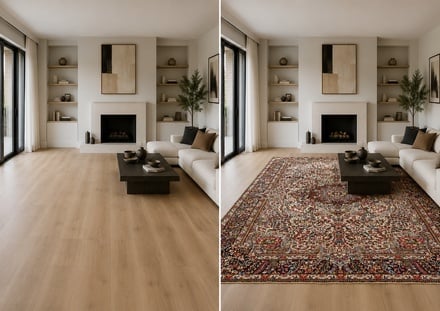


A hand-knotted Kerman carpet (often referenced as Kirman) stands as one of the most sophisticated artistic expressions in the entire history of classical Persian textile arts. Originating from an ancient desert trading hub located in southeastern Iran, between the arid expanses of the Dasht-e Lut and Dasht-e Kavir, Kerman weavings are celebrated for their unparalleled botanical fluidity, exceptionally expansive dye palettes containing up to thirty nuanced gradations, and supple pile foundations. For centuries, these masterpieces have graced royal courts, aristocratic European drawing rooms, and premier international museum collections.
Whether you are seeking an archival pictorial tapestry featuring Persian epics, a courtly medallion composition from the acclaimed weaving enclave of Ravar (Laver), or a grand-format room size with soft ivory and rose quartz tones, RugEast offers a curated selection of genuine, certified pieces. Explore our comprehensive collection of traditional Oriental carpets to find an enduring heirloom that brings imperial charm and museum-grade artistry into your home.
Kerman Province is bounded by Khorasan to the north, Sistan and Baluchestan to the east, Fars and Yazd to the west, and Hormozgan to the south. Historically recognized under pre-Islamic designations such as Buniya, Karamaniya, and Gowashir, the provincial capital trace its administrative foundations to Ardashir I, founder of the Sasanian Empire, in the 3rd century AD. The etymology—rooted in Old Persian Ker (signifying an elevated fortress or mountain) and the locative suffix -man—aptly translates to the "land of high mountains."
This geographical setting proved instrumental in shaping Kerman's textile legacy. Encircled by unforgiving deserts and jagged mountain ridges, the city developed as a self-sustaining artistic haven shielded from foreign invasions that periodically disrupted northern weaving centers. Paradoxically, this barren landscape inspired the local weavers to turn their vertical looms into verdant tapestries of lush vegetation, overflowing flower gardens, cascading cypress trees, and tranquil water basins—a tactile manifestation of paradise (Pardis) engineered in wool and silk.
Marco Polo chronicled Kerman's opulent embroidery and fine silken draperies as early as 1271. During the Safavid Golden Age under Shah Abbas I, the city was commissioned to weave the landmark Vase Carpets (Vase Technique), renowned for their multi-tiered directional branches and revolutionary double-warp structures.
By the late 19th century, Western commercial houses including the Oriental Carpet Manufacturers (OCM) and Nearco Castelli established branches in Kerman, calibrating scale and softening palettes for European townhouses and American estates.
Kerman dyers are world-renowned for color breadth. While most Persian regional carpets utilize between eight and twelve distinct tones, a masterwork Kerman incorporates 15 to 30 individual shades within a single composition, creating watercolor-like transitions.
Natural colorants have historically defined this vibrancy: cochineal yields dusty rose, magenta, and claret; madder roots provide coral and crimson; walnut husks and pomegranate rinds create rich sepia; and weld combined with indigo produces luminous celadon and sage greens.
Within elite connoisseur and auction circles, carpets produced in the satellite town of Ravar (regularly transcribed as Laver in antique trade catalogs), located 120 kilometers north of Kerman, represent the undisputed apex of south-Persian loom art. These rugs differ fundamentally from standard city productions in four critical technical dimensions:
The compositional vocabulary of Kerman carpets is arguably the most diverse in Iran. Unlike tribal pieces that rely on memorized geometric archetypes, Kerman carpets are drawn by master paper draughtsmen (Naqash) and executed using rhythmic vocal patterns sung aloud to weavers during production.
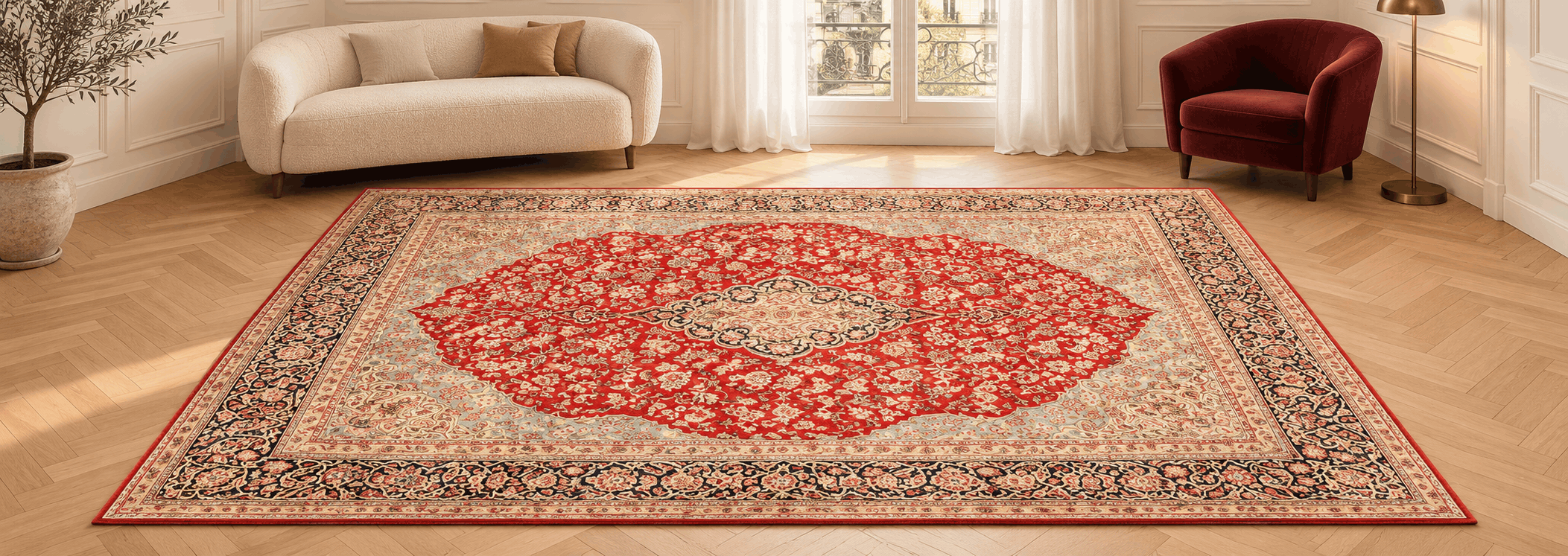
Between 1910 and 1930, Kerman experienced an unprecedented renaissance driven by visionary carpet designers who operated independent studios across the city. The most influential figure of this period was Hassan Khan Shahrokhi (often titled Hassan Khan Mosavvar, born 1862). A true polymath proficient in mathematics, celestial astronomy, calligraphy, and miniature painting, Shahrokhi liberated carpet design from rigid symmetry by introducing sweeping asymmetrical botanical motifs and expressive human figures.
Pattern cartoons signed by Hassan Khan and his brother, Mohsen Khan Shahrokhi, continue to be archived in the National Carpet Museum of Iran. Other notable masters who shaped Kerman's global acclaim include Sheikh Hossein Alireza, master draughtsman Mayel, and the workshop heads of the Rasouli family. Works traceable to these specific design dynasties maintain exceptional provenance value among collectors worldwide.
For collectors seeking to contrast Kerman's dense wool pile with other weaving traditions, compare the crisp double-wefted knot architecture of Kashan carpets or the fine silk-warp structures of Tabriz carpets.
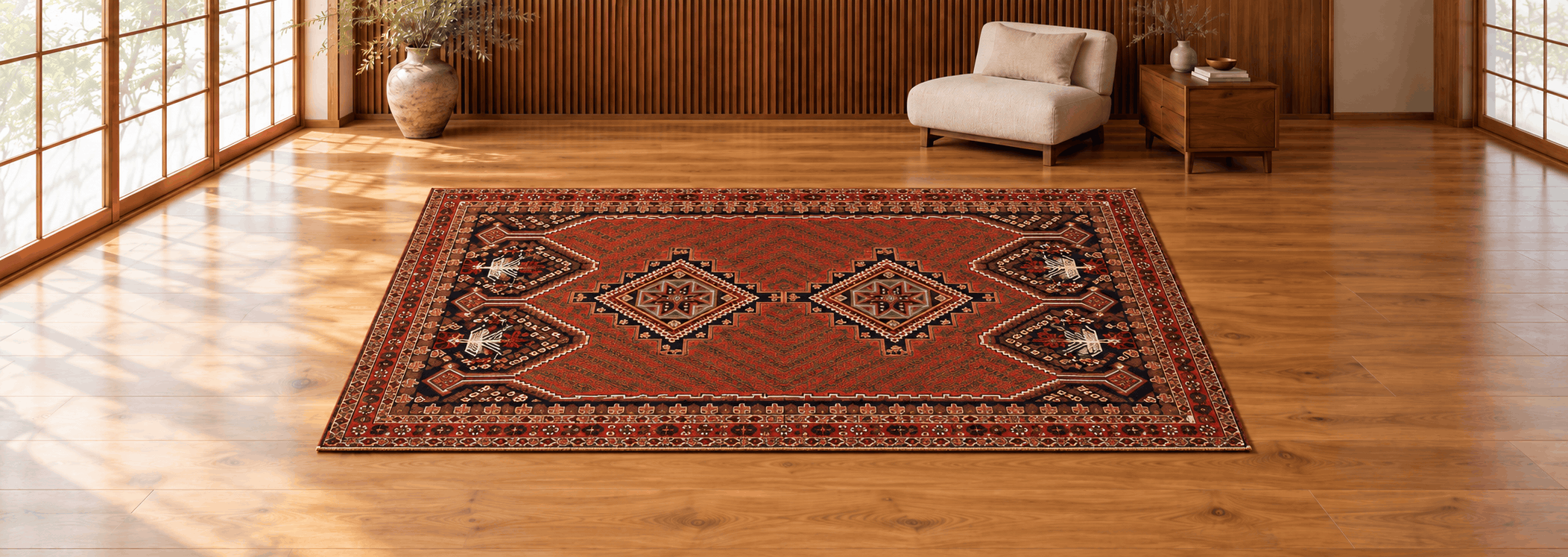
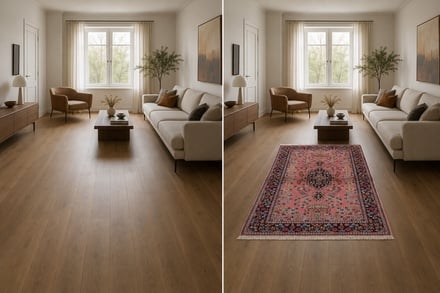
While Kerman rugs are steeped in classical history, top interior designers frequently feature them in modern, minimalist, and transitional environments. The secret lies in their balanced, often luminous color palettes:
Seeking a specific antique Laver provenance or customized sizing advice?
Our carpet specialists at RugEast provide comprehensive evaluations, high-resolution condition reports, and worldwide insured delivery.
Speak with our curator: +49 (040) 37 50 27 66
Kerman rugs are distinguished by their broad chromatic palette (up to 30 subtle hues), predominantly soft ivory, champagne, and rose grounds, and fluid botanical detailing without geometric angularity. Underneath, a tight asymmetric knotting structure built on sturdy cotton warps gives the carpet a supple, pliable body that lies flat without stiffness.
Ravar (or Laver) carpets are woven in the historic town of Ravar, north of Kerman city. They feature an exceptionally high knot count (often exceeding 400–500 KPSI), the finest hand-selected spring kork wool, and intricate pictorial or garden compositions. Because of their rarity, superior handle, and historical provenance, authentic Laver carpets frequently command premium valuations at auction.
Yes. Despite their delicate, refined appearance, high-grade Kerman rugs are crafted from dense, lanolin-rich highland wool with multi-weft cotton foundations. Natural lanolin acts as a protective barrier against spills and soil, while the resilience of tightly knotted wool ensures the pile rebounds under regular foot traffic and furniture placement.
Vacuum weekly using suction-only nozzle attachments across the grain of the pile, avoiding mechanical beater bars that can stress delicate edges. Blot liquid spills immediately with un-dyed cotton towels without rubbing. For long-term preservation, rotate the rug 180 degrees annually to ensure balanced light exposure, and rely solely on certified professional wash specialists experienced with natural vegetable dyes.