
Do you know anything about Gabbeh rugs?
Discover Gabbeh rugs, from their nomadic Iranian origins and symbolic motifs to their use in modern interiors. Compare handmade and machine-made types, materials, benefits, care needs, durability, and value, and learn what makes traditional Gabbehs warm, distinctive, and versatile floor coverings.
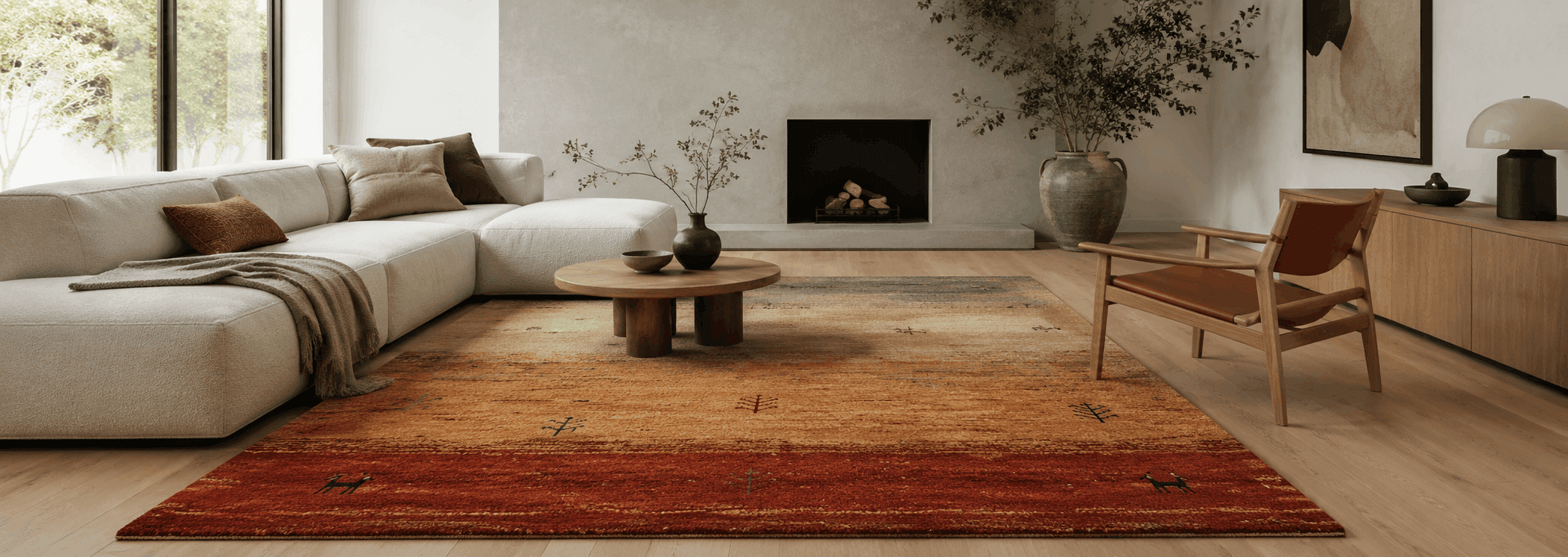
A Gabbeh is a traditional handwoven rug known for its simple patterns, coarse construction, and long, soft pile. Originally used in cold and mountainous regions, Gabbehs provided nomadic and rural communities with warmth, comfort, and insulation.
Today, these distinctive rugs are appreciated throughout Iran and exported to countries across Europe, Asia, North America, Africa, and Oceania. Their minimalist designs, rich colors, and versatility have made them popular in both traditional and contemporary interiors.
From Past to Present
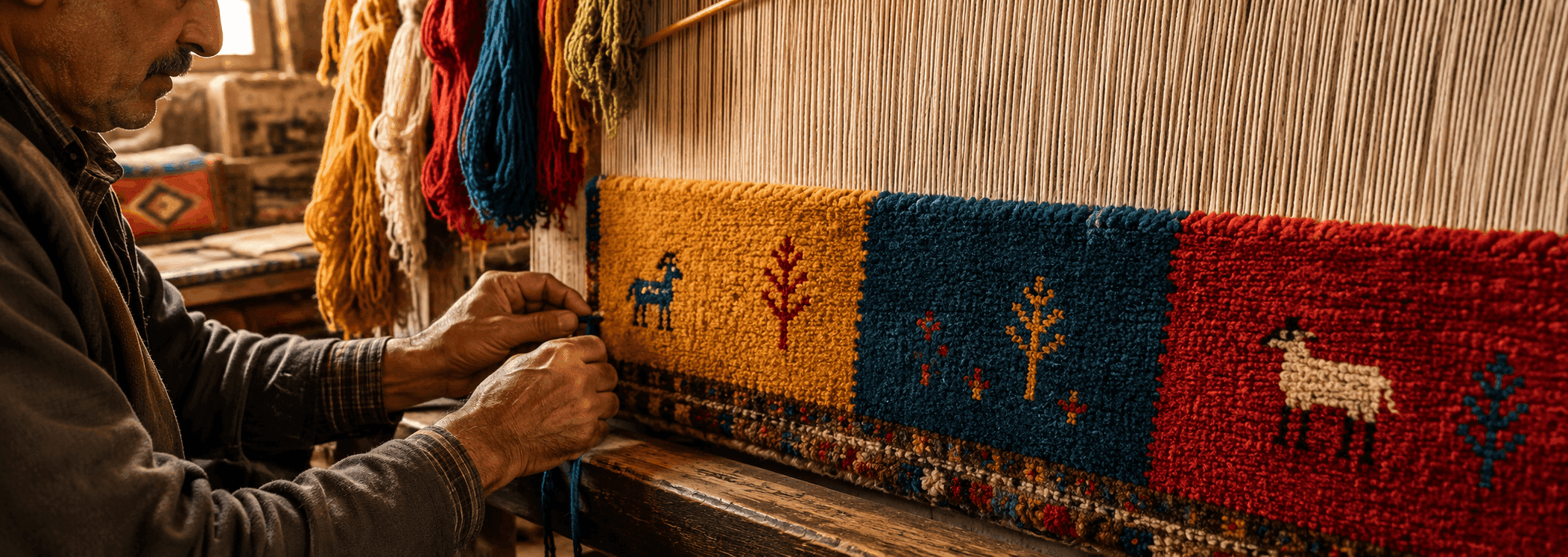
Carpet specialists generally consider the Gabbeh an early form of pile rug associated with Iran’s nomadic communities. Tribes moving between seasonal settlements needed warm, comfortable floor coverings that could withstand changing weather conditions.
Using locally available wool and relatively simple weaving techniques, tribal women created thick rugs inspired by their surroundings and daily lives. Their designs often depicted animals, plants, people, and geometric forms. Rather than following detailed cartoons, weavers commonly created these patterns from memory or imagination.
Traditional motifs include the cypress tree, which is often associated with life and endurance, and horned animals such as goats, which may symbolize pastoral life, fertility, abundance, or rain. Interpretations can differ among tribes and regions.
Gabbehs were historically woven by Qashqai and Bakhtiari communities and by other weaving groups in Iran. Over time, production expanded as domestic and international demand increased.
Gabbeh Rugs in Modern Interiors
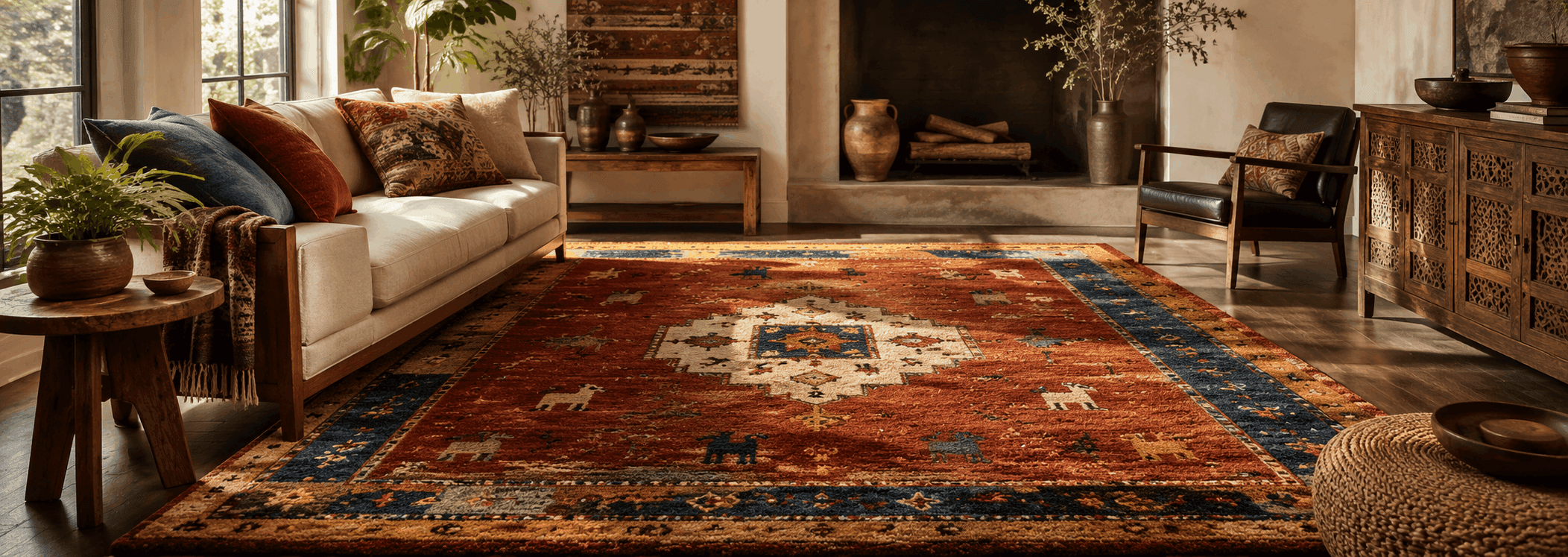
The simplicity of Gabbeh designs makes these rugs highly adaptable. Their abstract forms, ancient motifs, and bold areas of color can complement various styles of furniture, curtains, and decorative accessories.
Gabbehs work especially well in:
- Modern and minimalist interiors
- Rustic and traditional homes
- Scandinavian-style rooms
- Bedrooms and children’s rooms
- Living rooms and offices
Their thick pile adds warmth and texture while helping create a comfortable and inviting atmosphere.
Uses and Benefits of Gabbeh Rugs
Traditional Gabbehs are generally made from wool and have a long, dense pile. Their softness makes them comfortable underfoot, while their thickness provides insulation against cold floors.
A Gabbeh may also be useful in homes with small children because it creates a softer surface for sitting and playing. Its dense pile can absorb some sound and may cushion minor falls. However, a rug cannot prevent every injury and should be secured with a suitable non-slip underlay.
Gabbehs were traditionally produced in relatively small dimensions, often suitable for tents and compact living spaces. Modern examples are available in a much broader range of sizes, including large room-sized rugs.
Types of Gabbeh Rugs
Gabbeh-style rugs can generally be divided into two categories: handwoven and machine-made.
Handwoven Gabbehs
Traditional Gabbehs are woven by hand, usually from wool. Each piece reflects the individual choices and craftsmanship of its weaver, so slight irregularities in shape, color, and pattern are normal. These variations are often considered part of the rug’s character rather than defects.
Handwoven Gabbehs may feature:
- Hand-spun wool
- Natural or synthetic dyes
- Thick, soft pile
- Simple geometric or figurative motifs
- Slightly irregular dimensions
- Unique color and design variations
Machine-Made Gabbeh-Style Rugs
Machine-made rugs reproduce the visual character of traditional Gabbehs through automated manufacturing. They may be made from wool, polypropylene, polyester, acrylic, or blended fibers.
Manufacturers can produce these rugs consistently in numerous colors, patterns, shapes, and dimensions. They are generally less expensive than handmade examples and may be easier to replace or coordinate with existing décor.
Care and Potential Risks
Handwoven wool Gabbehs can be vulnerable to moisture, moths, carpet beetles, unsuitable cleaning products, and prolonged exposure to strong sunlight. Ladybugs are not normally considered a threat to carpets; carpet beetles and clothes moth larvae are the more relevant pests.
To protect a Gabbeh:
- Vacuum it gently and regularly.
- Rotate it periodically to distribute wear and sunlight exposure.
- Clean spills promptly without saturating the fibers.
- Avoid harsh chemicals and excessive moisture.
- Use a suitable rug pad.
- Arrange professional cleaning when necessary.
- Inspect stored rugs for signs of moths or carpet beetles.
Moisture damage does not always make restoration economically impractical. Whether a rug is worth repairing depends on its condition, age, craftsmanship, market value, and sentimental importance.
Special Features of Traditional Gabbehs
Techniques and Materials
Authentic traditional Gabbehs are hand-knotted or handwoven using techniques that vary among weaving communities. Local sheep’s wool gives many examples their characteristic softness, warmth, and subtle sheen.
The quality of a Gabbeh depends on more than knotting alone. Important factors include the wool, dyes, pile density, foundation, finishing, and skill of the weaver.
Uniqueness and Value
Every handmade Gabbeh is distinctive. Its patterns may reflect the weaver’s surroundings, memories, experiences, and cultural traditions.
Some Gabbehs may retain or increase their value, but they should not automatically be treated as financial investments. Their market value depends on provenance, age, condition, materials, dimensions, rarity, craftsmanship, and demand.
Role in Contemporary Design
Although Gabbehs originated as practical tribal floor coverings, they now appear in modern homes and offices worldwide. Their uncomplicated designs and expressive colors can introduce warmth and individuality without overwhelming the surrounding décor.
Conclusion
Gabbehs combine practical comfort with a rich weaving tradition. Their long wool pile provides warmth and softness, while their abstract designs and symbolic motifs reflect the lives and environments of the communities that created them.
Traditional handwoven Gabbehs offer individuality, natural materials, and cultural value. Machine-made Gabbeh-style rugs provide greater consistency, broader design choices, and more affordable prices. The best option depends on the buyer’s budget, aesthetic preferences, intended use, and maintenance requirements.
FAQs
1. What distinguishes a traditional Gabbeh rug?
Traditional Gabbehs are handmade wool rugs characterized by thick, soft piles, simple patterns, rich colors, and motifs inspired by nomadic life.
2. Are handmade Gabbehs more durable than machine-made rugs?
A well-made handmade wool Gabbeh can last for generations with proper care. Machine-made rug durability depends on its fibers, construction, use, and maintenance.
3. How should a Gabbeh rug be maintained?
Vacuum it gently, rotate it periodically, treat spills promptly, avoid excessive moisture and harsh chemicals, and arrange professional cleaning when necessary.