
Examine the meaning and concept of patterns on carpets
Explore the history, meanings, and symbolism of carpet patterns in German and Iranian traditions. Learn how artistic movements and cultural exchange shaped designs, and discover the diverse interpretations of Eslimi, boteh, Herati, floral, tree, animal, geometric, and human motifs across cultures.
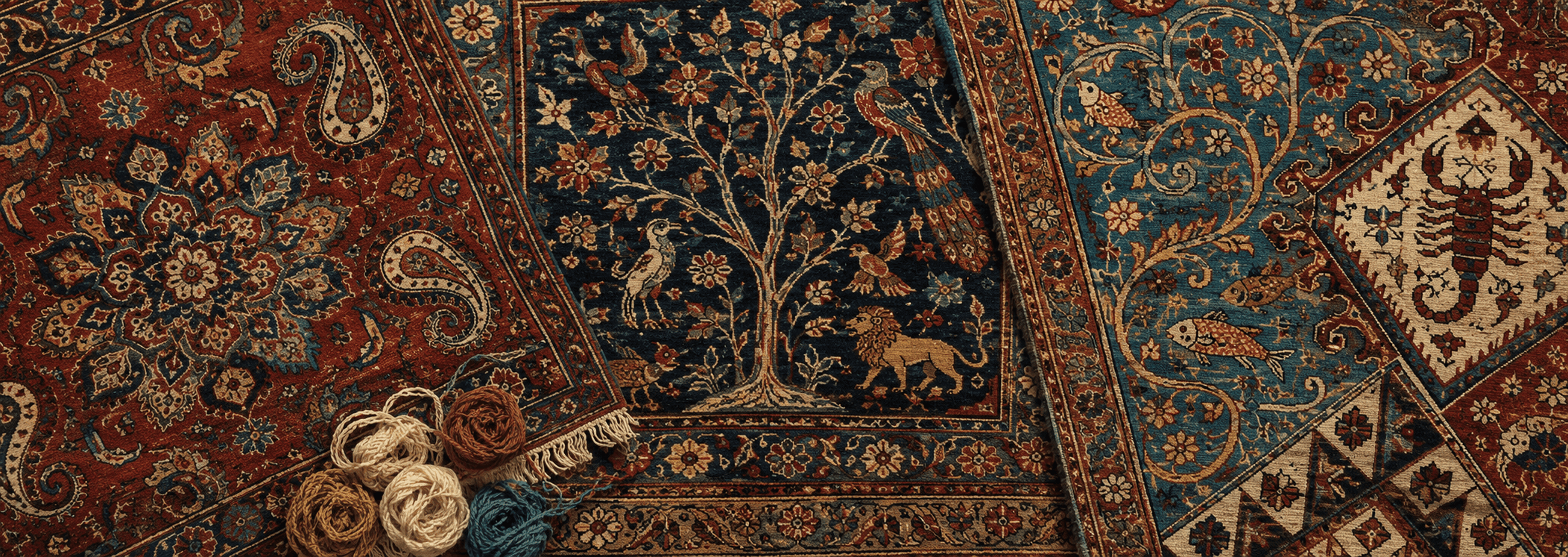
Patterns are among the most important elements in carpet weaving. Woven into the carpet’s surface, they contribute beauty, variety, cultural meaning, and artistic value. Carpet designs may feature geometric forms, flowers, plants, animals, symbols, or motifs inspired by history, literature, and regional traditions.
The History and Significance of Carpet Patterns in German Culture
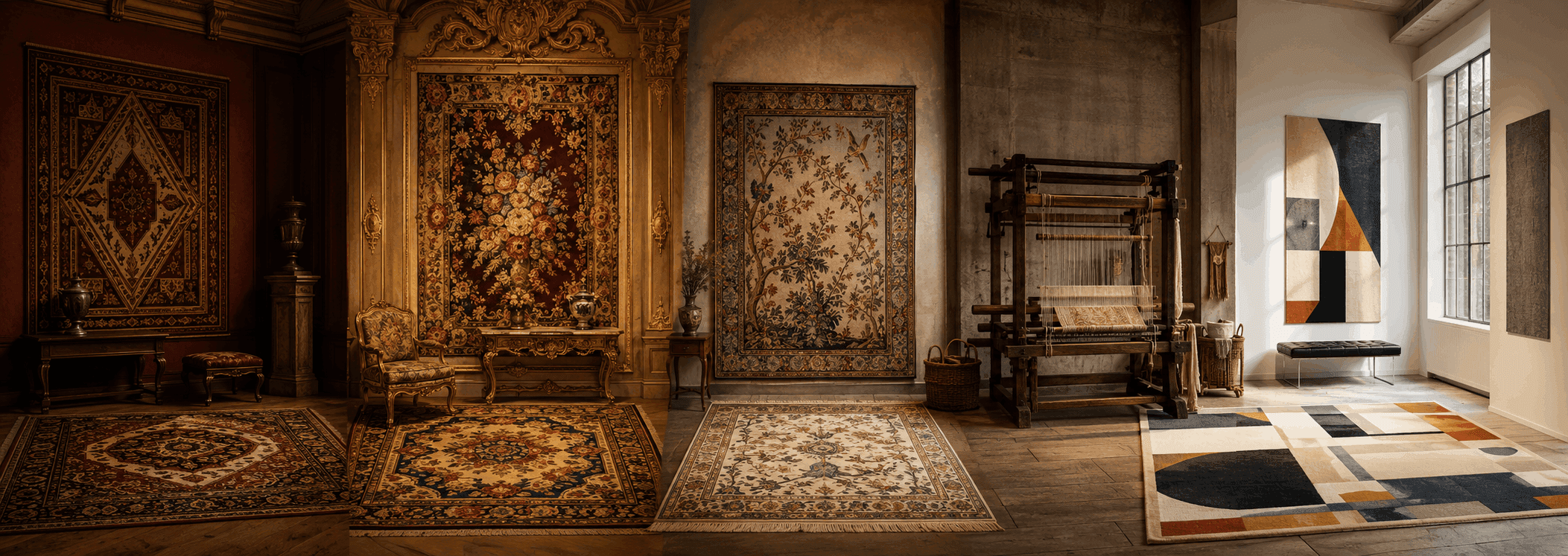
Carpet design has evolved alongside changing artistic movements, manufacturing techniques, and interior-design preferences in Germany. German carpets and textiles may incorporate geometric patterns, botanical elements, animals, historical imagery, and regional symbols.
Carpets are also an important part of interior design. Their patterns and colors can define a space, complement its furnishings, and influence its atmosphere. Beyond decoration, certain designs may refer to historical events, traditional stories, religious beliefs, or cultural values.
However, not every carpet produced or sold in Germany represents a distinctly German tradition. Many designs have been influenced by Persian, Ottoman, European, and other international carpet-making cultures.
Have German Carpet Patterns Changed Throughout History?
Yes. Carpet patterns in Germany have changed in response to technological developments, artistic movements, fashion, social change, and cultural exchange.
During the Renaissance, European decorative arts increasingly incorporated classical forms, symmetry, and elaborate geometric compositions. Baroque designs later became more ornate, dramatic, and richly detailed. Romanticism encouraged greater interest in nature, emotion, folklore, and historical subjects.
Industrialization brought significant changes to carpet production. Mechanized looms made it possible to manufacture carpets more quickly and reproduce detailed patterns consistently. Modern design movements subsequently introduced simpler compositions, abstract forms, and cleaner geometric lines.
Cultural exchange also contributed to this development. Persian, Ottoman, Central Asian, and other textile traditions influenced European carpet design, while foreign artists and manufacturers introduced new materials, colors, and production methods.
Meanings and Motifs in Iranian Carpet Patterns
Iranian carpets are renowned for their extensive variety of patterns. Individual weaving regions developed distinctive designs shaped by local customs, available materials, artistic traditions, and the preferences of particular tribes or workshops.
The interpretation of carpet symbols is not always universal. A motif may have different names or meanings depending on its region, historical period, and weaving community.
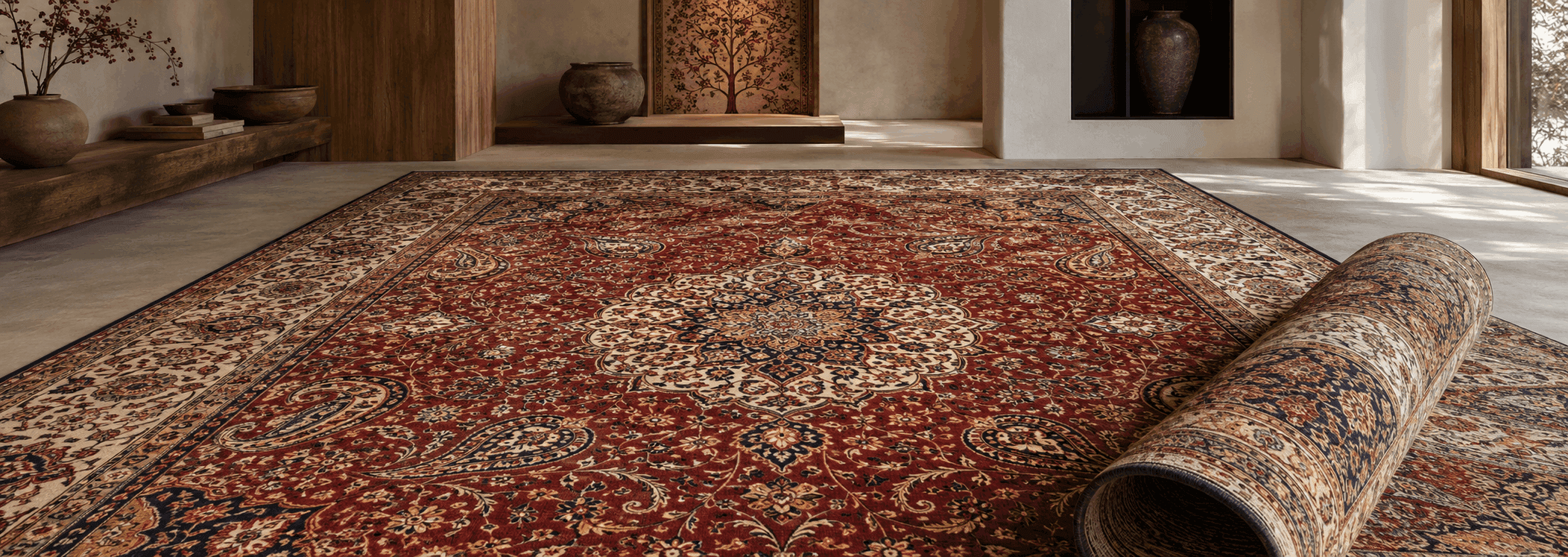
Eslimi Pattern
Eslimi designs feature curved, intertwined arabesques resembling curling leaves, vines, or split palmettes. Their flowing lines are frequently repeated across the carpet, creating a continuous and harmonious composition.
Numerous variations exist, including broken Eslimi and dragon-inspired forms. These patterns are often combined with floral elements, medallions, and decorative borders.
Boteh-Jegheh Pattern
The boteh, commonly associated with the paisley form, is one of the best-known motifs in Iranian textile art. It resembles a curved leaf, flame, seed, or cypress tree.
Some carpets use boteh motifs as isolated decorative elements, while others repeat them across the entire field. Regional variations include Boteh Miri, Boteh Sanandaj, and other locally developed forms.
Gol-e Farang Pattern
Gol-e Farang, meaning “European flower,” generally refers to floral compositions influenced by European naturalistic art. Roses are especially prominent, although other flowers may also appear.
These carpets often feature vivid colors and highly expressive floral arrangements. Related designs include flower-and-nightingale compositions and repeating bouquets.
Herati Pattern
The Herati pattern is a widely recognized Persian carpet design. It usually consists of a central diamond or rosette surrounded by curved leaves, which are sometimes interpreted as fish. For this reason, the design is also known as Mahi, meaning “fish.”
The pattern is repeated across the carpet’s field and appears in numerous regional traditions. Variations are associated with areas such as Kurdistan, Hamadan, Azerbaijan, and eastern Iran.
Floral Patterns
Flowers are among the most common elements in Iranian carpet design. They may be depicted naturalistically or transformed into geometric forms. Depending on the carpet’s origin, floral motifs can represent gardens, beauty, renewal, or the natural world.
Tree Pattern
Tree motifs may feature trunks, branches, leaves, blossoms, birds, or animals. The Tree of Life is commonly interpreted as a symbol of life, growth, continuity, and the connection between earthly and spiritual realms.
Almond or Lozenge Pattern
Diamond-shaped or almond-like motifs frequently appear in tribal and village carpets. They may be used independently, repeated across the field, or combined with other protective and geometric symbols.
Their precise meaning varies among weaving communities. In some traditions, they have been interpreted as protective motifs intended to repel harmful influences.
Triangle Pattern
Triangles appear frequently in tribal carpet fields and borders. Depending on their arrangement and cultural context, they may serve as decorative, geometric, or protective symbols.
Claims that the triangle always represents evil should be treated cautiously, as symbolic interpretations differ considerably among tribes and regions.
Goat Motif
Goats and other horned animals are common in tribal weaving. They may reflect pastoral life, livelihood, fertility, strength, or abundance. In some traditions, such animals have also been associated with rain and natural forces.
Scorpion or Crab Motif
Angular motifs are sometimes identified as scorpions or crabs. These forms may have been regarded as protective symbols associated with defense against danger, misfortune, or harmful forces.
Because highly stylized designs can resemble several different animals, their identification and meaning are not always certain.
Fish Motif
Fish motifs appear in various Persian carpet traditions, particularly in connection with the Herati pattern. Depending on the composition, fish may symbolize water, fertility, abundance, renewal, or the protection of life.
Turtle Motif
The turtle has sometimes been interpreted as a symbol of longevity, fertility, and protection. Such interpretations are especially associated with tribal weaving traditions, although meanings can vary between communities.
Lion Motif
The lion is a longstanding symbol of strength, courage, authority, and royal power in Iranian art. Carpets featuring lions may have been made for influential individuals or used to express bravery and protection.
Dog Motif
Dogs may symbolize loyalty, guardianship, defense, or tribal life. In narrative carpets, figures of people and animals can also depict historical events, conflicts, ceremonies, or scenes from everyday life.
Peacock Motif
The peacock is commonly associated with beauty, splendor, dignity, and immortality. Its meaning differs across religious and cultural traditions.
Some folk interpretations connect it with vanity or deception because of the contrast between its magnificent plumage and comparatively plain feet. This interpretation should not be regarded as universal.
Human Figures
Images of men, women, couples, and families sometimes appear in pictorial or tribal weavings. Depending on their context, they may represent fertility, marriage, family life, historical figures, or scenes from stories and daily activities.
In certain traditions, such motifs may have been woven as blessings for newly married couples or families hoping to have children.
Shop antique rugs
Conclusion
Carpet patterns are both decorative and culturally significant. Geometric, floral, botanical, animal, and figurative motifs can reflect a weaving community’s environment, history, beliefs, and artistic traditions.
The patterns found in German interiors and carpet production have developed through European artistic movements, industrial innovation, and interaction with international textile traditions. Iranian carpet designs, meanwhile, display exceptional regional variety and often carry symbolic or narrative associations.
The meaning of a motif should always be considered in relation to the carpet’s origin, age, and cultural context. Although traditional interpretations can enrich our understanding of a carpet, many symbols have multiple meanings, and definitive explanations are not always possible.
FAQs
1. What influences the meaning of a carpet pattern?
Its meaning may depend on the carpet’s origin, age, historical period, weaving community, and cultural context.
2. What does the Persian boteh motif represent?
The boteh resembles a curved leaf, flame, seed, or cypress tree. Its interpretation varies among regions and traditions.
3. What does the Tree of Life symbolize in carpets?
It commonly represents life, growth, continuity, and the connection between earthly and spiritual realms.