
How to Choose a Runner Rug for Hallways and Staircases
Hallway and stair runners protect floors, soften noise and add visual continuity, but sizing, construction and installation are essential. Choose a durable manageable pile, use a compatible non-slip pad in halls, confirm stair suitability, and arrange secure professional fitting where appropriate.
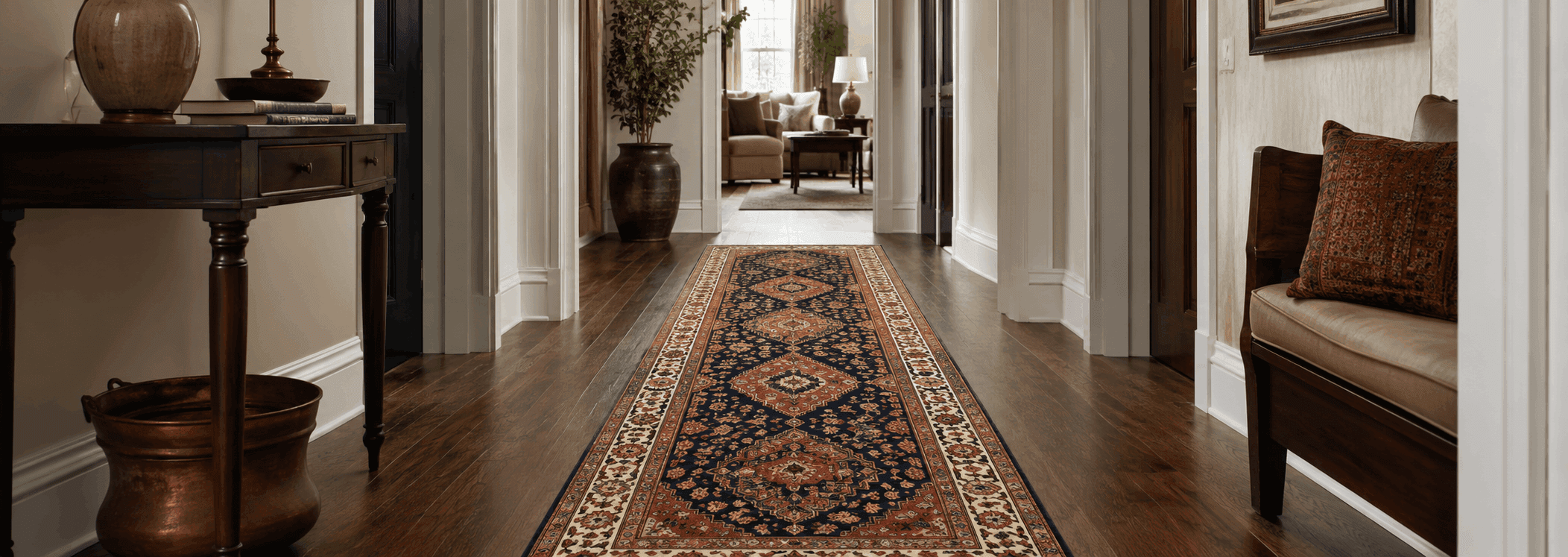
Hallways and staircases are among the busiest areas of a home. A well-chosen runner can protect the floor, soften footsteps, add warmth, and create visual continuity between rooms.
Safety and suitability are especially important on stairs. A decorative hallway runner should not automatically be assumed suitable for stair installation.
Benefits of a Runner Rug
An appropriately selected and secured runner can:
- Protect flooring from everyday wear
- Reduce footstep noise
- Add comfort underfoot
- Introduce color and pattern
- Define a long or narrow space
- Improve traction when correctly installed
A loose, curled, or improperly fitted rug can create a tripping hazard. Installation is therefore just as important as appearance.
Key Features to Consider
1. Appropriate Dimensions
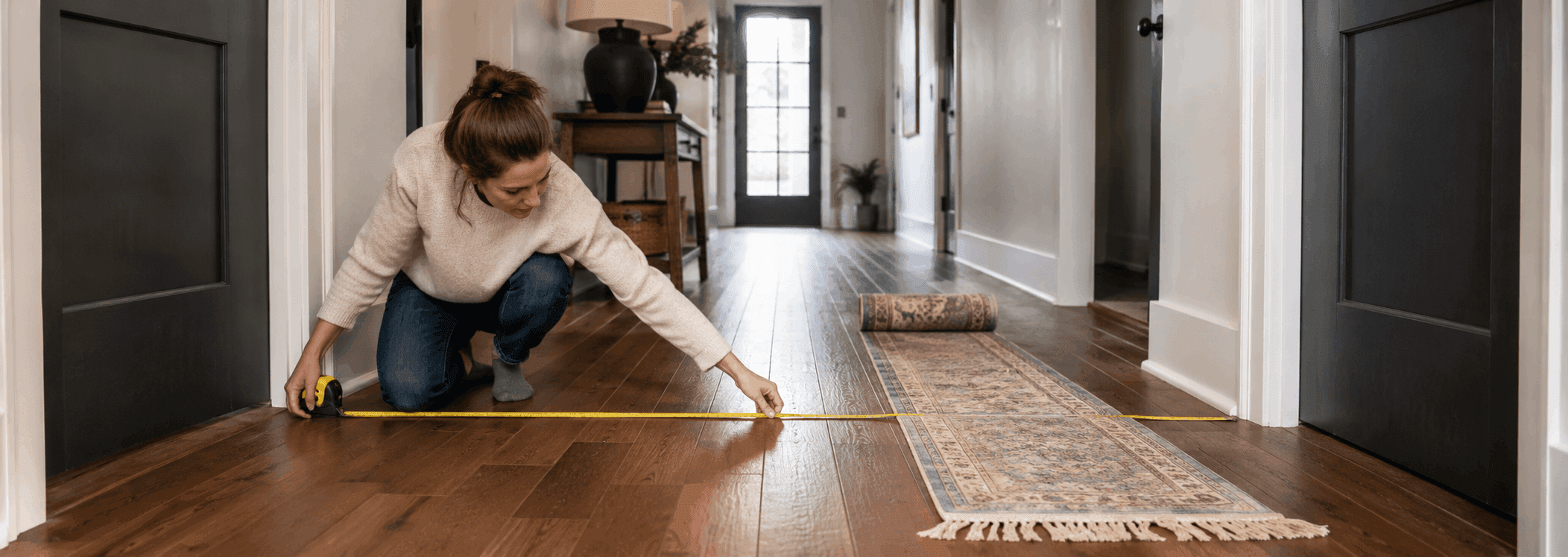
For a hallway, measure the usable floor area before purchasing a runner. Leaving a consistent strip of flooring visible along both sides usually creates a balanced appearance. The precise border depends on the hallway’s width, doors, vents, and architectural details.
Also check that:
- Doors can open without catching the pile.
- The runner does not obstruct floor vents.
- Its ends do not create hazards near stairs or thresholds.
- Furniture legs do not rest unevenly on its edges.
Stair runners require additional measurements, including every tread, riser, landing, and turn. Pattern matching and the treatment of stair nosings can substantially affect the amount of material required.
2. Durable Construction
Hallways require rugs capable of withstanding frequent foot traffic. Wool is a popular choice because its fibers are resilient and can perform well over time when properly maintained. However, wool is not automatically easy to clean, and inappropriate wet cleaning can cause dye bleeding, shrinkage, or texture changes.
Durability depends on more than fiber type. Consider:
- Weave and structural stability
- Pile density and height
- Quality of the foundation
- Edge finishing
- Colorfastness
- Suitability for the intended location
- Manufacturer or seller care instructions
Some synthetic fibers also provide good durability and stain resistance. The best material depends on the household, maintenance expectations, and budget.
3. Practical Colors and Patterns
Patterned or multicolored runners can make everyday dust, footprints, and minor marks less noticeable than very pale, solid-colored rugs.
Navy, charcoal, burgundy, brown, and other medium-to-dark shades can work well in busy areas. However, extremely dark colors may show lint and pale pet hair more clearly.
Choose a design that complements nearby rooms without relying on the rug to conceal dirt indefinitely. Regular cleaning remains necessary regardless of color.
4. Secure Underlay
A hallway runner placed on a hard floor should generally be paired with a nonslip pad designed for both the rug and the flooring material. The pad should be slightly smaller than the rug so it remains concealed.
Avoid improvised rubber, plastic, or adhesive products. Some materials can discolor or react with wood, vinyl, laminate, or stone floors. Confirm compatibility with the flooring manufacturer.
A rug pad can reduce movement, add cushioning, and limit abrasion, but it cannot correct a runner that curls, buckles, or fits poorly.
5. Suitability for Stairs
A stair runner should be flexible enough to conform securely to the treads, risers, and nosings. Low- or medium-pile constructions are generally easier to fit than very thick, rigid, or heavily textured rugs.
The selected rug must also be structurally suitable for bending over stair edges. Some handmade rugs are too stiff, thick, valuable, or vulnerable to repeated folding pressure for this purpose.
Loose fringe, raised decoration, thick pile, weak edges, and uneven surfaces can create hazards. Stair suitability should be confirmed before purchase.
Handmade Runner Styles to Consider
Traditional handmade runners can add distinctive color and craftsmanship to narrow spaces, but suitability varies from one rug to another.
Baluch Runners
Baluch rugs frequently feature compact geometric designs and deep reds, browns, blues, and blacks. Their narrow proportions can suit hallways, although their condition and edge stability should be inspected carefully.
Qashqai Runners
Qashqai weavings often contain strong geometric motifs and rich colors. They can bring warmth and character to transitional spaces.
Bijar Runners
Bijar rugs are known for dense, firm construction. This can make them durable for hallway use, but some examples may be too rigid or thick to bend safely around stair nosings.
Gabbeh Runners
Gabbeh runners often feature simplified geometric, abstract, or minimally decorated designs. Their pile and thickness vary, so not every example is suitable for stairs or door clearances.
Turkmen Runners
Turkmen rugs commonly display repeated geometric motifs and deep red palettes. Their visual rhythm can work particularly well in long hallways.
Regional or commercial labels do not guarantee quality, durability, or authenticity. Evaluate each rug according to its actual construction, materials, dimensions, condition, and intended use.
Installing a Runner on Stairs
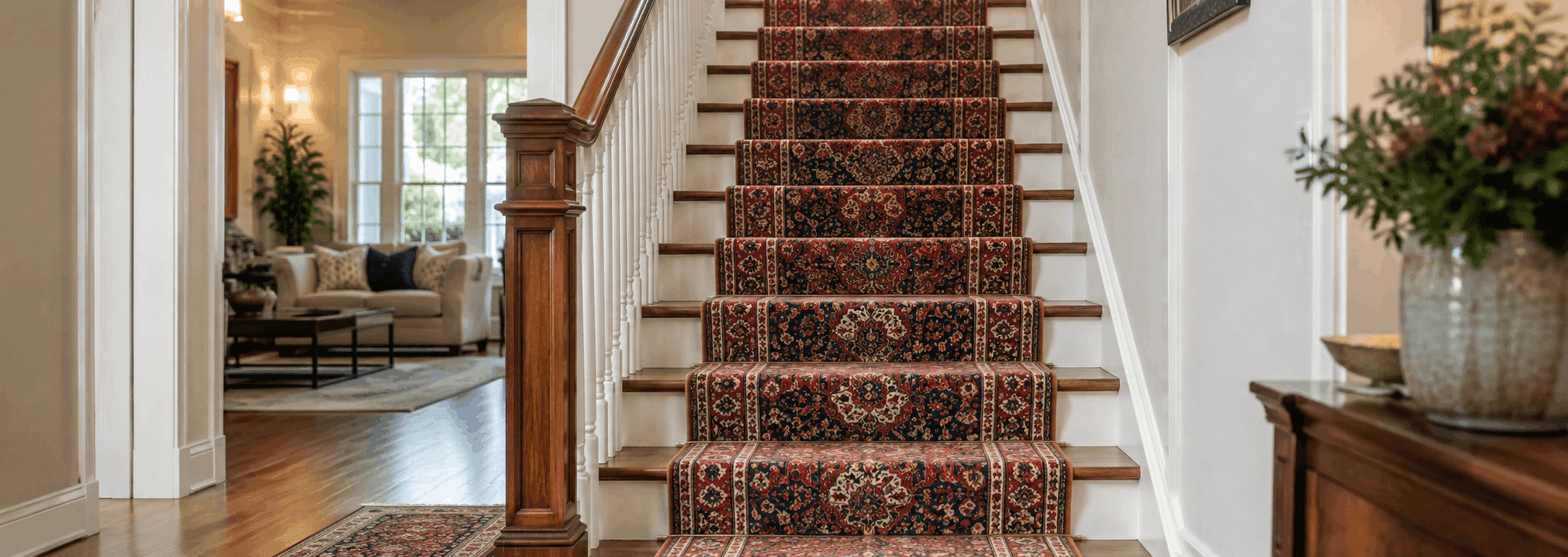
Stair-runner installation requires accurate cutting, alignment, tensioning, padding, and fastening. Incorrect placement can damage the runner or staircase and create a serious fall hazard.
The runner should:
- Lie flat on every tread and riser
- Fit securely around each nosing
- Remain consistently aligned
- Have no loose edges, wrinkles, or raised sections
- Be fastened using a method suitable for the rug and staircase
- Preserve safe tread depth and handrail access
Do not rely on ordinary double-sided tape, generic adhesive strips, decorative stair rods, or a few exposed nails as the primary fastening system. Stair rods are usually decorative and may not secure the runner adequately.
Professional installation is advisable, particularly for winding stairs, landings, valuable rugs, or hard-surface staircases. Carpet One notes that installation requires appropriate tools, stretching, cutting, and fastening and recommends professional fitting to protect performance and warranty conditions.
Maintaining a Hallway Runner
Vacuum Regularly
Vacuum according to the rug manufacturer’s instructions. Busy hallways may require cleaning more than once a week.
Use care around fringes and weakened edges. A rotating brush or beater bar can damage some handmade, looped, or delicate rugs.
Rotate When Appropriate
A reversible or movable hallway runner can be rotated periodically to distribute traffic and light exposure more evenly. Do not rotate a fitted stair runner without professional removal and reinstallation.
Treat Spills Promptly
Blot spills with clean white cloths rather than rubbing them. Follow the rug’s care instructions and test any cleaning product in an inconspicuous area.
Arrange Suitable Cleaning
Do not wash a handmade rug annually as a general rule. Cleaning frequency and method depend on its fiber, dyes, construction, soil level, and location.
Handmade wool, silk, antique, or color-sensitive rugs may require specialist cleaning. Never saturate a fitted stair runner unless the cleaning method permits effective moisture extraction and complete drying.
Repair Damage Early
Inspect the runner periodically for:
- Frayed sides
- Loose fringe
- Open seams
- Curling ends
- Worn pile
- Exposed foundation
- Insect damage
- Loose stair fastenings
Prompt repair can prevent minor damage from becoming more extensive.
Conclusion
A successful hallway or stair runner combines appropriate dimensions, durable construction, manageable pile, secure installation, and a design suited to the home.
For hallways, use a compatible nonslip pad and ensure the runner lies completely flat. For staircases, select a rug specifically suited to stair use and have it securely installed—preferably by an experienced professional. With appropriate care, a well-made runner can protect the floor and bring lasting character to an otherwise overlooked space.
Explore RugEast’s collection of handmade runner rugs to find a design suited to your hallway. If the rug is intended for stairs, confirm its construction and installation
FAQs
1. How wide should a hallway runner be?
It should leave a consistent, visually balanced strip of flooring visible on both sides without obstructing doors, vents, stairs or thresholds.
2. Do hallway runners need a rug pad?
Generally, yes. Use a compatible non-slip pad designed for both the rug and flooring, ensuring it remains concealed beneath the runner.
3. Can any runner rug be installed on stairs?
No. Stair runners must have suitable flexibility, thickness, construction and edge stability and should be securely fitted by an experienced installer.