
Hand-Knotted vs Hand-Tufted Rugs: What’s the Difference?
When shopping for a handmade rug, you may come across terms such as hand-knotted, hand-tufted, and handmade. Although these rugs may look similar at first glance, the way they are made is very different.
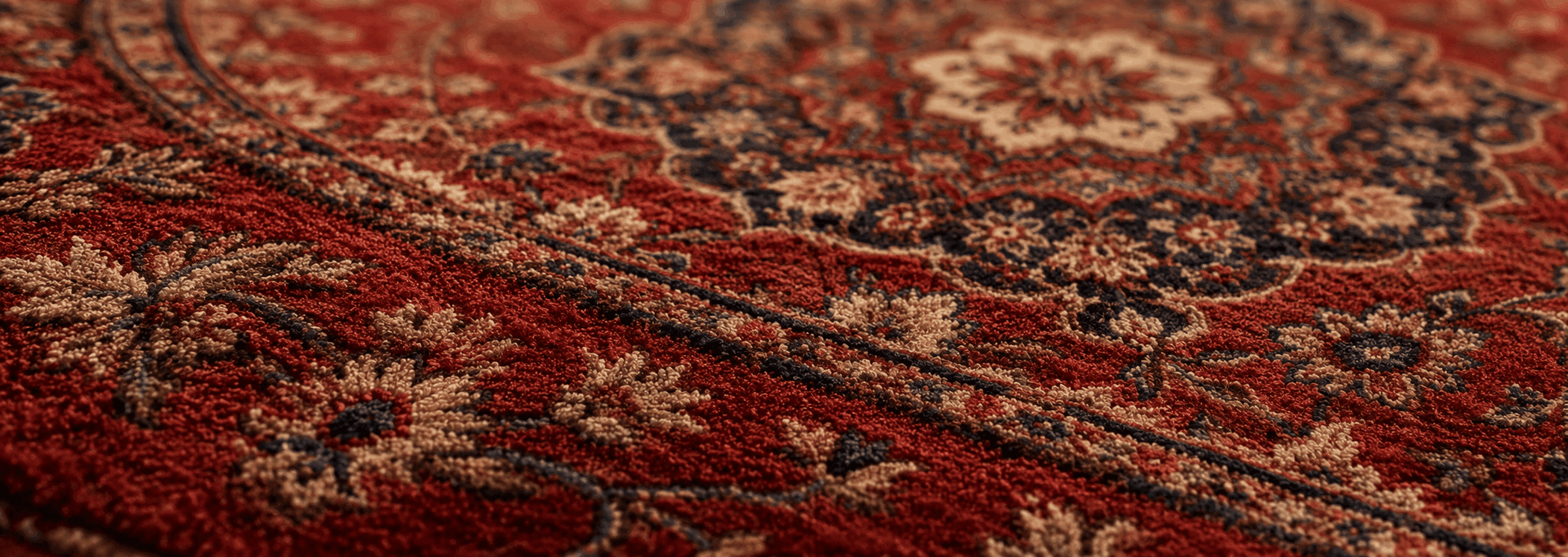
When shopping for a handmade rug, you may come across terms such as hand-knotted, hand-tufted, and handmade. Although these rugs may look similar at first glance, the way they are made is very different.
The construction method affects a rug's durability, appearance, texture, price, maintenance, and lifespan. This is particularly important when buying a Persian rug, because traditional Persian carpets are closely associated with hand-knotting techniques that have been passed down through generations.
So, what is the difference between a hand-knotted and a hand-tufted rug? How can you tell them apart? And which one is the better choice for your home?
In this guide, we explain everything you need to know before buying a hand-knotted or hand-tufted rug.
What Is a Hand-Knotted Rug?
A hand-knotted rug is one of the most traditional forms of handmade carpet.
Each knot is individually tied by hand around the foundation threads of the rug. The weaver creates the design gradually, row by row, while building the structure of the carpet.
Traditional Persian rugs are among the best-known examples of hand-knotted carpets. Depending on their region of origin, they may use different knotting techniques, including the Persian or Senneh knot and the Turkish or Ghiordes knot.
Because every knot is tied individually, producing a hand-knotted rug can take months or even years. The exact amount of time depends on the size of the rug, the density of the knots, the complexity of the design, and the skill of the weaver.
This labor-intensive process is one of the main reasons why high-quality hand-knotted rugs tend to have a higher price.
More importantly, the individual knots become an integral part of the rug's structure, allowing a well-made hand-knotted carpet to remain beautiful and functional for decades.
What Is a Hand-Tufted Rug?
A hand-tufted rug is also handmade, but it is produced using a different technique.
Instead of tying individual knots, the rug maker uses a special tufting tool to push yarn through a prepared foundation.
The yarn forms the visible pile of the rug. Once the design has been completed, the yarn is trimmed to create the desired texture and height. A secondary backing is then commonly applied to secure the yarn and stabilize the rug.
Because the yarn does not have to be individually knotted, the production process is much faster than traditional hand-knotting.
This makes hand-tufted rugs generally more affordable than comparable hand-knotted rugs. They can also offer a wide range of colors, patterns, textures, and contemporary designs.
However, their construction is different from that of a traditional hand-knotted carpet, which affects their long-term durability and maintenance requirements.
The Biggest Difference: How the Rug Is Made
The most important difference between these two types of rugs is their construction.
With a hand-knotted rug, each knot is tied individually around the foundation. The knots create both the pile and an important part of the rug's structural integrity.
With a hand-tufted rug, yarn is pushed through a foundation using a tufting tool. The yarn is then held in place with a backing, usually involving adhesive or latex.
This means that the two rugs may look similar from the front but have completely different structures underneath.
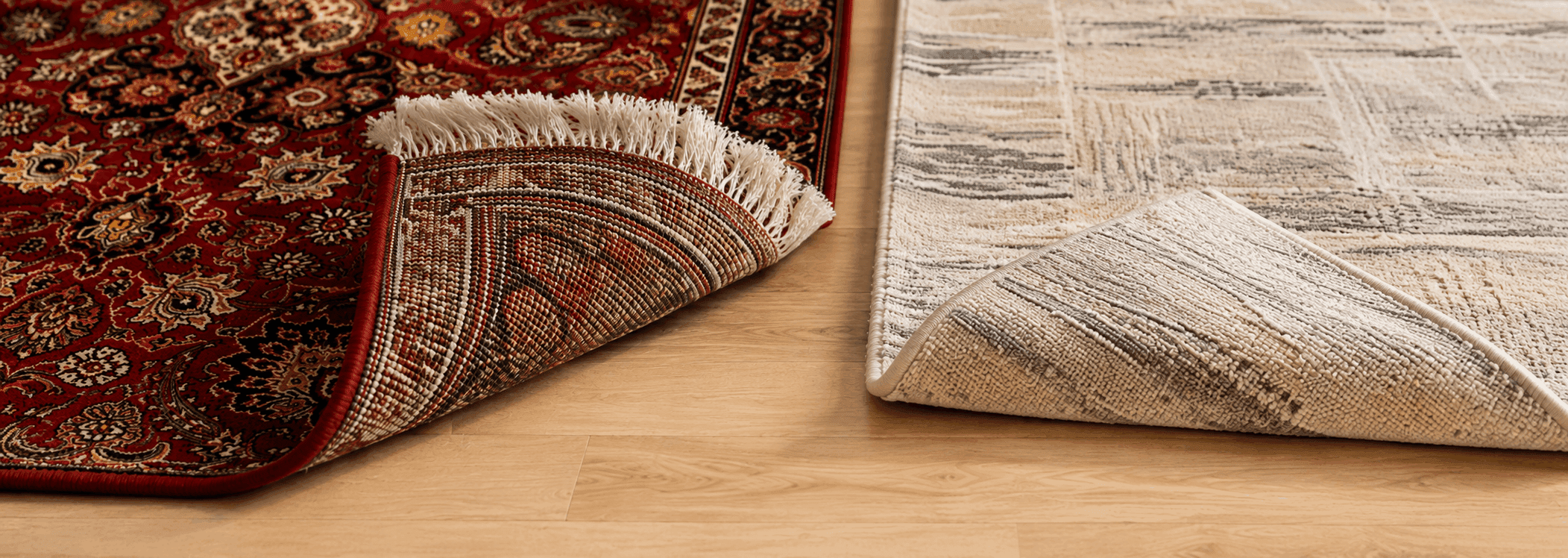
If you want to understand what type of rug you are buying, the back of the rug is often the best place to start.
How to Tell If a Rug Is Hand-Knotted
One of the easiest ways to identify a hand-knotted rug is to turn it over and examine the back.
A genuine hand-knotted rug normally allows you to see the individual knots and the underlying woven foundation.
The pattern may also be visible from the back, although it will usually appear less sharp and less colorful than on the front.
You may notice small variations in the size, shape, and alignment of individual knots. These irregularities are normal in handmade rugs and can actually be evidence of traditional craftsmanship.
A hand-knotted rug typically does not require a thick, uniform glued backing to hold the pile in place.
How to Tell If a Rug Is Hand-Tufted
A hand-tufted rug usually has a different appearance on the back.
You may see a secondary backing made from cotton, canvas, latex, or another material. This backing is applied to help secure the tufts and stabilize the carpet.
If you see a relatively uniform backing covering the reverse side, there is a good chance that the rug is hand-tufted rather than hand-knotted.
Another clue is the construction itself. Instead of visible individual knots, the yarn is inserted through the foundation and held in place by the backing.
When buying a handmade rug, always ask the seller about its construction rather than assuming that every handmade rug is hand-knotted.
Hand-Knotted Rugs and Durability
One of the greatest advantages of a high-quality hand-knotted rug is its durability.
Because the individual knots are integrated into the structure of the carpet, a well-made hand-knotted rug can withstand many years of regular use.
Traditional Persian rugs are particularly well known for their longevity. Some antique Persian carpets are more than a century old and continue to be used, collected, and appreciated today.
Of course, not every hand-knotted rug will last for the same amount of time. The quality of the wool, knot density, foundation, craftsmanship, amount of foot traffic, and maintenance all influence its lifespan.
Nevertheless, when properly cared for, a high-quality hand-knotted rug can become a long-term part of a home and may even be passed down through generations.
Hand-Tufted Rugs and Durability
Hand-tufted rugs can also be durable, especially when they are made from high-quality materials and used in appropriate spaces.
However, they generally do not have the same long-term structural durability as traditional hand-knotted rugs.
The adhesive and backing used in tufted construction can deteriorate over time. Moisture, humidity, heat, and improper cleaning may accelerate this process.
For this reason, hand-tufted rugs are often a good choice for bedrooms, living rooms, offices, and other areas with low to moderate foot traffic.
They can provide an attractive and comfortable surface without the higher cost associated with traditional hand-knotting.
Why Are Hand-Knotted Rugs More Expensive?
The main reason is time and labor.
Imagine creating a large carpet by tying thousands—or even hundreds of thousands—of individual knots by hand. Every knot contributes to the final pattern and structure.
The more detailed and densely knotted a rug is, the longer it can take to produce.
A highly detailed Persian rug may require an enormous amount of skill and patience. This craftsmanship is reflected in its price.
Hand-tufted rugs can be produced significantly faster because the yarn is inserted with a tufting tool rather than individually knotted.
This makes them a more affordable option for buyers who want a handmade appearance without the cost and production time of traditional hand-knotting.
Does a Higher Price Mean Better Quality?
Not necessarily.
A higher price does not automatically mean that one rug is better for every buyer.
Hand-knotted rugs generally offer advantages in terms of longevity, traditional craftsmanship, and structural durability. However, hand-tufted rugs can still be attractive, comfortable, and well made.
The right choice depends on your priorities.
If you want a rug that may become a long-term family piece, traditional hand-knotting is often worth considering.
If you want an attractive rug for a particular interior and have a more limited budget, hand-tufting may be a practical option.
The Importance of Materials
Construction is important, but materials matter too.
High-quality wool is commonly used in traditional Persian rugs because it is naturally resilient, comfortable, and capable of developing a beautiful patina over time.
Some fine Persian carpets also incorporate silk for additional detail and softness.
In a hand-tufted rug, the quality of the yarn and backing materials can have a significant effect on the rug's performance.
When buying a handmade rug, ask about the type of wool or other fibers used, the foundation, the backing, and the construction method.
Understanding these details will help you compare rugs more accurately.
Which One Is Better for a Persian Rug?
If you are specifically searching for an authentic traditional Persian rug, hand-knotted construction is generally what you should look for.
Traditional Persian carpets are famous for their hand-knotting techniques, regional designs, natural materials, and craftsmanship.
A hand-knotted Persian rug is more than a decorative object. It can represent a particular region, weaving tradition, and history.
However, a hand-tufted rug can still be a good choice if your main goal is interior decoration.
For example, if you want a particular Persian-inspired pattern at a more accessible price, a hand-tufted rug may provide the visual style you are looking for.
The important thing is to understand the difference and make sure the product description accurately explains how the rug was made.
Which Rug Is Better for High-Traffic Areas?
If your rug will be placed in a hallway, entrance, dining room, or another area with heavy foot traffic, a high-quality hand-knotted rug is generally the stronger long-term choice.
Its construction is designed to withstand repeated use, and damaged areas can often be repaired by an experienced rug specialist.
A hand-tufted rug may be more appropriate for a bedroom, sitting area, office, or another location where traffic is moderate.
The specific quality of the rug still matters, so construction should always be considered together with materials and craftsmanship.

Cleaning and Maintenance
Both hand-knotted and hand-tufted rugs require proper care.
For either type, regular vacuuming can help remove dust and dirt before they become deeply embedded in the fibers.
However, hand-tufted rugs require particular care around moisture because water can affect the adhesive or backing.
Avoid soaking a rug unless you know exactly how it was constructed and whether it can safely be wet-cleaned.
For valuable Persian rugs, antique carpets, or rugs with delicate natural dyes, professional cleaning is usually the safest option.
It is also important to protect handmade rugs from prolonged direct sunlight and excessive humidity.
Are Hand-Tufted Rugs Low Quality?
No.
Being hand-tufted does not automatically mean that a rug is poorly made.
A high-quality hand-tufted rug can be soft, attractive, comfortable, and suitable for many interiors.
The important distinction is that hand-tufted and hand-knotted describe different construction methods.
A hand-tufted rug is usually selected for affordability, design flexibility, and comfort, while a hand-knotted rug is often chosen for traditional craftsmanship, durability, longevity, and—in some cases—collectability.
Knowing the difference allows you to judge a rug according to what you actually need rather than simply assuming that one construction is always superior.
Hand-Knotted vs. Hand-Tufted: Which Should You Choose?
Choose a hand-knotted rug if:
- You want a traditional Persian or Oriental rug.
- You value traditional craftsmanship.
- You want a rug designed to last for decades.
- You appreciate natural materials and traditional weaving techniques.
- You are looking for a potential family heirloom.
- Long-term durability is important to you.
Choose a hand-tufted rug if:
- You have a more limited budget.
- You want a decorative handmade rug.
- You want a particular design at a lower price.
- You need a rug relatively quickly.
- The rug will be placed in a low- or moderate-traffic area.
Hand-Knotted Persian Rugs at RugEast
At RugEast, we believe that understanding how a rug is made is just as important as choosing its color, size, or pattern.
Traditional Persian handmade rugs represent generations of knowledge and craftsmanship. Every region has its own weaving traditions, patterns, materials, and visual characteristics.
When choosing a handmade rug, we recommend paying attention to its construction, materials, origin, dimensions, condition, and care requirements.
Whether you are looking for a traditional Persian carpet or a distinctive handmade rug for your home, understanding the difference between hand-knotted and hand-tufted construction can help you make a more informed purchase.
Final Thoughts
The difference between hand-knotted and hand-tufted rugs comes down primarily to how they are constructed.
Hand-knotted rugs are created by individually tying knots by hand. This traditional method requires significantly more time and labor, but it can produce exceptionally durable carpets that may last for generations.
Hand-tufted rugs are created by pushing yarn through a foundation and securing it with a backing. This process is faster and generally more affordable, making tufted rugs a popular choice for decorative interiors.
Neither type is automatically the right choice for every home.
If you want a traditional Persian rug with exceptional craftsmanship and long-term durability, a hand-knotted rug is usually the better option.
If affordability, design, and a handmade appearance are your main priorities, a hand-tufted rug can be an excellent alternative.
Before you buy, always look beyond the appearance of the rug and learn how it was actually made.
Because the beauty of a handmade rug is only one part of its story—the craftsmanship underneath is what makes it truly special.
Frequently Asked Questions
1) What is the difference between hand-knotted and hand-tufted rugs?
A hand-knotted rug is made by individually tying knots around the foundation threads. A hand-tufted rug is made by pushing yarn through a foundation with a tufting tool and securing it with a backing.
2) Are hand-knotted rugs better than hand-tufted rugs?
Not necessarily for every situation. Hand-knotted rugs are generally more durable and long-lasting, while hand-tufted rugs are usually more affordable and can be an excellent decorative option.
3) How can I tell if a rug is hand-knotted?
Turn the rug over and examine the back. A hand-knotted rug normally shows individual knots and its woven foundation rather than a thick, uniform backing.
4) Do hand-tufted rugs use glue?
Most hand-tufted rugs use some form of adhesive or latex backing to secure the yarn and stabilize the rug.
5) How long does a hand-knotted rug last?
A high-quality hand-knotted rug can last for decades and, with proper care, may remain in use for generations.