
How to Tell the Age of a Persian Rug
How old is your Persian rug? It is one of the first questions collectors, interior designers, and rug enthusiasts ask when they discover a beautiful handmade carpet.
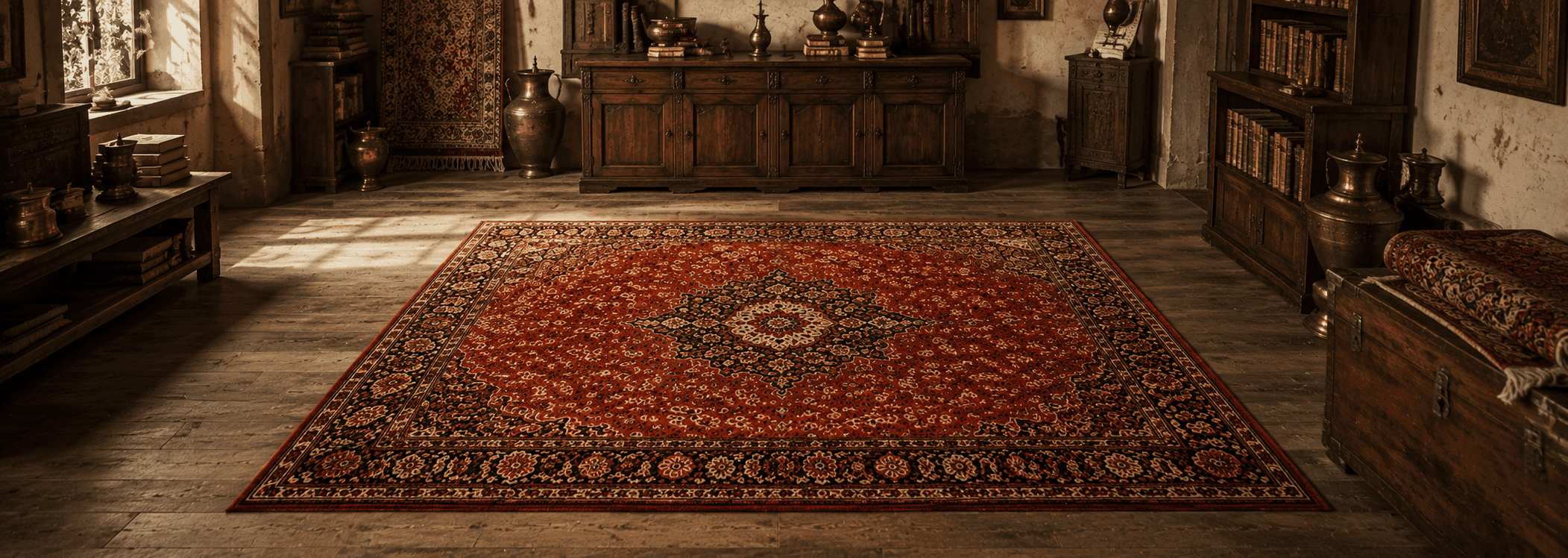
How old is your Persian rug? It is one of the first questions collectors, interior designers, and rug enthusiasts ask when they discover a beautiful handmade carpet. Unlike modern mass-produced rugs, a Persian rug can carry decades—or even more than a century—of history in its fibers, colors, weaving techniques, and design.
However, determining the exact age of a Persian rug is not always simple. There is usually no label or manufacturing date attached to an antique carpet. Instead, experts examine a combination of clues, including the rug's construction, materials, colors, patterns, condition, and signs of natural aging.
Whether you own an inherited Persian rug, are considering purchasing a vintage carpet, or simply want to understand more about your handmade rug, learning how to date it can help you appreciate its history and value.
What Is the Difference Between an Antique and a Vintage Persian Rug?
Before learning how to determine a rug's age, it is important to understand the terminology.
In the rug trade, an antique Persian rug generally refers to a carpet that is at least 100 years old. A rug that is approximately 50 to 100 years old is commonly described as vintage, although terminology can vary among dealers and collectors.
For example, a Persian rug made in the early 1900s may now qualify as antique, while a rug woven during the 1960s or 1970s would generally be considered vintage.
Age alone, however, does not determine whether a rug is valuable. A well-preserved handmade rug with high-quality wool, attractive natural dyes, and excellent craftsmanship can be more desirable than an older rug in poor condition.
1. Examine the Rug's Weaving Technique
One of the most useful ways to estimate the age of a Persian rug is to examine how it was constructed.
Traditional Persian rugs are handmade using techniques that have been passed down through generations. The type of knot, the density of the weave, and the structure of the foundation can provide important clues.
Persian rugs may use asymmetrical Persian knots, also known as Senneh knots, while some regions also use symmetrical Turkish or Ghiordes knots.
The weave itself can also reveal information about the rug's origin and period. Older handmade carpets often show subtle irregularities because they were woven entirely by hand. These irregularities are not necessarily defects; they can be evidence of individual craftsmanship.
When examining an older carpet, look at the back of the rug. The pattern should generally be visible from the reverse side, and the knots can often be inspected more easily there.
2. Look at the Wool and Other Natural Fibers
The materials used in a Persian rug can also help estimate its age.
Historically, high-quality wool was one of the most important materials used in Persian carpet weaving. Good wool can develop a beautiful, soft patina over many years of use.
Older rugs may also contain cotton foundations, while some traditional carpets use wool for both the pile and foundation. Silk may appear in finer Persian rugs, particularly in detailed designs.
The condition of the wool matters as well. Natural aging can produce changes in texture and sheen, particularly in areas that have experienced years of foot traffic.
However, worn wool does not automatically mean that a rug is antique. Artificial aging techniques can sometimes make newer rugs appear older, which is why material analysis should be combined with other clues.
3. Study the Colors and Dyes
Color is another important clue when dating Persian rugs.
Traditional Persian rug makers used natural dyes derived from plants, insects, minerals, and other natural sources. Examples include indigo for blue tones, madder root for reds, and various natural materials for yellow and brown shades.
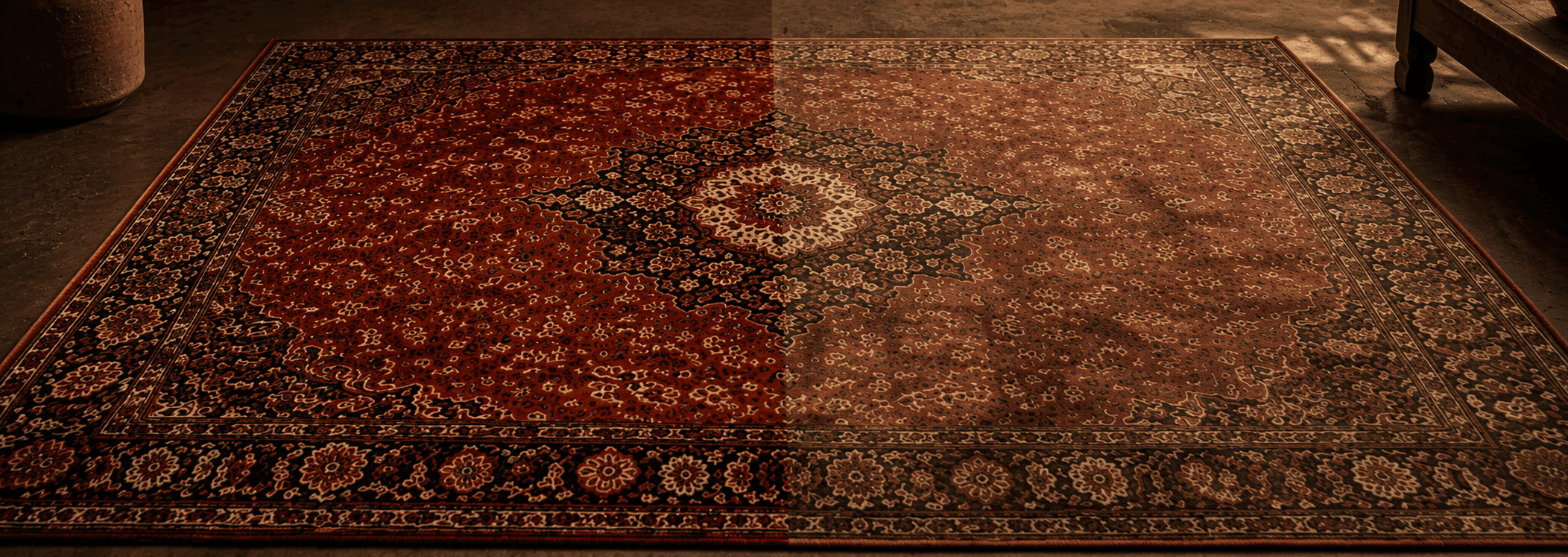
Natural dyes often age beautifully. Instead of fading uniformly, they can develop subtle variations known as abrash. Abrash appears as changes in color across sections of a rug and can result from changes in dye batches or wool during the weaving process.
This variation can be a characteristic feature of older handmade carpets.
Modern synthetic dyes became increasingly common during the twentieth century. Therefore, the type and behavior of the dyes can provide useful clues about when a rug may have been produced.
Nevertheless, dye analysis should not be used alone to determine age because synthetic dyes have been used in Persian rugs for many decades.
4. Examine the Design and Pattern
The design of a Persian rug can provide another valuable clue.
Different Persian rug-producing regions are known for distinctive patterns, colors, and motifs. Rugs from Tabriz, Isfahan, Kashan, Heriz, Kerman, Qom, Bakhtiari, and other weaving regions can have recognizable characteristics.
Certain motifs and compositions were especially popular during particular periods.
For example, floral medallions, hunting scenes, garden designs, geometric patterns, and repeating boteh motifs can all provide information about the rug's cultural and historical background.
The design can sometimes help identify where a rug was made before helping determine when it was made.
This is important because knowing the rug's origin can significantly narrow down the possible production period.
5. Check the Condition and Signs of Natural Wear
An old Persian rug should normally show some evidence of its history.
Areas that receive frequent foot traffic may become thinner over time. The pile may become lower, and the wool may develop a smooth, polished appearance.
The edges and fringes can also provide clues. Original fringes may become worn, shortened, or uneven with age. The sides of a rug can also show signs of repairs or restoration.
However, wear should be interpreted carefully.
A rug that looks extremely old is not necessarily antique. Some rugs are deliberately washed, distressed, or otherwise treated to create an aged appearance.
For this reason, genuine age is best established by looking at multiple characteristics together rather than relying on appearance alone.
6. Inspect the Back of the Rug
One of the easiest things you can do at home is turn the rug over.
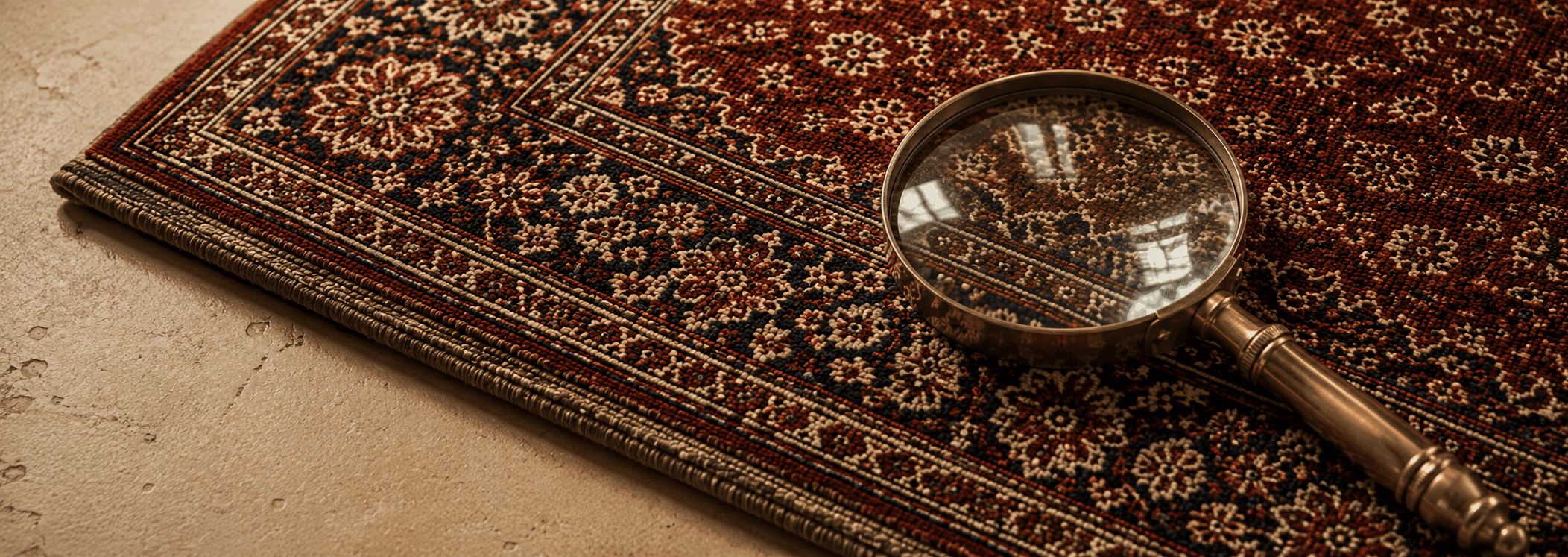
The reverse side can reveal details that are difficult to see from the front. You can examine the knots, weave, foundation, and consistency of the construction.
A handmade Persian rug generally has a construction that reflects the individual work of the weaver. Small variations in knot size and alignment can be visible.
Machine-made carpets usually have a much more uniform construction.
The back of the rug can therefore help answer an important first question: Is this carpet genuinely handmade?
Once you establish that it is handmade, examining the construction in greater detail can help estimate its age and regional origin.
7. Look for Repairs and Restoration
Restoration is extremely common in older Persian rugs.
A valuable antique carpet may have been repaired several times during its lifetime. Previous owners may have replaced damaged sections, repaired the edges, reattached fringes, or restored worn areas.
Repairs do not necessarily reduce the historical importance of a rug. In fact, they can be evidence that the carpet has been used and preserved for generations.
However, extensive restoration can make dating more difficult.
For example, a section of the pile may have been replaced with newer wool, making one part of the rug appear significantly younger than the rest.
Always distinguish between the age of the rug and the age of individual repaired components.
8. Consider the Rug's Provenance
Perhaps the strongest evidence of a rug's age is its provenance—the documented history of where it came from.
If a Persian rug has been passed down through several generations, old photographs, purchase receipts, family records, auction documentation, or previous appraisal documents can provide valuable evidence.
For example, if a rug was photographed in a family home in the 1950s, it must obviously have been made before that photograph was taken.
Provenance becomes particularly important when dealing with valuable antique Persian rugs.
If you are purchasing an expensive antique carpet, ask the seller whether they can provide information about its origin, previous ownership, or previous appraisal.
9. Identify the Region or Village
Dating a Persian rug becomes easier when you know where it was woven.
Persian carpets are produced in many regions, cities, and villages, each with its own weaving traditions.
Tabriz rugs, for example, are often associated with detailed designs and sophisticated city weaving traditions. Heriz rugs are known for bold geometric compositions and strong medallions. Kashan rugs are frequently recognized for elegant floral patterns, while tribal and village rugs can have more geometric and expressive designs.
Bakhtiari rugs, for instance, are associated with the Bakhtiari weaving tradition and can feature distinctive geometric, floral, and garden-inspired motifs.
Regional identification does not automatically provide an exact date, but it can significantly narrow the historical period in which the rug was likely produced.
10. Can You Tell a Persian Rug's Exact Age at Home?
You can make a reasonable estimate, but determining an exact production year is usually much more difficult.
A rug expert may combine:
- Knot and weaving structure
- Wool quality
- Foundation materials
- Dye characteristics
- Pattern and motifs
- Regional weaving style
- Wear and patina
- Repairs
- Provenance
Together, these clues can provide a much more reliable estimate.
If a rug appears to be particularly valuable or genuinely antique, professional evaluation is recommended before making assumptions about its age or market value.
Why Age Matters—but Isn't Everything
It is tempting to assume that the older a Persian rug is, the more valuable it must be.
In reality, age is only one factor.
The value of a handmade Persian rug can depend on its rarity, craftsmanship, condition, materials, dyes, design, size, origin, and cultural significance.
A 150-year-old carpet that has suffered extensive damage may not necessarily be worth more than a beautifully preserved vintage rug made by a highly skilled weaver.
Collectors often look for a combination of age, authenticity, quality, rarity, and condition.
This is why two Persian rugs of similar age can have dramatically different values.
How RugEast Can Help You Discover the Beauty of Persian Handmade Rugs
At RugEast, we believe that every handmade Persian rug has a story.
Our collection focuses on handmade Persian carpets that showcase the craftsmanship, regional traditions, natural materials, and distinctive designs that have made Persian rugs admired around the world.
Whether you are looking for a traditional Persian carpet, a vintage-style rug, or a distinctive handmade piece for your home, understanding the history and craftsmanship behind the carpet can make choosing the right rug much more meaningful.
When buying a handmade rug, don't look only at its age. Look at the quality of the weaving, the wool, the colors, the design, and the character that makes the piece unique.
A Persian rug is not simply a floor covering. It can be a piece of craftsmanship, culture, and history that remains in a home for generations.
Final Thoughts
Dating a Persian rug is part science, part history, and part craftsmanship.
The weaving technique, wool, dyes, pattern, regional characteristics, condition, repairs, and provenance can all provide clues about when a rug was made. No single characteristic can always give you an exact date, but examining several clues together can create a much clearer picture.
If you own a Persian rug and want to understand its history, start by turning it over and examining the construction. Then look closely at the colors, motifs, wool, fringes, and signs of wear.
And remember: the age of a Persian rug is only one part of its story. Its craftsmanship, authenticity, origin, and condition are equally important.
Frequently Asked Questions
1) How can I tell how old my Persian rug is?
Examine its weaving technique, knots, wool, dyes, design, wear, repairs, and provenance. For valuable rugs, a professional appraisal can provide a more reliable age estimate.
2) What is considered an antique Persian rug?
An antique Persian rug is generally considered to be at least 100 years old. Rugs between approximately 50 and 100 years old are often described as vintage.
3) Can you tell the age of a Persian rug by its color?
Color can provide clues, especially when examining natural dyes and aging patterns, but color alone cannot accurately determine a rug's age.
4) Does a Persian rug have a date on it?
Most traditional handmade Persian rugs do not have a production date. Some may contain inscriptions, signatures, or other information that can help with identification, but these do not always indicate the exact year of manufacture.
5) Are old Persian rugs always valuable?
No. Age is only one factor affecting value. Condition, rarity, craftsmanship, origin, materials, design, and authenticity can be equally or more important.
6) How can I tell if my Persian rug is handmade?
Turn the rug over and examine the knots and weave. Handmade rugs typically show individual variations in knot size and alignment, while machine-made carpets tend to have highly uniform construction.
7) Do repairs mean a Persian rug is not antique?
No. Many genuine antique Persian rugs have been repaired or restored during their lifetime. Repairs can actually be evidence of long-term use and preservation.
8) What is the difference between vintage and antique Persian rugs?
Generally, antique rugs are at least 100 years old, while vintage rugs are usually around 50–100 years old. These definitions can vary somewhat depending on the rug trade and seller.