
The meaning of various colors in Persian and Oriental carpets
Explore the colors of Iranian carpets, from traditional madder and indigo dyes to modern synthetic options. Learn how regional palettes, room lighting, color combinations, dye quality, and symbolic meanings shape a rug’s true beauty, atmosphere, character, and value without relying on rigid rules.
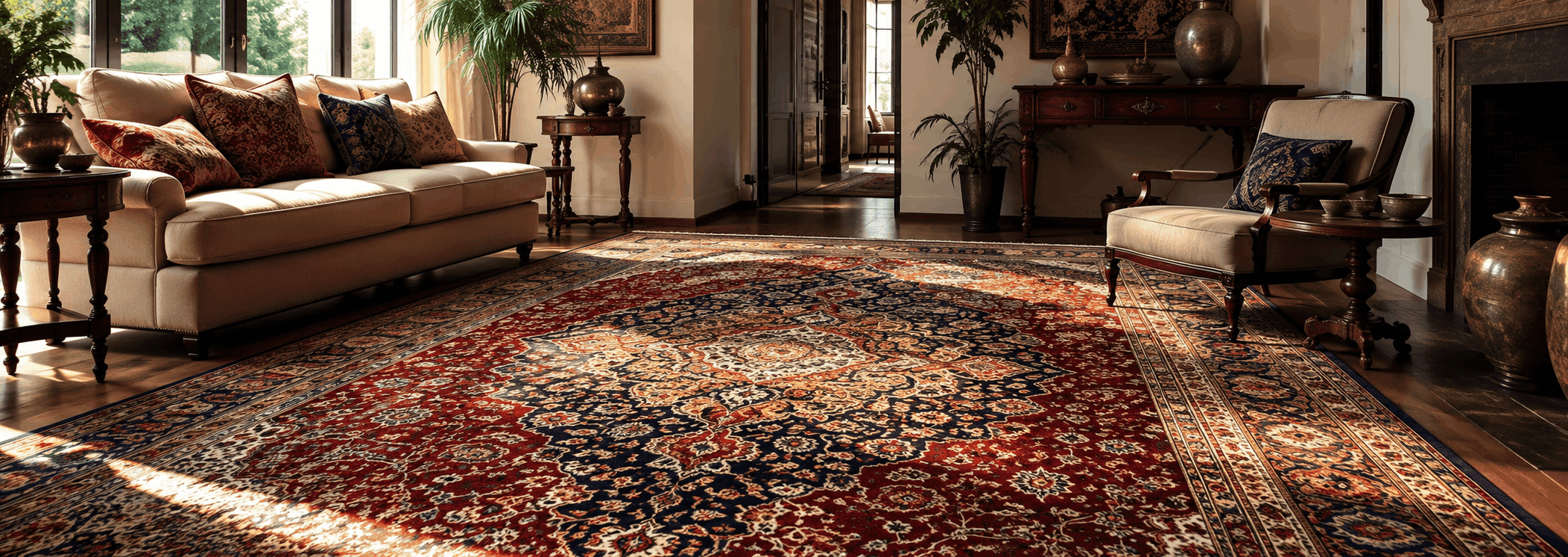
Color is one of the most important considerations when choosing a carpet. It affects the appearance and atmosphere of a room and can influence how spacious, warm, calm, or energetic the interior feels.
Iranian handwoven carpets are produced in a remarkable variety of colors and patterns. Their palettes reflect the materials available to dyers, regional weaving traditions, artistic preferences, and the individual creativity of their makers.
Traditional Carpet Dyeing
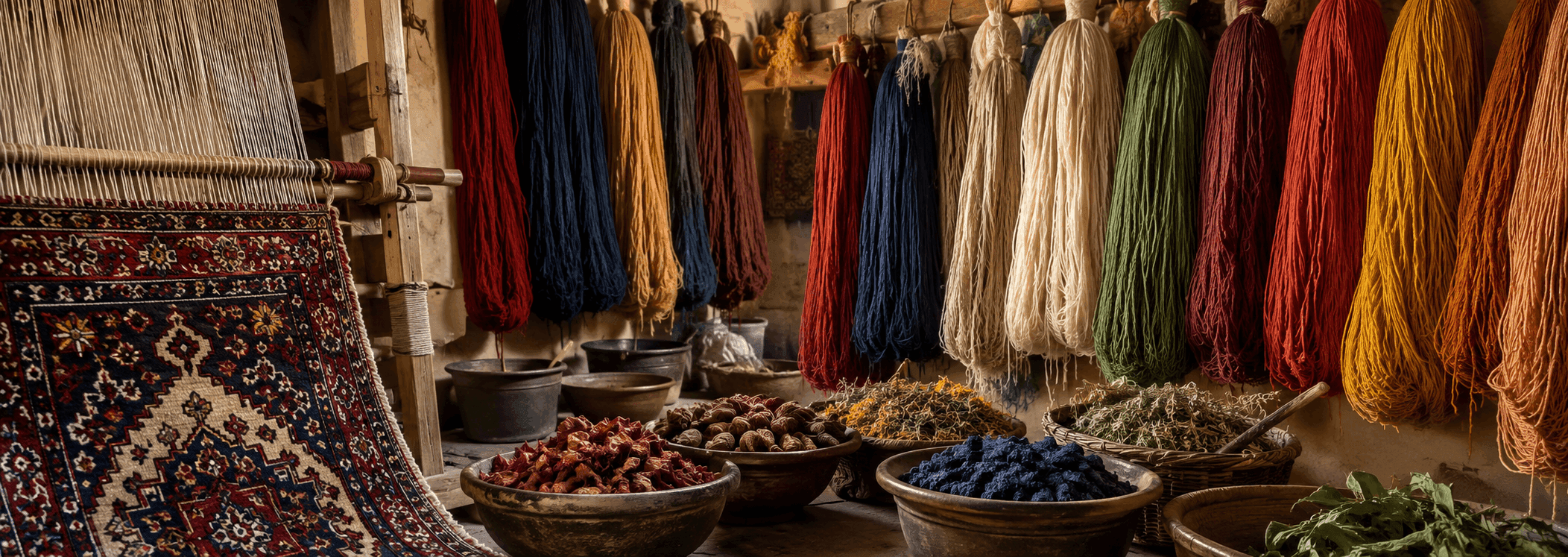
The wool used in a handwoven carpet is generally dyed before it is given to the weaver. Traditionally, skilled dyers produced colors from plants, insects, minerals, and other natural materials.
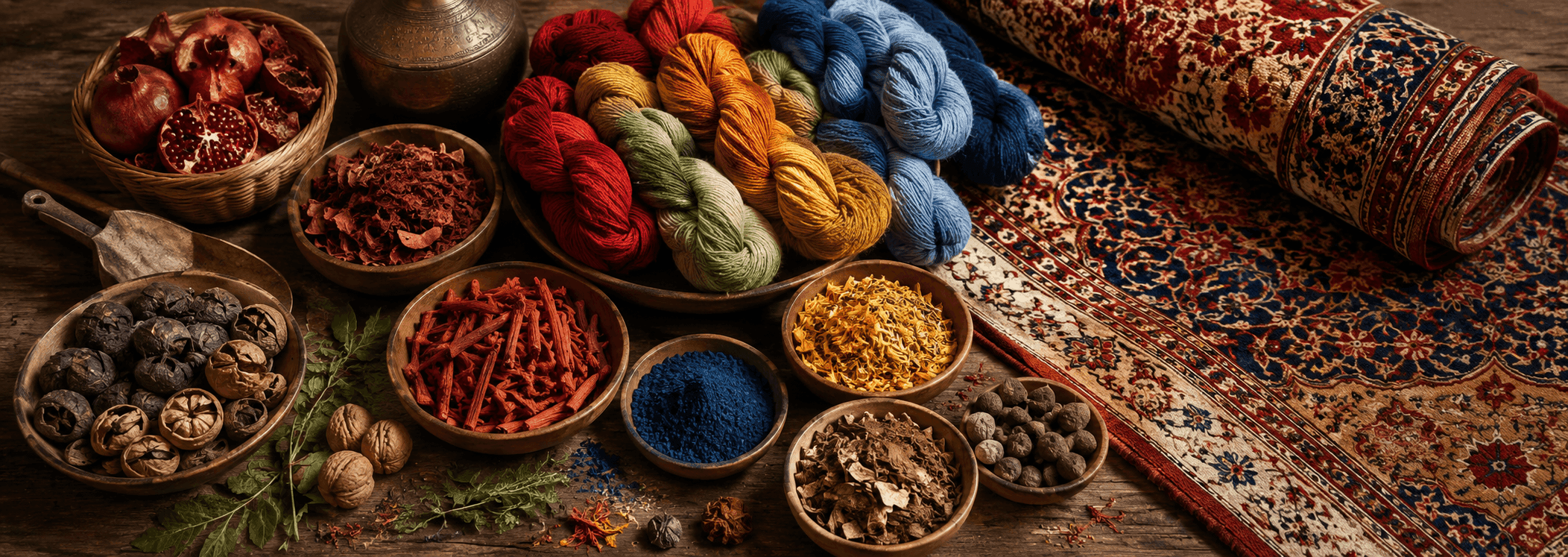
Madder root was an especially important source of reds, ranging from soft pink to deep crimson. Indigo produced shades of blue, while materials such as pomegranate peel, walnut husks, oak bark, and vine leaves created yellows, browns, and other earthy tones.
Before modern transportation and standardized production, dyers often relied on locally available materials. Consequently, the shades found in a carpet could reflect the plants, water, recipes, and dyeing traditions of its place of origin.
Many contemporary Iranian carpets still use naturally dyed wool, although synthetic dyes are also common. The term “natural dye” does not automatically guarantee superior quality; the dyer’s skill, the stability of the color, and the quality of the fiber are equally important.
Read more: Choosing a carpet for a child’s room
Common Colors in Authentic Iranian Carpets
Iranian carpets are known for rich, balanced color combinations. Frequently encountered shades include:
- Deep red and crimson
- Navy and lapis-inspired blue
- Ivory and cream
- Walnut and chestnut brown
- Gold and ochre
- Green
- Rose and salmon
- Black and dark brown
- Natural earth tones
The palette varies considerably by weaving region, tribe, workshop, age, and design. Some carpets contain only a few bold colors, while finely detailed examples may incorporate numerous carefully graded shades.
Choosing Carpet Colors for a Room
A carpet’s colors should complement the room’s size, lighting, furniture, and intended atmosphere.
Neutral shades, muted greens, and soft blues can create a calm environment and may suit bedrooms, offices, and reading areas. Strong reds, oranges, and contrasting colors can bring warmth and energy to living rooms, dining areas, and playrooms.
Lighter carpets may make a compact or dimly lit room feel more open. Darker colors can create intimacy and visual depth but may make a small space appear more enclosed.
These effects are not universal. Natural and artificial lighting, surrounding wall colors, and personal preferences all influence how a carpet appears in an interior.
Color Preferences and Cultural Influences
Ideas about attractive color combinations differ among individuals and markets. Some buyers prefer carpets with light grounds and restrained palettes, such as certain Nain, Kashan, and Isfahan designs. Others favor the strong red fields associated with many carpets from Kashan, Tabriz, Heriz, and tribal weaving traditions.
These preferences should not be treated as fixed cultural rules. Contemporary buyers throughout the world select both subtle and vibrant carpets according to their tastes and interior-design needs.
Natural and Synthetic Dyes
Synthetic Dyes
Synthetic dyes became increasingly important in carpet production because they can offer:
- Faster and more consistent dyeing
- A broad range of colors
- Easier large-scale production
- Lower manufacturing costs
- Predictable color matching
Their quality varies. Poorly prepared synthetic dyes may fade, bleed, or appear excessively harsh, while high-quality modern dyes can be stable, attractive, and durable.
Natural Dyes
Natural dyes are derived primarily from plants and, less commonly, insects or mineral-related substances. They are often valued for their subtle variations and the way their colors can develop over time.
Producing reliable natural colors requires considerable knowledge. The final result depends on the dye material, water, fiber, mordant, temperature, and length of the dyeing process.
Naturally dyed carpets are not necessarily rare, but carefully documented examples made with high-quality materials and skilled workmanship may command higher prices.
Traditional Dye Sources
The exact color produced by a natural material varies according to the recipe and dyeing conditions.
Dye source
Typical color range
Madder root
Red, rust, coral, or pink
Indigo
Light blue to deep navy
Pomegranate peel
Yellow, gold, tan, or brown
Walnut husks
Brown
Oak bark or galls
Tan, brown, grey, or near-black
Saffron and other yellow-producing plants
Yellow or gold
Vine leaves and other plant matter
Yellow, greenish, or brown tones
Insect dyes such as cochineal or lac
Crimson, red, or purple-red
Green was commonly produced through layered or combined dyeing—for example, applying a yellow dye and indigo—rather than simply extracting green from one plant. Turmeric produces yellow, while mulberry materials may yield yellowish or brownish shades depending on the part used and the process.
Does the Number of Colors Determine a Carpet’s Value?
Some exceptionally detailed carpets contain dozens or even hundreds of distinguishable shades. Producing such complex palettes can require advanced dyeing knowledge, careful planning, and considerable weaving skill.
Nevertheless, more colors do not automatically make a carpet more valuable. Its value also depends on:
- Age and condition
- Materials and dye quality
- Origin and provenance
- Knotting and construction
- Design quality
- Rarity
- Workshop or weaver
- Market demand
- Quality of any repairs
A carpet with a limited but harmonious palette may be more artistically or commercially valuable than one containing many poorly coordinated colors.
Symbolic Meanings of Carpet Colors
Colors in Iranian carpets are sometimes associated with particular ideas or emotions. Common interpretations include:
Color
Common associations
Red
Joy, courage, vitality, beauty, and good fortune
Green
Paradise, holiness, spring, and renewal
Brown
Earth, fertility, and productivity
Yellow or gold
Light, power, wealth, and grandeur
Blue
Trust, spirituality, calmness, and protection
Orange
Warmth, humility, or devotion
White
Purity, peace, and cleanliness
Black
Mystery, strength, mourning, or protection
These meanings are interpretive rather than universal. The significance of a color can vary according to the carpet’s region, period, design, religious context, and weaving community. Dark colors may also be used simply to outline motifs or create contrast rather than convey a symbolic message.
Conclusion
Color gives an Iranian carpet much of its visual and emotional character. Traditional dyers created remarkable palettes from madder, indigo, pomegranate peel, walnut husks, oak materials, and numerous other sources. Synthetic dyes later expanded the available range and made consistent production easier.
When choosing a carpet, consider not only individual colors but also their balance, the room’s lighting, the surrounding décor, and the quality of the dyeing. Symbolic interpretations can enrich appreciation of a carpet, but they should always be understood within the piece’s specific historical and regional context.
FAQs
1. What natural dyes are traditionally used in Iranian carpets?
Common sources include madder root for reds, indigo for blues, and pomegranate peel, walnut husks, oak materials, and plant matter for earthy shades.
2. Are natural dyes better than synthetic dyes?
Not automatically. Dye quality depends on the dyer’s expertise, fiber, color stability, ingredients, and production process.
3. Do carpet colors have universal symbolic meanings?
No. Interpretations vary according to the carpet’s region, period, design, religious context, and weaving community.