
Which carpets should we restore?
Learn whether an antique carpet is worth restoring by assessing its age, origin, condition, craftsmanship, rarity, value, and sentimental importance. Explore restoration versus conservation, how repairs affect authenticity, why expert work matters, and how preventive care limits future damage too.
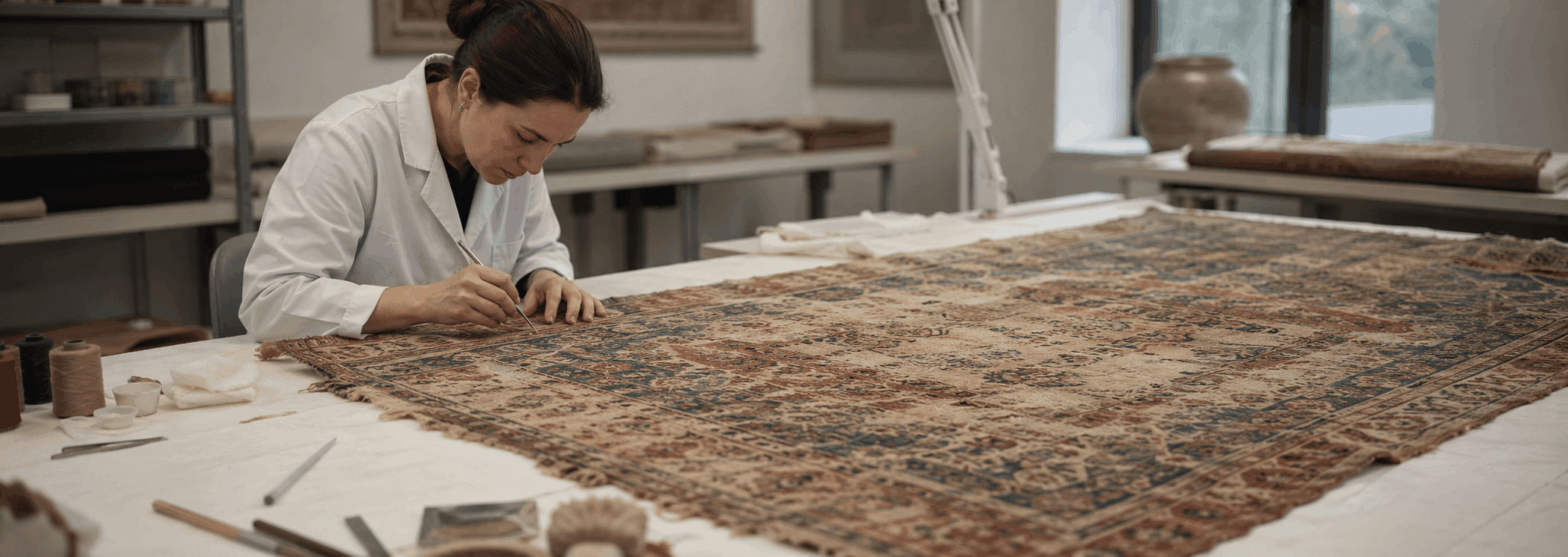
Is an Antique Carpet Worth Restoring?
Deciding whether to restore a damaged carpet involves more than aesthetics. Its age, origin, craftsmanship, condition, market value, sentimental importance, and restoration costs should all be considered.
Professional restoration may preserve or enhance a valuable carpet, while poor-quality repairs can reduce its appearance and value. Before proceeding, have the carpet assessed by a specialist experienced in antique and hand-knotted rugs.
Which Carpets Are Worth Restoring?
Not every carpet justifies the expense of restoration. Modern machine-made carpets generally have limited resale value, so extensive repairs may cost more than replacing them. Restoration may still be worthwhile, however, when a carpet has substantial sentimental value.
Antique and handmade rugs should be evaluated according to factors such as:
- Age and condition
- Place of origin
- Materials and dyes
- Weaving technique
- Knot density and fineness
- Design and color
- Rarity and provenance
- Artistic and historical significance
- Current market demand
- Cost and extent of the required repairs
A professional valuation can help determine whether restoration is economically sensible.
Carpets That May Justify Restoration
Historically Significant Carpets
Rare carpets associated with important periods, such as surviving Safavid-era examples, can possess considerable historical and artistic value. Any treatment of such pieces should be planned with the assistance of a qualified textile conservator.
Rugs by Recognized Workshops or Weavers
Finely woven carpets associated with respected workshops or master weavers—such as Haji Jalili, Mohtasham of Kashan, or Kermani workshops—may command high prices when their attribution and provenance are credible.
A famous name alone does not establish authenticity or value. Attribution should be verified by an experienced appraiser.
Carpets from Renowned Weaving Regions
Carpets from established weaving centers such as Tabriz, Bijar, Kashan, Heriz, and Kerman may be valuable, but origin alone is not enough. Quality, age, rarity, condition, and craftsmanship must also be considered.
Distinctive Tribal, Village, and Kilim Designs
Nomadic and village rugs remain popular among collectors, particularly when they feature unusual compositions, traditional dyes, or well-executed motifs. Kilims and rugs displaying trees, flowers, animals, or Tree of Life designs may also attract interest.
Not every tribal or village rug is expensive, however. Its individual quality and value should be compared with the proposed restoration cost.
How Restoration Can Affect Value
Appropriate restoration can stabilize a weakened carpet, improve its appearance, and prevent further deterioration. It does not automatically increase the carpet’s market value, however. The effect depends on:
- The carpet’s rarity and original condition
- The amount of original material remaining
- The extent of the intervention
- The quality and reversibility of the work
- The expectations of collectors and buyers
For some rare or museum-quality carpets, extensive reconstruction may reduce historical authenticity. Conservative stabilization may therefore be preferable to making the carpet look new.
Before restoring an important piece, obtain opinions from both an independent appraiser and a qualified restorer or textile conservator.
Why Professional Restoration Matters
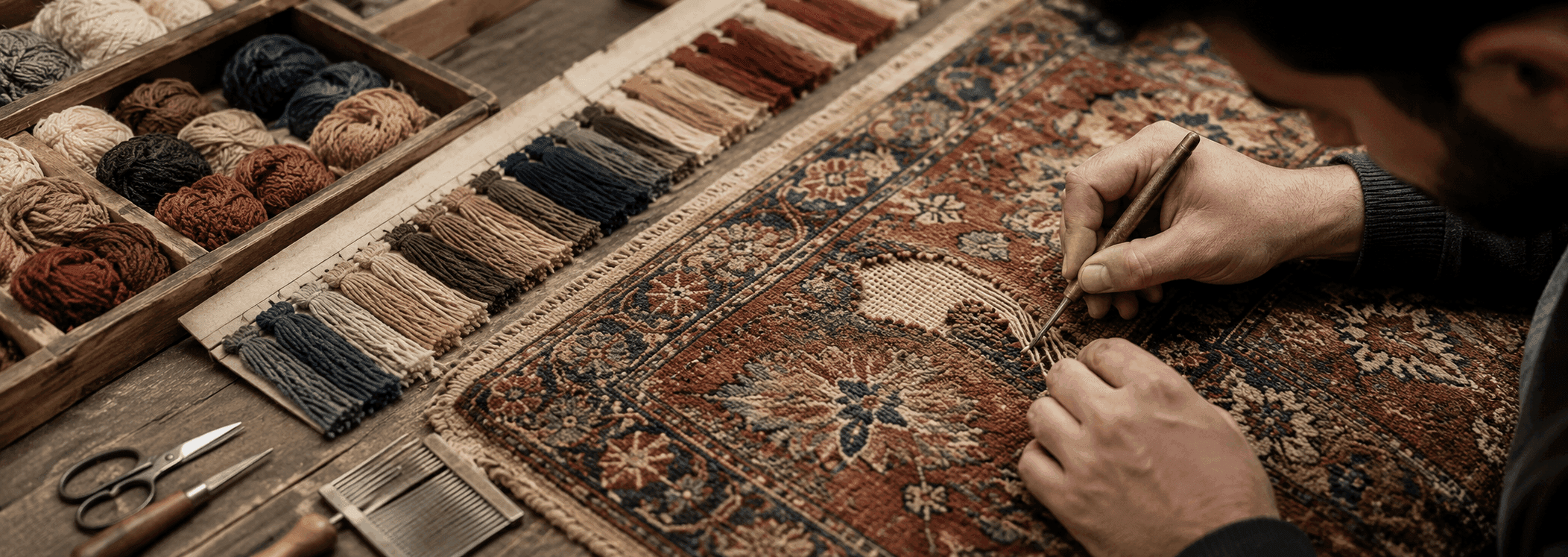
Antique-carpet restoration is not simply a matter of sewing damaged areas together. Depending on the damage, the work may involve:
- Stabilizing weakened foundations
- Rebuilding damaged warps and wefts
- Re-knotting missing pile
- Repairing edges and ends
- Securing fringes
- Correcting previous repairs
- Treating tears, holes, or moth damage
- Reducing distortion where safely possible
Reweaving and knotting should follow the carpet’s original structure as closely as possible. Incorrect materials, visible stitching, unsuitable adhesives, or poorly matched yarn can make a repair conspicuous and diminish the carpet’s value.
Matching Colors and Materials
Matching old yarn precisely is difficult. The original colors may have changed through fading, oxidation, cleaning, wear, or exposure to light.
A skilled restorer considers the carpet’s fiber, dye type, pile direction, texture, and existing color variations. Newly dyed yarn may initially appear brighter, but careful selection and preparation can produce a close visual match.
Any color treatment should be tested cautiously, particularly on antique wool or silk carpets.
Should a Gabbeh Be Restored?
Whether a Gabbeh is worth restoring depends on its age, construction, condition, rarity, quality, and sentimental value. A recently produced Gabbeh with a low resale value may not justify extensive reconstruction, although minor repairs may still prevent further damage.
Older, finely made, or unusual Gabbehs may warrant professional attention. Market value should not be the only consideration: a family piece may deserve repair because of its personal significance.
Restoration Versus Conservation
Restoration and conservation are related but different approaches:
- Restoration attempts to recover aspects of the carpet’s earlier appearance or function.
- Conservation focuses on stabilizing the existing material and slowing further deterioration.
For an extremely rare or historically important carpet, conservation may be preferable. Replacing large sections could obscure evidence of the piece’s age and construction.
Choosing a Carpet Restorer
The person you select can directly affect the carpet’s appearance, durability, and value. Before authorizing work:
- Request a written condition assessment.
- Ask which areas will be repaired or replaced.
- Discuss conservative and extensive treatment options.
- Request photographs of comparable work.
- Confirm the proposed materials and techniques.
- Ask whether the treatment can be reversed.
- Obtain an itemized estimate and expected completion date.
- Clarify insurance and responsibility for loss or damage.
- Seek an independent valuation for an important carpet.
- Document the carpet with detailed photographs before treatment.
Be cautious of anyone who promises to make an antique carpet look completely new without discussing how extensive reconstruction could affect its authenticity and value.
Maintenance and Preventive Care
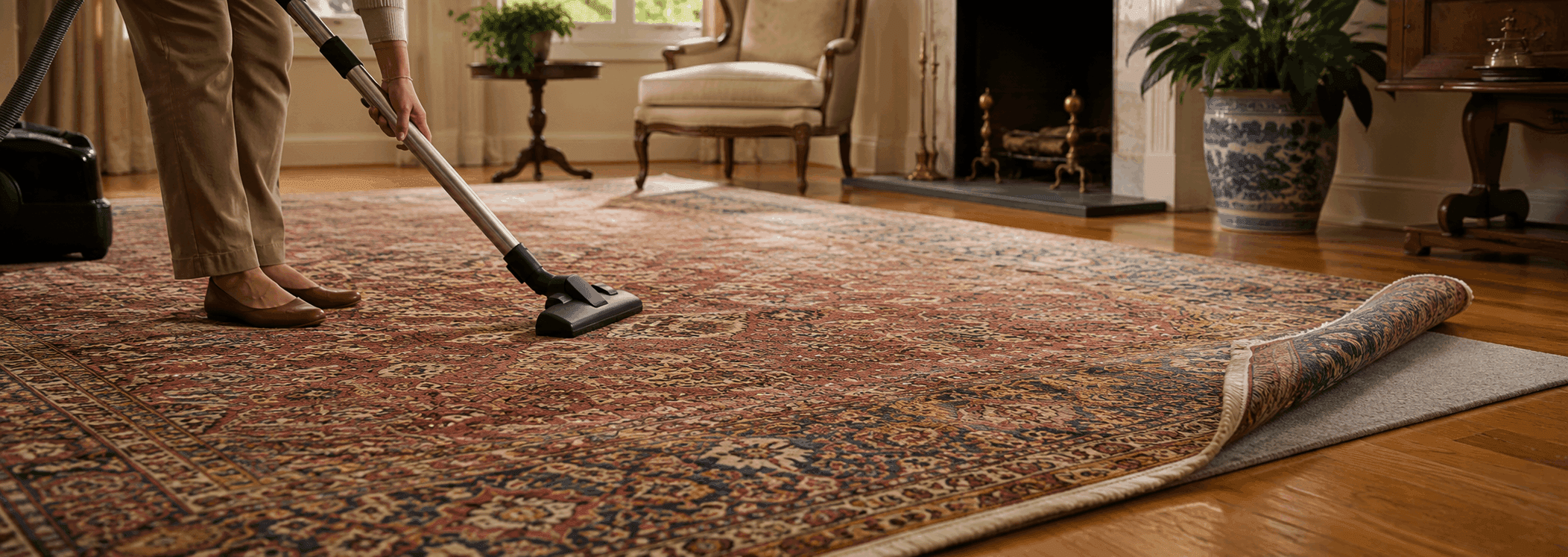
Good maintenance can reduce the need for expensive repairs. To protect a handmade or antique carpet:
- Vacuum it gently and regularly.
- Rotate it periodically to distribute wear.
- Use an appropriate rug pad.
- Protect it from prolonged direct sunlight.
- Address spills promptly without saturating the fibers.
- Keep it away from persistent dampness.
- Inspect it for moth or carpet-beetle activity.
- Arrange professional cleaning when necessary.
- Repair loose edges, open seams, and damaged fringes promptly.
Delaying a small repair can allow the damage to spread and make treatment more complicated and expensive.
Can Carpet Repairs Be Done at Home?
Minor maintenance may be possible for someone with the appropriate knowledge, but inexperienced repairs can cause irreversible damage.
Operations such as fringe reconstruction, edge overcasting, re-knotting, reweaving, straightening, and treating distortion should generally be entrusted to a trained professional. Household adhesives, unsuitable thread, aggressive cleaning products, and ordinary sewing techniques should not be used on valuable antique carpets.
Key Points
- Almost any carpet can be repaired technically, but not every repair is economically or historically appropriate.
- Do not discard an old or damaged handmade carpet before obtaining a professional assessment.
- Compare the carpet’s financial and sentimental value with the restoration cost.
- High-quality restoration may preserve a carpet, while poor work can reduce its value.
- Rare pieces may benefit more from conservative stabilization than extensive reconstruction.
- Prompt maintenance can prevent minor damage from becoming severe.
- Valuable carpets should be handled only by specialists experienced in antique textiles.
Conclusion
Antique-carpet restoration aims to preserve a rug’s beauty, structure, and cultural significance. When performed skillfully, it can make a damaged carpet stable, attractive, and usable again. Nevertheless, the appropriate treatment depends on the individual piece.
Before deciding, consider the carpet’s history, construction, condition, market value, sentimental importance, and the cost of treatment. A careful assessment by qualified professionals offers the best chance of preserving a rare and beautiful textile for future generations.
FAQs
1. How do I know whether an antique carpet is worth restoring?
Consider its age, origin, condition, rarity, craftsmanship, market value, sentimental importance, and estimated restoration cost.
2. Can restoration increase an antique carpet’s value?
Expert restoration may stabilize and improve a valuable carpet, but extensive or poor-quality repairs can diminish its authenticity and market value.
3. What is the difference between restoration and conservation?
Restoration aims to recover a carpet’s earlier appearance or function, while conservation focuses on stabilizing original materials and preventing further deterioration.