
Why Handwoven Rugs Are a Smart Investment and a Sustainable Choice for Your Future
Handwoven rugs can offer lasting beauty, durability, repairability and potential resale value. Their worth depends on craftsmanship, materials, origin, rarity, condition and demand, so appreciation is never guaranteed. Buyers should prioritize quality, suitability, documentation and proper upkeep.
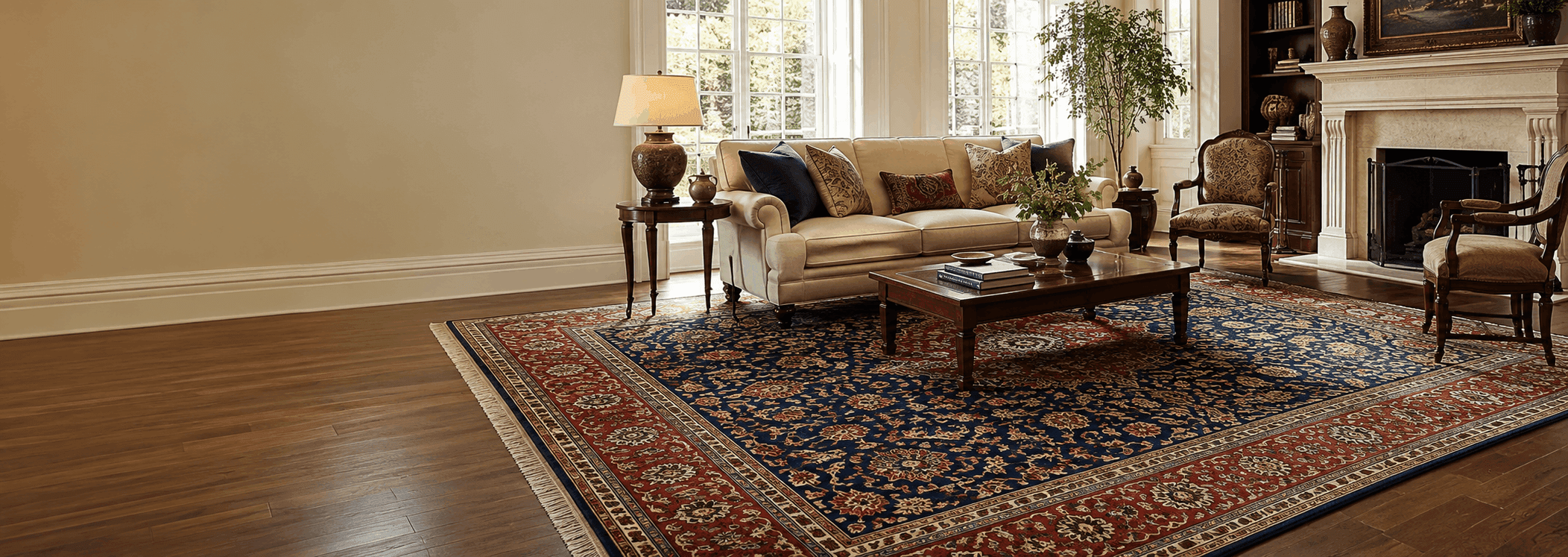
Rugs have long played an important role in Iranian interiors. Beyond their practical function, handwoven rugs embody artistic skill, regional identity, and cultural heritage.
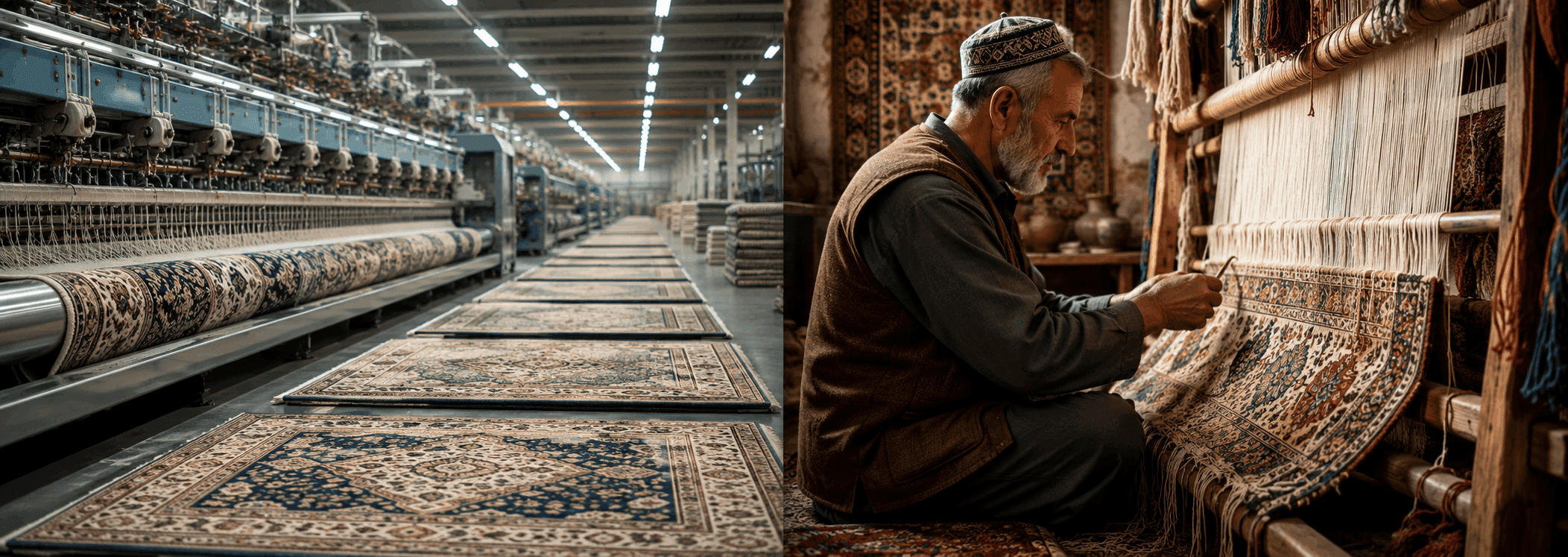
Machine-made rugs are generally more affordable, whereas handwoven rugs can require a substantial initial investment. Price, however, is only one consideration. Durability, craftsmanship, materials, condition, maintenance requirements, and potential resale value all affect a rug’s long-term worth.
Handwoven and Machine-Made Rugs: The Main Differences
Machine-Made Rugs
- Automated production: Power looms can manufacture rugs rapidly and consistently.
- Varied materials: Machine-made rugs commonly use acrylic, polyester, polypropylene, nylon, wool, or fiber blends.
- Standardized designs: Digital patterns can be reproduced in large quantities.
- Predictable appearance: Uniform dimensions, colors, and construction make matching rugs easier.
- Lower initial cost: Mass production generally makes these rugs more affordable.
Machine-made rugs can be practical and durable, particularly in busy households. Their principal limitation as investments is that most are mass-produced and have little resale or collectible value.
Handwoven Rugs
- Manual craftsmanship: Weavers form the rug by hand, often over several months or longer.
- Traditional materials: Many examples use wool, cotton, silk, or combinations of these materials.
- Individual character: Small variations in drawing, knotting, and color distinguish one rug from another.
- Regional identity: Construction and design may reflect traditions associated with particular cities, villages, or weaving communities.
- Limited production: Even rugs based on the same design are rarely completely identical.
Not every handmade rug uses natural dyes, and handmade construction alone does not guarantee high quality. Materials, weave, design, finishing, condition, and the weaver’s skill must all be considered.
From Floor Covering to Collectible Object
Potential for Long-Term Value
Some handmade rugs preserve their value and may appreciate, particularly when they possess artistic quality, rarity, documented origin, historical importance, or excellent condition.
Appreciation is not guaranteed, however. Fashion, provenance, repairs, market demand, size, age, and condition can all influence resale value. A handwoven rug should therefore be purchased first because it is well made and suitable for the owner—not on the assumption that it will produce a financial return.
A Specialist Resale Market
Authentic handmade rugs have an established market involving collectors, dealers, auction houses, and private buyers. Machine-made rugs usually have much weaker resale prospects because identical or similar examples remain readily available.
A rug’s likely resale value depends on factors including:
- Origin and attribution
- Materials and construction
- Age and rarity
- Artistic quality
- Dimensions
- Color and design
- Repairs and alterations
- Overall condition
- Provenance or documentation
Options at Different Prices
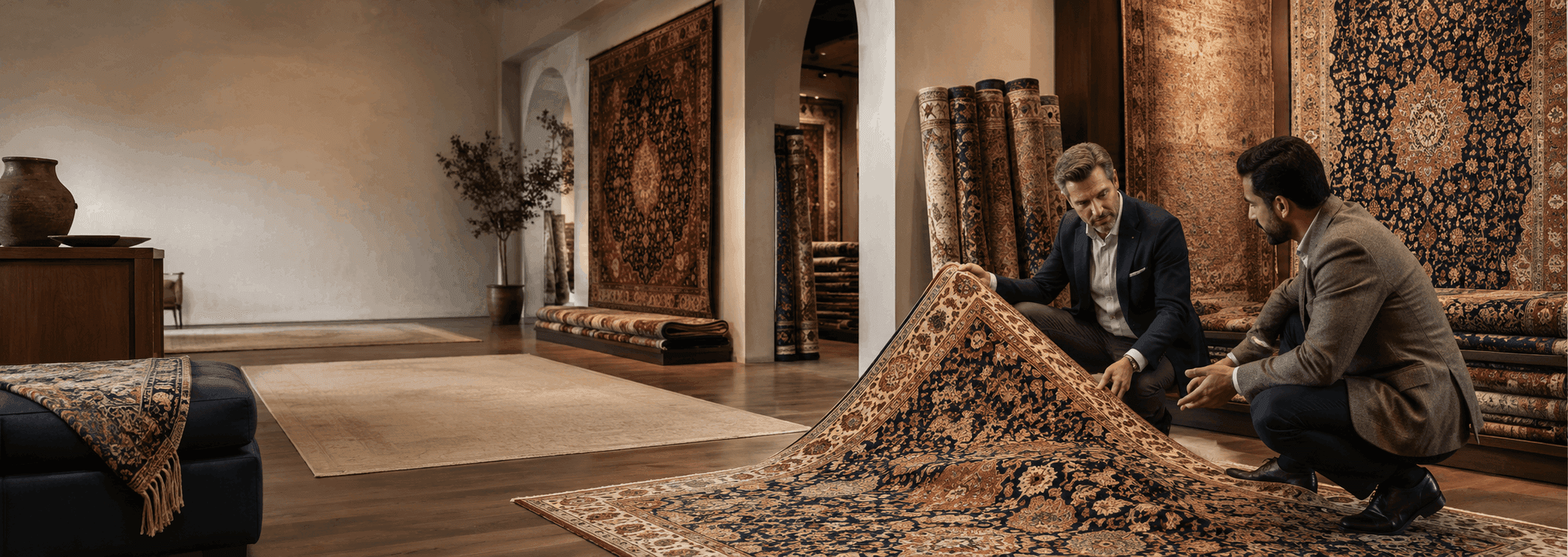
Handwoven rugs are not limited to elite collectors. Smaller rugs, village and tribal weavings, contemporary pieces, and well-preserved secondhand rugs can offer accessible entry points.
A used handmade rug may provide greater individuality and longevity than a new mass-produced rug at a similar price. Buyers should nevertheless inspect it for moth damage, stains, weakened foundations, excessive wear, and poorly executed repairs.
Comfort, Health, and Environmental Considerations
Natural Fibers and Comfort
Wool is resilient, insulating, sound-absorbing, and able to absorb and release moisture vapor. These properties can make a wool rug comfortable underfoot and help moderate changes in its immediate environment.
It is inaccurate, however, to describe all wool or silk rugs as hypoallergenic. People may react to accumulated dust, mites, mold, dyes, treatments, or occasionally the fibers themselves. Regular vacuuming, moisture control, and appropriate professional cleaning are essential.
Carpet can retain dust and other particles until they are removed through effective cleaning. The US Environmental Protection Agency notes that poorly maintained or persistently damp carpet can contribute to indoor-air problems and microbial growth.
Sound and Thermal Comfort
A rug and its underlay can reduce reflected noise, soften footsteps, and make a room feel warmer. The degree of improvement depends on the rug’s thickness, density, size, fiber, and placement.
A rug does not actively cool a room in summer, although natural fibers may manage moisture differently from many synthetic fibers.
Environmental Impact
A durable handwoven rug made from natural fibers may offer environmental advantages:
- A long service life can reduce replacement frequency.
- Wool is renewable and biodegradable under suitable conditions.
- Manual weaving generally requires less industrial machinery during production.
- Older rugs can be repaired, reused, resold, or passed between generations.
Nevertheless, “handmade” and “natural” do not automatically mean sustainable. Fiber production, grazing, dye chemistry, water consumption, transportation, labor conditions, washing, and disposal must also be considered. The EPA recommends evaluating the complete product—including emissions, dyes, backing, recycled content, and end-of-life programs—when choosing environmentally preferable carpet.
How to Recognize a Handwoven Rug
Examine the Back
On a hand-knotted rug, the design is normally visible on the reverse because the knots form the pattern. Minor variations may appear in the weave.
A machine-made rug often has an extremely uniform back and may include an applied backing. This test is useful but not conclusive, as construction methods vary and some modern products imitate handmade features.
Check the Fringe
In many hand-knotted rugs, the fringe is formed by extensions of the foundation warps. On numerous machine-made rugs, fringe is sewn or attached after production.
Some handmade rugs have altered or replaced fringes, so this feature should not be used alone to determine authenticity.
Study the Materials
Wool often feels resilient and less uniformly glossy than many synthetic fibers, while silk may have a distinctive luster. Touch alone cannot reliably identify fiber content, particularly in blended or chemically treated materials.
Avoid burn tests or other damaging identification methods. For an expensive purchase, obtain an assessment from a qualified rug specialist.
Look for Color Variation
Subtle changes in color, known as abrash, may result from separate dye batches, differences in wool, or changes during weaving. Abrash can add character and may support handmade attribution, but it does not by itself prove age, quality, or authenticity.
Assess Condition
When considering a used rug, inspect it in good light for:
- Uneven or exposed foundation
- Holes and tears
- Moth or insect damage
- Stains and odors
- Color bleeding
- Brittle or weakened areas
- Reduced or rebuilt edges
- Replaced fringe
- Repairs, reweaving, or painted restoration
Professional repairs are not necessarily undesirable, but they should be disclosed and reflected in the price.
Choosing the Right Rug
Before purchasing, consider:
- Where and how the rug will be used
- Whether its materials suit the room
- Its construction and workmanship
- Its present condition
- Cleaning and maintenance requirements
- The seller’s reputation and return policy
- Any documentation concerning origin, age, or repairs
- Whether the price is supported by comparable rugs
For valuable pieces, request a written invoice describing the rug’s dimensions, stated origin, approximate age, materials, condition, and restoration history. An independent appraisal may also be worthwhile.
Conclusion
A well-chosen handwoven rug can provide decades of use while bringing craftsmanship, cultural character, and visual warmth into a home. Certain examples may retain or increase their market value, but no purchase should be presented as a guaranteed financial investment.
The strongest reasons to choose a handmade rug are its artistry, individuality, repairability, durability, and enduring usefulness. Explore Rugeast’s collection to find a handwoven rug suited to your home, preferences, and budget.
FAQs
1. Do handwoven rugs always increase in value?
No. Resale value depends on factors such as craftsmanship, rarity, provenance, condition, market demand and restoration history.
2. How can buyers identify a handwoven rug?
Examine the reverse, fringe, materials, weave and color variations, but obtain a specialist assessment for valuable purchases.
3. What should buyers inspect in a used handmade rug?
Check for stains, odors, insect damage, exposed foundations, worn edges, replaced fringe, color bleeding and undisclosed repairs.