
The Beauty of Small Persian Rugs: Timeless Craft for Modern Homes
Small handmade rugs are often more than scaled-down versions of larger carpets. They have their own history, practical purpose, artistic character and place within the traditions of rug weaving.
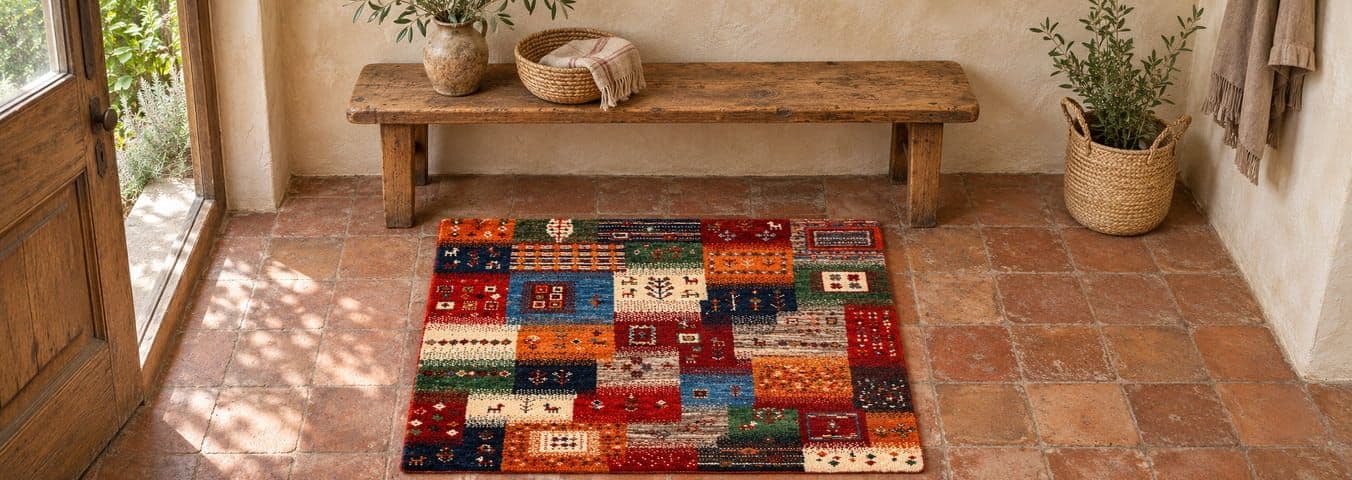
A handmade rug does not need to cover an entire room to make a room feel complete. Sometimes, a small piece of wool, silk and colour can bring more character to a space than a much larger furnishing. It can soften a quiet corner, add warmth beside a favourite chair, create a welcoming entrance or become a beautiful focal point in a contemporary interior.
Small handmade rugs are often more than scaled-down versions of larger carpets. They have their own history, practical purpose, artistic character and place within the traditions of rug weaving. In Persian weaving culture, small rugs have long been part of everyday life—from practical pieces used in homes and nomadic settings to finely woven decorative rugs created to display the skill and imagination of their makers.
Today, these smaller pieces are finding a new place in European homes. They work particularly well in apartments, modern interiors, reading corners and spaces where people want to introduce natural materials, colour and craftsmanship without covering every inch of the floor.
In this guide, we explore why small rugs have been made throughout history, why Iranian weavers have played an important role in their production, how different types of small Persian rugs are distinguished, and how to choose and style them in a modern home.
1. What Is a Small Handmade Rug?
The term small rug does not have one universally accepted definition. Depending on the country, retailer and intended use, it may describe anything from a compact decorative piece to a relatively small area rug designed for a specific part of a room.
In the international rug trade, several terms are commonly used:
Small Rugs: A general term for rugs of smaller dimensions.
Accent Rugs: Rugs used to highlight a particular area, furnishing or design feature.
Scatter Rugs: Smaller rugs placed individually throughout a home.
Mini Rugs: Very small rugs, often decorative or intended for limited practical use.
Small Area Rugs: Rugs designed to cover a relatively small section of floor.
Rug Mats: Compact pieces commonly used near entrances, beds or other functional areas.
These terms generally describe size or intended use rather than a specific weaving technique, origin or design tradition.
Is a Small Rug the Same as a Persian Rug?
Not necessarily. A small rug can be handmade or machine-made, pile-woven or flatwoven, traditional or contemporary, Persian or from another weaving tradition.
A small Persian rug, however, refers to a handmade rug originating from Iran, although the exact size and style may vary considerably.
In the Persian carpet trade, smaller formats are also known by traditional names such as Poshti, Zar-o-Nim and Dozar. These names reflect the vocabulary of the traditional rug market, but their dimensions are not always identical across regions and sellers.
For this reason, the actual measurements in centimetres are always more useful than relying on the product name alone.
At Rugeast, our Small Rugs collection includes a range of handmade pieces selected for smaller spaces and more flexible interior styling.
Discover Small Handmade Rugs at Rugeast
Explore small Persian rugs, tribal rugs, village rugs, Gabbeh and kilims for hallways, bedrooms, reading corners and contemporary interiors.
Browse rugs with lengths up to 200 cm and widths up to 100 cm using our size filters.
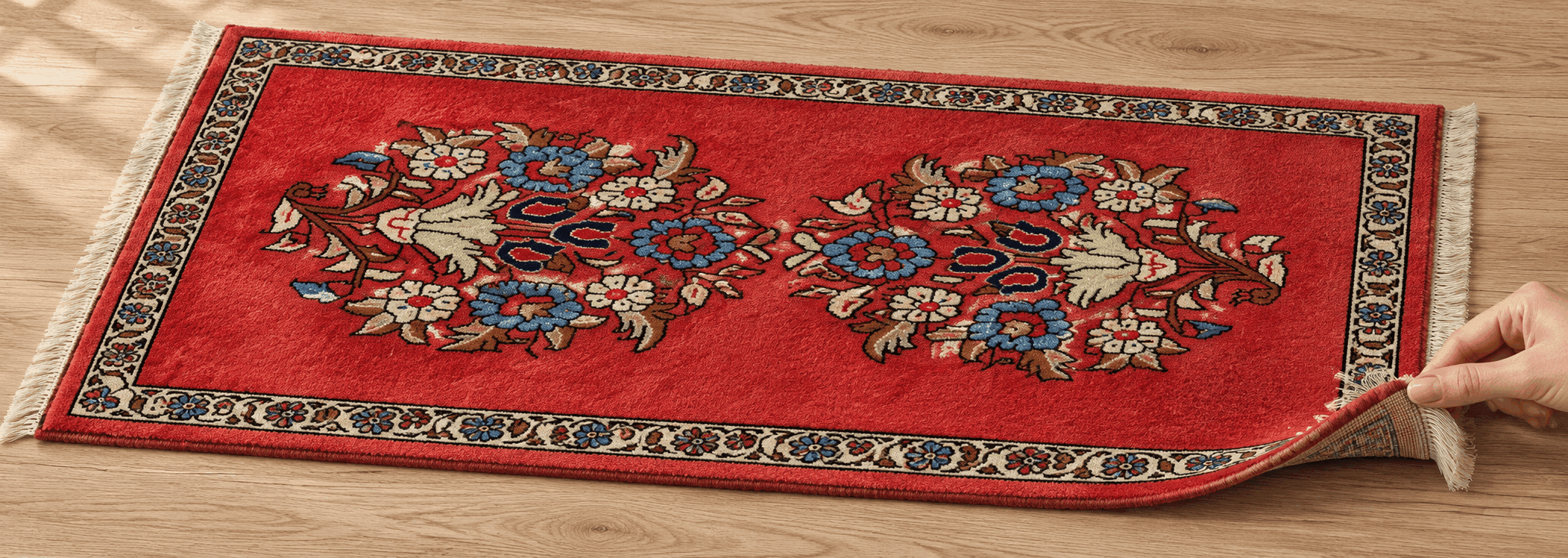
2. Why Have Small Rugs Been Made Throughout History?
To understand small rugs, it helps to move beyond the idea that every carpet was originally intended to cover a large living room.
Handwoven textiles have served many purposes throughout history. They were used as floor coverings, seating surfaces, bedding, protective coverings, portable household furnishings and decorative objects. Their size was often shaped by the way people lived, the materials available to them and the spaces in which they were used.
Small rugs developed for several interconnected reasons.
2.1 Everyday Practical Needs
Traditional homes did not always require a large carpet in every space. Different parts of a home had different purposes, and smaller textiles could be used where a full-sized carpet was unnecessary.
- They might be placed:
- Beside a bed or sleeping area
- Beneath a small table
- Near an entrance
- In a narrow passage
- At a seating area used by one or two people
- Around a particular household object
- In a corner dedicated to prayer, rest or personal use
A small rug was therefore not necessarily an incomplete carpet. It could be a complete and practical object designed for a particular purpose.
2.2 Making Use of Available Materials
Traditional weaving often depended on locally available wool, cotton, natural dyes, spinning equipment and the time and skill of the weaver.
In some circumstances, smaller pieces could provide a practical way to use limited materials or leftover yarn. This may have been particularly relevant in household and village production.
However, not every small rug was created from leftover materials. Many were deliberately designed and woven as individual pieces, with their own intended dimensions, patterns and uses.
2.3 Mobility and Nomadic Life
For nomadic communities, household possessions needed to be practical, portable and adaptable to changing living conditions.
Smaller rugs and flatweaves were easier to roll, carry, arrange and reuse when a family moved. Their size could therefore be closely connected with the realities of seasonal migration and mobile living.
This does not mean that nomadic weavers only produced small rugs. They also created larger carpets, tent furnishings and other woven textiles. Small formats were simply one part of a much wider and highly adaptable weaving tradition.
2.4 Trade, Transport and Market Demand
Handmade rugs have always been both household objects and commercial products.
Smaller rugs could appeal to customers who had limited space, a more modest budget or a specific decorative need. They could also be easier to transport, display and sell in local markets or international trade.
For European buyers today, these advantages remain relevant. A small handmade rug can be an accessible way to introduce traditional craftsmanship into a home without making a major furnishing investment.
2.5 A Canvas for Artistic Expression
A smaller surface does not necessarily mean a simpler design.
Some small rugs are woven with exceptionally fine details, intricate borders, multiple colours and carefully balanced compositions. A compact piece can offer the weaver an opportunity to concentrate artistic expression within a limited area.
In these rugs, size becomes part of the design rather than a limitation.
3. Traditional Persian Small Rug Sizes and Names
Persian rug terminology is a fascinating part of the country's weaving and trading heritage. Traditional size names were used in markets and commercial conversations, often reflecting familiar measurements and established formats.
Although these terms remain useful, dimensions can vary depending on region, workshop and market convention. They should be understood as approximate traditional categories rather than strict international standards.
Poshti:
Around 50 × 80 to 60 × 90 cm
Compact rug or traditional cushion-related format
Zar-o-Charak:
Around 80 × 120 cm
Small traditional rug format
Zar-o-Nim:
Around 100 × 150 cm
A popular compact carpet size
Dozar:
Around 130 × 200 cm
Larger rug format suitable for smaller rooms
Kenareh:
Narrow, elongated dimensions
Runner traditionally used in passages and long spaces
Kelleghi:
Elongated and relatively wide
Traditional long-format rug used in specific room arrangements
These measurements are indicative and may differ according to regional and commercial conventions. Always check the actual dimensions of an individual rug.
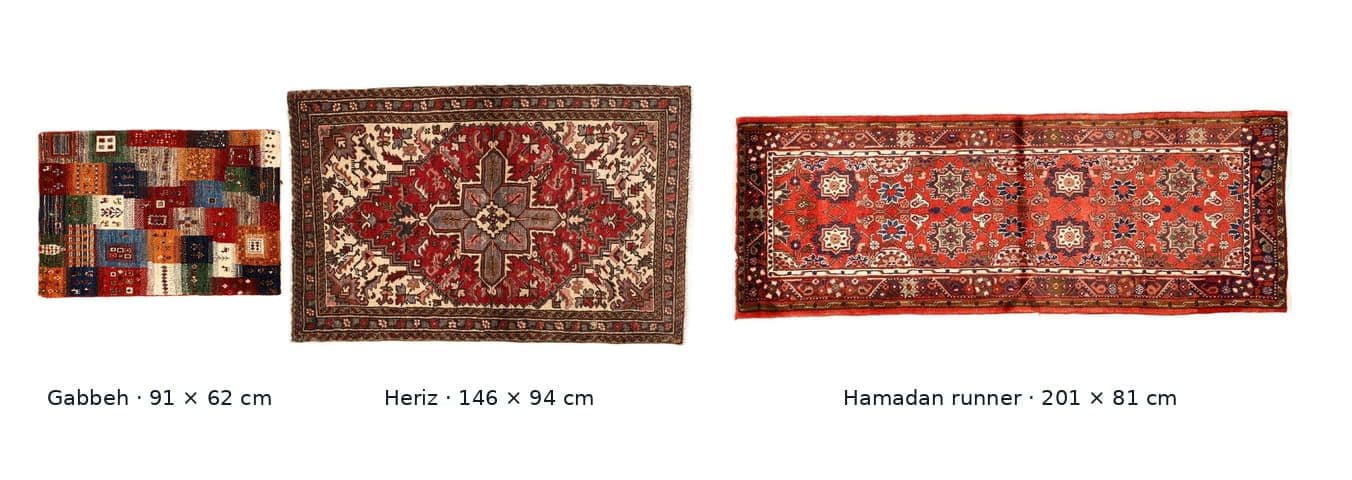
Poshti: A Small Rug with a Traditional Role
The Poshti is one of the familiar small formats in Persian household culture.
Traditionally, the word is associated with a cushion or backrest, and woven pieces of this type could be used as coverings or textile components for seating arrangements. Depending on the particular piece, a small rectangular rug may also serve as a decorative floor covering.
Poshti-style pieces may feature geometric patterns, medallions, floral designs or relatively simple compositions. Their compact size makes them particularly adaptable to modern interiors.
Today, a small Poshti-style rug may be placed beside a chair, on a bench, in a reading corner or even displayed as textile art.
Zar-o-Nim and Zar-o-Charak: Between Decorative and Practical
These traditional formats are particularly interesting for people who want a rug that is smaller than a conventional living-room carpet but still large enough to define a useful area.
A Zar-o-Nim rug, for example, may work well beside a bed, in front of a small sofa, beneath a compact coffee table or in a reading space.
A Zar-o-Charak can be useful as an accent rug near an entrance or in a smaller seating arrangement, depending on its proportions.
Kenareh: Narrow Rugs for Long Spaces
A Kenareh is traditionally a long, narrow rug. Although it is not necessarily a small rug in total area, its narrow proportions make it especially useful in hallways and elongated spaces.
A handmade runner can transform an otherwise plain corridor into a more inviting part of the home. It can also visually connect two rooms or create a sense of continuity between different areas.
4. Why Small Rugs Are Particularly Important in Iranian Nomadic Weaving
One of the clearest connections between lifestyle and rug dimensions can be found in the weaving traditions of nomadic communities in Iran.
In the case of Fars tribal weaving, documentation associated with UNESCO's Intangible Cultural Heritage describes how the mobility required by nomadic life influenced the dimensions of some woven carpets. Portable looms and the role of women in spinning and weaving are also important aspects of this tradition.
Three Characteristics of Nomadic Small Rugs
1. Portability
The dimensions and weight of household textiles mattered in mobile living. Smaller pieces could be easier to roll, carry and rearrange at a new location.
2. Connection with Local Materials
In many nomadic communities, sheep's wool, local spinning traditions and natural resources were closely connected with textile production.
This relationship between environment, material and craftsmanship can be reflected in the texture, colours and structure of the rugs.
3. Independent Artistic Expression
Nomadic rugs were not merely functional objects. Their patterns and colours could express a distinctive visual language shaped by experience, cultural memory, nature and the weaver's personal creativity.
It is important, however, not to assume that every small Persian rug is tribal or nomadic. Small rugs were also produced in village settings, urban workshops and for commercial markets, each with its own traditions and characteristics.
Why Tribal Small Rugs Work So Well in Modern Interiors
Many contemporary European interiors feature neutral colours, clean lines, natural materials and relatively simple furniture.
A small tribal rug, with its geometric motifs, warm colours and handmade texture, can introduce a sense of contrast and personality.
Rather than trying to unify every element in a room, the rug may simply create one distinctive point of interest.
5. Why Persian Small Rugs Offer Such a Wide Variety of Styles
Iran is not a single rug-making centre with one uniform design tradition. Carpet weaving has developed across cities, villages and nomadic communities, each influenced by local materials, techniques, cultural traditions and artistic preferences.
As a result, two small Persian rugs can look remarkably different, even if they have similar dimensions.
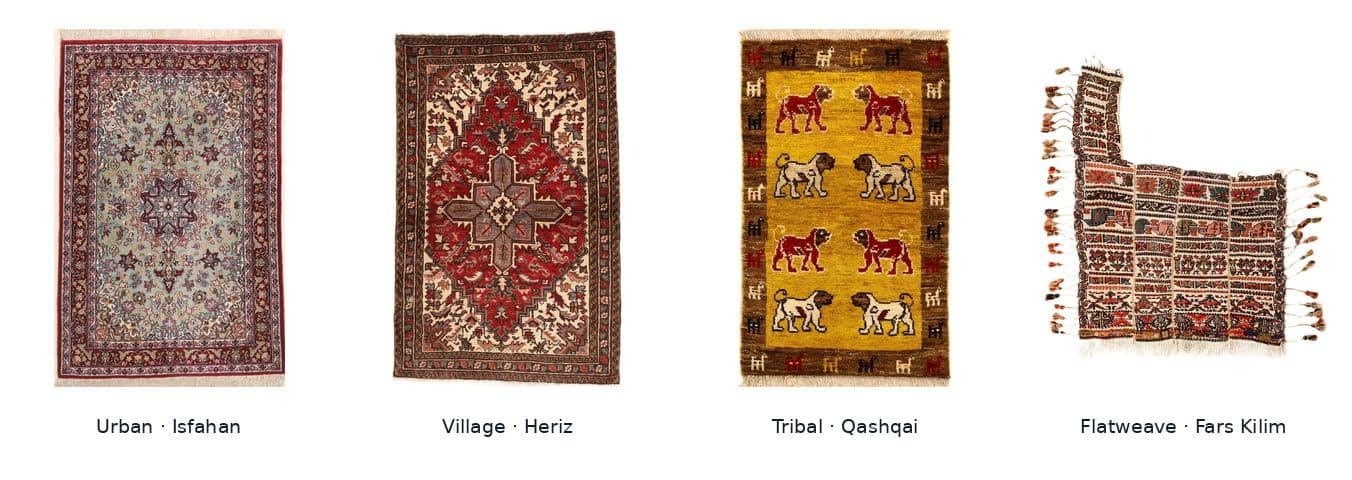
Small Urban Rugs
Some urban rugs are characterised by more structured compositions, elaborate floral motifs, central medallions, corner designs and multiple borders.
In finer examples, particularly silk rugs, the small surface may be used to display considerable detail and sophisticated design.
Small Village Rugs
Village rugs may feature more geometric, simplified or less rigidly symmetrical designs.
These characteristics should not automatically be interpreted as inferior design. They can be an expression of the visual traditions, weaving methods and individual creativity associated with a particular community.
Small Tribal Rugs
Tribal rugs often feature geometric motifs, rhythmic repetition, strong colour contrasts and compositions that may feel more spontaneous.
Some pieces also display small variations in their borders, motifs or proportions that reflect the nature of handmade production.
Small Kilims
A kilim is structurally different from a pile rug. Instead of a pile created by knotted yarn, its pattern is formed through the interweaving of warp and weft.
Small kilims are often appreciated for their lighter structure, distinctive geometric patterns and versatility.
Depending on their construction and condition, they may work well in entrances, kitchens, beside beds or in layered interior arrangements. Their suitability for a particular location should still be considered in relation to traffic, edge condition and maintenance requirements.
6. A Small Rug Can Be a Work of Art
One of the most common misconceptions about small rugs is that their value should be judged mainly by their size.
In handmade rug weaving, dimensions are only one part of the story. Wool or silk quality, weaving skill, design, knot structure, condition, age, provenance and artistic character all contribute to the identity and value of a rug.
A small silk rug with intricate detailing may be far more complex to produce than a larger rug with a relatively simple design.
Why Are Some Small Rugs So Fine?
In certain small rugs, especially those designed for decorative or artistic purposes, the weaver may aim to include more detail within a limited surface.
This can result in:
Fine and intricate motifs
Multiple narrow borders
Carefully balanced colour combinations
Detailed floral or pictorial elements
Fine wool or silk
More complex compositions
However, finer weaving does not automatically mean greater value or better durability.
A robust tribal rug with thicker wool and a relatively coarse knot structure may be highly desirable because of its material quality, construction, artistic character and suitability for everyday use.
The quality of a handmade rug should always be assessed in context.
7. How to Use Small Persian Rugs in European Homes
Small rugs are among the most flexible elements of interior design.
In contemporary European homes, particularly apartments and interiors featuring simple furniture and natural colours, a small handmade rug can change the atmosphere of a space without requiring a complete redesign.
Here are some of the most effective ways to use them.
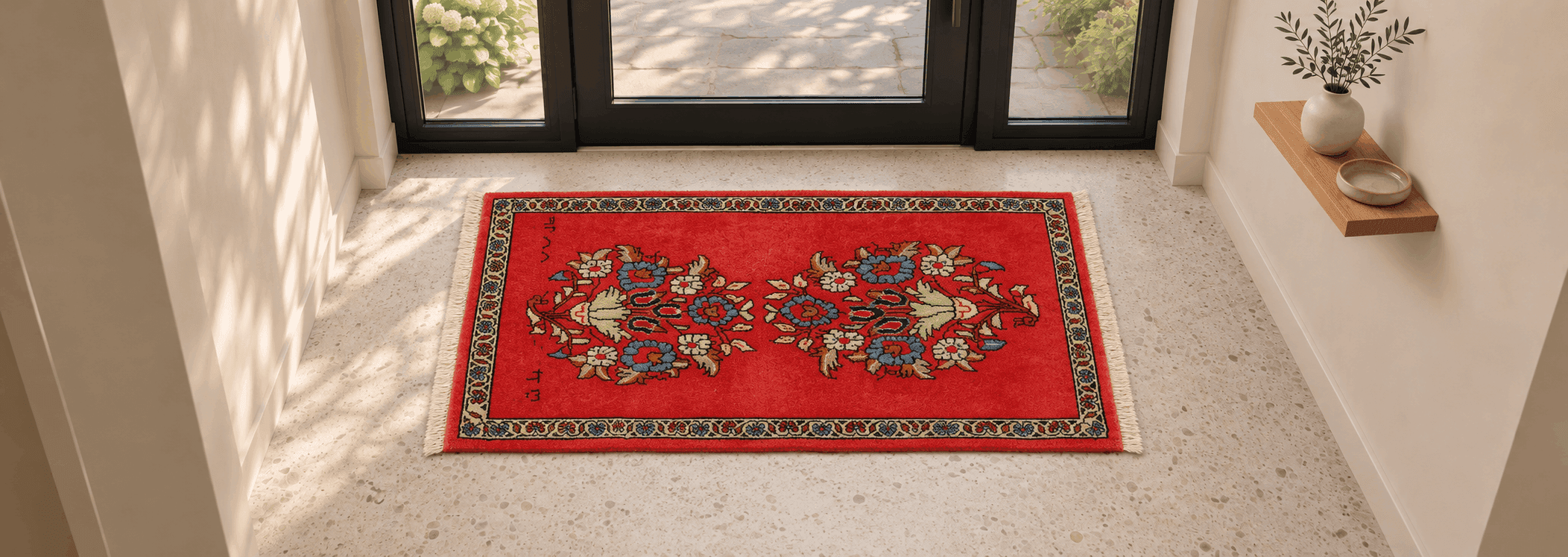
7.1 The Entrance: A Welcoming First Impression
The entrance is the first space visitors experience when they arrive.
A small handmade rug can make a simple hallway feel warmer, more personal and thoughtfully designed.
For narrow entrances, geometric designs and warm colours can work particularly well. In a light interior, a rug featuring red, dark blue or natural contrasting colours can create an attractive focal point.
Before choosing one, make sure it does not interfere with the door opening and that its edges will not create a tripping hazard.
7.2 Beside the Bed: A Softer Start to the Morning
Placing a small rug beside a bed is one of the simplest ways to introduce handmade textiles into a bedroom.
Stepping onto a soft, warm rug in the morning can make the space feel more comfortable and inviting.
For this setting, calm colours, understated patterns and geometric designs often work beautifully.
If there is enough space on both sides of the bed, two matching rugs or two complementary pieces can create a balanced arrangement. Matching does not necessarily mean identical; two rugs with related colours or patterns can work equally well.
7.3 Beside a Sofa or Reading Chair: Creating a Cosy Corner
A comfortable chair, a floor lamp, a small table and a handmade rug can create a welcoming reading corner.
The rug helps define the seating area, making it feel like a separate destination within a larger room.
This is particularly useful in apartments where there is no dedicated reading room or separate home office.
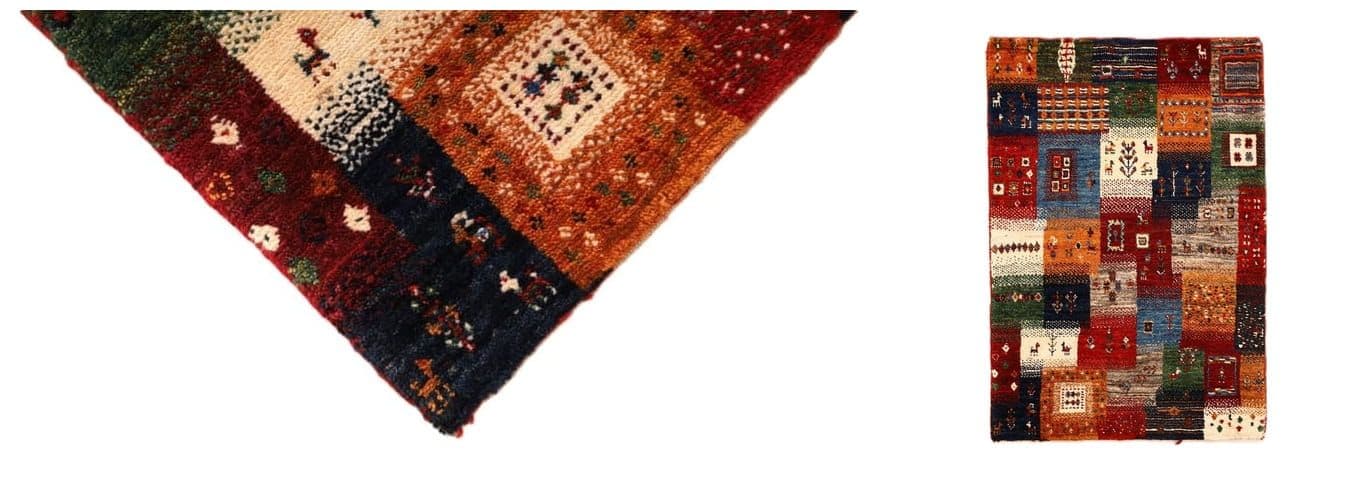
Small Gabbeh rugs, village rugs and tribal pieces can work especially well here because their texture and colours bring a natural and relaxed character to the space.
7.4 Under a Coffee Table: A Subtle Focal Point
A small rug beneath a coffee table can draw attention to the centre of a seating arrangement.
However, its proportions should be considered carefully in relation to the table and surrounding furniture.
If a rug is too small and sits entirely beneath a table without visually connecting to anything else, it may feel isolated.
Before buying, mark the intended dimensions on the floor and compare them with the furniture arrangement.
7.5 In the Kitchen: Colour and Texture in Everyday Spaces
A handmade rug can add warmth and character to a kitchen.
For this location, consider the amount of foot traffic, the possibility of spills, cleaning requirements and whether the rug may slip.
A relatively flatwoven kilim or a suitable wool rug may be more practical than a very delicate or high-pile piece, depending on its construction.
No handmade rug is entirely maintenance-free, so its placement should match your lifestyle.
7.6 In a Home Office: Defining a Personal Workspace
In homes where part of a bedroom or living room is used as a workspace, a small rug can help distinguish the office area from the rest of the room.
It introduces texture, colour and a sense of separation without requiring additional furniture or room dividers.
If you use a wheeled office chair, consider the position carefully. A pile rug or raised edges may interfere with the movement of the chair.
7.7 On the Wall: Handmade Textile as Art
Some small rugs are so visually striking that they deserve to be displayed rather than hidden beneath furniture.
Fine silk rugs, antique pieces, pictorial rugs and textiles with distinctive compositions can be treated as works of art.
A small rug can bring texture, colour and a cultural dimension to a wall that would otherwise remain empty.
For wall display, use an appropriate hanging system that distributes the weight evenly and avoids placing excessive pressure on the warp, fringe or edges. Hanging a rug from a few small clips for a prolonged period may cause damage.
8. Styling Small Persian Rugs with Different Interior Design Styles
Persian handmade rugs are not limited to traditional homes. Their ability to introduce contrast, texture and colour makes them suitable for many different interior styles.
Scandinavian Style
Scandinavian interiors often feature light wood, white walls, natural light, neutral colours and simple furniture.
A small Persian rug in red, terracotta, blue or warm earthy tones can introduce an attractive focal point.
In this setting, the contrast between simple furniture and the complexity of a handmade rug often creates a beautiful balance.
Japandi Style
Japandi combines Japanese-inspired simplicity with the warmth and functionality associated with Scandinavian design.
Natural materials, restrained colours and uncluttered spaces are important.
Small Gabbeh rugs featuring earthy tones, subtle patterns and natural textures can work particularly well in these interiors.
Minimalist Style
In a minimalist room, every object has a reason to be there.
A small rug with a distinctive design can act almost like an artwork. Rather than filling the room with decorative objects, a single handmade piece may provide the colour, texture and visual interest the space needs.
Industrial Style
Industrial interiors often feature concrete, metal, brick and darker or neutral surfaces.
A small tribal rug with warm colours and geometric motifs can create a striking contrast, making the room feel less cold and more welcoming.
Mid-Century Modern
Mid-century modern interiors are characterised by distinctive furniture shapes, wood, geometric forms and carefully chosen colours.
Small Persian rugs featuring geometric patterns, simple medallions or traditional colour combinations can complement these elements beautifully.
9. How to Choose the Right Size for a Small Rug
One of the most important factors in successful rug styling is proportion.
A beautiful rug may not look right in a room if its dimensions are unsuitable for the intended location.
Step 1: Decide Where the Rug Will Be Used
Before looking at rugs, determine its intended location.
Will it be placed:
- At the entrance?
- Beside a bed?
- Near a sofa or armchair?
- Under a coffee table?
- In a kitchen?
- In a home office?
- On a wall?
A rug that works perfectly beside a bed may be too small for a coffee table arrangement.
Step 2: Consider the Relationship with Furniture
The rug should have a clear visual relationship with the furniture around it.
For example, beside a reading chair, a small rug can define the seating area. But if the intention is to connect several sofas and a central table, a larger rug may be more appropriate.
Step 3: Mark the Dimensions on the Floor
A simple method is to use masking tape to mark the intended rug size on the floor.
Then:
Walk through the space.
Open and close doors.
Move chairs and furniture.
Check the distances between the rug and surrounding objects.
View the arrangement from different angles.
This small exercise can prevent an unsuitable purchase.
Step 4: Consider the Shape
Not every space requires a rectangular rug.
A compact rectangular rug may be suitable beside a bed, while a more square-shaped piece may work better beside a chair or small table.
Handmade rugs may also have slight irregularities in shape. These are part of their handmade character, but actual measurements should still be checked.
10. Colour and Pattern: Making a Small Rug Stand Out
Because a small rug occupies a limited surface, it can play an important role in the colour balance of a room.
Create Contrast
If your room is mainly neutral, a rug featuring red, dark blue, terracotta or other rich colours can attract attention and bring energy into the space.
Create Harmony
If you prefer a calmer atmosphere, choose colours that complement the floor, furniture, curtains or other textiles.
Choose Patterns According to the Room
In a room with patterned furniture or curtains, a rug with a simpler design may create visual balance.
In a room with plain furniture and minimal decoration, a more intricate rug can become the main visual feature.
Consider Lighting
Natural and artificial light can change the way rug colours appear.
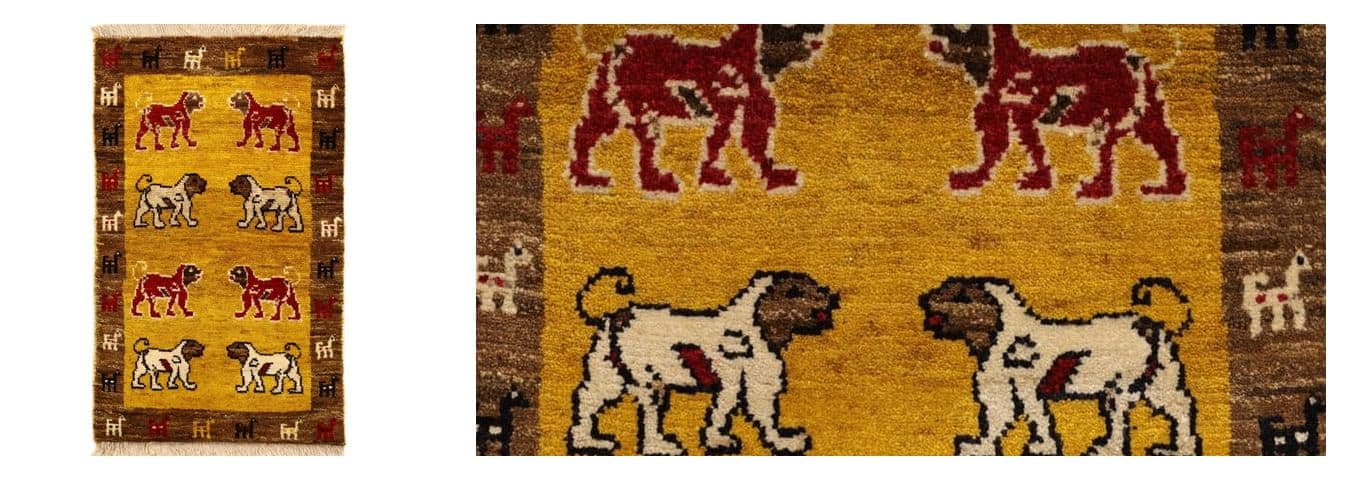
A rug that looks bright in a product photograph may appear darker in a room with limited daylight.
When buying online, examine photographs from different angles and under different lighting conditions. If available, request a video of the actual rug.
11. A Practical Buying Guide for Small Handmade Rugs
A small rug deserves the same attention to quality and authenticity as a larger carpet.
Its compact dimensions should not cause buyers to overlook materials, construction, condition or artistic character.
11.1 Check Whether the Rug Is Handmade
A hand-knotted pile rug is made by tying individual pile knots around the foundation threads. Machine-made rugs use industrial manufacturing methods and have a different construction.
For an initial assessment:
Examine the back of the rug.
Look at the knot structure.
Observe how the design appears on the reverse.
Check the edges and fringe.
Ask the seller for precise information about the construction.
The reverse side alone is not always sufficient for a definitive identification, especially in certain specialised constructions and manufacturing techniques.
11.2 Understand the Materials
Materials influence appearance, texture, durability and price.
Wool: Commonly used in Persian rugs. Its quality, spinning method and finishing can make a significant difference to the finished piece.
Silk: Valued for its fine texture and lustre. It is used in some highly detailed rugs and decorative pieces. Silk rugs may require more careful handling depending on their construction and condition.
Cotton: Often used in the foundation, including warp and weft, helping to form the rug's structural framework.
When buying, do not rely only on labels such as "natural wool" or "silk." Ask which materials are used in the pile and foundation.
11.3 Understand Knot Density in Context
Knot density is one technical characteristic of a rug, but it is not a complete measure of quality.
A high knot density may allow for finer details, but a tribal rug with thicker wool and a coarser knot structure can also be highly desirable because of its material quality, durability, construction and artistic identity.
Density should be evaluated alongside design, materials, workmanship and intended use.
11.4 Examine the Edges and Fringe
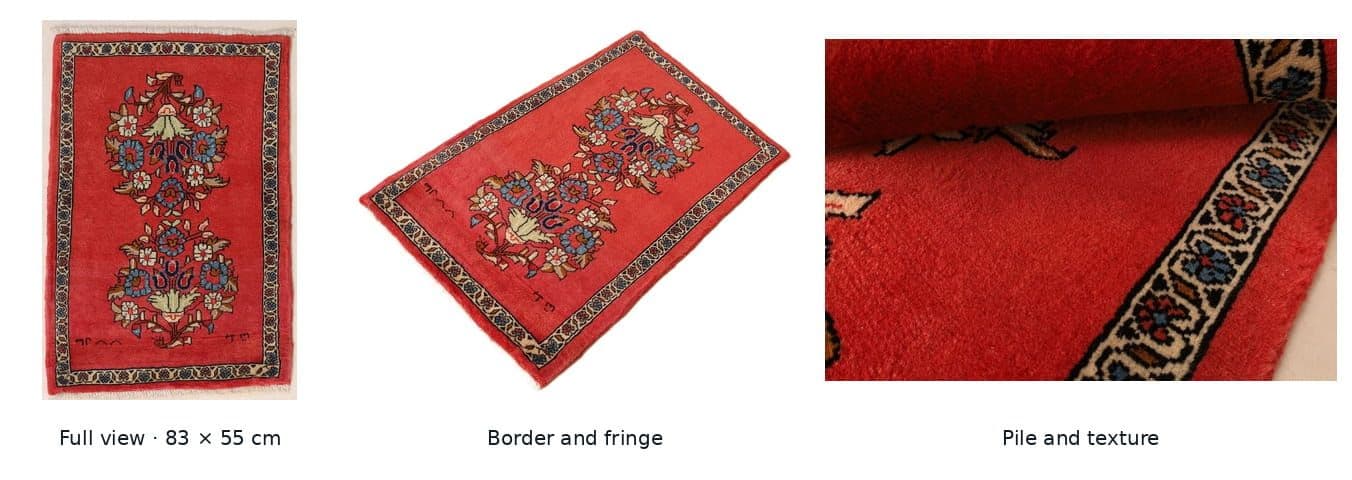
In small rugs, the edges and fringe may be particularly noticeable.
Check for:
Loose or damaged fringe
Weak or worn selvedges
Tears or openings
Repairs
Distortion around the corners
Unusual wear
Repairs or signs of previous use do not automatically make a rug undesirable, but they should be clearly understood before purchase.
11.5 Do Not Confuse Age with Quality
An older rug is not automatically more valuable or in better condition than a newer one.
Age, authenticity, construction, condition, artistic appeal and maintenance history should be considered separately.
In older rugs, wear, fading, repairs, insect damage or moisture-related deterioration may affect both value and usability.
11.6 Verify the Origin
A rug's region of origin should be supported by reliable information rather than inferred solely from a pattern.
Many motifs are shared across different weaving regions and even across countries.
When possible, look for information based on the seller's knowledge, construction characteristics and available provenance.
12. Are Small Handmade Rugs a More Affordable Choice?
In many cases, a smaller rug requires a lower total investment than a larger one because it covers less area.
However, small rugs are not necessarily inexpensive.
A fine silk rug, a well-preserved antique, a piece with an exceptional design or a rug with unusual artistic characteristics may command a considerable price despite its compact dimensions.
The price of a handmade rug may be influenced by:
- Material quality
- Weaving technique and workmanship
- Knot density and its suitability for the design
- Complexity of the pattern
- Age and condition
- Region and provenance
- Artistic appeal
- Rarity
- Repairs or damage
Comparing two rugs solely by size is therefore not a reliable way to judge their value.
Look for Value in Quality and Proportion
If you need a rug for a limited area, buying a well-made handmade piece in the correct size may be a more sensible choice than purchasing a larger rug that does not fit your room or lifestyle.
The goal is not to buy the largest possible rug.
It is to find a piece whose quality, design, practicality and price make sense for the way you intend to use it.
13. Caring for Small Handmade Rugs
Because small rugs are often moved more frequently and placed in areas with direct contact with the floor, proper care is particularly important.
Prevent Slipping
On wooden, stone or ceramic floors, use an appropriate non-slip underlay.
Choose one compatible with both the flooring and the rug. An unsuitable underlay may cause marks, residue or other damage.
Move Them Carefully
Avoid pulling a rug by its corners.
Lift it properly or roll it carefully to prevent unnecessary stress on the edges and foundation.
Protect Them from Direct Sunlight
Prolonged exposure to strong sunlight may gradually affect some fibres and dyes.
If possible, position the rug away from areas receiving intense, continuous sunlight.
Vacuum Regularly
Remove surface dust using an appropriate vacuum setting.
Avoid harsh brushes or excessively strong suction that may damage the pile, fringe or edges.
Clean According to the Rug's Construction
Cleaning methods should depend on the rug's materials, dyes, structure, condition and level of soiling.
Household detergents or soaking a rug without checking colourfastness may cause damage.
For delicate silk rugs, antique pieces or rugs with sensitive dyes, consult a specialist before washing.
14. Why Buy Small Rugs from a Specialist Rug Shop?
A handmade rug is not a product whose quality and characteristics can always be understood from a single photograph.
For online buyers, accurate product information and real photographs are particularly important.
A specialist rug retailer should be able to answer questions about dimensions, materials, weaving technique, origin, condition and suitability for different interior settings.
At Rugeast, our aim is not simply to sell rugs. We want to help customers understand handmade Persian rugs and make informed choices for their homes.
What Should You Check When Buying Online from Rugeast?
1. Check the actual dimensions.
Compare the measurements listed on the product page with your intended space. Traditional rug names are not substitutes for precise dimensions.
2. Examine the real photographs.
Look carefully at the background colour, motifs, borders, edges, fringe and weaving details. Different screens may display colours slightly differently.
3. Ask questions about the rug.
If you need clarification about materials, construction, origin or condition, request accurate information before purchasing.
4. Request a dedicated video if needed.
A video showing the rug from different angles and moving across its surface can help you better understand the texture and colours.
Rugeast can provide dedicated product videos and live video calls during office hours.
5. Check delivery and return conditions.
Rugeast rugs are stored in Hamburg, Germany, and orders are shipped from Hamburg. Before placing an order, check the delivery terms for your destination and the applicable return conditions.
Small Handmade Rugs at Rugeast
Discover compact Persian rugs, tribal pieces, village rugs, Gabbeh and kilims for smaller rooms and modern European interiors.
Explore handmade pieces selected for their character, colour, craftsmanship and versatility.
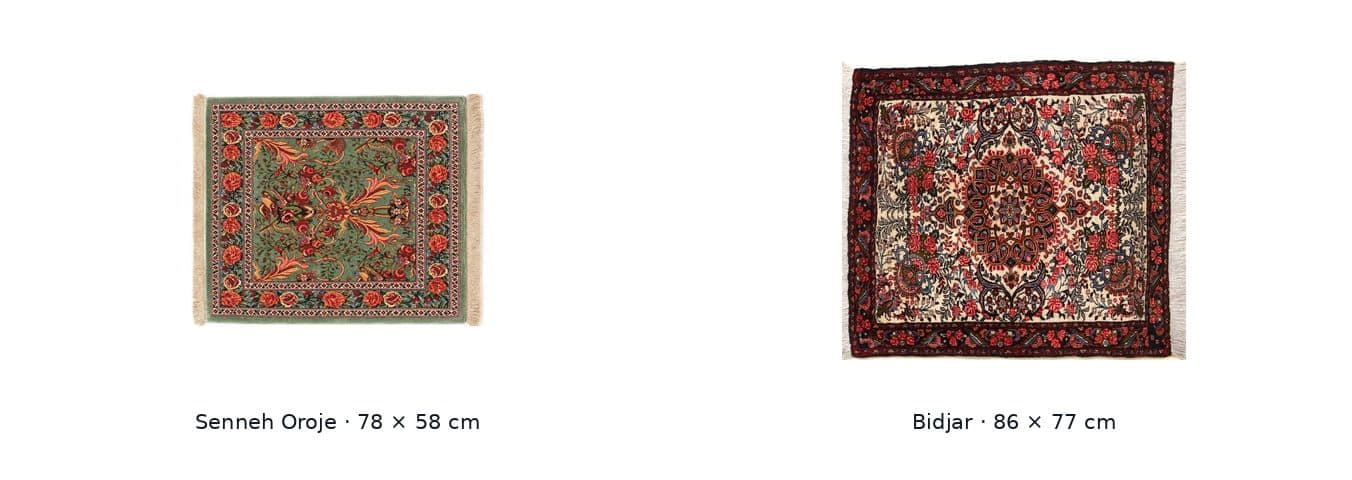
15. Small Rugs in European Homes: A Meeting of Heritage and Contemporary Living
Contemporary homes often feature simple furniture, calm colours and carefully chosen decorative elements.
This does not mean that craftsmanship and traditional art have no place in modern interiors. Quite the opposite: a handmade rug can become especially meaningful when surrounded by simplicity.
A small Persian rug can:
Turn an overlooked corner into a purposeful space.
Add texture to modern furniture.
Introduce colour into a neutral room.
Bring traditional craftsmanship into everyday life.
Change the atmosphere of a space without a major redesign.
A small rug does not necessarily need to perform the role of a room's main carpet.
Sometimes, a single well-chosen piece can have a greater visual impact than covering the entire floor with a larger rug.
For this reason, small handmade rugs are not simply a secondary category of carpets. They offer a distinct way of bringing colour, craftsmanship, culture and individuality into the home.
16. Frequently Asked Questions About Small Handmade Rugs
What size is considered a small handmade rug?
There is no universal definition. Different markets use the term for different dimensions, from very compact decorative pieces to rugs suitable for smaller rooms. At Rugeast, our small-rug filter covers lengths up to 200 cm and widths up to 100 cm. Always check the exact dimensions of each rug.
What is the difference between a small rug and a Persian rug?
A small rug describes its size or intended use. A Persian rug describes a rug originating from Iran. A Persian rug may be small, medium or large.
Why did Iranian nomadic communities weave small rugs?
Portability was an important factor in nomadic life. Smaller woven pieces could be easier to transport and rearrange. UNESCO documentation related to Fars tribal weaving describes the relationship between nomadic mobility and the dimensions of some tribal rugs.
Are small rugs suitable for apartments?
Yes. They are particularly useful in entrances, bedrooms, reading corners, beside sofas, home offices and other limited spaces. The key is choosing the right dimensions and placement.
Which small Persian rug is best for a modern interior?
The answer depends on your interior style. Simple Gabbeh rugs can work well in minimalist and Japandi spaces, tribal rugs can introduce contrast into contemporary rooms, and classic small rugs may complement more formal interiors.
Can a small rug be placed under a coffee table?
Yes, provided its dimensions are proportionate to the table and surrounding furniture. A rug that is too small may appear disconnected from the seating arrangement.
Can a small Persian rug be hung on a wall?
Yes. Some small rugs, particularly fine silk pieces, antique rugs and rugs with distinctive designs, can be displayed as textile art. Use a suitable hanging method that distributes the weight evenly and protects the rug's structure.
Are small handmade rugs always cheaper than large rugs?
No. Smaller dimensions may reduce the overall cost, but materials, workmanship, design, age, rarity and condition can make a small rug quite valuable.
What type of small rug is suitable for an entrance?
Choose a rug with suitable dimensions, a practical construction and sound edges. Make sure it does not interfere with the door and that it cannot easily slip.
Is a kilim the same as a small handmade rug?
A kilim is a type of handmade flatweave, while a small rug is a size category. A kilim can be small or large, and a small rug may be either pile-woven or flatwoven.
What should I check before buying a small rug online?
Check the dimensions, materials, weaving technique, photographs of the front and back, condition of the edges and fringe, any repairs or damage, and the delivery and return terms.
Can a small handmade rug have artistic value?
Absolutely. Artistic value is not determined by size alone. Design, craftsmanship, material quality, provenance, condition and the individual character of a piece can all contribute to its value.
17. Final Thoughts: Small in Size, Rich in Character
Small handmade rugs represent an important part of the diversity of Persian weaving.
They have developed in response to everyday needs, different lifestyles, geographical conditions, village and tribal traditions, and the demands of the rug market.
From compact Poshti pieces and village rugs to colourful tribal kilims and finely woven silk rugs, each can reveal a different aspect of the culture and creativity of its maker.
For contemporary European homes, these rugs offer an opportunity to introduce handmade craftsmanship without requiring a large area of floor space.
Ultimately, choosing a small handmade rug is not simply about choosing a size. It is about choosing a colour, texture, story and character that can become part of your home for years to come.
At Rugeast, we believe that the beauty of a handmade rug should never be measured by its size. Sometimes, a small piece can make the biggest difference to a room.