
The Science of Persian Rug Wool: Why Iranian Wool Defines Handmade Carpet Quality
Wool has been the preferred material for Persian rugs for centuries because it combines a unique group of natural characteristics. Unlike many synthetic fibres, wool is a living biological material with complex internal structures.
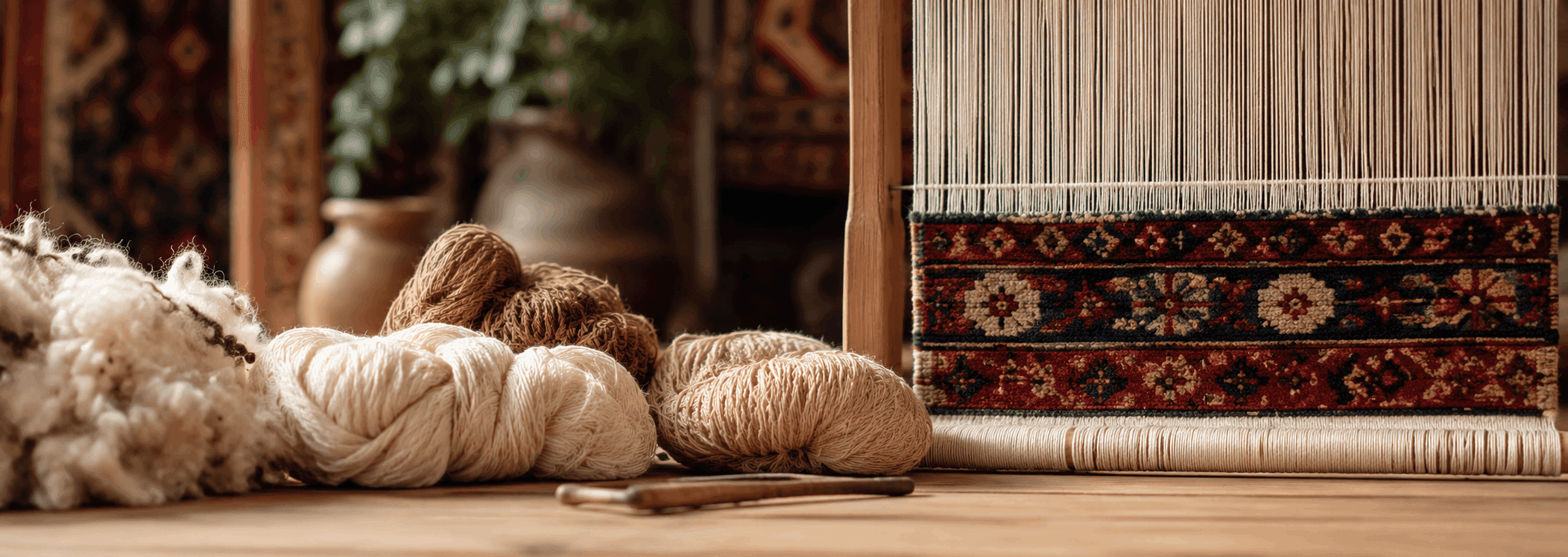
Understanding the Natural Fibre Behind Handmade Persian Rugs
Wool: The Hidden Foundation of Persian Rug Beauty
When people admire a handmade Persian rug, they usually notice the things that are immediately visible:
- the colours,
- the design,
- the patterns,
- the craftsmanship.
However, beneath every beautiful Persian rug lies a fundamental element that determines much of its character:
Wool.
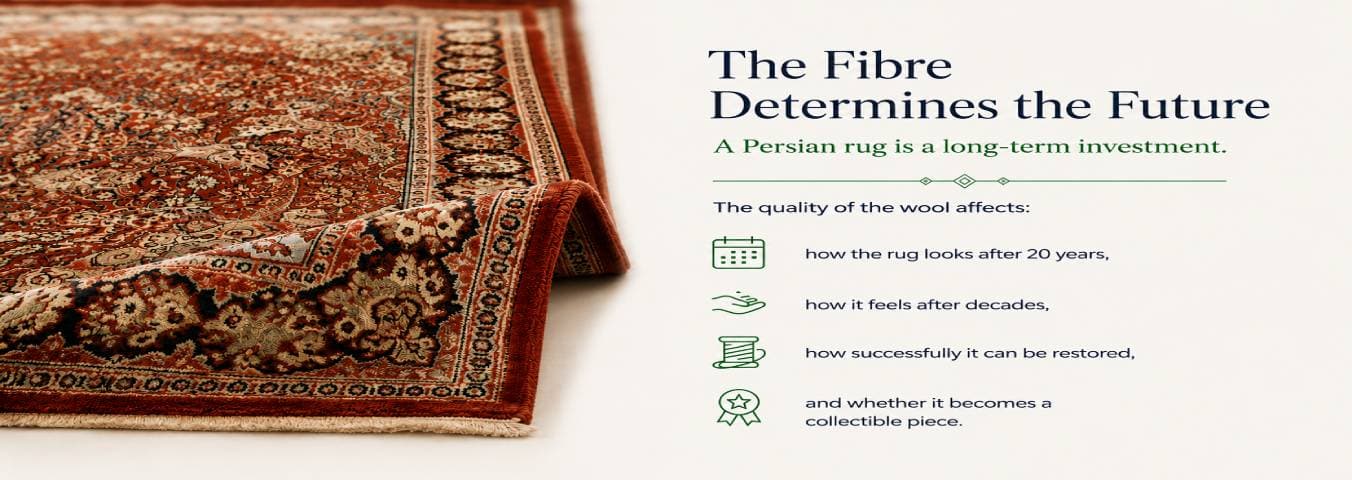
The quality of the wool influences:
- how the rug feels under the hand,
- how colours appear,
- how well it ages,
- how it responds to cleaning,
- and how long it can survive through generations.
A Persian rug is not created only by the skill of the weaver.
It begins much earlier — with the animal, the environment, the climate, the quality of the fleece and the traditional knowledge of preparing the fibre.
This is why two rugs with similar designs can have completely different values.
One may use ordinary commercial wool.
Another may contain exceptional regional wool with superior softness, strength and dye absorption.
The difference is often hidden inside the fibre itself.
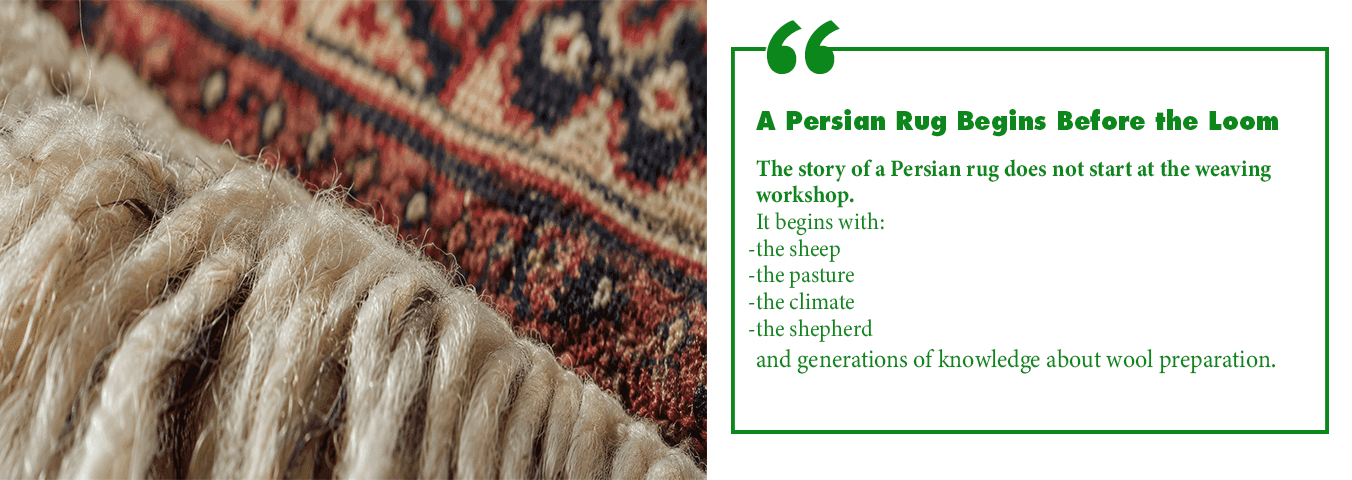
Why Wool Matters in Persian Rugs
More Than Just a Fibre
Wool has been the preferred material for Persian rugs for centuries because it combines a unique group of natural characteristics.
Unlike many synthetic fibres, wool is a living biological material with complex internal structures.
A high-quality wool fibre provides:
Softness
Good wool creates a pleasant tactile experience.
The hand can immediately feel the difference between:
- coarse wool,
- average wool,
- fine mountain or regional wool.
Strength
A Persian rug is designed to be used.
The wool must resist:
- footsteps,
- friction,
- pressure,
- environmental changes.
Strong wool allows a rug to maintain its structure over many decades.
Elasticity
One of wool's greatest advantages is its natural ability to recover.
When compressed by walking or furniture, quality wool fibres can return closer to their original shape.
This property contributes significantly to rug longevity.
Colour Absorption
Wool has a natural ability to absorb dyes.
This is one reason traditional natural dyes appear so rich and deep on good-quality Persian rugs.
The relationship between:
- fibre quality,
- dye preparation,
- and weaving technique
creates the unique visual character of Persian carpets.
Wool Quality and Persian Rug Value
Why Similar Designs Can Have Different Prices
Many buyers compare Persian rugs mainly by:
- size,
- design,
- age,
- origin.
These factors are important.
However, one of the most underestimated factors is:
Material quality.
Two rugs from the same region and with similar patterns may have very different values because of:
- wool quality,
- fineness of yarn,
- preparation methods,
- dye absorption,
- durability.
A rug made with excellent wool may become more beautiful with age.
A rug made with inferior wool may lose:
- softness,
- colour depth,
- surface quality.
The Relationship Between Wool and Handmade Tradition
Why Persian Weavers Chose Wool
For centuries, Iranian weavers selected wool not only because it was available, but because it matched the requirements of traditional rug production.
Wool provided:
- flexibility during weaving,
- strength during use,
- compatibility with natural dyes,
- comfort and warmth.
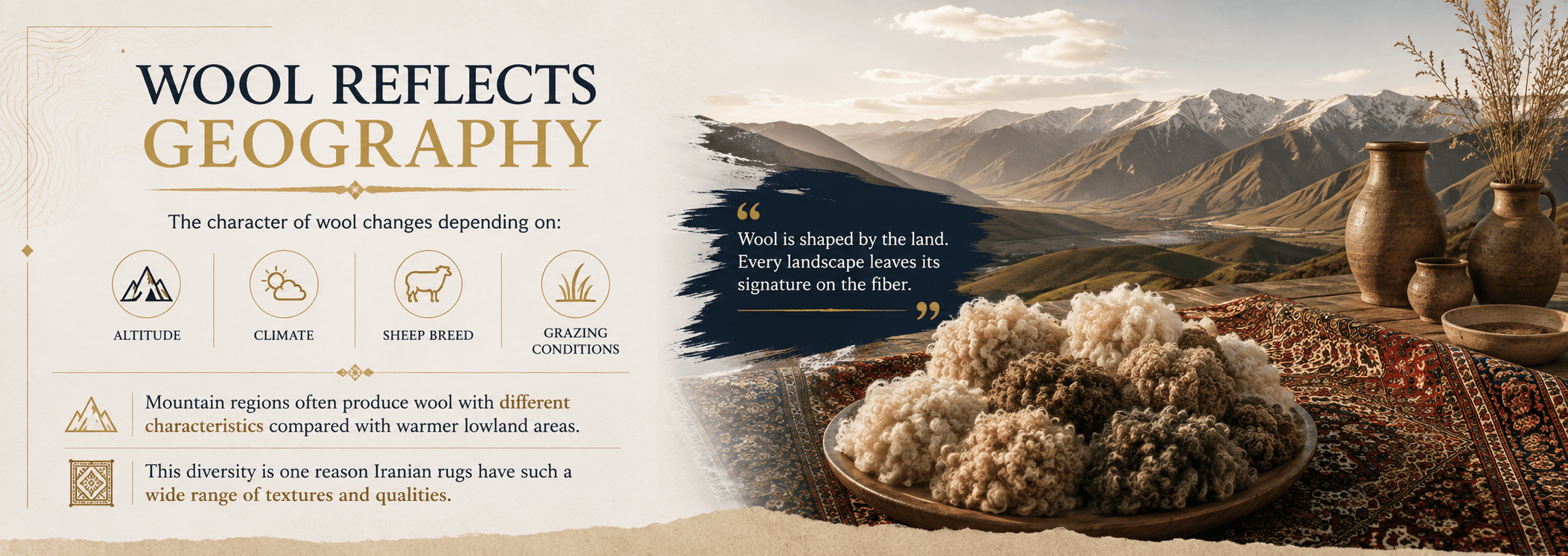
For nomadic and rural communities, wool was also connected to daily life.
The same communities that raised sheep often used their own wool to create textiles.
This created a direct relationship between:
- landscape,
- livestock,
- material,
- and artistic tradition.
Summary
Wool is not simply a material inside a Persian rug.
It is one of the main elements that defines:
- beauty,
- durability,
- ageing,
- value,
- and cultural identity.
Understanding wool is the first step toward understanding Persian rugs.