
Which carpet should we buy?
Choosing a handmade carpet involves matching its style, dimensions and colors to the room, then inspecting its structure and condition. Compare materials, dyes, knot density, craftsmanship, provenance and repairs. For costly, antique or silk pieces, seek an independent expert assessment with care.
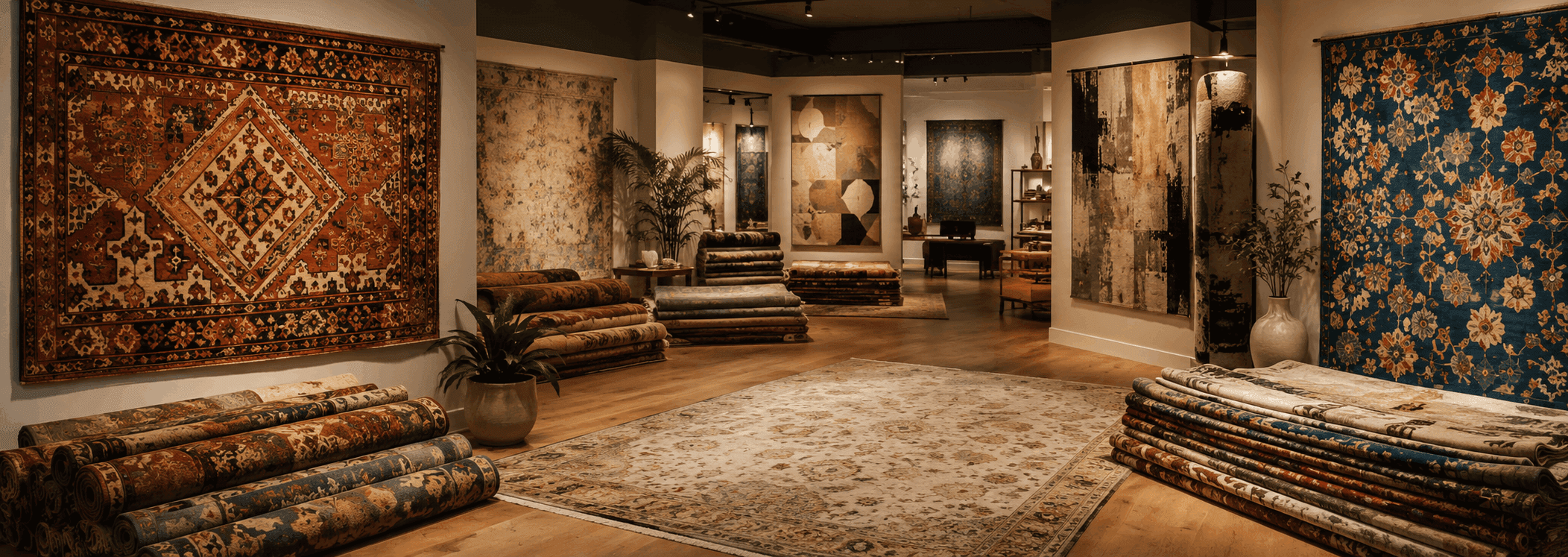
“Which carpet should we buy?” is one of the most common questions among carpet buyers. Choosing becomes easier when you consider four essential factors:
- Which carpet style do I prefer?
- What carpet dimensions do I need?
- Which colors complement my interior?
- How can I identify a well-made carpet without technical defects?
Choosing a Carpet Style
Persian handmade carpets are often broadly classified into four stylistic groups:
- Nomadic
- Village
- Urban
- Modern
These categories sometimes overlap, but they provide a useful starting point.
Nomadic Carpets
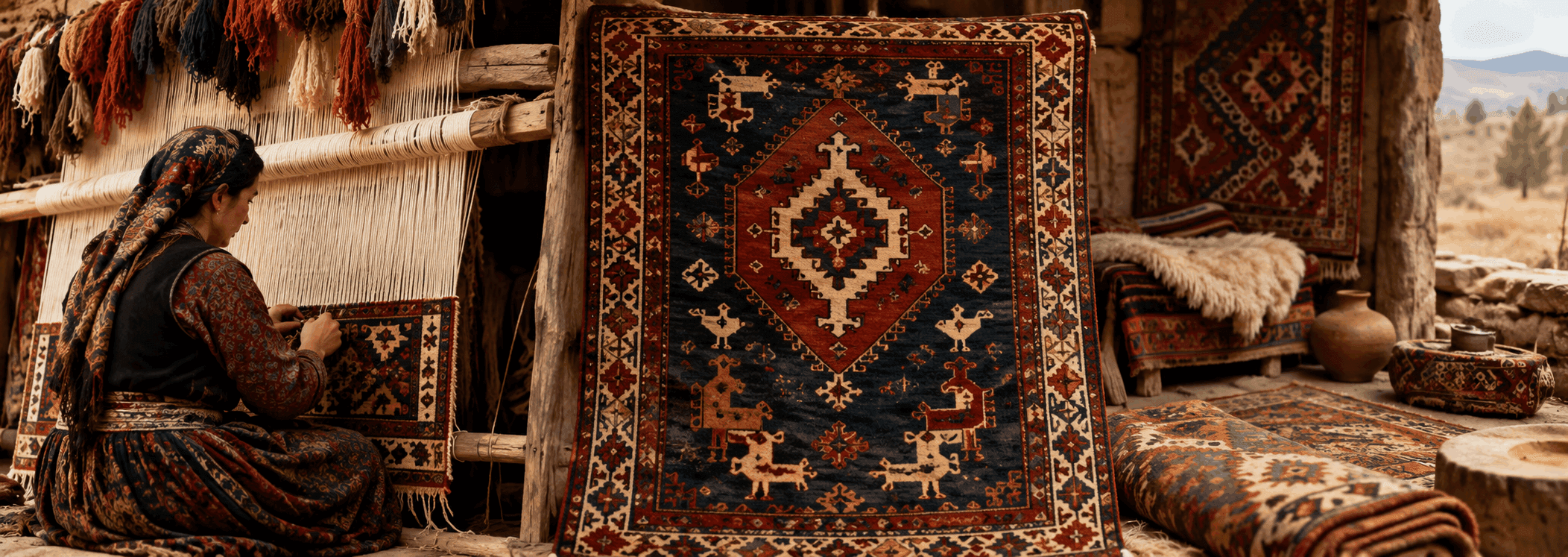
Nomadic carpets are among the oldest expressions of Persian weaving. Traditionally woven from memory rather than from a prepared pattern, they reflect the weaver’s surroundings, beliefs, experiences, and tribal traditions.
Their designs are commonly geometric and may include stylized animals, plants, people, and protective symbols. Slight irregularities are natural characteristics of handmade production and do not necessarily indicate poor quality.
Village Carpets
Village carpets developed partly as nomadic communities settled in permanent locations. Their compositions are generally more structured than those of nomadic carpets, although they often retain bold geometric motifs, angular lines, and regional color combinations.
Many village carpets are still woven without detailed cartoons, allowing individual weavers to interpret traditional designs freely.
Urban Carpets
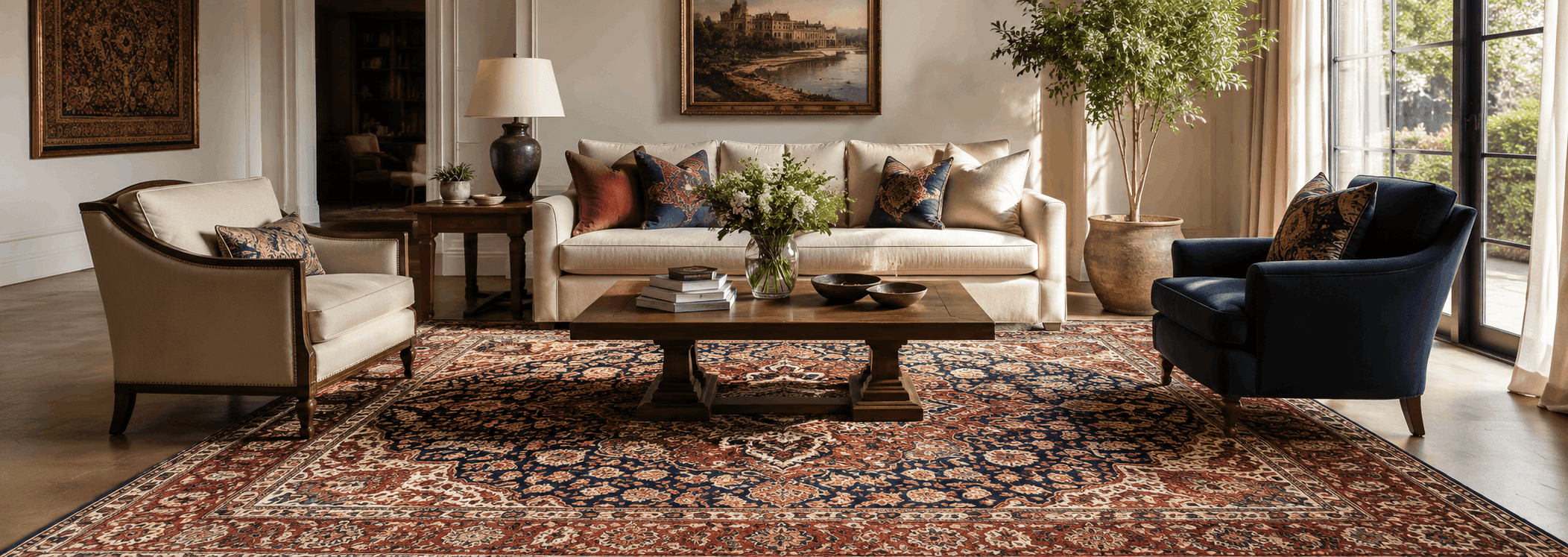
Urban carpets are usually produced in established weaving centers and often follow detailed cartoons prepared by professional designers. They commonly feature intricate floral motifs, curving lines, and carefully balanced compositions.
Well-known formats include:
- Lachak-o-Toranj: A central medallion accompanied by corner motifs
- Afshan: Interconnected floral and leafy patterns distributed across the field
- All-over designs: Repeated motifs covering the carpet without a dominant central medallion
Urban carpet weaving flourished during the Safavid period, particularly under royal patronage, and many designs developed during this era continue to influence Persian carpets today.
Modern Carpets
Modern handmade carpets may use abstract forms, unconventional color combinations, asymmetrical arrangements, or minimalist compositions. They are particularly suitable for contemporary interiors and for buyers seeking an alternative to traditional Persian designs.
Modern carpets do not follow a single design system, but their quality should still be evaluated according to their materials, construction, and finishing.
Selecting the Correct Size
Measure the room and determine how the carpet will relate to the furniture before making a purchase.
Common arrangements include:
- A large carpet extending beneath all major furniture
- A medium carpet placed beneath the front legs of sofas and chairs
- A smaller carpet centered beneath a coffee table
- A dining-room carpet large enough to accommodate the chairs when pulled out
- A runner sized to leave a visible border of flooring along a hallway
Do not rely only on the room’s total area. Mark the intended dimensions on the floor with removable tape to judge the carpet’s proportions before buying.
Choosing Colors That Suit the Interior
A carpet should harmonize with the room’s furniture, walls, curtains, flooring, and lighting.
Warm colors such as red, rust, gold, and orange can make a room feel lively and welcoming. Blues, greens, greys, and neutral shades generally create a calmer atmosphere. Dark carpets may make a large space feel more intimate, while lighter colors can make a small room appear more open.
Consider practical requirements as well:
- Mid-tone and patterned carpets conceal minor marks more effectively.
- Very light carpets show dirt more readily.
- Dark carpets may reveal dust and pet hair.
- Sunlight can gradually fade sensitive dyes.
- Online photographs may not reproduce colors accurately.
Whenever possible, examine the carpet in person and under lighting similar to that of the intended room.
Checking for Technical Problems
Before buying a handmade carpet, inspect both its front and back.
Check for:
- Holes, tears, stains, odors, or insect damage
- Uneven or severely distorted edges
- Weak foundations or brittle fibers
- Loose knots, unraveling ends, or damaged fringes
- Poorly executed repairs
- Significant color bleeding or fading
- Areas where the pile has been excessively worn
- Unexplained differences in texture or pile height
Minor variations in shape, design, and color can be normal in a handmade carpet. Abrash—subtle bands of color caused by variations between dye batches—is also often a natural feature rather than a defect. Severe distortion, unstable dyes, concealed repairs, or structural weakness require closer evaluation.
What Determines a Handmade Carpet’s Price?
The value of a handmade carpet may be influenced by:
- Fiber quality
- Natural or synthetic dyes
- Knot density and fineness
- Weaving consistency
- Design complexity
- Size
- Place and workshop of production
- Age, rarity, and provenance
- Condition and restoration history
- Market demand
A high knot count alone does not guarantee quality. The materials, artistic execution, durability, condition, and cultural importance of the carpet must also be considered.
Final Recommendation
Choose a carpet that suits the room’s dimensions, colors, level of use, and overall style. Inspect its structure carefully rather than judging it only by appearance or knot density.
For an expensive, antique, silk, or collectible carpet, obtain an independent assessment from a qualified handmade-carpet specialist or textile conservator before purchasing.
FAQs
1. What should I consider when choosing a handmade carpet?
Consider the carpet’s style, dimensions, colors, materials, construction, condition and suitability for the room.
2. Does a high knot count guarantee a high-quality carpet?
No. Materials, craftsmanship, design, durability, condition and cultural significance also influence quality and value.
3. Which handmade carpets require an expert assessment?
Expensive, antique, silk and collectible carpets should be independently evaluated by a qualified specialist or textile conservator.