
Why Bijar Rugs Are Known as “Iron Rugs”?
Among the many famous Persian rug styles, Bijar rugs have earned one of the most unusual nicknames: “Iron Rugs.” The name may sound surprising. After all, a Persian rug is made from wool, cotton, or silk—not iron.
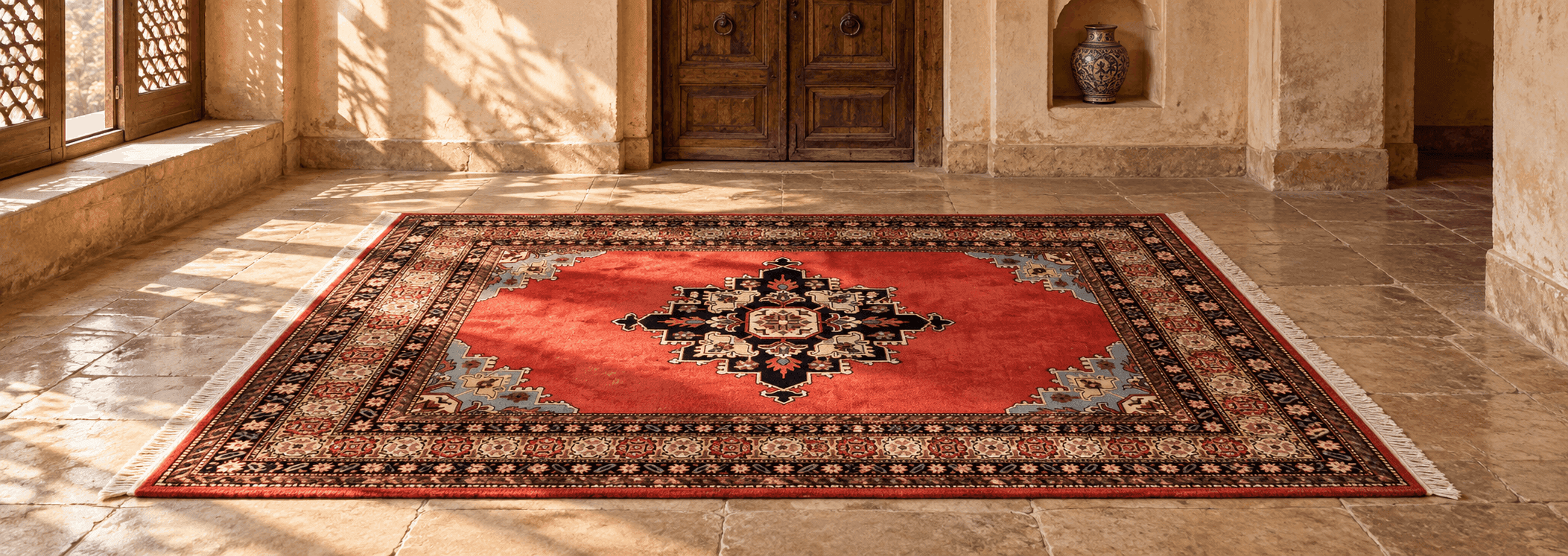
Among the many famous Persian rug styles, Bijar rugs have earned one of the most unusual nicknames: “Iron Rugs.”
The name may sound surprising. After all, a Persian rug is made from wool, cotton, or silk—not iron.
So why are Bijar rugs called Iron Rugs?
The answer lies in their remarkable density, weight, durability, and construction. A well-made Bijar rug can feel unusually firm and heavy underfoot, and its tightly packed structure allows it to withstand years of everyday use.
But there is much more to Bijar rugs than their strength.
Their distinctive weaving technique, beautiful Persian designs, rich colors, and connection to the Kurdish region of western Iran have made them highly respected among rug collectors and enthusiasts.
Where Do Bijar Rugs Come From?
Bijar, also written as Bidjar, is a city in the Kurdistan region of western Iran.
The surrounding area has a long tradition of Kurdish rug weaving. Bijar rugs are particularly known for their strong construction and distinctive weaving techniques.
Although the name "Bijar" refers to a specific region, rugs associated with the Bijar tradition can vary considerably in design.
Some feature large central medallions, while others use all-over floral patterns, geometric designs, or repeated motifs.
What connects them is often their characteristic construction and robust feel.
Why Are Bijar Rugs Called Iron Rugs?
The nickname “Iron Rug” comes mainly from the unusual firmness and durability of traditional Bijar carpets.
One of the key reasons is their tightly packed structure.
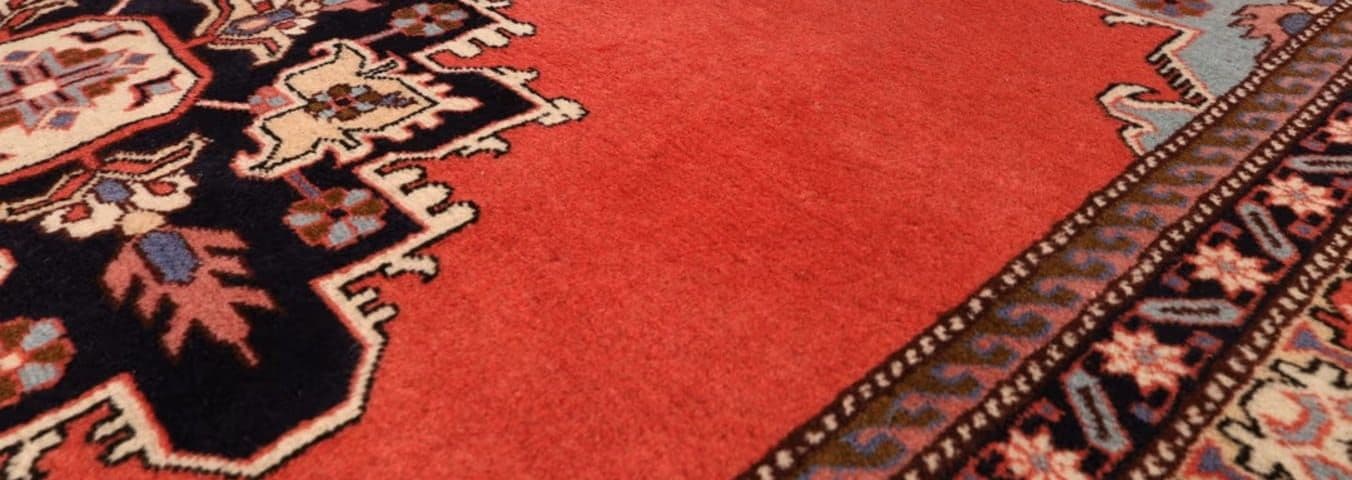
Bijar weavers traditionally used techniques that produced a dense and compact rug. The finished carpet can feel considerably firmer than many other Persian rugs.
When you walk across a high-quality Bijar rug, it often feels almost solid beneath your feet.
This impressive density is one of the features that made the "Iron Rug" nickname so memorable.
The Special Weaving Technique
One of the most important characteristics of traditional Bijar rugs is their distinctive construction.
A traditional Bijar rug may use a special approach involving the weft threads, which are tightly packed into the structure.
After rows of knots are created, the wefts are beaten down firmly. This creates an unusually compact foundation.
In some traditional Bijar rugs, the foundation can appear somewhat compressed or undulating when viewed from the side or back.
This construction contributes significantly to the rug's famous strength.
It also makes Bijar rugs feel different from many other Persian carpets.
Why Are Bijar Rugs So Heavy?
The dense construction of a Bijar rug naturally contributes to its weight.
The rug contains a large amount of tightly packed material within a relatively compact structure.
This is one reason why moving a large Bijar carpet can require considerably more effort than moving a lighter Persian rug of a similar size.
The weight is not simply a result of using more wool.
It is also related to how tightly the components of the rug are compressed and constructed.
Durability Is One of Their Greatest Strengths
Bijar rugs have traditionally been made for practical use as well as beauty.
Their dense construction helps the pile resist everyday wear.
This makes many Bijar rugs particularly suitable for areas of the home where a carpet may receive regular foot traffic.
A well-maintained Bijar rug can remain beautiful for generations.
Of course, durability depends on many factors, including the quality of the wool, knotting, construction, age, condition, and how the rug has been used.
Not every rug sold as "Bijar" will have exactly the same level of durability.
What Do Bijar Rugs Look Like?
Bijar rugs are not defined by one single pattern.
Traditional examples can feature:
- Central medallions
- Floral motifs
- Repeating geometric patterns
- Herati-style designs
- Tree-of-life compositions
- Elaborate borders
- Rich red and blue backgrounds
Many Bijar rugs have a strong visual presence.
Their designs can be highly detailed, but the overall appearance often remains balanced and structured.
This combination of visual beauty and physical strength is one of the reasons Bijar rugs are so popular.
Bijar Rugs and Kurdish Weaving Tradition
Bijar rugs are closely connected to the Kurdish weaving tradition of western Iran.
Kurdish rug making has a long history and includes many different regional styles.
Bijar became particularly famous for producing rugs with exceptionally strong construction.
This combination of regional craftsmanship and distinctive weaving techniques helped establish Bijar as one of the best-known Persian rug traditions.
Are All Bijar Rugs Extremely Heavy?
Not necessarily.
The term “Iron Rug” is associated particularly with traditional, densely constructed Bijar rugs.
However, Bijar rugs can differ in materials, construction, age, and weaving quality.
Modern rugs inspired by the Bijar style may also have a different structure from traditional examples.
Therefore, the nickname should be understood as a description of the traditional Bijar rug's characteristic strength and density—not a guarantee that every Bijar rug will literally be extremely heavy.
Why Bijar Rugs Can Be Difficult to Fold
The same dense construction that makes Bijar rugs strong can also make them relatively stiff.
A traditional Bijar rug may not fold as easily as a more flexible Persian carpet.
Instead of forming soft folds, it can feel firm and resistant.
This is another physical characteristic that helps explain the Iron Rug nickname.
It is also something buyers should consider when storing or transporting a Bijar rug.
Are Bijar Rugs Valuable?
Some Bijar rugs can be highly valuable, particularly when they combine excellent craftsmanship, desirable design, good condition, age, and high-quality materials.
However, the name "Bijar" alone does not determine a rug's value.
Experts typically consider:
- Age
- Condition
- Materials
- Knotting
- Construction
- Design
- Colors
- Size
- Rarity
- Provenance
Antique and older Bijar rugs with exceptional craftsmanship can be especially attractive to collectors.
How to Recognize a Bijar Rug
If you want to identify a Bijar rug, look beyond the pattern.
The construction is one of the most important clues.
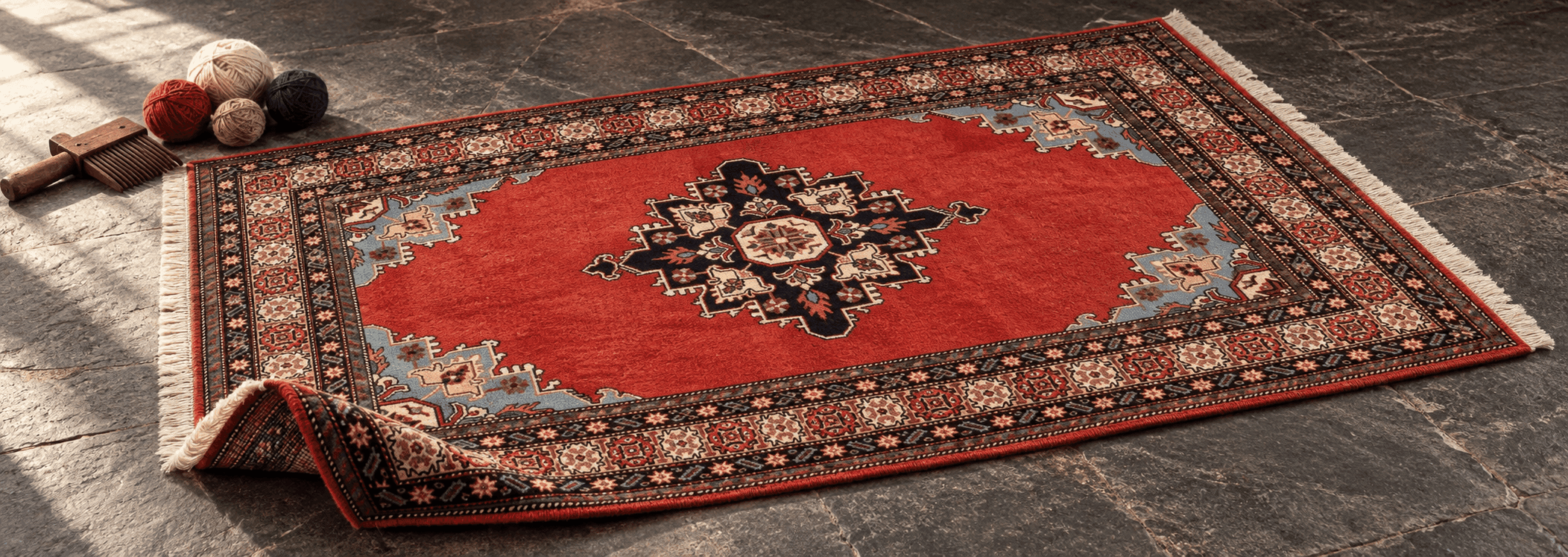
Turn the rug over and examine the back. Look at the knot structure, foundation, weft arrangement, edges, and overall density.
Then consider the design and colors.
A professional rug expert can combine these characteristics to determine whether a rug is genuinely associated with the Bijar tradition.
A pattern alone is not enough because similar Persian motifs can appear in rugs from different regions.
How Should You Care for a Bijar Rug?
Despite their reputation for exceptional durability, Bijar rugs still need proper care.
Regular vacuuming can help prevent dirt from becoming embedded in the pile. Avoid exposing the rug to prolonged direct sunlight, and deal with spills promptly.
For valuable or antique Bijar rugs, professional cleaning is often the safest option.
Because these rugs can be dense and heavy, moving them incorrectly can also put unnecessary stress on the rug.
Bijar Rugs at RugEast
At RugEast, we believe that understanding the construction of a Persian rug makes its beauty even more meaningful.
Bijar rugs are a perfect example.
Their appeal is not only in their colors and patterns but also in the craftsmanship hidden inside their structure.
The nickname “Iron Rug” reflects something essential about the Bijar tradition: a Persian carpet can be both an artistic object and an exceptionally durable piece of craftsmanship.
Final Thoughts
Bijar rugs earned the nickname “Iron Rugs” because of their exceptional density, firmness, weight, and durability.
Their tightly constructed foundation and traditional weaving techniques give them a distinctive feel that separates them from many other Persian rugs.
But their strength is only part of the story.
Bijar rugs also represent a rich Kurdish and Persian weaving tradition, with beautiful designs, carefully chosen colors, and generations of craftsmanship behind them.
That combination of strength, beauty, and tradition is what makes a genuine Bijar rug so special.
Frequently Asked Questions
1) Why are Bijar rugs called Iron Rugs?
Bijar rugs are called “Iron Rugs” because traditional examples are exceptionally dense, firm, heavy, and durable compared with many other Persian rugs.
2) Are Bijar rugs really made with iron?
No. The name is a nickname that describes their remarkable strength and dense construction. Bijar rugs are traditionally made from materials such as wool and cotton.
3) Are Bijar rugs durable?
Yes. Traditional Bijar rugs are particularly well known for their strong construction and resistance to everyday wear.