
Complete Guide to Persian Rug Cleaning and Care
Persian rugs require special care because their natural fibres, traditional dyes and handmade construction can be easily damaged by improper cleaning. Learn how professional Persian rug cleaning and preservation methods help protect their beauty, quality and heritage for generations.
Introduction
A handmade Persian rug is much more than a decorative object.
It is the result of generations of knowledge, craftsmanship and cultural heritage. Every Persian rug contains a complex combination of natural materials, traditional techniques and artistic decisions that have developed over centuries.
From selecting the wool and preparing the yarn to dyeing, designing and weaving thousands of individual knots, the creation of a handmade rug requires patience, experience and extraordinary skill.
For this reason, caring for a Persian rug cannot be compared with maintaining an ordinary machine-made carpet.
A Persian rug has its own personality.
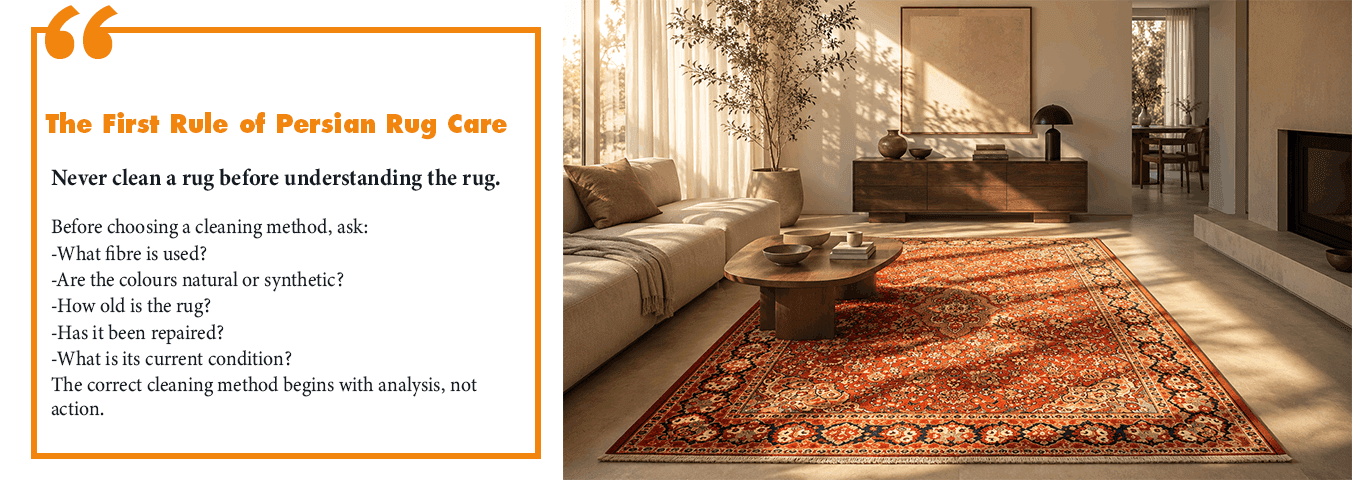
The type of fibre, weaving technique, age, dye structure and previous treatments all influence how it should be cleaned and preserved.
A cleaning method that works perfectly for a modern synthetic carpet may seriously damage:
- an antique Persian rug,
- a naturally dyed tribal carpet,
- a delicate silk piece,
- or a valuable family heirloom.
Professional rug care begins with understanding.
Before applying water, chemicals or cleaning methods, we must first understand what the rug is made of and how it was created.
This guide explores the science and tradition behind Persian rug care — from wool and natural dyes to dust protection, moisture control, stain removal, professional cleaning methods and long-term preservation.
Why Persian Rugs Require Special Care
A Handmade Rug Is a Living Combination of Natural Materials
Unlike industrial carpets made from standardized synthetic fibres, handmade Persian rugs are unique creations.
Each rug may differ in:
- wool quality,
- fibre structure,
- dye composition,
- knot density,
- weaving origin,
- age and condition.
A Persian rug is not simply a surface covering.
It is a textile artwork created from biological and natural materials.
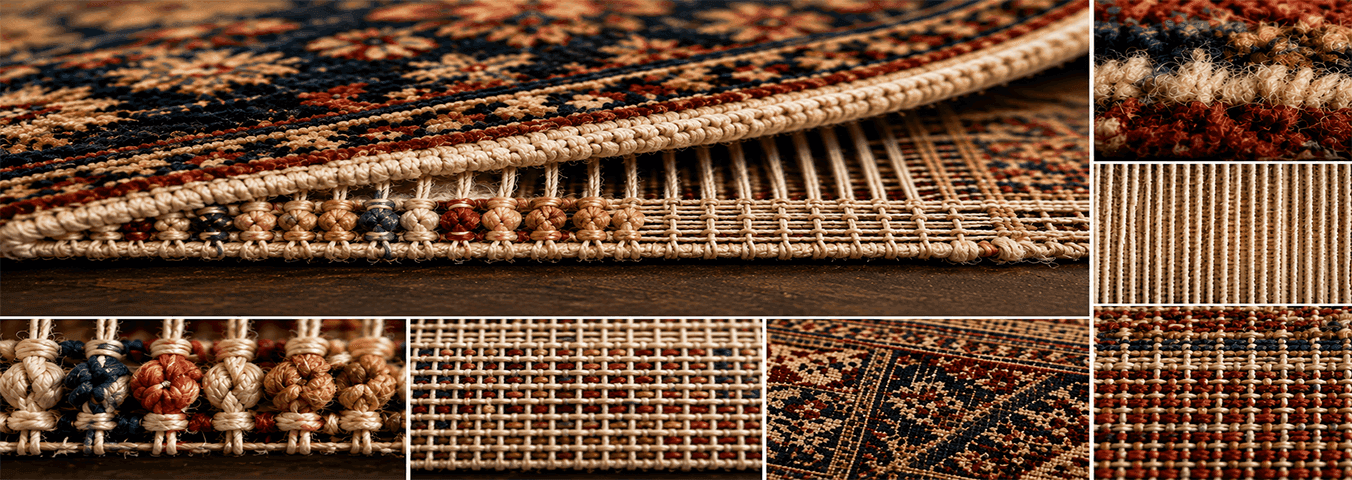
The main components of a traditional Persian rug include:
Wool
Used mainly for the pile, wool provides:
- softness,
- durability,
- natural elasticity,
- warmth,
- resistance to everyday use.
However, different types of wool behave differently.
The wool of a nomadic Qashqai rug, the wool of a Kurdish rug and the fine wool used in high-quality urban carpets may have completely different characteristics.
Silk
Silk is valued for:
- exceptional softness,
- high shine,
- fine detailing.
However, silk fibres require much more delicate handling compared with wool.
Cotton
Cotton is commonly used in:
- warp,
- weft,
- foundation structures.
Its condition strongly affects the stability of the entire rug.
The Difference Between Cleaning and Preservation
Many people think cleaning means simply removing visible dirt.
However, professional rug care has a much broader purpose.
Cleaning removes unwanted materials:
- dust,
- stains,
- residues,
- environmental contamination.
Preservation protects:
- fibres,
- colours,
- structure,
- historical value.
These two concepts are connected but not identical.
A rug can look clean while suffering from hidden damage.
For example:
- excessive moisture may weaken foundations,
- unsuitable chemicals may affect natural dyes,
- aggressive brushing may damage wool surfaces.
Professional care aims for balance:
Remove what harms the rug while protecting what gives the rug its value.
Every Knot Contains a Story
A handmade Persian rug represents:
- human creativity,
- regional traditions,
- natural materials,
- generations of knowledge.
Proper maintenance is not only about keeping a rug beautiful.
It is about protecting a piece of cultural heritage.
What Makes Persian Rug Cleaning Different?
A professional approach considers five essential factors:
1. Fibre
Wool, silk and cotton each react differently to:
- water,
- chemicals,
- friction,
- temperature.
2. Dye
Natural dyes may have remarkable beauty and depth, but they require careful treatment.
3. Construction
The structure of the rug determines its resistance and vulnerability.
4. Age
Older rugs often require gentler methods because materials naturally change over time.
5. Condition
Existing weaknesses, repairs or previous treatments influence every cleaning decision.
Summary
A Persian rug is not just cleaned.
It is studied, evaluated and carefully preserved.
The foundation of professional rug care is knowledge:
Knowledge of fibres.
Knowledge of dyes.
Knowledge of construction.
Knowledge of tradition.
Only after this understanding can the correct cleaning and preservation process begin.