
How Persian Rugs Change Color Over Time
When you invest in a hand-knotted Persian rug, you are not just buying a static piece of decor; you are acquiring a living textile that will evolve alongside your home.
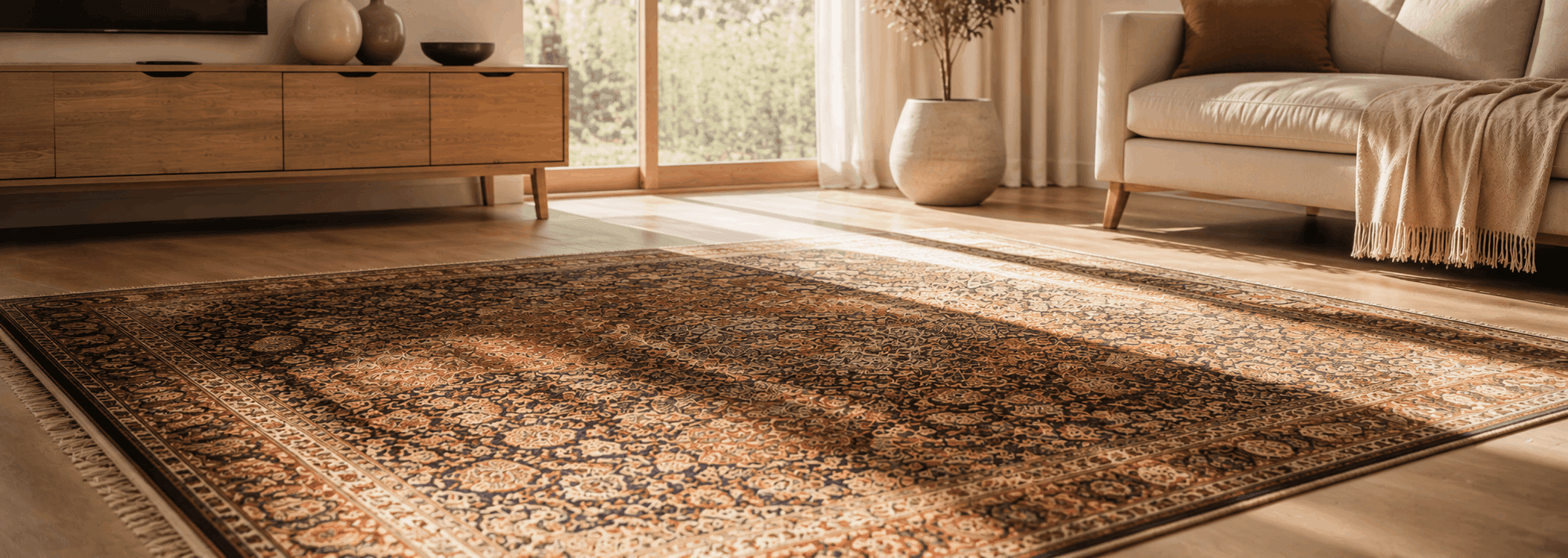
When you invest in a hand-knotted Persian rug, you are not just buying a static piece of decor; you are acquiring a living textile that will evolve alongside your home. Over the decades, the vibrant colors of a new oriental rug will subtly soften, shift, and develop a unique character known as a "patina."
At RugEast, we celebrate the natural aging process of these magnificent artworks. Understanding why and how a Persian rug changes color over time can help you appreciate its growing value and teach you how to protect it from unnatural, damaging fading. Here is everything you need to know about the color evolution of your hand-knotted rug.
The Role of Natural Dyes vs. Synthetic Dyes
The way a rug ages depends heavily on how the wool was dyed before the weaving began.
- Natural (Vegetal) Dyes: For centuries, Persian weavers used natural sources like madder root (reds), indigo (blues), and pomegranate skin (yellows) to dye their wool. Natural dyes do not fade; they mellow. Over time, harsh tones soften into harmonious, muted shades that antique collectors highly prize.
- Synthetic Dyes: Introduced in the late 19th and early 20th centuries, synthetic chrome dyes are extremely colorfast and vibrant. While they hold their initial color much longer than natural dyes, when they do finally fade, the change can sometimes appear harsh or uneven if exposed to heavy sunlight.
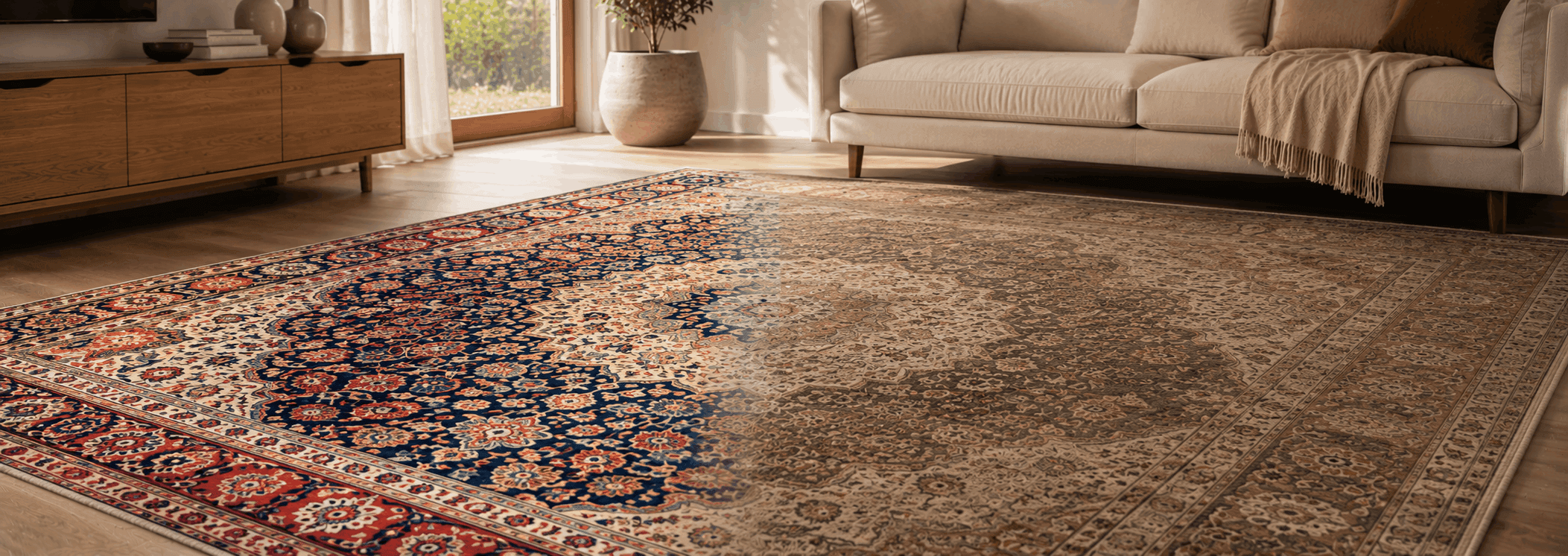
What is "Abrash"? The Beauty of Imperfection
If you notice horizontal bands of slightly different color shades across your rug, do not panic! This is not a defect; it is a highly sought-after characteristic called Abrash (pronounced ah-brash).
- Why it happens: In traditional nomadic weaving, a weaver might run out of a specific batch of dyed wool. When they dye a new batch, the color might be slightly darker or lighter due to variations in the plants, the water temperature, or the wool's ability to absorb the dye.
- Why it matters: Abrash is the ultimate proof that your rug is authentically hand-made and naturally dyed. As the rug ages and is walked upon, these subtle color variations become more pronounced, giving the rug a beautiful, multidimensional depth.
Environmental Factors That Change a Rug's Color
While some color change is natural and desirable, environmental factors can cause premature or uneven fading.
1. Sunlight (Photodegradation)
Direct, intense sunlight is the biggest enemy of rug dyes. Ultraviolet (UV) rays break down the chemical bonds in the dyes. Over several years, a rug placed in a sunny room will become noticeably lighter on the exposed side.
- The Fix: Rotate your rug 180 degrees every six months to ensure that any inevitable fading happens evenly across the entire surface. Use sheer curtains or UV-blocking window films in very sunny rooms.
2. Foot Traffic and Oxidation
As you walk on a wool rug, you slowly wear away the very tips of the wool fibers. The wool underneath is often slightly darker and more saturated because it has not been exposed to air and light (oxidation). This gradual wear is what creates the coveted "antique patina"—a soft, glowing sheen that machine-made rugs cannot replicate.
3. Improper Cleaning Chemicals
Harsh alkaline detergents or chemical stain removers can strip the natural oils (lanolin) from the wool and cause the dyes to bleed or fade instantly. This is why you should only ever use mild, pH-neutral soap or trust a professional with water-washing your oriental rug.
How to Protect Your Rug's Colors
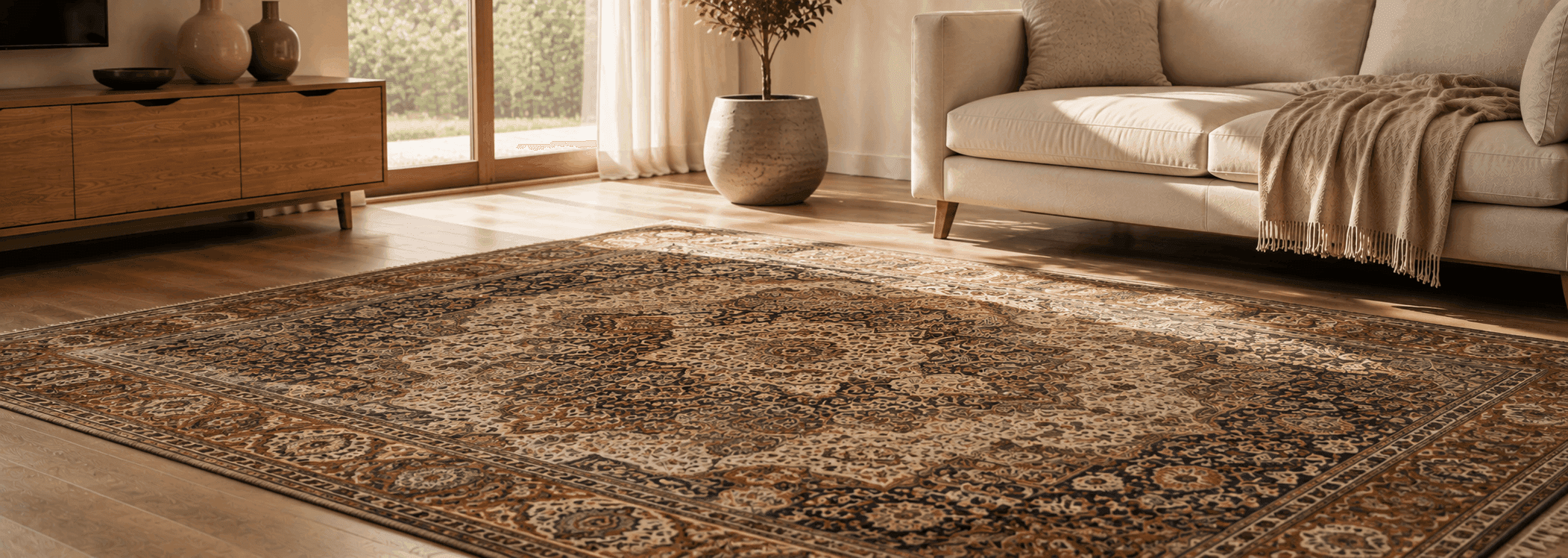
To ensure your Persian rug ages gracefully rather than fading drastically:
- Rotate regularly: Every 6-12 months.
- Manage sunlight: Close blinds during peak afternoon sun.
- Clean correctly: Vacuum gently and only use professional hand-washing services. Never use supermarket carpet shampoos.
Frequently Asked Questions (FAQ)
Is a faded Persian rug less valuable?
Not necessarily! An antique rug with naturally mellowed, harmonious colors (a good patina) is often more valuable to collectors than a brand-new rug with harsh, bright colors. However, uneven fading caused by direct sunlight can reduce a rug's value.
Can a faded Persian rug be restored?
Yes, to some extent. Professional rug restorers can sometimes "color wash" or touch up severely faded areas using specialized dyes, but it is a delicate and expensive process. Prevention is always better.
Why does my rug look like a different color from different angles?
This is normal and is due to the "pile direction." Hand-knotted rugs are woven so the pile naturally leans in one direction. Looking into the pile (against the grain) makes the colors appear dark and rich. Looking down the pile (with the grain) makes the colors appear lighter and more reflective.